Table of Contents
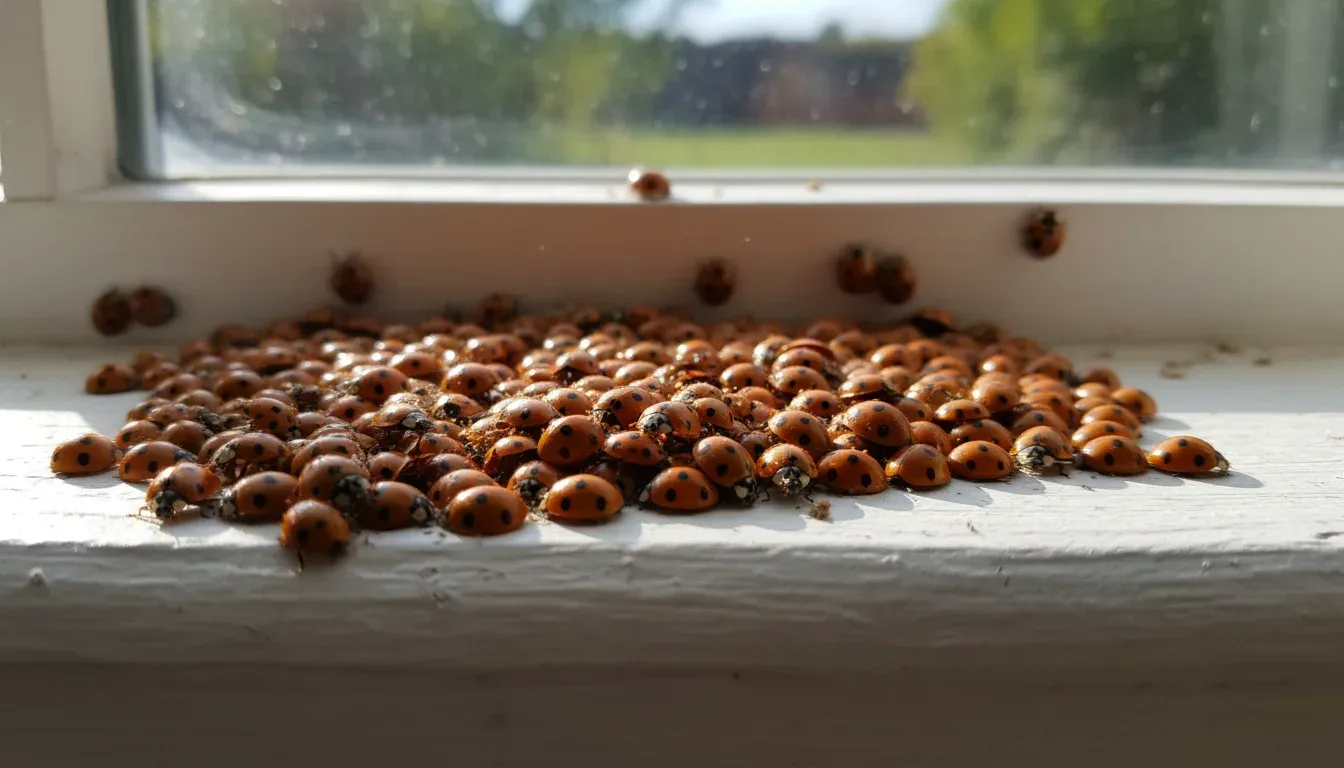
Ladybugs are beneficial insects in the garden. They devour aphids, mites, and other pests that damage plants. But when temperatures drop in fall, these same helpful beetles start looking for warm places to spend winter. Suddenly your sunny windowsills and attic corners are swarming with red-and-black spotted visitors who don’t know when to leave.
The ones invading your home are often Asian lady beetles, a similar-looking species that’s more aggressive about moving indoors. Both types cluster in groups, emit a foul smell when disturbed, and leave yellow stains on surfaces. Here’s how to get them out and keep them from coming back.
1. Identify Asian Lady Beetles vs True Ladybugs
Before you treat, know what you’re dealing with. Asian lady beetles look similar to native ladybugs but have key differences. Asian lady beetles typically have a white "M" or "W" shaped marking on their heads behind the eyes. Their color tends toward orange-brown rather than the bright red of true ladybugs.
True ladybugs are more likely to stay outside and travel alone. If you’re seeing clusters of dozens or hundreds indoors, you’re almost certainly dealing with Asian lady beetles. This distinction matters because Asian lady beetles are more persistent about entering homes and can bite when handled, though the bite is harmless.
Both species release a foul-smelling yellow fluid when crushed or threatened. This fluid can stain walls, fabrics, and furniture. Avoid handling them directly and never crush them indoors.
2. Vacuum and Immediately Dispose of Bag Outside
When you find ladybugs clustered on windows, walls, or in corners, a vacuum is your fastest removal tool. Use the hose attachment with a brush head if you have one. The brush prevents the bugs from being crushed in the suction, which reduces the smell.
Critical step: Immediately remove the vacuum bag or empty the canister into a sealed plastic bag and take it outside. Ladybugs can crawl back out if left in the vacuum indoors. Don’t let the full vacuum sit in your closet—these persistent insects will find their way back into your living space.
If you’re dealing with dozens or hundreds, this is the only practical way to clear them quickly. A handheld vacuum dedicated to bug duty works well for ongoing management. For heavy infestations, you may need to vacuum daily until the population drops.
3. Seal Entry Points Before Fall
Ladybugs enter through gaps around windows, doors, vents, and anywhere siding meets trim. They’re looking for cracks that lead to wall voids and attic spaces where they can hibernate. Seal these entry points in late summer before the migration begins.
Check window frames, door frames, utility penetrations, and foundation cracks. Caulk gaps, repair screens, add weatherstripping to doors, and ensure attic vents are properly screened. A thorough sealing job in August or September prevents the fall invasion entirely. Once they’re inside the walls, they’re much harder to remove.
Pay special attention to the south and west sides of your home where warming sun attracts them. These are the primary entry zones during fall migration.
4. Use Light Traps at Night
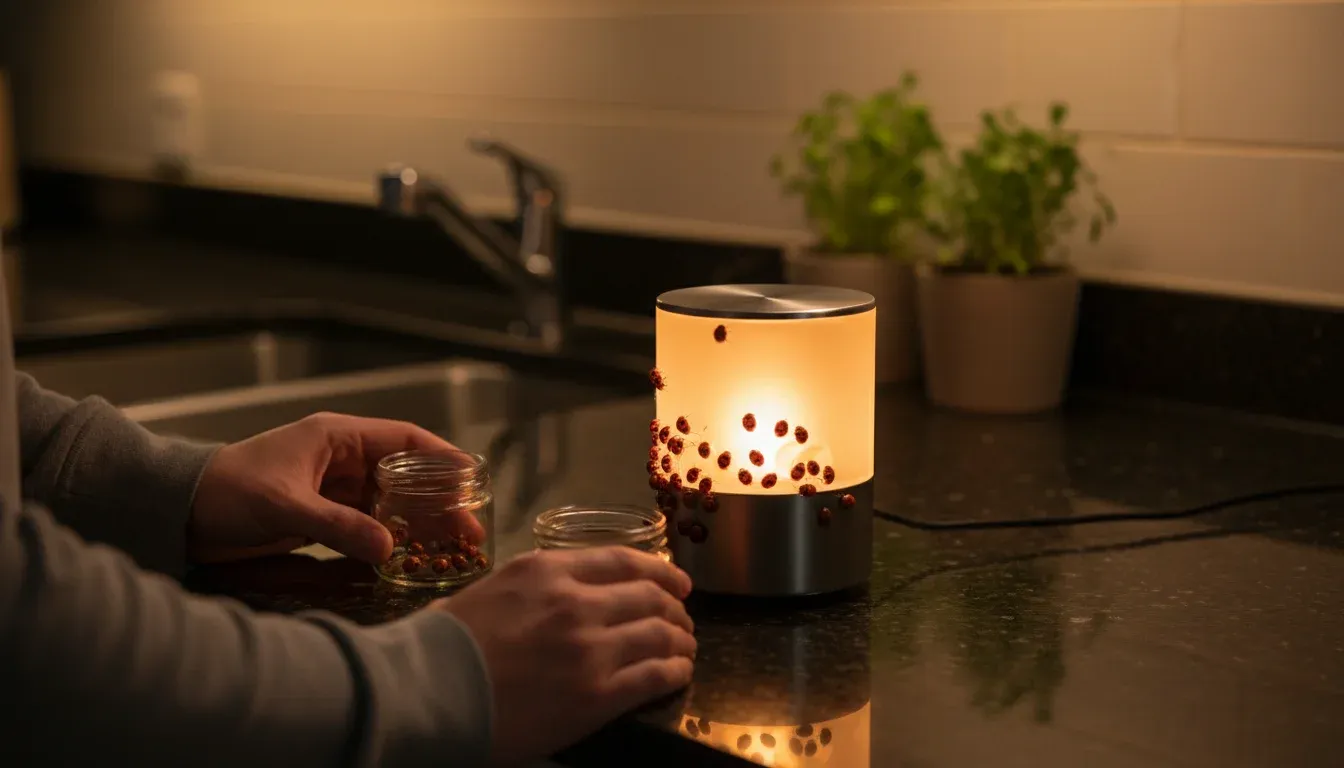
Ladybugs are attracted to light, especially on warm fall evenings when they’re actively seeking entry points. Place a desk lamp or work light in a dark room with a shallow pan of soapy water underneath. The bugs fly toward the light, hit the bulb, and drop into the water.
The soap breaks the surface tension so they sink instead of floating. Check the trap in the morning and dispose of the drowned bugs. This won’t catch every ladybug but it reduces the numbers trying to find cracks around that window or door. Works best when set up near known entry points.
For outdoor control, commercial light traps can capture beetles before they reach your house. Position these away from entry doors so they draw insects away from, not toward, your home.
5. Spray Citrus or Clove Oil
Ladybugs dislike strong scents. Mix 10-15 drops of citrus essential oil (lemon or orange) or clove oil with water in a spray bottle. Apply around windows, doors, and other entry points. The smell repels them without harming them.
Reapply every few days or after rain. You can also place citrus peels on windowsills as a deterrent. This won’t stop determined bugs but it makes your home less attractive compared to the neighbor’s untreated house. For heavy infestations, combine this with sealing for better results.
Test sprays on a small area first to ensure they don’t damage paint or finishes. Most essential oils are safe for painted surfaces but can discolor some fabrics.
6. Apply Citronella Around Entrances
Citronella, famous for repelling mosquitoes, also works against ladybugs and Asian lady beetles. Use citronella candles on porches and patios during fall evenings when beetles are most active. The smoke and scent create a barrier they avoid.
For longer-lasting protection, mix citronella essential oil with water and spray around door frames, window sills, and foundation vents. Reapply weekly or after heavy rain. You can also place citronella-scented products like wax melts or sachets near entry points indoors.
Combine citronella with other scent deterrents for stronger effect. Layering different repellents makes your home consistently unappealing to invading beetles.
7. Use Bay Leaves as Repellent
Bay leaves contain compounds that repel ladybugs and many other insects. Place whole dried bay leaves on windowsills, behind furniture, in pantry corners, and anywhere you’ve seen ladybug activity. Crush them slightly to release more of the aromatic oils.
Replace bay leaves every two weeks during active season (September through November) as the scent fades. They’re inexpensive, non-toxic, and safe around food, pets, and children. Many people already have them in their spice cabinet.
For stronger effect, make a bay leaf spray by boiling 15-20 leaves in 2 cups of water for 10 minutes. Let it cool, strain, and spray around entry points. Store leftover spray in the refrigerator for up to a week.
8. Spray Peppermint Oil Around Entry Points
Peppermint oil is another powerful ladybug deterrent. Mix 15-20 drops of peppermint essential oil with 2 cups of water and a teaspoon of dish soap (which helps it stick to surfaces). Spray around doors, windows, and any cracks or gaps where beetles might enter.
The strong mint smell confuses their sensory receptors and makes your home smell like a predator or unsafe environment. Reapply every 3-5 days or after rain. Peppermint oil also repels spiders, ants, and mice, so you get multiple benefits.
Be careful using peppermint oil around cats—it’s toxic to them. If you have feline pets, stick with citrus or bay leaf deterrents instead.
9. Maintain a Tidy Garden
Ladybugs overwinter in garden debris, leaf piles, and dense vegetation. The more shelter you provide near your house, the more bugs will be in position to invade when cold weather hits. Clear fallen leaves, remove dead plants, and trim back overgrown vegetation in fall.
Pay special attention to the area within ten feet of your foundation. This is the staging ground for fall invasions. A clean perimeter reduces the local ladybug population and gives them fewer places to congregate before seeking indoor shelter.
Remove or relocate wood piles, rock piles, and dense shrubbery that touch your house. These provide perfect overwintering spots that lead directly to indoor infestations.
10. Remove Aphid-Attracting Plants
Ladybugs go where the food is. If your garden has plants that attract aphids, you’re attracting ladybugs too. Roses, nasturtiums, and certain vegetables are aphid magnets. Consider replacing these with less appealing alternatives, especially near house walls.
Check plants regularly for aphid infestations. If you find them, treat the problem promptly to eliminate the food source. Fewer aphids means fewer ladybugs setting up camp in your yard and eventually your house.
If you must keep aphid-prone plants, position them away from house walls and foundation. The farther the food source, the less likely beetles are to find your entry points.
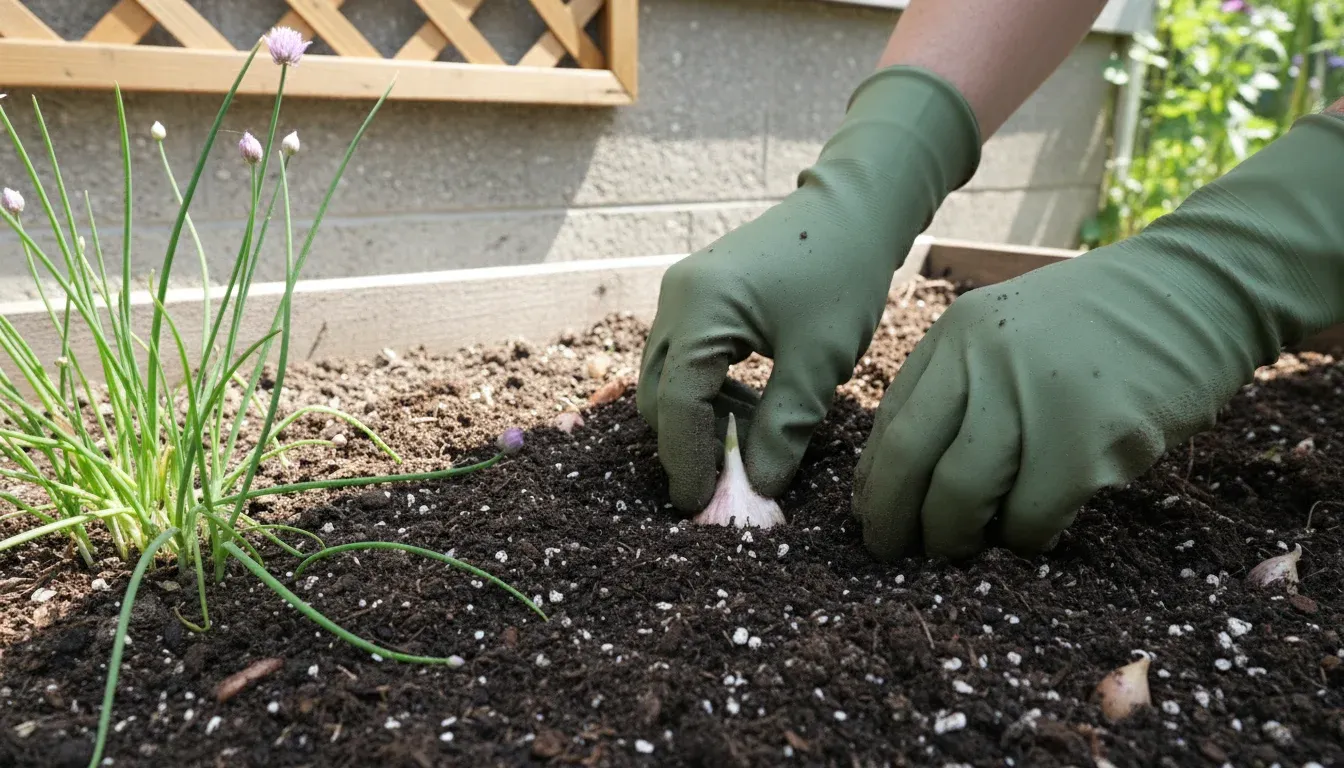
11. Plant Garlic and Chives as Deterrents
Garlic, chives, and other strong-smelling herbs repel aphids, which indirectly reduces ladybug interest. Plant these around garden borders and near house foundations. They create a scent barrier that aphids avoid.
This is a long-term strategy that won’t help with an active invasion, but it reduces the likelihood of problems next year. The herbs are useful in cooking too, so you’re getting multiple benefits from the same plants.
Other deterrent plants include mint, lavender, and rue. Create a perimeter of these around your garden’s edge to make the area less appealing to both aphids and the ladybugs that hunt them.
12. Use Fine Mesh Netting
Cover vulnerable plants or garden beds with fine mesh netting. This physical barrier keeps ladybugs from reaching plants while still allowing light and water through. Secure the edges so bugs can’t crawl underneath.
Netting works best for specific problem areas rather than entire gardens. Use it to protect seedlings, young plants, or vegetables that seem to attract more than their share of attention. Remove the netting when the plants are established or when ladybug season passes.
Choose netting with holes smaller than 1/8 inch to effectively block beetles while maintaining airflow. Hardware cloth or floating row cover material both work well.
13. Install Row Covers
Floating row covers are lightweight fabric sheets that cover entire garden rows. They create a complete physical barrier between plants and insects. Secure the edges with soil, pins, or weights so nothing can crawl underneath.
Row covers are particularly useful for vegetable gardens during fall when ladybugs are most active. They protect crops while letting sunlight and rain through. Remove covers for pollination if needed, or use them on plants that don’t require insect pollination.
For best results, install row covers before beetles become active in late summer. Once they’re established in the garden, covers are less effective because some bugs will already be underneath.
14. Avoid Crushing Them Indoors
It’s tempting to swat or crush ladybugs when you find them on windowsills, but don’t. When crushed, they release a yellow fluid that stains walls, curtains, and fabric. They also emit a foul odor that lingers and can actually attract more beetles to the area.
Vacuum them, trap them, or catch and release them outside. If you must kill them, do it in a way that doesn’t involve crushing—the soapy water in light traps works well. Your walls and furniture will thank you for the restraint.
The staining compound (hemolymph) can permanently damage painted surfaces and fabrics. If you accidentally crush one, clean the spot immediately with warm soapy water before the fluid dries.
Understanding the Lifecycle
Ladybugs don’t reproduce indoors. The ones invading your home in fall are looking for places to hibernate through winter. They enter a dormant state and don’t eat or breed while inside. In spring, they’ll try to exit and return to gardens.
This means an indoor infestation is temporary, even if you do nothing. But few people want to live with clusters of bugs all winter. The key is prevention through sealing, followed by removal of any that get through.
Asian lady beetles are particularly persistent because they were introduced to North America specifically for pest control in the 1980s and 1990s. They’ve thrived and spread, becoming a significant fall nuisance in many regions.
When to Call a Professional
If you’re finding hundreds of ladybugs daily, or if they’re appearing in winter when they should be dormant, you may have a significant population living in your walls. A pest control professional can treat wall voids and attic spaces to eliminate overwintering colonies.
This is more of a nuisance problem than a serious infestation. Ladybugs don’t damage structures or transmit disease. But if the numbers are overwhelming your tolerance, professional help is available. They can apply residual insecticides to entry points and harborage areas that stop invasions before they start.