Table of Contents
The reason ants keep coming back to your kitchen isn’t that you haven’t killed enough of them. It’s that you’re still feeding them. Every open bag of flour, every bowl of kibble left on the floor overnight, every ripe banana sitting on the counter – that’s a food signal the colony can smell from across the yard. Cut off the supply and the workers lose their reason to show up. These four steps do that.
Lock Down Food Storage
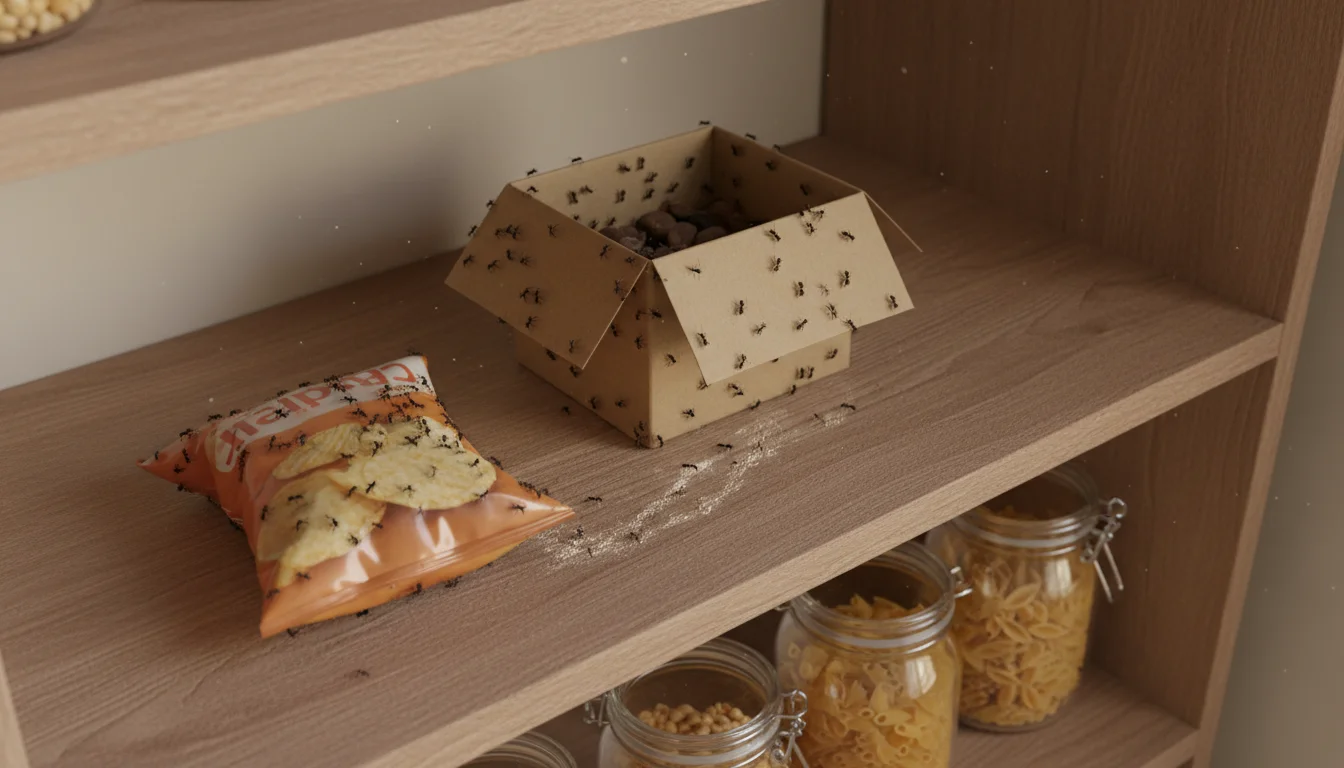
Standard packaging isn’t designed to stop ants. Cardboard boxes, folded chip bags, loose lids on sugar containers – ants get into all of it. And once one scout finds a food source and lays a pheromone trail, the whole neighborhood shows up.
Transfer everything in your pantry into hard-sided containers with tight-sealing lids. This means flour, sugar, cereal, crackers, pasta, rice, and any other dry goods. Mason jars handle smaller quantities well. Larger bins with gasket seals work for bulk items. Store ripe fruit in the refrigerator rather than on the counter – a fruit bowl is basically a welcome sign. A properly sealed pantry removes the primary reason ants enter kitchens.
This one change makes more difference than any trap you’ll set.
Discard Contaminated Foods
Once ants find an open package, that food is finished. You might only see a handful of ants on the surface, but the colony has already marked it with pheromones and recruited workers to haul it away grain by grain. Picking out the visible ants and saving the cereal just spreads the pheromone trail and invites the next wave.
Bag the entire package, seal it, and throw it directly into your outdoor trash bin. Not your kitchen garbage – that just relocates the problem three feet. Check surrounding packages for holes or trails; ants can chew through cardboard and thin plastic. If the infestation is widespread in your pantry, anything opened in the past month is suspect.
Store Birdseed in Sealed Containers
Birdseed and wild animal feed stored in garages or sheds are ant magnets most people overlook. The bags are designed for retail display, not pest prevention, and ants chew through paper and thin plastic without much effort. Transfer birdseed into heavy-duty plastic bins with locking lids, or metal trash cans. If you’re storing 50 lb (23 kg) bags, get a bin that fits the whole bag rather than leaving it folded open.
Ants will build nests directly in loose seed if given the chance, contaminating the entire supply. The same applies to chicken feed, rabbit pellets, and any other bulk grain products stored in outbuildings. Once ants claim a food source this rich, they’ll defend it aggressively and often establish satellite colonies right next to the bin.
Remove Pet Food Bowls Daily
Leaving pet food and water bowls out overnight is equivalent to running an ant buffet. Dry kibble seems less attractive than human food, but ants will swarm it if nothing better is available. Wet food is faster – you can have a full trail going within an hour of putting the bowl down.
Feed pets on a schedule and pick up bowls immediately after meals. Wash them the same day. If your pet grazes throughout the day, use elevated bowl stands with moats – small trays filled with soapy water that ants can’t cross. Water bowls attract ants too, not just food bowls. If you can’t eliminate bowls entirely, move them to a tiled area that’s easy to wipe down and keep them on a shallow tray that catches spills before they spread.