Table of Contents
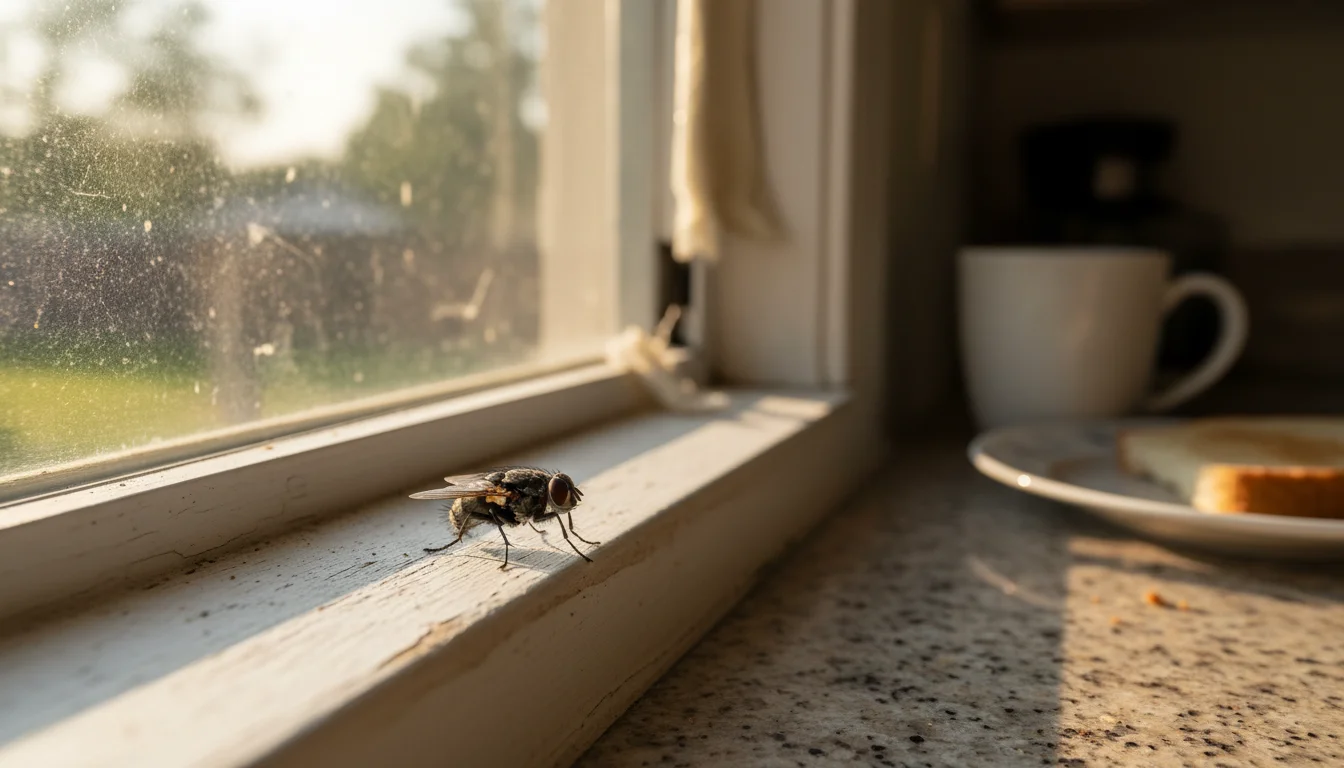
Flies don’t materialize. They come in through specific gaps, they breed in specific spots, and they’re drawn to specific food and odor sources. The methods that actually solve the problem address those specifics. The methods that fail are the ones people use when they’re frustrated – spraying air freshener, waving their hands, hoping the flies get bored and leave. Here’s what actually works.
Seal Cracks, Gaps, and Install Screens
This is the only method that stops new flies from entering. Everything else deals with flies already inside. A gap under a door, a tear in a window screen, a crack around a dryer vent – these are the actual entry points, and fixing them is the only permanent solution.
Inspect every door and window. Install weatherstripping on frames that don’t seal fully. Add door sweeps with firm rubber blades that contact the threshold all the way across. Replace torn or damaged window screens rather than patching them – patches lift at the edges. Use caulk around window frames and baseboards where gaps have opened. Check dryer vents and bathroom exhaust fans for intact screens. A single gap the width of a pencil is enough for most house fly species.
This takes an afternoon of work. But an afternoon of physical sealing beats months of catching the flies that keep getting in.
Apple Cider Vinegar Traps
The standard fruit fly trap, and it works. Pour about 2 fl oz (60 ml) of apple cider vinegar into a small bowl or glass. Add a few drops of dish soap and stir lightly. The vinegar smell attracts fruit flies; the soap breaks surface tension so they drown on contact instead of landing and escaping.
Set several traps near where you’ve seen the most activity – typically near the fruit bowl, trash can, and sink drain. Refresh daily. White vinegar doesn’t work as well; fruit flies respond specifically to the fermented smell of apple cider vinegar. If you’re not catching anything after 24 hours, the flies you’re dealing with might not be fruit flies – they could be drain flies (check slow drains) or house flies (vinegar doesn’t attract them much).
Plant Repellent Herbs
Basil, mint, lavender, rosemary, and lemongrass all repel flies through their strong aromatic compounds. Potted basil on a kitchen windowsill has a genuine deterrent effect on house flies. Crush a leaf occasionally to release more volatile oils.
This method won’t clear out an existing infestation – it’s a deterrent, not a trap. But potted herbs at doorways and windows create a scent barrier that makes those entry points less attractive. They’re also useful in outdoor eating areas where fly traffic is annoying but not infestation-level.
Essential Oil Repellents
Peppermint, eucalyptus, and clove oil repel house flies effectively. Mix 10-15 drops of essential oil per 8 fl oz (250 ml) of water with a small squirt of dish soap to emulsify. Spray around door frames, window sills, and other areas where flies land or enter.
These aren’t contact killers – they’re deterrents. They won’t knock down an active infestation but they reduce reinfestation pressure when used consistently. Reapply every 2-3 days since the oils evaporate quickly. More useful as a perimeter defense than as a response to a fly problem that’s already established.
Use Bay Leaves as Repellent
Bay leaves contain eucalyptol and other volatile compounds that flies find unpleasant. Place dried bay leaves on windowsills, on shelves behind furniture, in pantry corners, and near trash cans. Crush them slightly to release more oil.
Replace every 2-3 weeks as the scent fades. Bay leaves are cheap, non-toxic, and safe around food – you can put them directly in your pantry without concerns. They’re not a solution for an active infestation, but they’re a low-effort deterrent for spots where flies tend to linger.
Bay Leaf Spray
Boil 10-15 dried bay leaves in 2 cups (475 ml) of water for 10 minutes. Let it cool, strain out the leaves, and pour into a spray bottle. Spray around doorways, windows, garbage areas, and anywhere flies congregate.
The spray version is more concentrated than placing whole leaves and covers more surface area. Reapply daily or every other day. Store unused spray in the refrigerator for up to a week. This works better as a companion to other methods than as a standalone fix.
Use Sticky Traps
Yellow sticky traps exploit a visual attraction response that most flying insects have toward yellow surfaces. Hang them near windows, light sources, and areas with fly activity. They’re passive, require no monitoring, and clearly show you where the fly problem is concentrated.
For fruit flies specifically, traps placed at drain level and near compost catch more than traps hung high. Replace when covered – a saturated trap stops working. Sticky traps don’t address the source of an infestation, but they reduce the active population while you work on root causes and they function as an effective monitoring tool.
Bug Zapper
For outdoor use near entries and patios, a bug zapper is one of the most effective options. Modern units with UV attractant lights work well on flies and cost nothing to operate beyond electricity.
Keep zappers outside only – there are better options for indoors, and the fine particulate from zapped insects isn’t something you want spreading through a kitchen. Get a model with an enclosed collection tray rather than the kind that lets debris fall onto whatever’s below it. Position it away from where people sit (so you’re attracting flies toward the zapper, not toward your guests) and within range of a power outlet at head height or slightly above.
Insecticide Sprays
For severe active infestations, targeted spray provides immediate knockdown that nothing passive accomplishes. Look for products labeled for flying insects containing pyrethrin (botanical) or permethrin (synthetic). Spray window sills, door frames, and fly landing surfaces lightly.
Never use outdoor-rated foggers or bombs indoors. Never spray food prep surfaces, and follow label directions precisely. Insecticides kill adult flies but do nothing about breeding sources – using spray without also fixing the sanitation issue just keeps replacing the adults as new ones emerge. Use it to knock down the active population while you address the root cause.
Fly Swatter
Exactly what it sounds like. A fly swatter works if you’ve got the patience and reflexes for it. Flies detect air pressure changes from the approaching swat, which is why they dodge so often – approach slowly and swing fast rather than telegraphing the motion. Aim slightly ahead of where the fly is sitting.
Satisfying when you connect. Not a strategy for dealing with more than a few flies at a time.
Electric Fly Swatter
A tennis racket-shaped electrified mesh. Easier to aim than a flat swatter, faster swing, and you get a definitive zap on contact rather than a smear. The mesh allows for precision on a resting fly. Not a toy, despite the shape – keep it away from children and charge it regularly.
Better than a regular swatter for anyone with slower reflexes. Still not a solution for large numbers of flies, but it handles the stragglers efficiently once you’ve addressed the sources.