Table of Contents
Flies in the kitchen aren’t a cleanliness judgment – they’re a logistics problem. Your kitchen produces exactly what flies need: food scraps, moisture, and warm drains full of rotting organic matter. Swatting them accomplishes nothing. The ones you kill get replaced before the day’s out. The fix is systematic: find where they’re breeding, eliminate that source, and close off the food supply they’ve been living on. Most kitchen fly problems are either a trash discipline issue or a drain issue. Sometimes both.
Identify and Eliminate the Breeding Source
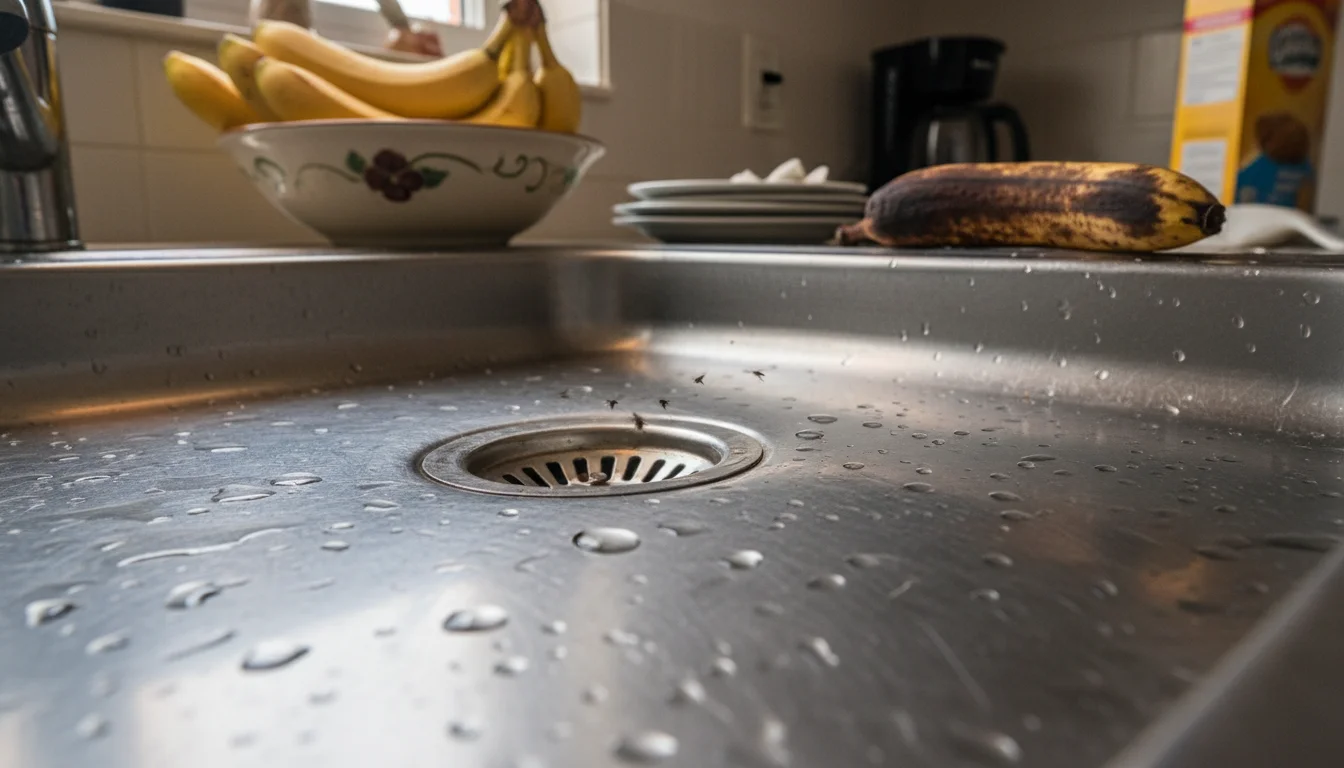
You can swat flies all day but they’ll keep coming if you don’t find where they’re breeding. Start with a systematic inspection. Check garbage bins – both indoor and outdoor – for rotting food or forgotten scraps. Look under appliances where food crumbs accumulate. Inspect pet waste in the yard daily. Check drains for organic buildup. Examine compost bins and recycling containers. If you have fruit flies specifically, look for overripe produce – one forgotten banana peel behind the fruit bowl can spawn hundreds.
Once you find the source, clean it thoroughly or remove it entirely. Be thorough. Most people find it, then half-clean it. That’s not enough.
Dispose of Food Waste Frequently
Flies breed in organic matter, and your kitchen garbage is prime real estate. During warm months, take your trash out daily – twice daily if you’re dealing with an active infestation. Don’t let food scraps sit in the bin overnight. Rinse recyclable containers before tossing them. If you have a compost bin indoors, empty it every day.
The goal is to eliminate food sources before flies find them. This sounds like basic housekeeping because it is, but most fly problems persist because people get lazy about trash discipline.
Store Produce in Sealed Containers
Fruit flies appear seemingly out of nowhere when you leave bananas, apples, or tomatoes on the counter. Store all produce – ripe or not – in the refrigerator or in sealed containers with tight-fitting lids. This applies to pet food too; don’t leave open bags in the pantry.
For bulk items like flour, rice, and grains, transfer them to airtight containers immediately after purchase. Clear containers work best so you can see when supplies run low.
Keep Trash Bins Sealed and Clean
Your garbage bin is a fly magnet, especially outdoor bins in summer heat. Use bins with tight-fitting lids – no gaps, no loose corners. Clean indoor bins weekly with hot soapy water to remove residue that attracts flies.
For outdoor bins, rinse them monthly and sprinkle baking soda at the bottom to absorb odors. Try placing a bay leaf or two at the bottom of clean bins – the scent repels them. Double-bag particularly pungent waste like meat scraps or seafood.
Boiling Water Down Drains
Kitchen drains are prime fruit fly breeding grounds. Food particles collect in the trap and on the pipe walls, providing perfect conditions for eggs and larvae. Pour a kettle of boiling water down the drain twice a day for three days to kill eggs and larvae living there.
Follow the boiling water with a half-vinegar, half-baking soda mix. The foaming action scrubs away the organic buildup that feeds the flies. Do this weekly as prevention, even after the flies are gone.
Clean Drains with Enzyme-Based Cleaners
For stubborn drain fly problems, enzyme-based cleaners work better than boiling water or vinegar. These products contain bacteria that eat the organic slime where drain flies breed. Pour the recommended amount down affected drains and let it sit overnight. Unlike harsh chemical drain cleaners, enzyme products are safe for pipes and septic systems.
Use weekly until the problem clears, then monthly for maintenance. Products like Bio-Clean or Drain Stick work well. Regular use keeps pipes clean and eliminates breeding sites before flies establish them.
Baking Soda and Vinegar Drain Flush
Half a cup of baking soda down the drain. Follow it with a cup of white vinegar. Let it fizz and bubble for about 15 minutes. Then flush it all with hot water.
The foaming action scrubs the inside of your pipes and breaks down the slime layer where drain flies lay eggs. Do this once a week if you’ve seen drain flies hovering near your sinks.
Salt, Baking Powder, and Vinegar Weekly Treatment
Mix half a cup of salt with half a cup of baking powder, pour it down the drain, then chase it with a cup of vinegar. Let it sit overnight. Flush with hot water in the morning.
The salt and baking powder combo is more abrasive than baking soda alone and does a better job scraping buildup off pipe walls. Weekly application keeps drain flies from establishing breeding sites. Rotate this with the simpler baking soda flush to keep pipes properly clean without overdoing it.