Table of Contents
The yard is where you fight mosquitoes on their own turf – and where you can actually tip the balance in your favor. Personal repellents protect you. Eliminating standing water hits their breeding. But if you want fewer mosquitoes showing up in the first place, yard-level changes are what move the needle. These five methods reduce attraction and pressure around outdoor spaces.
1. Swap to Yellow Bug Lights
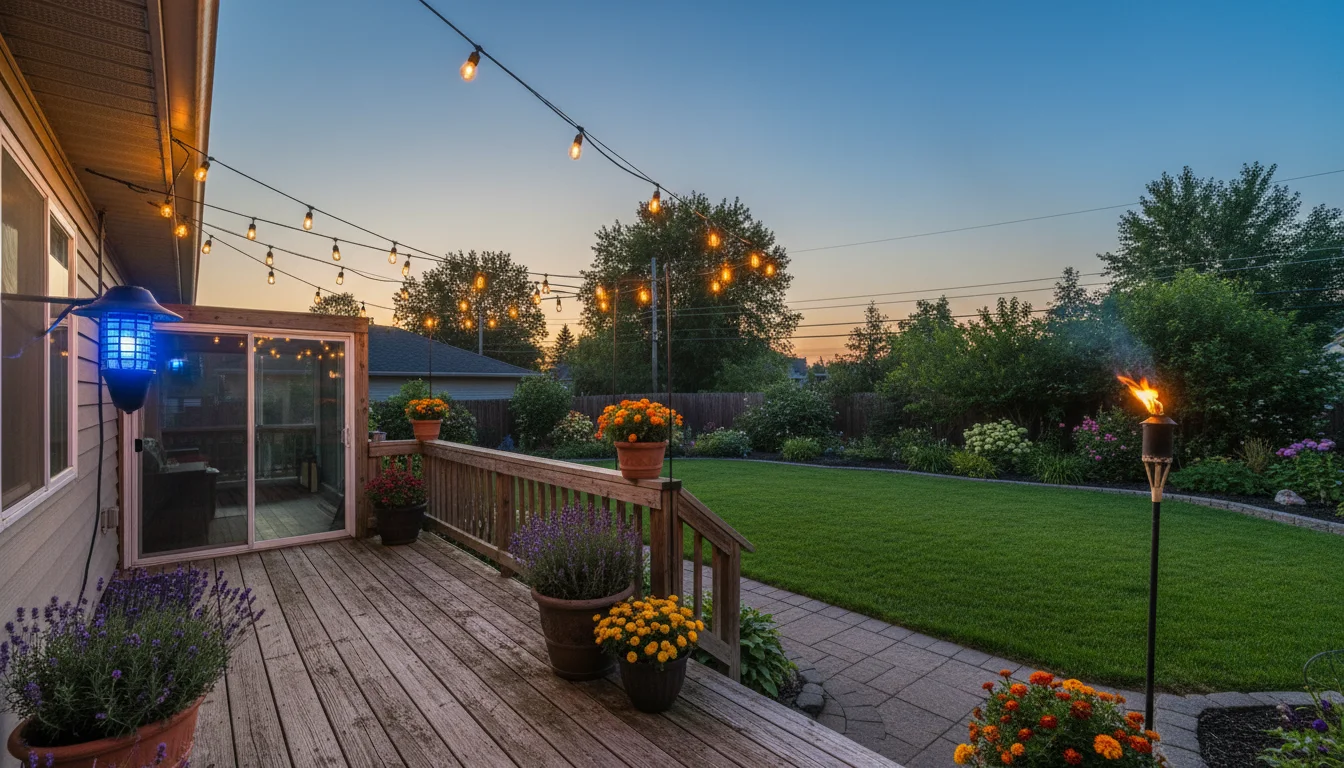
Standard white bulbs are mosquito beacons. The UV and blue wavelengths in bright white light draw every flying insect in range. Yellow "bug lights" and warm-toned LEDs emit wavelengths that are far less attractive to insects – not zero, but dramatically fewer.
Position outdoor lights away from seating areas when you can. Light the path to the door, not the chairs. Motion-activated fixtures are the better option: you get security without running a constant insect magnet all evening.
2. Keep Grass and Vegetation Trimmed
Tall grass and overgrown weeds give mosquitoes a place to shelter during the heat of the day. They don’t breed there, but they rest there – and a yard full of resting spots means a yard full of mosquitoes ready to find you at dusk.
Keep grass at 2-3 inches (5-8 cm). Trim back vegetation along fences, walls, and the edges of decks. Clear leaf litter from yard corners, since damp decaying leaves hold moisture and give them cover. Bushes pressed against the house wall are a particular problem – thin them out or cut them back a foot.
3. Burn Citronella Candles or Torches
Citronella works by masking the carbon dioxide and sweat cues that mosquitoes track. It doesn’t kill them or repel them from a wide area – it just confuses them close to the source. That’s a limited effect, but in a small seating area it’s a real one.
Place candles or torches around the perimeter of where you’re sitting, not in the middle of the table. Multiple sources create a more consistent barrier. The smoke matters as much as the scent, so don’t position them where the smoke blows into your face all evening.
They’re not a substitute for repellent on your skin, but as a yard-level layer alongside other methods, they hold their own.
4. Plant Mosquito-Repelling Plants
Citronella grass, lavender, marigolds, basil, lemon balm, catnip, and peppermint all contain oils that mosquitoes avoid. Plant them near patios, along walkways, or in containers on the deck where you can position them right where you need them.
The catch: the oils need to be released to do anything. Intact leaves in a pot don’t repel much. Brush them as you walk by, or crush a few leaves and drop them on the ground around the seating area. Potted plants are better than in-ground for this reason – you can pick them up and rub them when you want the effect.
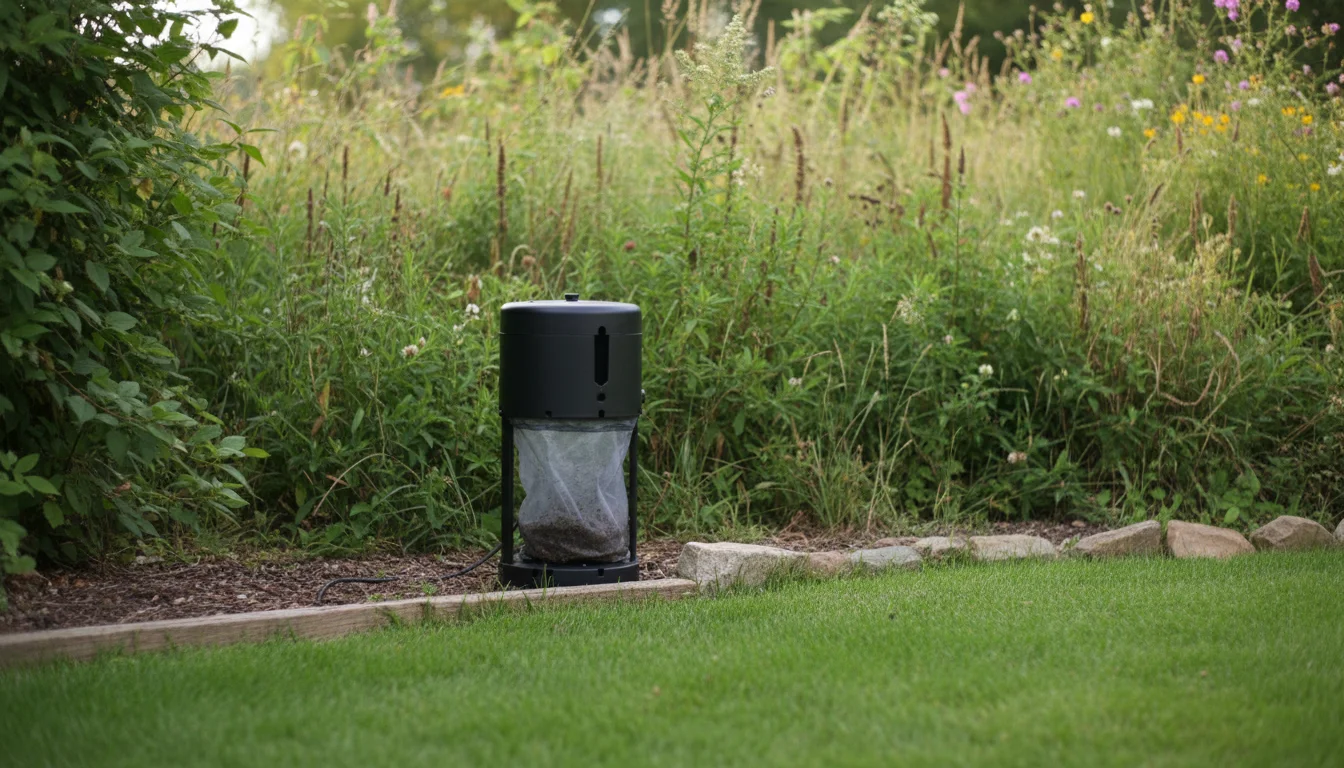
5. Use Outdoor Mosquito Traps
CO2 traps mimic human breath by releasing carbon dioxide, luring mosquitoes into a collection chamber where they die. UV and heat traps work on different attractants. Neither approach is a complete solution, but they can put a meaningful dent in the local population over time.
Placement is everything. Position traps away from where you sit – upwind and toward the perimeter of your yard – so they pull mosquitoes away from you rather than toward you. Running a trap right next to your patio does the opposite of what you want.
For best results, run them consistently during peak season. They’re most effective when combined with standing water elimination, since you’re reducing both the population and what sustains it.
CO2 traps require a propane tank or CO2 cartridge to generate the lure – factor that into the ongoing cost. UV traps are cheaper to run but attract a wider range of insects rather than targeting mosquitoes specifically. Neither replaces source reduction, but as part of a layered yard strategy they’re worth running.