Table of Contents
Traps and repellents are the reactive side of gnat control – they deal with the gnats already in your space while you work on eliminating the breeding sources. On their own, they’re a band-aid. But as part of an overall approach, they make a real difference fast. Knock down the active population while you address the root cause, and you can go from swarming to zero in a few days.
Close Windows and Doors
Open windows and propped-open doors are an invitation. Gnats are small enough that they don’t need much space – if air gets through, they do too.
Install tight-fitting screens on all windows you plan to open. Check for tears and patch them with screen repair tape. Use door sweeps on exterior doors – the rubber strip that seals the gap at the bottom. If you leave windows or doors open for ventilation, make sure screens are intact. No screen means you’re actively recruiting from the population outside.
Use Sticky Traps
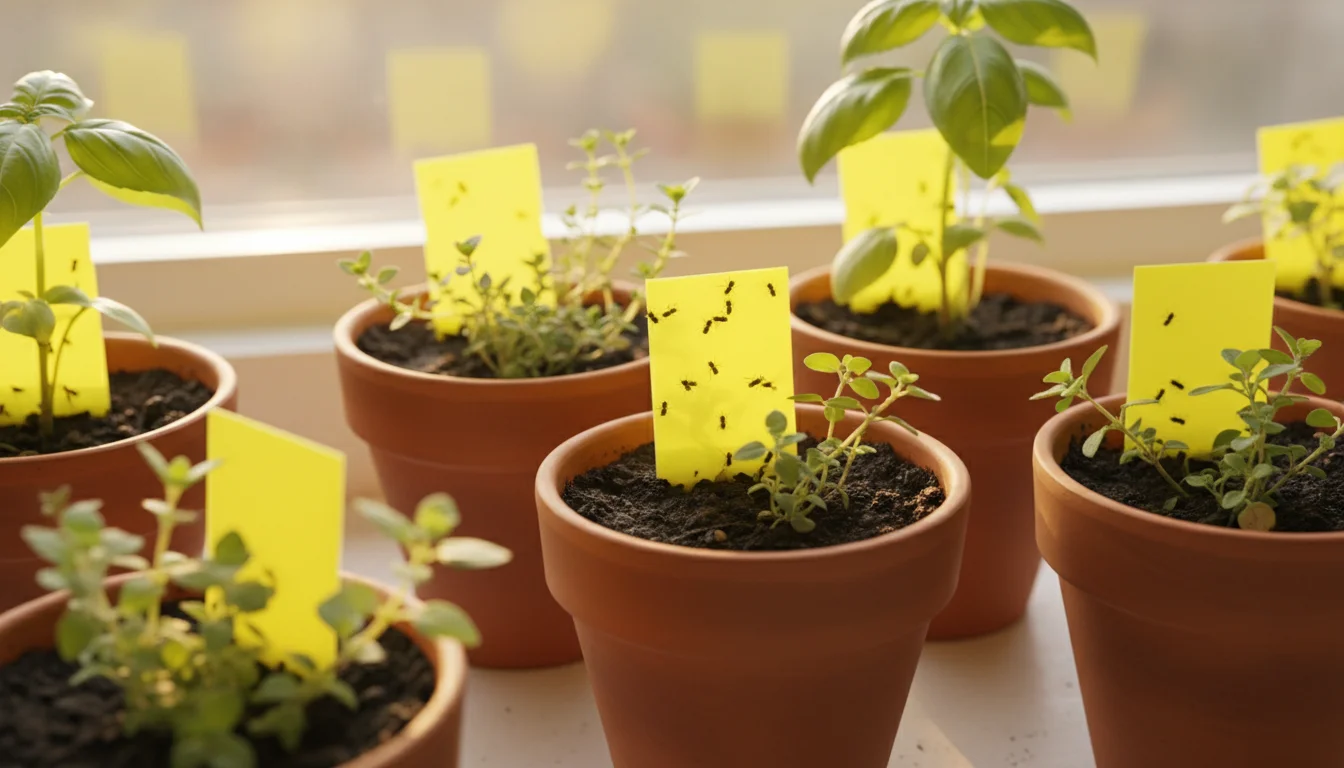
Sticky traps work by catching anything that flies across an adhesive surface. For gnats specifically, yellow-colored traps exploit a visual attraction response – gnats are drawn to yellow wavelengths.
Hang traps just above houseplant foliage or near infested areas. They catch adults before they can lay more eggs. Replace traps when they’re full or lose their stickiness.
Sticky traps won’t eliminate an infestation alone, but they reduce the active population while other methods address the source. They’re also useful as a monitoring tool – where you catch the most gnats tells you where to focus your cleaning efforts.
Spray Vinegar
Fill a spray bottle with equal parts white vinegar and water. Spray it around windowsills, doorframes, and anywhere you see gnats gathering. They dislike the smell and will avoid treated areas. Reapply every few days.
Your kitchen will smell like a salad for a bit, but it fades. This works best as a perimeter treatment – not a direct kill method, but a deterrent that pushes gnats away from surfaces and entry points you want to keep clear.
Use Basil Leaves
Put a small bowl of fresh basil leaves on your kitchen counter or near problem areas. Gnats dislike the scent. You can also grow a basil plant on your windowsill for continuous coverage.
It’s not going to solve a serious infestation, but it’s genuinely effective at reducing gnat activity in localized areas. And you get fresh basil for cooking. Hard to argue with that.
Keep Food Packaging Tightly Closed
Gnats can smell fruit through a plastic bag. Use sealed containers for produce, especially bananas, tomatoes, and anything overripe. If you have a fruit bowl on the counter, check it daily and toss anything that’s starting to go soft.
Open bags of flour, sugar, or grains are also targets. Transfer them to airtight containers – gnats will find their way in and lay eggs in the food. This is both a prevention measure and a trap removal: take away the attraction and fewer gnats make it indoors.
Use Insect Repellent Sprays
If natural methods aren’t cutting it, grab an indoor insect spray labeled for gnats or flying insects. Spray around entry points, drains, and known breeding areas. Follow the label instructions.
These work fast. But they’re treating the symptom. You still need to fix the moisture and food source issues or they’ll come back within a week. Use the spray to get immediate relief while you address what’s actually attracting them.