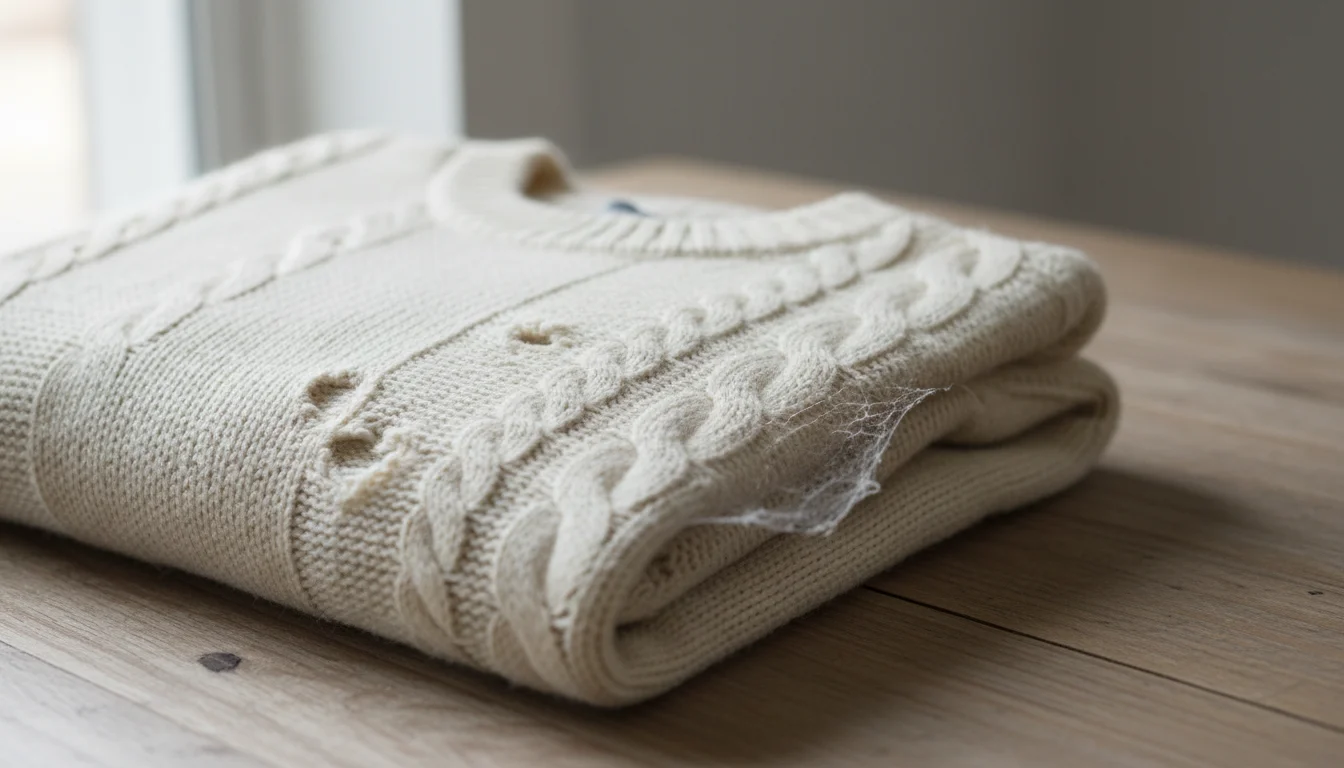
You find it when you pull out the wool coat in October: small ragged holes, sometimes a silky webbing along the seams. Clothes moths (the larvae specifically – the adult moths don’t eat anything) have been living in your closet all summer, working through natural fibers. Silk, wool, cashmere, fur, and feathers are all targets. Synthetic fabrics get left alone. The fix involves treating the garments and the closet itself, because killing what you can see isn’t enough if eggs are still in the carpet or along the baseboards.
1. Wash or Dry Clean Infested Fabrics
Heat kills clothes moths at every life stage. Wash anything that can handle it in water at 120°F (49°C) or hotter and run it through a full cycle in the dryer on high heat for at least 30 minutes. That temperature range is lethal to eggs, larvae, and adults.
For delicate items that can’t handle hot washing – wool knitwear, cashmere, silk, vintage pieces – dry cleaning is the answer. The solvents kill the pests without damaging the fabric. Tell the dry cleaner you’re treating for moths; they’ll know which process to use.
Check the care label on every item before choosing your method. "Dry clean only" on a wool sweater means exactly that – hot water washing will shrink and felt it permanently. Natural fiber items that have never been treated for shrinkage (vintage wool, handknit pieces) are particularly vulnerable.
Inspect everything before it goes back into the closet. Don’t skip inspection because a garment looks fine on the outside; larvae often feed from the inside of seams and folds first – you’ll find damage along the hem or cuff before you find it on the visible surface. Items that can’t survive washing or dry cleaning go in the freezer instead.
2. Empty and Paint the Closet with Insect-Resistant Paint
This is the nuclear option. If you’ve been dealing with clothes moths for months and they keep coming back, it’s time to treat the closet itself, not just the clothes.
Empty everything out completely. Vacuum every surface – ceiling, walls, floor, and especially the carpet if there is one, because larvae and eggs settle into carpet fibers along the baseboard. Go over the seams and corners with the vacuum attachment. Then immediately seal the vacuum bag in a plastic bag and take it outside. If you have a bagless vacuum, empty the canister outside and wipe it out with a damp cloth.
Wipe all surfaces down with undiluted white vinegar and let them dry. Then repaint with paint that contains insecticides or mold inhibitors. Cedar-scented paint exists specifically for closets – it’s less about an insecticide barrier and more about creating an ongoing deterrent. The paint creates a surface that prevents eggs from adhering and discourages re-infestation. Let it cure for a full 48 hours with the closet aired out before putting anything back in.
This is overkill for a minor problem. It makes sense if conventional methods haven’t worked or if the infestation has been running for multiple seasons. Also consider whether you need to treat the carpet in the surrounding room – clothes moths aren’t limited to the inside of the closet.
3. Freeze Infested Items
Cold works just as well as heat and is safe for virtually any fabric. Seal infested clothing, blankets, or fabric items in a plastic bag, press out the air, and put them in the freezer for at least 72 hours. A full week is safer.
At -4°F (-20°C) or colder, all life stages die – eggs, larvae, pupae, and adults. Most home freezers run between 0°F and 5°F (-18°C to -15°C), which is cold enough if you leave items in for the full week.
After freezing, take the bags outside to open them and shake the items out. You don’t want dead moths and eggs falling onto your closet floor. Wash or dry clean fabrics after removing from the freezer before returning them to storage.
One common mistake: putting infested items in the freezer loose, then placing cleaned items back in the same freezer drawer afterward. The larvae and eggs you shook out during inspection can survive on the freezer surface long enough to transfer. Wipe down the freezer interior after any freezing treatment and seal post-treatment items properly before they go back in.