Table of Contents
When a groundhog has burrowed under your deck, torn up your garden beds, or started undermining your foundation, deterrents aren’t the answer anymore. You need to get it out. These methods range from DIY live trapping to professional wildlife control, and the right choice depends on your situation, your local laws, and how many groundhogs you’re dealing with. Check your state regulations before you start – groundhog management rules vary significantly.
Block Access Under Structures
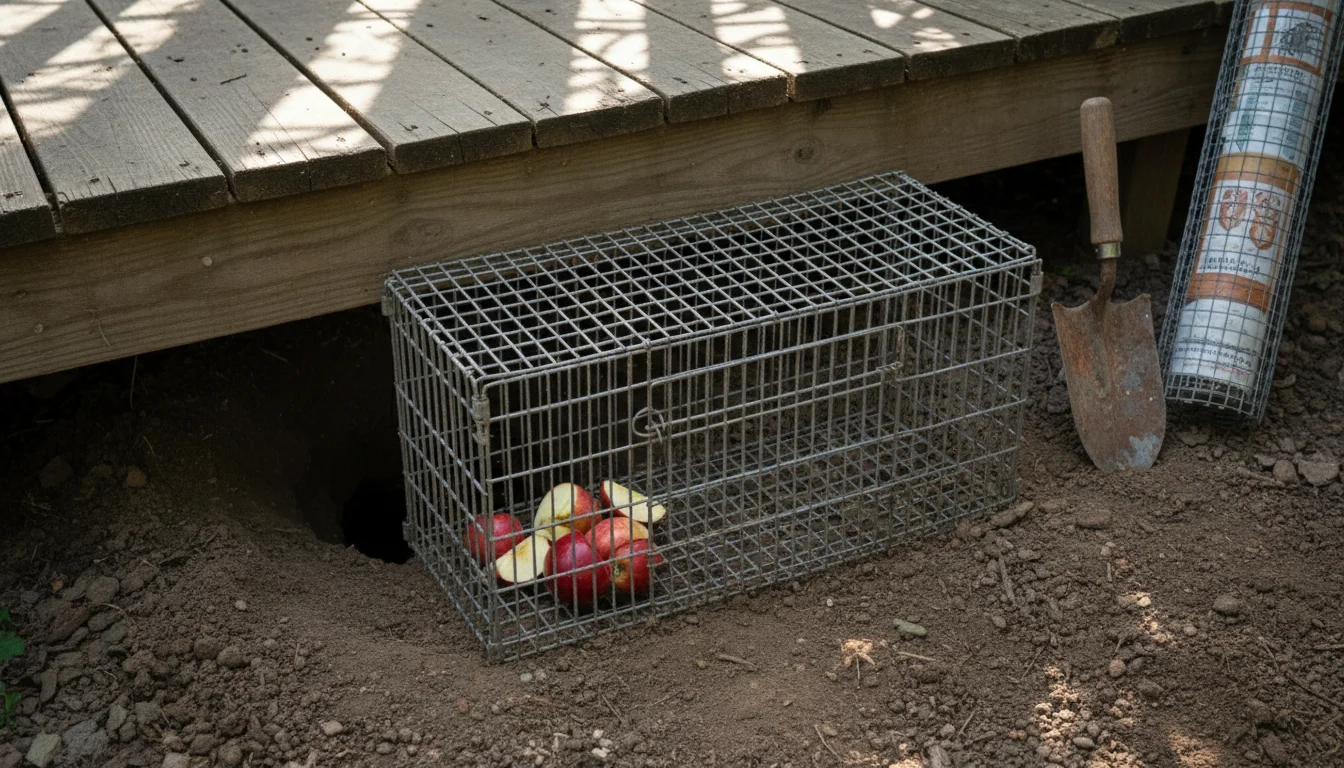
Groundhogs love burrowing under decks, sheds, patios, and sidewalks – easy digging and good cover. Screen off these areas with hardware cloth or welded wire fencing buried 12 inches deep.
Before you seal anything, check that nothing is actively living there. Shine a flashlight in, watch for activity for a few days, and look for fresh digging near the entrances. Seal an occupied space and you’ll have a much worse problem on your hands.
Use Live Traps
Live traps catch without killing. They’re metal boxes with one-way doors – the animal goes in for the bait, the door closes behind it. Bait with peanut butter, apple slices, cantaloupe, or cabbage near the entrance.
Check traps every few hours. Leaving an animal trapped in summer heat for hours is both cruel and counterproductive. Live traps are slower than lethal alternatives and require more hands-on work, but they work.
Place the trap near the burrow entrance along the groundhog’s regular travel path. Cover it with a cloth or leaves to make it feel less exposed – groundhogs are suspicious of unfamiliar objects in the open. Don’t relocate catches to parks, neighbors’ yards, or anywhere near human structures. You’re just moving your problem onto someone else.
Relocate Trapped Groundhogs
If local regulations allow it, relocate trapped groundhogs at least five miles away from your property in suitable habitat – woodlands, fields, away from residential areas. Check state wildlife laws first, because many jurisdictions prohibit relocation due to disease transmission concerns and territorial conflicts with established groundhog populations.
Transport the trapped animal in a covered cage to reduce stress. Release it during daylight hours and open the trap door from behind or with a rope. Relocation sounds straightforward but it’s often illegal, and survival rates for relocated animals aren’t great. Know your local rules before committing to this approach.
Humane Euthanization
If relocation isn’t legal in your area and you’ve trapped a groundhog, you may need to euthanize it. Most states require this to be done humanely – either by a licensed wildlife control operator or using approved methods (typically a single gunshot to the head).
This is unpleasant but it’s often the only legal option for nuisance wildlife. Don’t attempt drowning, poisoning, or blunt force – these are illegal, inhumane, and you can face animal cruelty charges. If you’re not comfortable with euthanization, hire a professional who’s trained and licensed to handle it.
Install One-Way Exclusion Doors
The most effective humane method for animals already occupying a burrow under a structure is the one-way exclusion door. These devices allow groundhogs to exit but block re-entry.
Install the door over the main burrow entrance. The door swings outward freely but can’t be pushed back in. Over several days, the occupants leave for food and water and can’t get back in. Once you’re certain the burrow is empty – watch for 3-5 days with no activity – seal the entrance permanently with hardware cloth buried 12 inches deep.
One-way doors work best when animals aren’t raising young. In spring and early summer, check for kits before installing exclusion devices. Sealing young animals inside is both inhumane and creates a decomposition problem later.
Shooting (Where Legal)
In rural areas where discharge of firearms is permitted and you hold a valid hunting license, shooting is an effective removal method during legal hunting seasons. Check state game laws for season dates, bag limits, and weapon restrictions. Use a rifle or shotgun appropriate for small game, practice safe firearm handling, and ensure a clear backstop.
This isn’t legal in most suburban or urban areas, and it’s not an option for most homeowners. If you’re not an experienced shooter or you’re uncertain about local ordinances, don’t attempt this.
Call a Wildlife Control Specialist
If you’ve got multiple burrows, structural damage, or groundhogs that keep coming back after DIY attempts, hire a licensed nuisance wildlife control operator. They’ll trap and remove groundhogs legally, identify entry points you missed, and handle exclusion work properly.
It costs money – typically $150-$500 depending on scope – but it’s faster and more reliable than DIY trial-and-error, especially if you’re dealing with structural damage under a foundation or deck.