Table of Contents
Brown recluse spiders don’t wander into yards randomly. They’re there because you’ve given them somewhere to live – a woodpile, a leaf pile, overgrown shrubs touching the house, gaps in the foundation they can duck into. Remove the habitat and the population drops. Leave it in place and no amount of spraying will solve anything long-term. These six steps address the yard conditions that let brown recluses establish and multiply.
Seal Entry Points
The line between yard problem and house problem is thin, so close the gap before you deal with anything else. Brown recluses are flat-bodied spiders that can squeeze through surprisingly small openings. Any gap around your foundation, under doors, around utility penetrations, or in your soffits is a potential entry point.
Check the full perimeter of your home’s exterior. Where utility lines enter the house, where siding meets the foundation, gaps around vents and crawl space covers. Seal cracks with caulk or hydraulic cement. Use steel wool packed into larger gaps before applying expandable foam. Install door sweeps on any exterior door with visible daylight underneath. A thorough seal job done once is more valuable than repeated treatments that never address the actual access route.
Clear Yard Debris
Brown recluse spiders need shelter. Woodpiles, leaf piles, stacked lumber, old furniture left outside, tarps covering equipment, junk against the house – all of it provides dark, dry hiding spots. Spiders aggregate in these areas, feed on other insects attracted to the same debris, and use it as a base for moving into the structure.
Move firewood to a location at least 20 ft (6 m) from the house. Rake up leaves and bag them or compost them in a bin away from the structure. Clear out anything that’s been leaning against the exterior walls. If you have garden tools or seasonal equipment stored outside, organize it into a sealed shed rather than leaving it in open piles. The goal is eliminating every spot within striking distance of the house where a spider can set up.
Relocate and Elevate Firewood
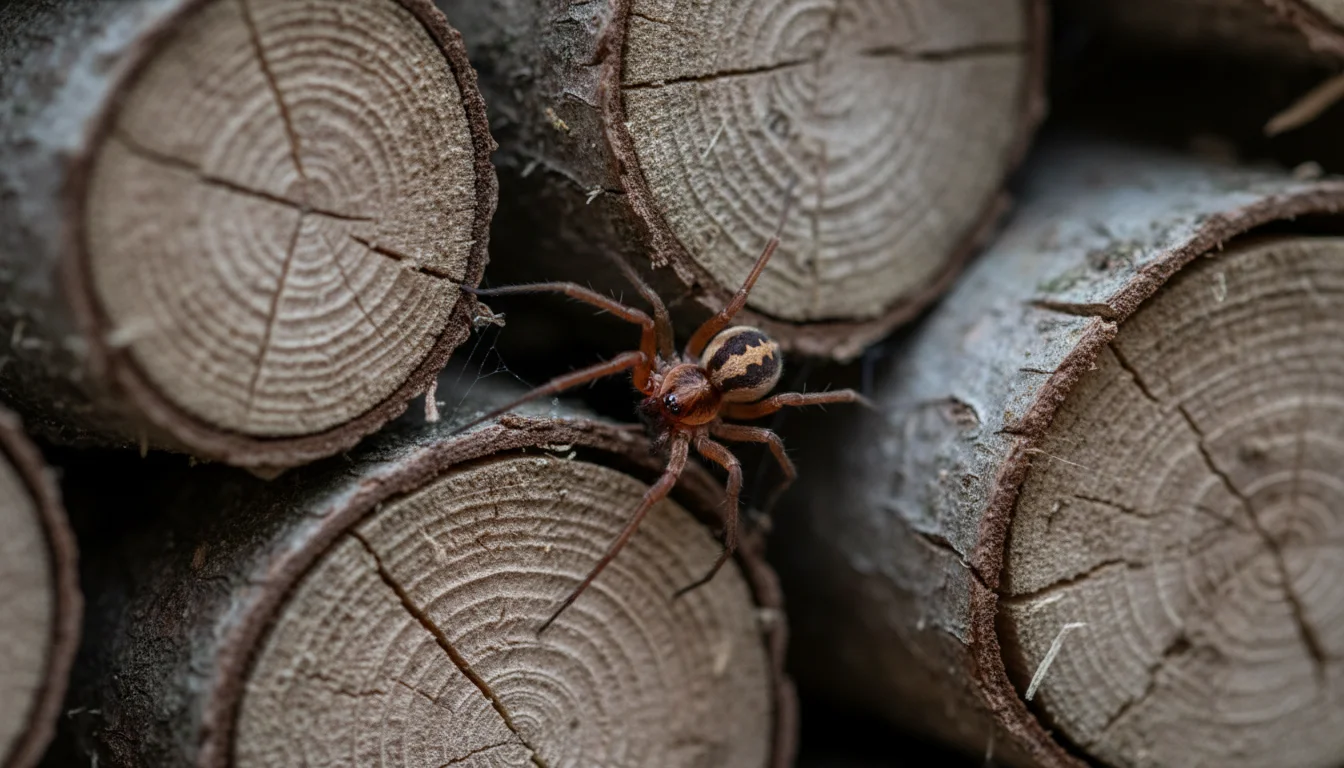
Firewood stacks deserve their own mention because they’re the single most common brown recluse magnet in suburban yards. Stacked wood creates dozens of tight, dark gaps at exactly the right temperature and humidity for spider habitat. If the pile sits against your house, spiders don’t even need to cross open ground to reach the structure – they’re already there.
Move the woodpile to a detached shed or at least 20 ft (6 m) from the house. Then elevate it off the ground on a proper rack or on pallets. Ground contact accelerates moisture, attracts the insects spiders feed on, and makes the stack more attractive to ground-level arthropods generally. Only bring in wood you’re going to burn immediately. Don’t stack it inside the house for "easy access" – you’re carrying spiders in with it.
Clear Vegetation Near House
Dense plantings against your foundation are spider habitat. Shrubs that touch the wall, ground cover that runs right up to the siding, climbing vines on the structure – these create exactly the dark, sheltered, humid microclimate that brown recluse spiders prefer. They also block you from inspecting the foundation for cracks and gaps.
Trim everything back at least 12 in (30 cm) from the exterior walls and foundation. Pull ivy and other climbing plants off the structure entirely. Move compost bins and garden debris piles to locations well away from the house. The less vegetative cover adjacent to the building, the fewer spiders make the transition from yard to structure.
Trim Vegetation Away from House
Tree branches that overhang or touch your roofline give spiders (and every other arthropod) aerial access to the upper story. Brown recluses are decent climbers and will use branch contact to reach soffits, attic vents, and high window frames.
Trim branches so there’s at least 6 ft (1.8 m) of clearance between any branch and the roof, soffits, or upper walls. This also reduces leaf accumulation in gutters and on the roof surface, which creates additional debris-based habitat. It takes an afternoon with a pole saw but removes an entire category of entry route.
Install Door Sweeps and Weatherstripping
A lot of the brown recluses that end up inside came through gaps under exterior doors and around windows rather than through wall cracks. Stand inside at night with the interior lights on. If you can see daylight under the door, a spider can get through.
Install rubber-blade door sweeps on every exterior door. The sweep needs to make full contact with the threshold all the way across – check that it doesn’t bow up in the center. Add adhesive foam weatherstripping around door frames where the door doesn’t seat tightly. Replace cracked or compressed weatherstripping on windows. Pay particular attention to doors leading to the garage – garage interiors are prime brown recluse habitat, and the interior door is often the worst-sealed entry point in the house.