Table of Contents
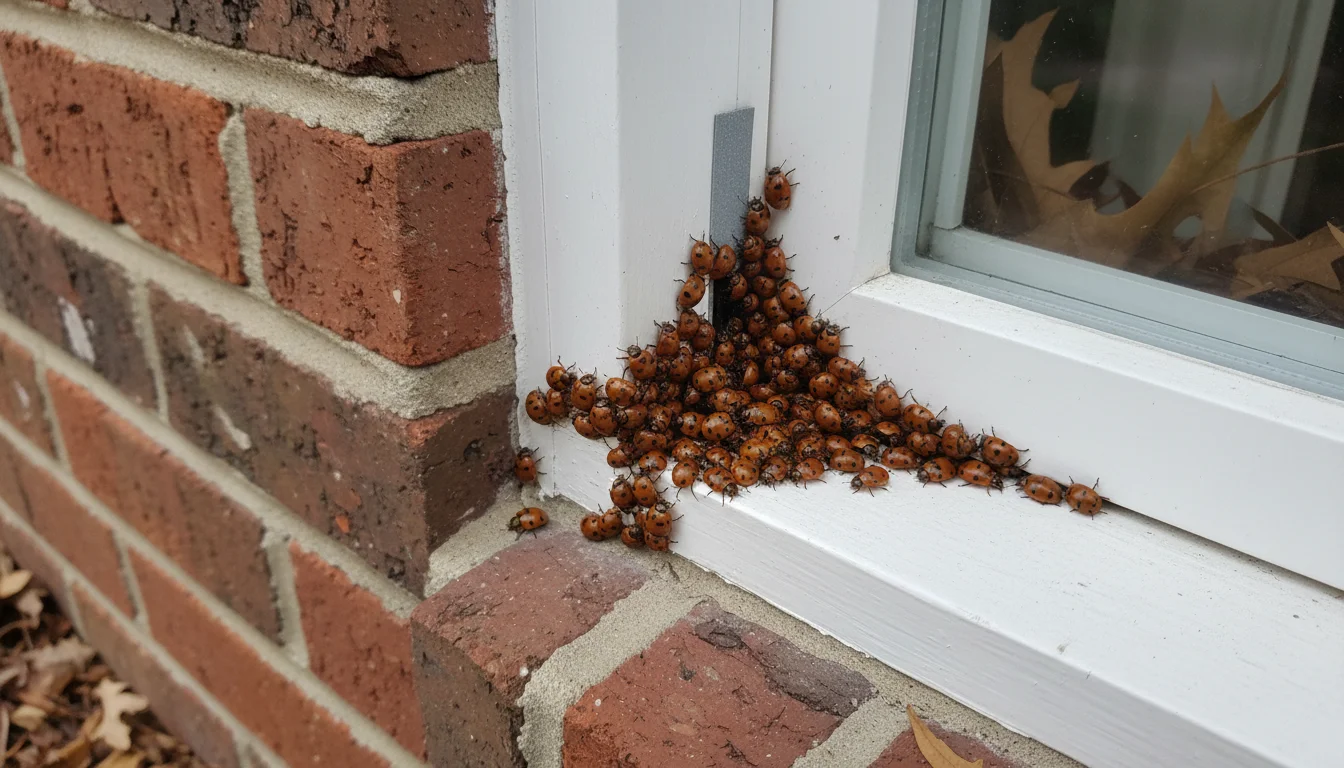
Ladybugs in the garden are a sign of an aphid problem – they follow the food. That’s fine until fall, when they start hunting for overwintering spots and your house looks like an excellent candidate. The goal isn’t to eliminate them (they eat aphids and you want that), it’s to remove the conditions that make your garden and your walls irresistible. Fix the upstream problem and the congregation shrinks on its own.
Maintain a Tidy Garden
This is the highest-leverage thing you can do. Ladybugs overwinter in garden debris, leaf piles, and dense vegetation. The more shelter you provide near your house, the more bugs spend the autumn staging there before pushing inside when the cold hits.
Clear fallen leaves, remove dead plants, and cut back overgrown vegetation in fall. Pay particular attention to the area within 10 feet (3 m) of your foundation – this is where the action happens. A clean perimeter shrinks the local population and leaves them fewer places to congregate before they start looking for gaps.
Remove or relocate wood piles, rock piles, and dense shrubbery that touch your house. These are perfect overwintering spots positioned right at your entry points. It’s tedious fall work, but nothing else you do here matters as much.
Remove Aphid-Attracting Plants
Ladybugs go where the food is. Roses, nasturtiums, and many common vegetables are reliable aphid hosts. If you’ve got plants that consistently draw aphid colonies, you’re consistently drawing ladybugs.
Check plants regularly through the season. When you spot aphids, treat them promptly – a quick blast of water knocks off most colonies, and insecticidal soap finishes the job if needed. Fewer aphids means fewer ladybugs deciding your garden is worth their time.
If you’re keeping aphid-prone plants regardless, move them away from house walls and the foundation. The farther the food source from your entry points, the less likely the bugs hunting that food are to notice those entry points.
Plant Garlic and Chives as Deterrents
Garlic, chives, and other alliums repel aphids at the scent level. Plant them around garden borders and near your foundation and they create a perimeter that aphids avoid – which means fewer aphids, which means fewer ladybugs with a reason to hang around.
This won’t help if you’re already dealing with an active congregation. It’s a next-year play. But garlic and chives grow easily, cost nothing to maintain, and you can eat them. Mint, lavender, and rue do the same job if you want variety, though mint needs a container or it’ll take over.
Use Fine Mesh Netting
For specific plants or beds that keep attracting trouble, fine mesh netting is a direct solution. Drape it over vulnerable plants, secure the edges so nothing can crawl underneath, and beetles can’t get to the plants at all.
Use netting with holes smaller than 1/8 inch (3 mm) – anything larger and adult beetles can push through. Netting works best as a targeted measure for seedlings, young transplants, or whatever plant in your garden consistently draws the most attention. Pull it once plants are established or ladybug activity drops.
Row Covers
For vegetable beds, floating row covers do the same job at scale. These lightweight fabric sheets drape over entire rows, let sunlight and rain through, and create a complete barrier between your crops and anything flying or crawling. Anchor the edges with soil, pins, or rocks so nothing works its way underneath.
The timing matters. Install row covers before ladybug activity picks up, not after. Once they’re already in the bed, covers trap as many in as they keep out. For crops that need insect pollination, pull the covers during flowering, then replace them.
Row covers won’t stop the broader congregation problem – if your garden is full of aphids and debris, you’ll still have a lot of bugs around the perimeter. They’re a crop protection tool, not a population management one. Use them alongside the habitat and food source changes, not instead of them.