Table of Contents
Stink bugs don’t break in – they find gaps you didn’t know existed and walk through them. They’re looking for a warm place to spend winter, and from September through November they’re actively hunting for it. If your house has cracks, gaps, or loose screens, they’ll find them. Exclusion is the only long-term fix: seal the entry points, eliminate what guides them to you in the first place, and they overwinter somewhere else.
Repair Damaged Screens
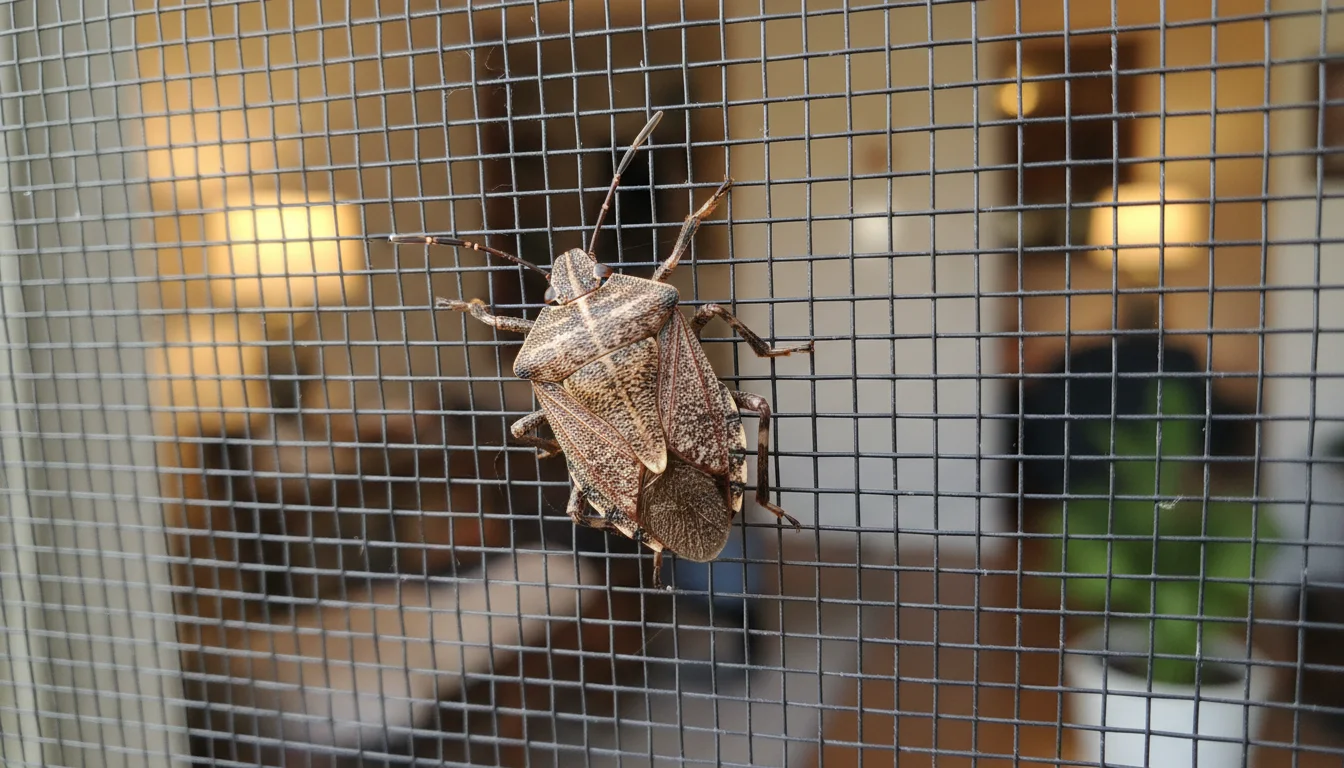
Check every window and door screen for holes, tears, and loose edges. Stink bugs don’t need a large opening – they squeeze through surprisingly small gaps. Patch small holes with screen repair tape or replace torn screens entirely.
Inspect the frames too. A screen that doesn’t sit tightly in its frame leaves a gap around the perimeter even if the mesh itself is intact. Foam weatherstripping closes those frame gaps. Don’t forget attic vents and crawl space openings – those get overlooked and they’re major entry points. A single damaged vent screen can admit hundreds of bugs over a season.
Do this in late summer before they start moving. Screen repair is cheap and blocks multiple pest species at once.
Check Weather Stripping
Weatherstripping wears out. The rubber or foam around doors and windows compresses, cracks, and pulls away from frames over time, leaving gaps that stink bugs find without any effort. Test your doors and windows on a windy day by running your hand along the closed edges – if you feel air movement, bugs can get through.
Replace worn weatherstripping with self-adhesive foam tape or V-strip seals. Focus on exterior doors first since they take more abuse and wear faster. For windows, check both the sash seal and the frame seal. The goal is contact pressure when closed without preventing the door or window from shutting properly.
Fresh weatherstripping blocks bugs and cuts heating costs in winter. It’s one of the better dual-purpose maintenance tasks you can do in late summer.
Seal Entry Points
Go around the exterior of your house systematically. Check where utility lines enter the building, gaps around door and window frames, spaces under garage doors, and any opening around vents or pipes. Look for cracks in siding, gaps in soffits or fascia boards, and foundation cracks. The places most people miss: the gap between the wall and the top of the foundation sill, the spaces around air conditioning lines, and the corners where siding meets window frames.
Seal small gaps with exterior-grade caulk. Use expandable foam for gaps wider than about a quarter inch. For any gap where bugs might push through foam before it cures, stuff steel wool in first – stink bugs won’t chew through it and it holds the foam in place as it expands. For larger structural openings like vents or structural gaps in older homes, use metal mesh or hardware cloth cut to size and secured with screws or staples.
Do a second pass after the first. One missed gap can let in as many bugs as no sealing at all. Any crack wide enough to fit a credit card edge is wide enough to admit a stink bug.
Reduce Outdoor Lighting
Lights attract insects, and insects attract stink bugs. The concentration of activity around your exterior lights creates pressure right at your entry points. Switch outdoor lights to yellow bulbs or warm-colored LEDs, which attract significantly fewer insects than white or cool-toned lights.
Position lights away from doors and windows where you can. Motion-activated lights are better still – they provide security illumination without running all night as a beacon. Reducing insect activity around your perimeter reduces everything that follows from it.
Shut Window Blinds at Night
Stink bugs flying at dusk navigate toward light sources. The glow from inside your house reads as warmth and shelter to them. Close blinds, curtains, or shades after dark and you remove one major navigation signal they’re using to find you.
This matters most during their fall migration window (September through November) when they’re actively searching for overwintering sites. Combine it with switching outdoor lighting to warm-toned bulbs and you’ve made your house significantly less visible to anything flying around looking for a way in.
Remove Food Sources
Stink bugs feed on plants before they migrate indoors. The garden and overgrown weedy areas around your house are their staging ground – they eat, build numbers, and eventually move toward your walls as temperatures drop.
Keep the zone within 10-15 feet (3-5 m) of your house tidy. Clear weeds from garden borders and along your foundation. Clean up fallen fruit promptly. Remove debris piles and dense ground cover near the structure. The goal isn’t a sterile perimeter but a less hospitable one – if there’s nothing to eat and nowhere to shelter near your house, they establish elsewhere and your exclusion work only has to deal with what finds you anyway.