Table of Contents
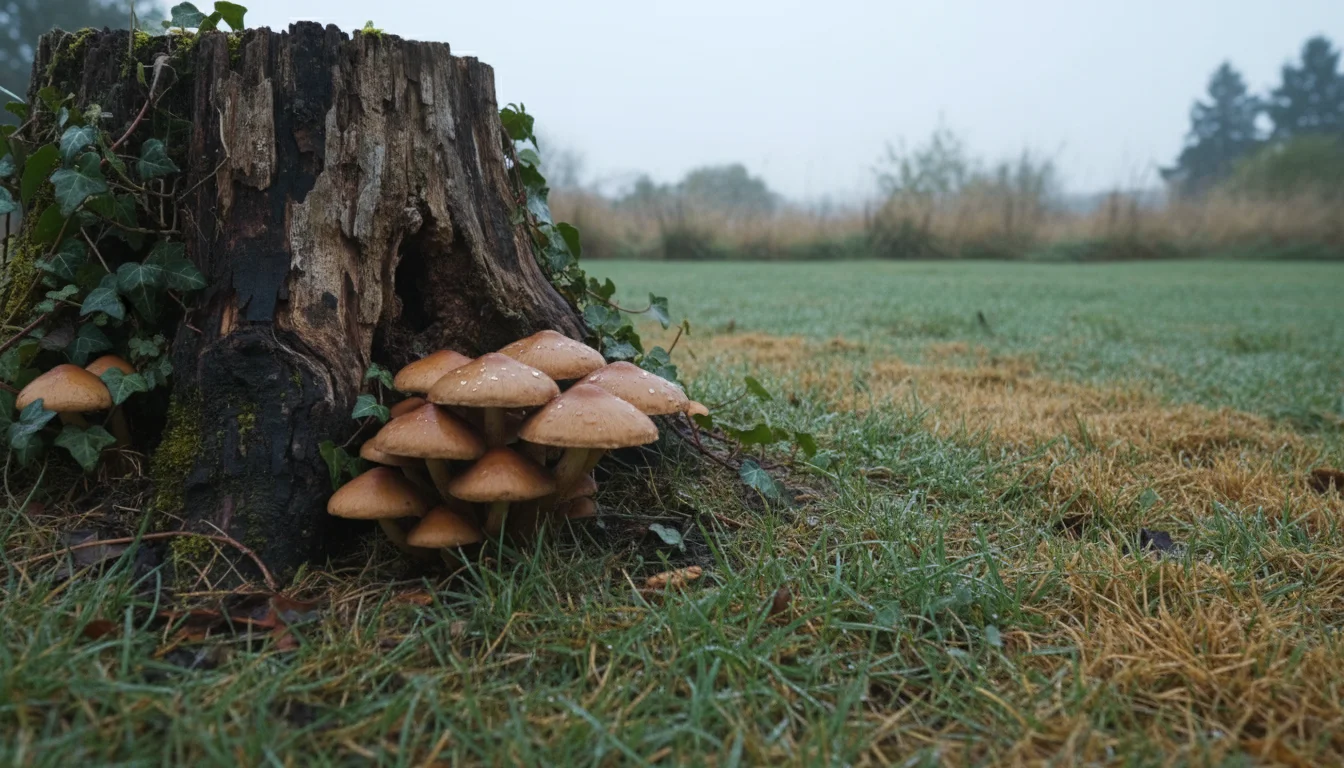
Pulling mushrooms doesn’t fix anything. The fruiting bodies you see above ground are just the tip of it – the actual fungus is a network of mycelium running through the soil beneath. Pull the mushrooms and more appear within days. The only way to stop them is to remove what’s feeding them: moisture, shade, and decaying organic matter underground.
1. Cut Off the Water Supply
Mushrooms need moisture, and they’re telling you there’s too much of it in your soil. If you’re watering daily or running sprinklers for 30 minutes at a stretch, pull back to deep, infrequent sessions – once or twice a week at most, watered in the morning so the grass dries out by evening.
Check for the obvious problems too: leaky hose connections, pooling near downspouts, or areas where water from neighboring properties runs in. Fix those first. Reducing surface moisture is the fastest way to make conditions less hospitable.
2. Improve Drainage
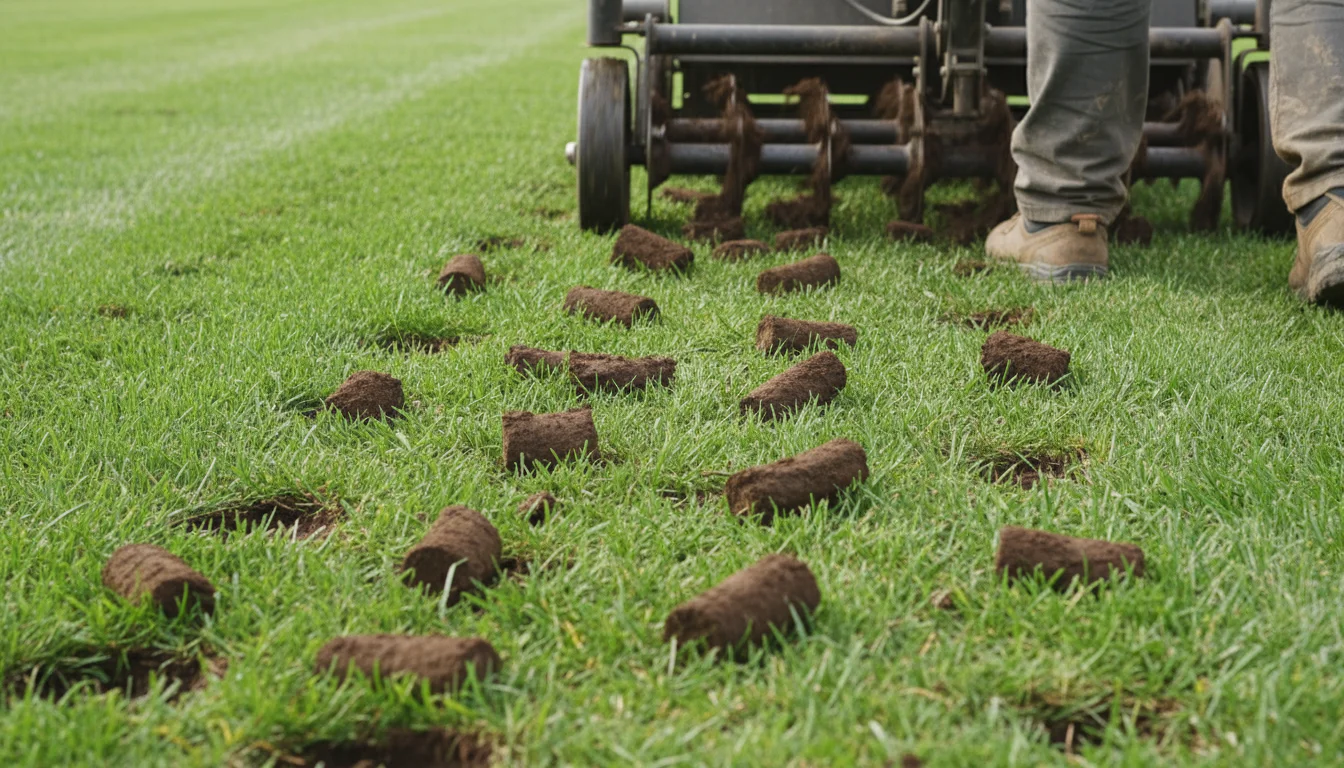
Compacted soil holds water at the root level long after the surface looks dry. That’s exactly the condition fungal mycelium thrives in. Core aeration – the kind that pulls actual plugs of soil out, not the spike-roller type that just compresses things further – breaks up compaction and improves drainage through the soil profile.
Do it in spring or early fall when the grass is actively growing. For persistently wet spots or low-lying areas that collect runoff, aeration alone may not be enough. In those cases, regrading the area or cutting in a simple French drain solves it properly. Mushrooms don’t persist in soil that drains well.
3. Remove Decaying Organic Matter
Buried organic matter is what feeds the mycelium. Old tree stumps, roots left behind after tree removal, buried wood chips from previous landscaping, thick layers of decomposing mulch – all of it feeds fungal networks for years. The mycelium doesn’t care whether the wood is above ground or below it; anything cellulose-based that’s decomposing will sustain it.
Dig up what you can reach. Old stumps should be ground down at least 4-6 inches (10-15 cm) below the soil line, not just cut flush – the root system continues decomposing underground and can feed mushrooms for a decade or more. Clear dense thatch and leaf litter from the yard. Pet waste and fallen fruit accumulate on the surface and add to the problem.
If you can’t identify buried organic material but mushrooms keep appearing in the same location, that’s usually a buried stump or large root from a tree that was removed years ago. Try digging down 6-12 inches (15-30 cm) in the center of the mushroom cluster. You’ll likely find the food source. Removing the food source is the only way to permanently starve the mycelium.
4. Dethatch Your Lawn
Thatch is the mat of dead grass stems and roots that builds up between the soil surface and the green blades. A thin layer (under half an inch / 12 mm) is harmless. More than that retains moisture, blocks sunlight from reaching soil, and gives mycelium a comfortable layer to spread through.
Rent a power dethatcher in early spring or fall and run it over the lawn. The debris it kicks up looks alarming – rake it all up and bag it. Your lawn will look rough for a week, then bounce back visibly healthier. It’s one of the more impactful single tasks you can do for mushroom-prone lawns.
5. Increase Sunlight
Shade is the other half of the equation. Mushrooms don’t thrive in dry, sunny conditions – they prefer the damp corners where a canopy keeps things cool and dark.
Trim back overhanging branches, prune shrubs away from the turf, and thin out dense plantings that cast extended shade across the lawn. Even an extra hour of direct sun per day shifts conditions enough to matter. Hire an arborist for large tree canopy work – don’t just take branches off randomly, since improper pruning leaves large wounds that invite disease.
If you have a persistently shaded north-facing yard under a heavy tree canopy, changing the canopy enough to fix a mushroom problem may not be practical. In that case, concentrate on moisture management, organic matter removal, and drainage – those are the variables you can actually control in a heavily shaded space.
6. Aerate and Overseed
Thin or patchy turf is prime territory for mushroom establishment. Dense, healthy grass covers the soil surface and creates conditions that compete with fungal fruiting. Bare spots and weak areas give everything else a foothold.
After aerating, overseed to fill gaps. Rake bare areas to loosen the top half-inch (1 cm) of soil, spread seed at the label’s recommended rate, top-dress lightly with compost, and keep it moist for two weeks while it establishes. Cool-season grasses (fescue, bluegrass, ryegrass) do best overseeded in early fall; warm-season grasses (bermuda, zoysia, st. augustine) in late spring. Both timing windows work because the grass is in active growth and the soil temperature is ideal for germination.
Don’t skip the aeration step before overseeding in a mushroom-prone lawn. The compaction that holds water also prevents new seed from making good soil contact. Overseeding onto hard, compacted soil gets poor germination. Aerate first, overseed second. A thick lawn is the long-term solution – once turf is dense and actively growing, mushrooms struggle to push their way through.
7. Apply Nitrogen-Rich Fertilizer
Fungal mycelium feeds on carbon-heavy organic matter. Flooding the soil with nitrogen from lawn fertilizer shifts the microbial balance, speeding up decomposition of whatever organic material remains and leaving less for the fungi to feed on long-term.
Use a fast-release nitrogen fertilizer per package instructions. Don’t overcorrect – too much nitrogen burns grass and creates new problems. This is a supporting measure, not the centerpiece. Combined with removing buried organic matter and improving drainage, it accelerates the process of making the soil inhospitable.