Chemical treatments won’t solve a mushroom problem on their own – the mycelium runs deeper than any surface spray reaches. But these three treatments are genuinely useful for spot-treating active mushrooms, disrupting surface mycelium, and buying time while you address the drainage, moisture, and buried organic matter that’s actually sustaining them.
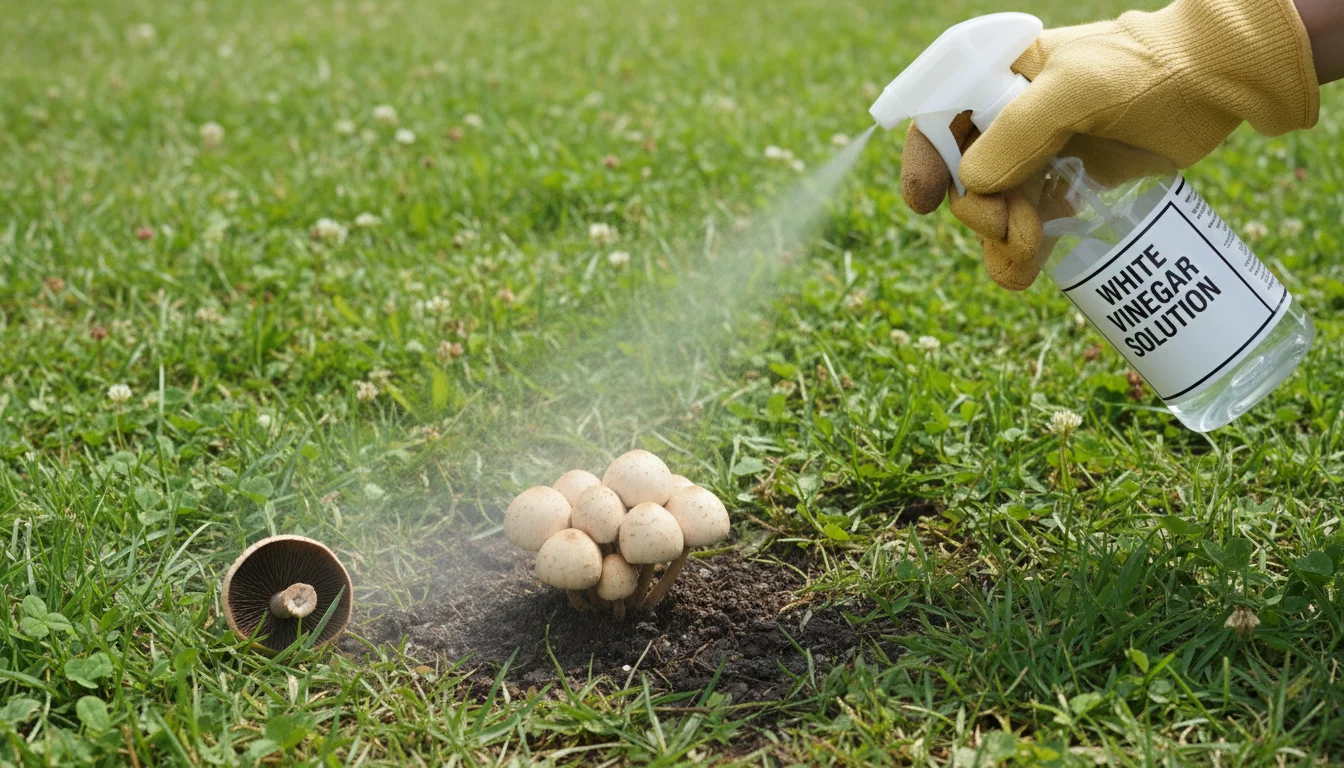
1. Apply a Vinegar Solution
Mix one part white vinegar to four parts water in a spray bottle. Soak the mushrooms directly and saturate the soil around them in a 6-inch (15 cm) radius. The acidity kills the mushroom and damages the mycelium in the top inch or two of soil.
Works best for spot treatment of isolated clusters. This is not a whole-lawn application – concentrated vinegar kills grass, and even a 4:1 dilution will damage turf if you spray it broadly. Spray precisely, focusing on the mushroom cap and the soil immediately surrounding the base. Reapply after rain, since runoff dilutes the treatment fast.
Remove the mushrooms physically before spraying – cap and stem, pulled or cut as close to the soil as possible – then treat the hole and surrounding area. Leaving the fruiting body in place while you spray wastes most of the treatment on surface that’s already going to die anyway. The goal is getting acidity into the soil where the mycelium is.
For mushrooms growing in mulch beds or bare soil where grass damage isn’t a concern, you can use a stronger 1:1 ratio for faster effect.
2. Use a Baking Soda Solution
Baking soda raises the soil pH, making the environment less favorable for fungal activity. Mix 2 tablespoons per gallon (3.8 L) of water and pour it over areas prone to mushroom growth.
It’s gentler on grass than vinegar and less likely to cause collateral damage from overspray. The tradeoff is that it works more slowly and doesn’t have the same direct contact effect on established mushrooms. Use it as a preventive treatment after you’ve cleared an area, or as ongoing maintenance in zones where mushrooms keep reappearing.
Apply it during a dry stretch – watering or rain immediately after dilutes it to ineffective levels before it has a chance to shift the pH. You won’t see immediate results; pH-based suppression works over several weeks of repeated application.
Don’t use it repeatedly in the same area without testing soil pH. Most grass prefers a slightly acidic pH of 6.0-7.0. If you push the soil alkaline trying to kill fungi, you’ll start seeing yellowing and nutrient deficiencies in the turf instead. A cheap soil pH test kit from a hardware store takes 5 minutes and tells you exactly where you stand.
3. Try a Soapy Water Drench
Dish soap breaks down the waxy coating on mushroom caps and disrupts the surface mycelium. Mix 2 tablespoons of liquid dish soap into 1 gallon (3.8 L) of water and pour directly over affected areas.
This won’t sterilize the soil or kill deep mycelium, but it knocks back the current crop and reduces surface spore activity. It’s the gentlest option of the three and safe to use broadly across the lawn without worrying about grass damage.
Pour slowly so it soaks in rather than running off. For dense patches, water the area lightly first to open up the soil structure, then apply the soapy drench. One application per week during active growth is reasonable.
These treatments work best when you’re running them in parallel with the longer-term fixes: cutting back irrigation, improving drainage, and removing whatever buried organic material the mycelium is feeding on. The treatments buy you a cleaner lawn while that work takes effect.
A note on timing: apply all three of these in the morning, not before rain. Rain dilutes them immediately and you lose most of the effect. Wait for a dry stretch of 24-48 hours after application for the treatment to work into the soil. If mushrooms reappear in the same spots within a week, that’s confirmation there’s organic matter underground feeding them – surface treatments will keep knocking back the mushrooms but the underlying cause needs to be addressed.
For mushrooms growing in mulch beds, you have more flexibility – vinegar at higher concentrations (up to 1:1 with water) is safe where there’s no grass to protect. Saturate the mulch thoroughly and let it soak down to the root zone. Replace heavy, wet mulch that’s clearly decomposing with fresh, dry material after treatment.