Table of Contents
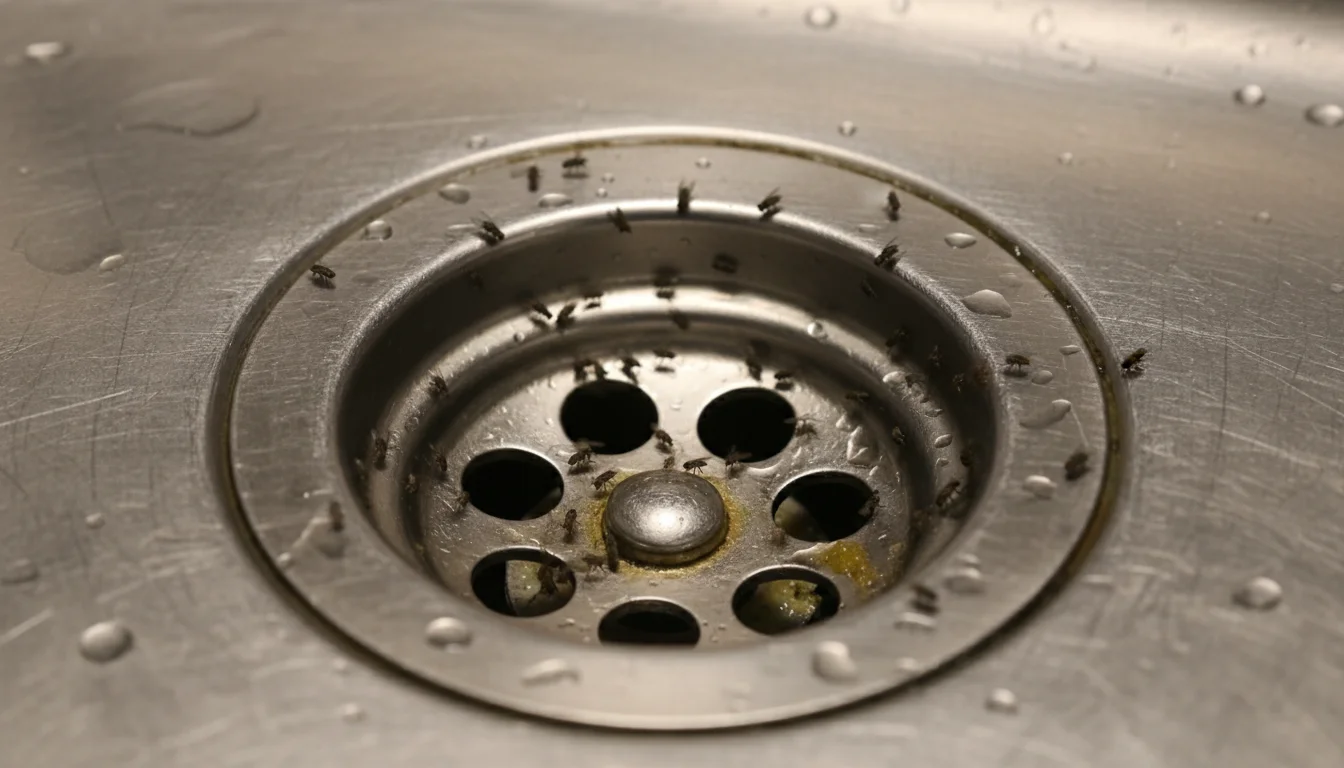
You’ve cleaned the kitchen. Tossed the overripe fruit. Wiped down every surface. And they’re still there, hovering around the sink like it owes them something. Drains are where fruit fly infestations survive after you’ve done everything else right. A layer of organic slime lines your pipes – food particles, grease, decomposing residue – and that’s where the eggs are. The adults you’re swatting are just the visible part. The problem is below the drain.
1. Get rid of the sources
Start here, even though the drain is your main target. Rotting produce keeps the adult population fed while you work on the breeding site. Toss anything overripe, bag it, take it straight outside. Don’t leave it in the kitchen trash overnight – fruit flies can lay dozens of eggs in a few hours, and a kitchen bin at room temperature overnight is enough time for them to do it.
If you’ve got an indoor compost bin, empty it daily. Even sealed ones leak enough smell to draw flies. Move scraps to an outdoor bin and scrub the indoor container with hot soapy water. Check your canning jars too – fruit flies can smell a single drop of dried juice on a lid. A forgotten lime that rolled behind the toaster will sustain them for days.
2. Check for hidden breeding spots
Still seeing flies after a week of treatments? You’ve missed a source.
Fruit flies don’t only breed in the main drain. Check the drain pan under the fridge (the one you’ve probably never cleaned). The garbage disposal rubber flap – flip it back and look underneath, it gets coated in slime. Behind the stove. Under shelf liners in the pantry. Potted plant soil that’s staying too wet. Any vase with old water.
Bag anything you find and remove it immediately. The fruit fly life cycle runs about ten days from egg to adult. A source you miss Monday produces a fresh wave by the following week. If you find an infested dry good (birdseed, pet food), bag it and either toss it or freeze it for 48 hours at 0°F (-18°C) – that kills all life stages.
3. Clear slow drains
Fill the sink and watch how fast it drains. Sluggish means buildup, and buildup means fly food. A slow drain is an active breeding ground.
Grab a drain brush (under $10 at any hardware store). Push it into the pipe opening, scrub hard, flush with boiling water, repeat until the water runs fast again. Really get in there – the buildup you’re after is the visible slime ring right at the opening, plus anything you can reach down the first few inches of pipe. If the clog is deeper than the brush can reach, use a drain snake. A drain that flows freely has less surface area for biofilm to cling to, which is the whole point.
4. Boiling water down drains
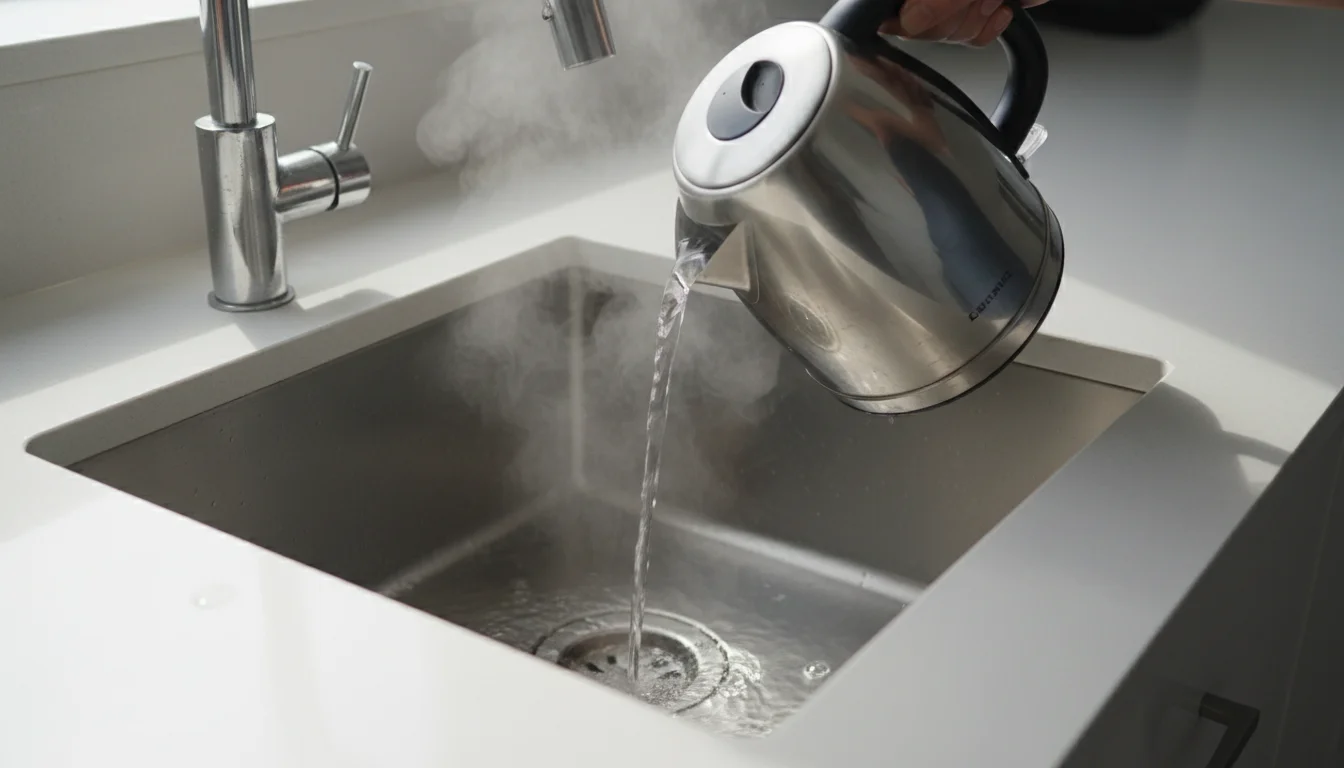
The main event. Food particles collect in the drain trap and on pipe walls, and that organic layer is where the eggs are. Pour a full kettle of boiling water down the drain twice a day for three days.
Follow each kettle with half a cup of baking soda and half a cup of white vinegar. The foam scrubs away the biofilm that feeds them – it’s mechanical cleaning via bubbles, not just a rinse. Let it sit for a few minutes, then flush with another round of boiling water. Do this once a week after the infestation clears to keep the pipe walls clean.
Bleach isn’t a substitute. It flows through too fast to kill the biofilm where eggs live. Boiling water plus the foam does both jobs.
5. Rinse sinks with boiling water overnight
An overnight treatment works differently than the daytime flush. Before bed, boil a full kettle and pour it slowly down your kitchen sink drain. Then put the stopper in and leave it closed overnight. The steam gets trapped in the pipes instead of venting immediately, and it reaches breeding sites that a quick pour misses.
Do this every night for a week during an active infestation. After that, once or twice a week keeps them from re-establishing. Works better than chemical drain cleaners because it actually reaches the larvae inside the pipe gunk instead of just eating surface deposits.
6. Discard old cleaning supplies
The sponge sitting next to your drain is probably part of the problem. Kitchen sponges and dish rags hold moisture and food particles in every pore – once they’re worn out they’re a fruit fly breeding ground sitting right on your counter.
If it smells funky or has gone gray instead of its original color, throw it out now. Replace sponges weekly during an active infestation – they’re cheap and they’re actively working against you if you leave them. Between replacements, microwave a damp sponge for two minutes on high (it gets hot enough to kill what’s living in it). Better yet, switch to a dish brush that dries completely between uses. Brushes don’t hold moisture the way sponges do.
Drain infestations take longer to clear than produce infestations because the breeding site is inside the pipe. Give the boiling water treatments a full week before deciding they’re not working. Keep the drain clear, the sources gone, and the cleaning supplies fresh. The cycle breaks when there’s nowhere left to lay eggs.