Table of Contents
Brown recluse don’t arrive from the cold like mice do – they’re already there, in the woodpile stacked against your house, under the patio, in the crawl space. The ones you find indoors aren’t wandering in from the yard. They’re overflow from established outdoor populations that got too close to the building.
That’s why most guides miss the point. They start with glue traps and insecticide spray when the actual problem is 3 feet from your foundation. Fix the outdoor harborage first. Then deal with the indoor population. Do it backwards and you’ll be fighting the same spiders every year. If your problem is primarily outside, see how to get rid of brown recluse spiders from your yard for the perimeter-focused approach.
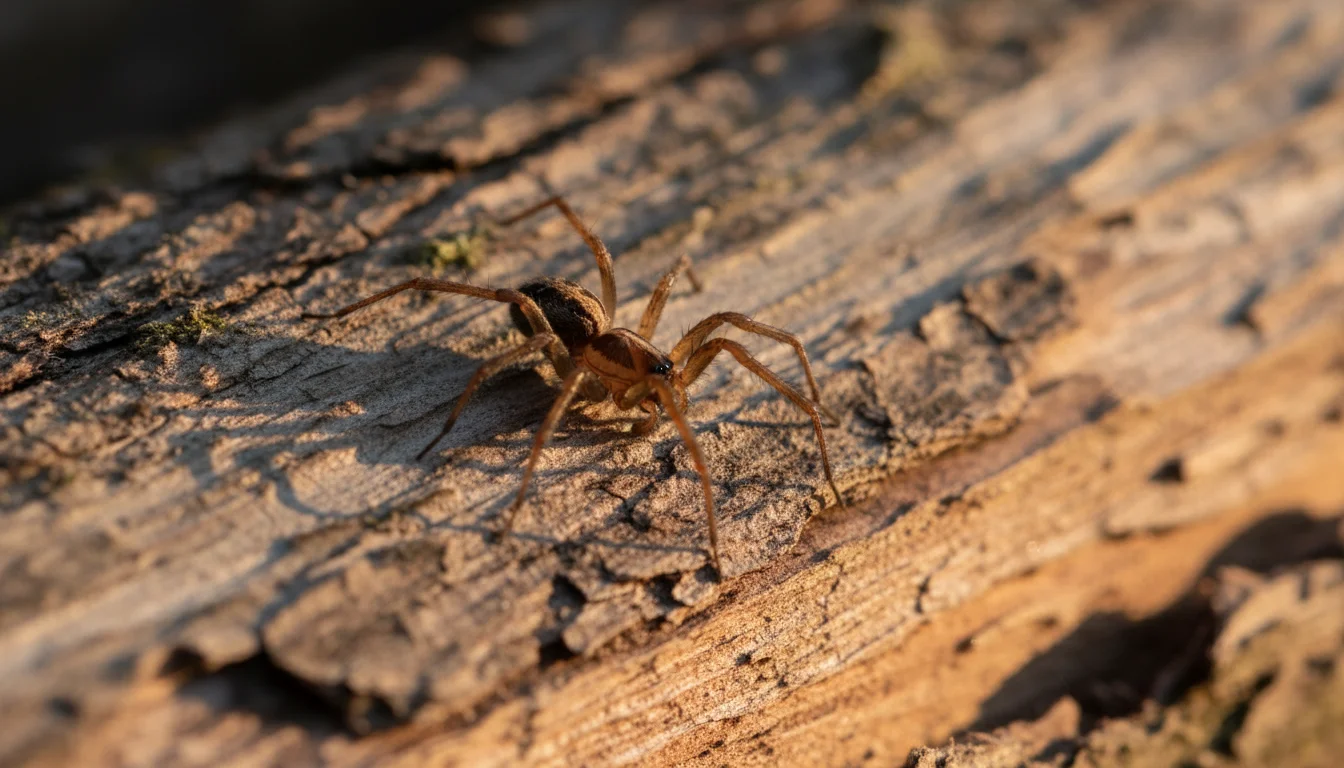
Brown recluse spiders are tan to dark brown, about 3/4 inch (2 cm) long, with a violin-shaped marking on the back. They’re shy, not aggressive, but their bite is medically significant. If you get bitten and develop a spreading wound or systemic symptoms – call a doctor, not a how-to website.
1. Relocate and Elevate Firewood
Firewood stacked against the house is the single biggest brown recluse attractor on most properties. Stacked wood creates layered, sheltered gaps at exactly the right temperature and humidity for spiders to thrive. And it’s often right next to the wall, giving them a three-foot commute inside.
Move the firewood at least 20 feet (6 m) from the house and put it in a detached shed or on metal racks that keep it off the ground. Elevating the stack discourages ground-dwelling spiders and lets air circulate, which reduces moisture and makes the wood less habitat-like.
Only bring in what you’ll burn that day. A spider can hitch a ride on a log, and once they’re inside, they’ll find the closest quiet corner and set up there. Before bringing any log inside, bang it against another piece of wood outside and shake off any loose bark. This isn’t foolproof, but it catches the obvious riders.
2. Clear Vegetation Near House
Shrubs, ornamental grasses, and ground-cover plants touching your exterior walls are spider architecture. They provide dense, undisturbed shelter right against the building, and anything living in them has an easy path indoors through gaps in siding, weep holes, or window frames.
Trim everything back at least 12 inches (30 cm) from the foundation. Cut back climbing vines entirely – they’re the worst offenders because they hold moisture, create layered cover, and give spiders vertical access to every crack in the wall.
Leaf litter, compost bins, and garden debris sitting against the house need to move too. Stack mulch at least 6 inches (15 cm) away from the foundation. The goal is a clear, exposed perimeter that spiders have to cross in the open to reach the house.
3. Trim Vegetation Away from House
Overhanging tree branches that touch the roof are aerial bypass routes. Spiders (and everything else you don’t want indoors) use them to skip the open ground entirely and reach the eaves, soffits, and upper windows directly.
Cut branches back so nothing contacts the structure. A gap of 3 feet (1 m) between the nearest branch and the roofline is enough. While you’re up there, check the gutters – clogged gutters with decomposing leaf matter are primo spider habitat at roof level.
This is separate from ground-level vegetation clearance because it addresses entry through the top of the building, not the foundation. Both matter.
4. Ventilate Attics and Crawl Spaces
Brown recluse don’t need much moisture to survive, but their insect prey does. A humid, stagnant crawl space produces the steady supply of soft-bodied insects that spiders feed on. Reduce that food supply and you reduce the reason spiders want to be there.
Check crawl space vents first – they’re often blocked by debris, insulation that sagged, or they’re simply inadequate for the space. Each 150 sq ft (14 sq m) of crawl space needs roughly 1 sq ft of ventilation. Attic vents should create cross-flow air movement. A dehumidifier in a damp basement makes a real difference for the same reason.
Screen all vents with tight mesh (1/8 inch / 3 mm or smaller) to block entry while maintaining airflow. If your crawl space has a dirt floor, add a vapor barrier (6 mil polyethylene sheeting over the entire floor area) to cut moisture at the source. It makes the space dramatically less hospitable to the insect life that spiders depend on.
5. Seal Entry Points
Once you’ve reduced the outdoor population, stop new spiders from getting in. Brown recluse can squeeze through openings the size of a pencil eraser – they’re flat and flexible.
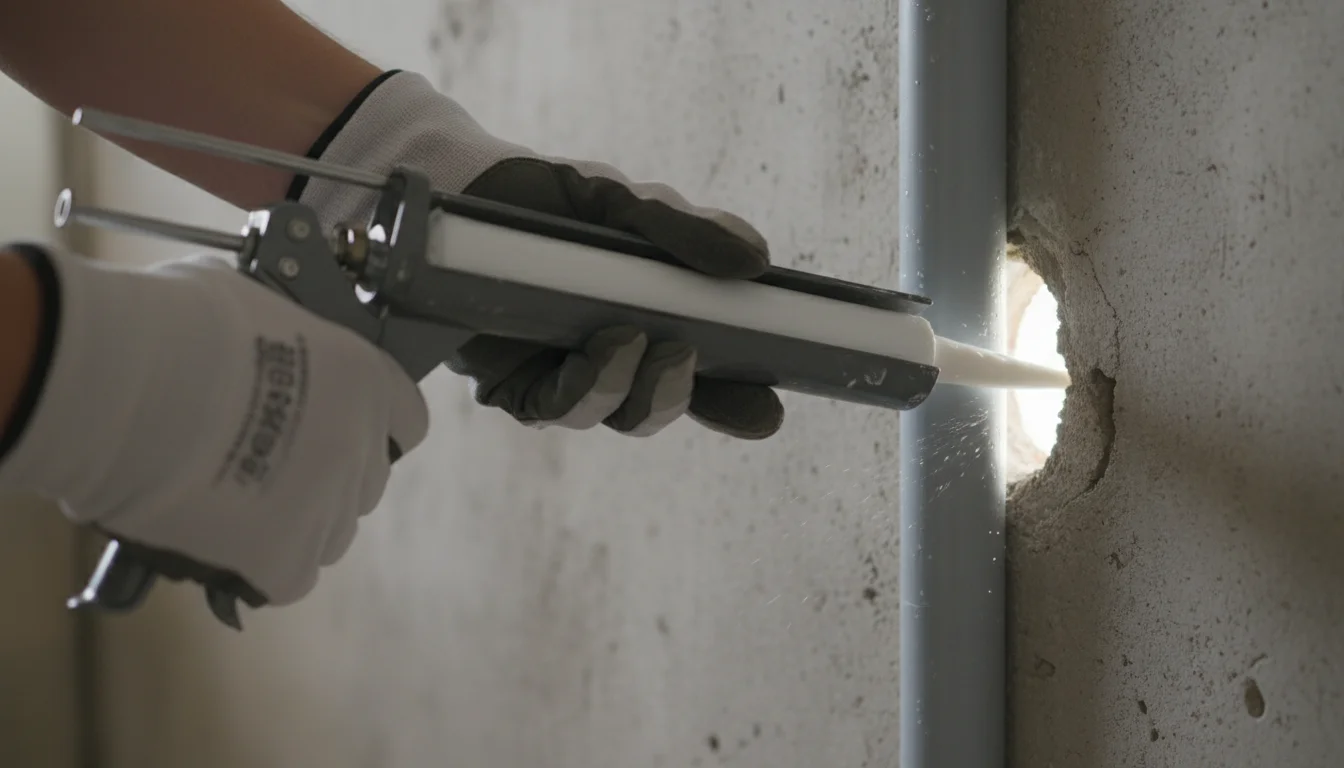
Walk the perimeter and look for gaps around utility penetrations (pipes, wires, conduit), cracks in the foundation, holes in siding, and open weep holes. Seal them with silicone caulk or expandable foam. For larger gaps, cut a piece of fine wire mesh to size and secure it before caulking over it.
Check where the sill plate meets the foundation – there’s often a gap here that runs the whole length of the house. Foam rope backer rod pressed into the gap, followed by caulk, handles this efficiently.
Do a secondary check from inside: go into the basement or crawl space on a sunny day and look for daylight coming through. Any pinhole of light is a spider-sized gap. Mark them with tape and seal from the outside.
6. Install Door Sweeps and Weatherstripping
Stand inside your front or back door at night with the lights off. If you can see light under the door, spiders can come through. This is the most common indoor entry point and it’s fixable in 20 minutes.
A door sweep with a firm rubber blade that makes full contact with the threshold handles the bottom gap. Adhesive-backed foam weatherstripping around the frame handles the sides and top. Check the seal around any door to the garage – those doors are often neglected and the garage is a prime brown recluse zone.
Same principle applies to windows. Replace torn or missing weatherstripping. Older windows with single-pane glass often have gaps around the frame where the trim meets the siding. Caulk those from the outside.
7. Declutter Storage Areas
Brown recluse love undisturbed, cluttered spaces. Garages, basements, closets with boxes stacked on the floor, attics with old furniture pushed into corners – these are ideal habitat. They can live in cardboard boxes for years without being noticed.
Replace cardboard boxes with sealed plastic storage bins. Cardboard is easy to nest in and breaks down over time into exactly the kind of debris that small insects (spider food) live in. Keep items off the floor where possible. Put rarely-used shoes in sealed bags or bins. Shake out clothes, towels, and gloves that have been sitting for a while before you put them on.
In the garage specifically: move items away from the walls so you can see and treat the perimeter. A 6-inch (15 cm) gap between stored items and the wall makes a big difference in visibility and trap effectiveness. The less undisturbed territory in your house, the less suitable it is.
8. Vacuum Webs and Egg Sacs Regularly
An empty web signals vacancy. Other spiders move in. Worse, if a web has an egg sac and you leave it, it will hatch dozens of spiderlings. One egg sac can contain 50 eggs.
Use the hose attachment and go through corners, ceiling junctions, behind furniture, window frames, and inside closets. Pay special attention to the garage and basement. Do it weekly during late summer and fall (peak spider activity as they seek winter shelter) and monthly the rest of the year.
If you vacuum up an egg sac, empty the canister or bag outside immediately and seal the contents in a plastic bag before tossing it. Don’t leave it sitting in the machine.
9. Use Sticky Traps
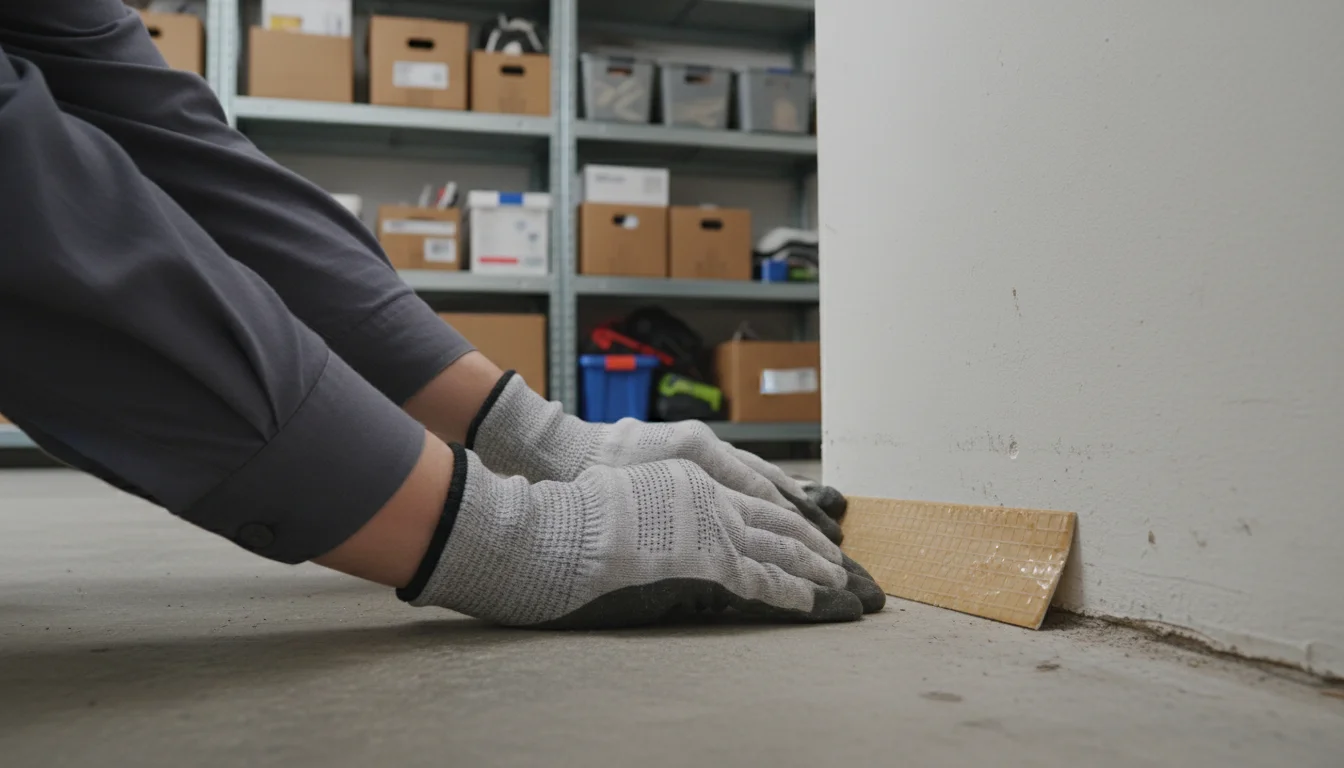
Glue boards do two things: catch spiders, and tell you where the problem is worst. Place them along baseboards, in the corners of closets, under furniture, in the garage, and along basement walls. Spiders travel along edges, not across open floor, so placement at the wall junction is what makes them effective.
Check traps every few days initially to see where you’re catching the most activity. That tells you where to focus sealing efforts and where to apply insecticide. Replace traps when they’re full or when they’ve lost their stickiness (dust and debris will coat them quickly in a garage).
Multiple traps is the right approach, not one per room. Use 3-4 in the garage, 2-3 in the basement, one per closet in main living areas. They’re cheap. The data they give you about where spiders are traveling is worth more than the spiders they catch.
They won’t eliminate an infestation alone. Think of them as monitoring plus population reduction, not a stand-alone solution.
10. Apply Residual Insecticides
For established infestations, insecticide is a legitimate tool. Products with bifenthrin, lambda-cyhalothrin, or permethrin as the active ingredient work well against brown recluse. Apply along baseboards, window frames, door frames, and in the corners of storage areas.
For outdoor perimeter treatment, spray the foundation and lower wall surface in a 3-foot (1 m) band. Do this in early spring before spiders become active, and again in late summer. This is particularly useful if you’ve already done the habitat reduction work and want to maintain the perimeter. Focus the outdoor application on the areas where vegetation was cleared – that soil and ground cover is where the outdoor population was sheltering.
Wear gloves, follow label directions exactly, and keep pets and children out of treated areas until dry. Don’t spray near fish tanks or water sources. Insecticide without habitat reduction just kills the current residents – new ones will move in from the woodpile you forgot to move.
When to call a pro: If you’re consistently catching dozens of spiders on glue boards, finding egg sacs in multiple rooms, or if someone has been bitten, call a pest control company. Large established infestations in wall voids or structural spaces need professional treatment.
What attracts brown recluse spiders to a house? Their insect prey is the main draw. Clutter and undisturbed storage gives them shelter. Firewood and dense vegetation adjacent to the building gives them outdoor habitat right next to easy entry points.
What repels brown recluse spiders? Nothing reliably. Strong scents like eucalyptus oil are sometimes cited but the evidence is weak. Physical exclusion and habitat removal is what actually works.
How do I know if I have a brown recluse infestation? Regular sightings (more than one or two over a season), spiders in multiple rooms, or finding egg sacs in storage areas. Glue boards placed in likely spots for a week will give you a reliable population estimate.
Can brown recluse spiders survive in cold climates? Brown recluse are primarily found in the south-central US (Missouri, Kansas, Oklahoma, Texas, Arkansas, and surrounding states). If you’re in the Northeast or Pacific Northwest, what you’re seeing is almost certainly a different species. Check your local extension service.