Table of Contents
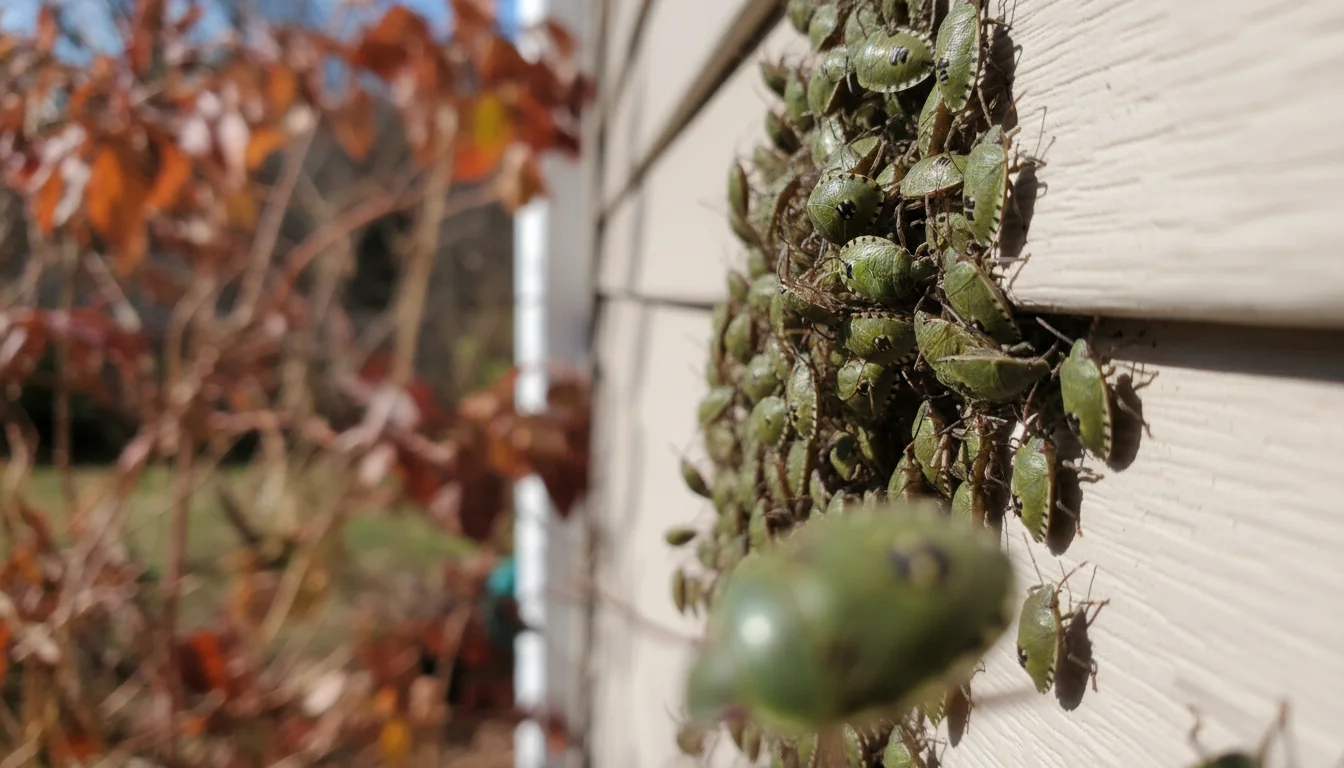
Every fall across the southeastern US, these small olive-green shield bugs show up by the hundreds on the south-facing wall of your house. If you’re trying to figure out how to get rid of kudzu bugs, start here: they’re not there for food or shelter in any interesting sense – they want somewhere warm to wait out winter, and your exterior walls look great from the outside. Light-colored siding especially. Once temperatures drop below 50°F (10°C), they start squeezing through any gap they can find to get into wall voids and attics.
The thing most people miss: kudzu bugs are a kudzu problem first. They breed and feed on kudzu vines, then disperse to structures in fall when the plant dies back. Deal with the kudzu, and you cut the invasion off at the source.
1. Remove Host Plants
This is the step most guides skip. Kudzu bugs don’t materialize out of thin air – they come from nearby kudzu patches, and also from wisteria, soybeans, and other legumes. If there’s a kudzu stand within 30-50 meters (100-165 ft) of your house, that’s your reservoir population feeding and reproducing before they migrate to your walls.
Cut kudzu to the ground and keep cutting. It regrows from the root crown aggressively, so a single cut accomplishes nothing. You need sustained mechanical removal through the growing season, combined with herbicide for lasting control. Triclopyr and metsulfuron-methyl are the effective options. The best timing for herbicide application is late summer (August-September), when kudzu is translocating resources to roots before dormancy – that’s when the herbicide follows the same route and does the most damage. Expect to repeat for two or three seasons before a mature stand is fully controlled.
The meaningful radius is within 30-50 meters (100-165 ft) of your structure. Distant patches contribute far less to localized invasions. Focus your effort there.
If the kudzu is on a neighbor’s property, you can’t control it directly – but you can reduce migration with barrier treatments at your property line.
2. Vacuum Them Up
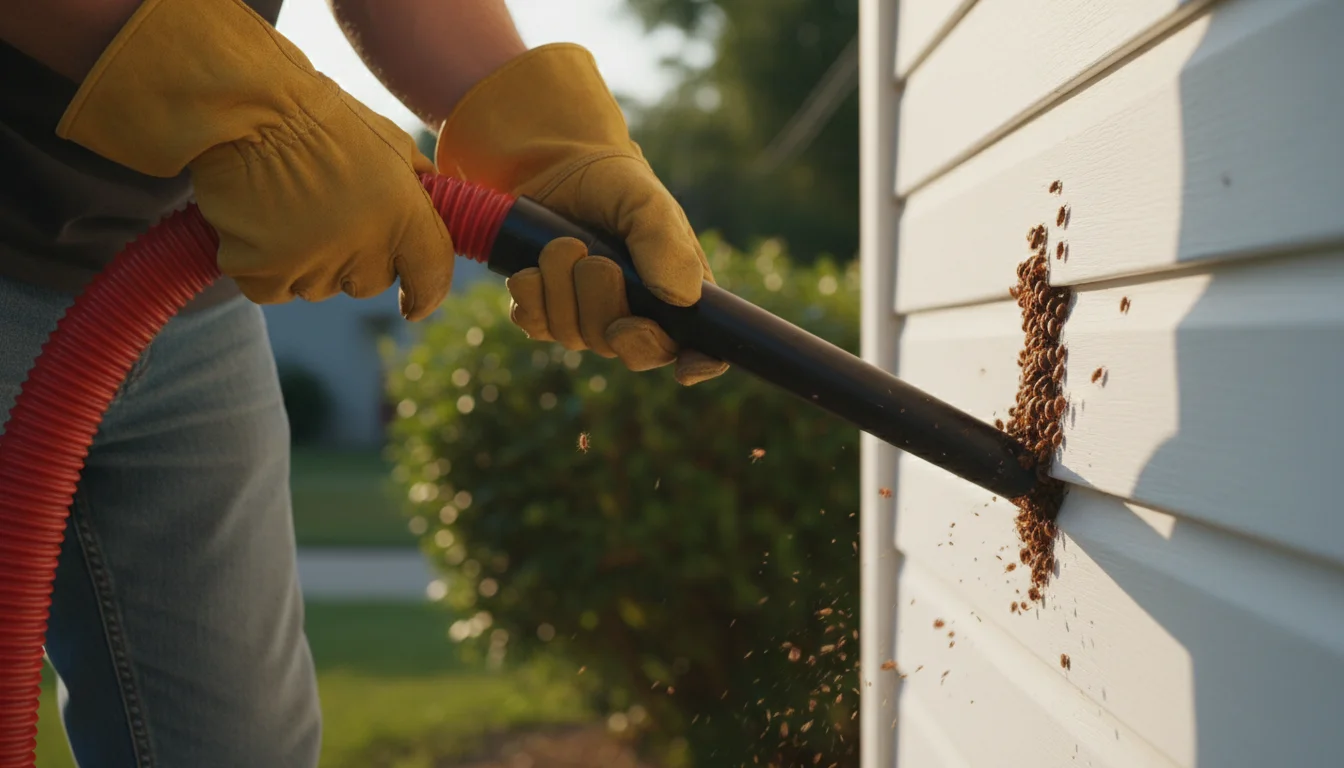
For bugs already on your walls or clustering around windows, a shop vac is the right tool. Suck them up, remove the canister immediately, and dump it outside into a bucket of soapy water (more on that below).
One thing: don’t crush them. Kudzu bugs release a foul defensive odor when disturbed that can stain surfaces and lingers. This is why vacuuming wins over sweeping. Dedicating a cheap handheld vac to pest season and tossing it after is a completely legitimate approach if you’re dealing with repeated invasions.
This method works well for large aggregations on exterior walls. You can clear hundreds in minutes. Just don’t use your nice vacuum unless you’re prepared for the consequences.
3. Soapy Water Kill Bucket
Pair this with vacuuming or hand-picking. Fill a bucket with warm water and a few squirts of dish soap. The soap breaks surface tension so bugs can’t float or crawl out – they drown quickly, and crucially, they don’t release their defensive odor in water the way they do when crushed.
Drop collected bugs directly in. Empty the bucket well away from your house when you’re done – not near garden beds or storm drains. Bare soil or gravel is fine.
On plants, you can apply the same diluted soap-and-water solution directly as a spray. One tablespoon of dish soap per quart (1 L) of water kills on contact. Spray in the morning or evening to avoid heat stress on foliage, and repeat every 5-7 days during peak activity.
4. Seal Entry Points
This is the foundation of keeping them out of the house. If you skip it and go straight to insecticides, you’re killing bugs while hundreds more walk through gaps behind them.
Kudzu bugs can squeeze through openings you’d never notice at a glance. Do a systematic exterior inspection: gaps where utility lines enter the wall, cracks in the foundation, holes in soffits and fascia, spaces around vents and pipe penetrations, and anywhere siding meets trim. The south and west-facing walls get the heaviest traffic in fall – that’s where they concentrate, and where most entry points get exploited first.
Seal small gaps with caulk or expandable foam. For larger holes, cut hardware cloth or metal mesh to size, secure it with screws, then caulk the edges. The combination matters – caulk alone cracks over time, but the mesh holds. One missed gap undoes everything else.
Secondary structures count too. A gap in the garage or shed wall is one step from your living space. Treat them with the same thoroughness.
5. Apply Residual Insecticides
For fall migration, a pyrethroid perimeter spray is the most effective single treatment. Extension services recommend bifenthrin or lambda-cyhalothrin. Apply to the exterior foundation, siding, around windows and doors, and under eaves.
Timing is everything: treat in late September through October, before temperatures stay below 50°F (10°C). Once bugs have already settled into wall voids for winter, exterior spraying does almost nothing. The application window is narrow but it’s effective when you hit it.
Pyrethroid residuals break down fast on sun-exposed surfaces, so during peak migration you’ll need to reapply every 1-2 weeks. Apply on a calm day, wear gloves and eye protection, and keep kids and pets off treated surfaces until dry.
Frequently Asked Questions
Do kudzu bugs bite?
No. They have piercing mouthparts for feeding on plants, not biting. They can cause minor skin irritation from defensive secretions if you crush them – another reason to vacuum rather than swat.
What attracts kudzu bugs to my house?
Primarily kudzu vines nearby, but also wisteria, soybeans, and other legumes as food sources. For structures specifically: light-colored siding and south/west-facing walls that absorb the most afternoon heat. They’re looking for warmth to overwinter.
Does vinegar kill kudzu bugs?
Vinegar doesn’t kill them effectively. Soapy water works much better – it kills on contact without the smell issue you get from crushing them. Vinegar sprays won’t stop a serious invasion.
Will they go away on their own?
They’ll go dormant in winter and disperse in spring. But without addressing entry points and the nearby kudzu population, they’ll be back next fall – often in larger numbers as the pattern establishes.