Table of Contents
Knowing how to get rid of scabies means treating two things at once: mites living in the skin, and mites in your environment that can reinfect you. Both have to be dealt with on the same day, or you end up in a cycle of re-infestation. Most treatment failures happen because people treat their skin and not their bedding, or do them a day apart.
Get a confirmed diagnosis before starting – a pharmacist or doctor can confirm it. Scabies is very treatable. The process is clear-cut but requires the whole household to act at once.
1. Apply Permethrin Cream
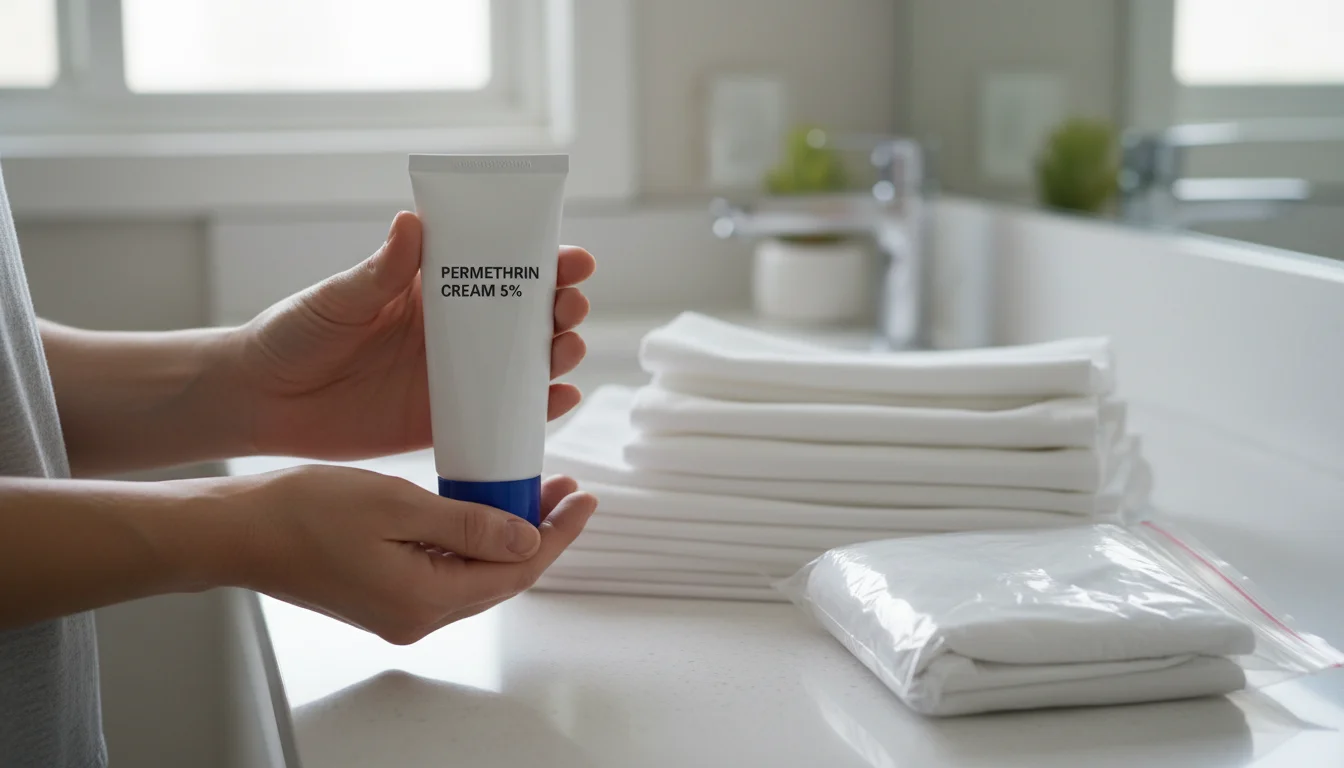
Permethrin 5% cream is the standard first-line treatment, available at pharmacies. This is the actual cure – everything else in this article supports it.
Apply from the neck to the soles of the feet. Every surface. That means between every finger, under fingernails (trim them first, then work the cream under the edges), behind the knees, in the groin, around the waist, in every skin fold. If you miss an area, mites in that area survive.
Leave it on for 8-12 hours. Applying before bed and washing off in the morning is the standard approach.
Everyone in the household needs to do this at the same time – even people with no symptoms. Scabies mites can live on a person for 4-6 weeks before causing visible symptoms. Treating the person who’s itching while untreated household members carry asymptomatic infestations means you’ll just reinfect each other.
Repeat the application exactly one week later. The second treatment catches mites that hatched from eggs after the first application.
Infants and children need permethrin applied to the face and scalp as well (adults don’t). For pregnant women, check with a doctor before using – permethrin is generally considered safe in pregnancy but confirm first.
2. Wash All Laundry on the Same Day
While the permethrin is doing its job, deal with the environment. This happens the same day you start treatment – not the next morning, not after the cream washes off.
Wash all bedding, clothing, and towels that have been in contact with anyone being treated in the last 3 days. Wash at 140°F (60°C) or as hot as the fabric allows – 122°F (50°C) is the minimum effective temperature. Follow with a hot dryer cycle for at least 30 minutes. The heat kills mites and eggs.
Items worn days ago don’t need to be hunted down – mites live off a human host for a maximum of 24-72 hours. Anything that hasn’t had contact in the last 3 days is already clear.
3. Bag Non-Washables
Some things can’t go in a washing machine – heavy coats, duvets that won’t fit, stuffed toys, shoes. Seal them in a plastic bag for 7-10 days. Scabies mites die within 24-72 hours off a human host, so 7 days is well beyond the margin. Label the bag with the date so you know when it’s safe to open.
Don’t open it early. The extra days exist to cover any eggs that might have been in the items.
4. Vacuum Soft Furnishings
Vacuum mattress seams, the sofa, armchairs, and any upholstered furniture that’s been in close contact with an affected person. Dispose of the vacuum bag in an outdoor bin immediately after – or for bagless vacuums, empty the canister outside and wash the washable parts in hot water.
This is supplementary environmental control. Vacuuming removes mites from surfaces but doesn’t kill them inside the machine. Steam cleaning is more thorough if you have access to one – the heat kills on contact.
Mattress encasements are an optional extra – they seal the mattress surface and simplify cleaning going forward. Not essential for a first treatment, but useful if you want peace of mind.
When to Call a Doctor
See a doctor if:
- Itching and new burrows continue after two complete treatment courses (cream applied correctly, one week apart, plus full environmental treatment)
- You see thick, crusted patches of skin rather than the typical thin linear burrows – this is crusted (Norwegian) scabies and requires prescription oral treatment (ivermectin)
- The affected person is immunocompromised, an infant, or very elderly
- An entire household, care facility, or school is affected – coordinating large-scale simultaneous treatment usually requires medical coordination
Frequently Asked Questions
What’s the fastest way to cure scabies?
Permethrin 5% cream applied correctly (neck to toe, overnight, everyone in the household at the same time) combined with same-day laundry decontamination. There’s no shortcut to the timeline, but doing both parts on the same day prevents the cycle of re-infestation that makes treatment feel like it’s not working.
Can scabies live in a mattress?
Yes, but not for long – a maximum of 24-72 hours away from a human host. Vacuuming mattress seams removes them, and an encasement provides ongoing protection. Your mattress isn’t the main vector; your bedding and clothing are.
Do scabies go away on their own?
No. Without treatment, mites continue to reproduce and spread. The infestation gets worse, not better, over time, and you can pass it to everyone you have close skin contact with.
Why am I still itching after treatment?
This is normal and doesn’t mean treatment failed. The itching is an immune reaction to dead mite proteins in the skin, and it can last 2-4 weeks after successful treatment. New burrows appearing after the second week, or new skin-to-skin spread to someone who hadn’t been affected, would indicate treatment failure – in that case, see a doctor.