Table of Contents
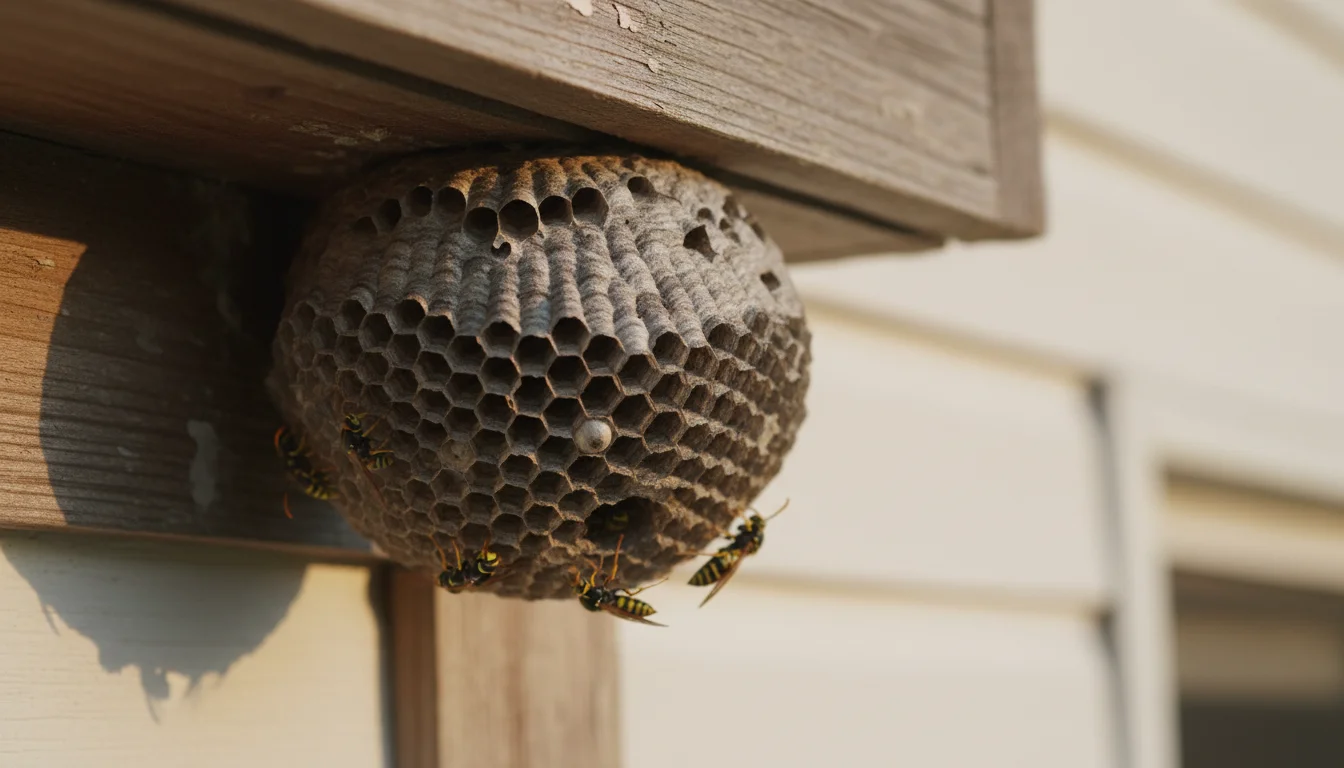
You’ve got a wasp nest somewhere on your property and you want it gone. Here’s how to get rid of a wasp nest safely: timing is everything – treat at dusk when wasps are back inside and less aggressive, and you’ve already solved half the problem. Most accessible nests are DIY territory. Here’s what works, roughly in order of how fast you’ll want results.
1. Commercial Wasp Spray
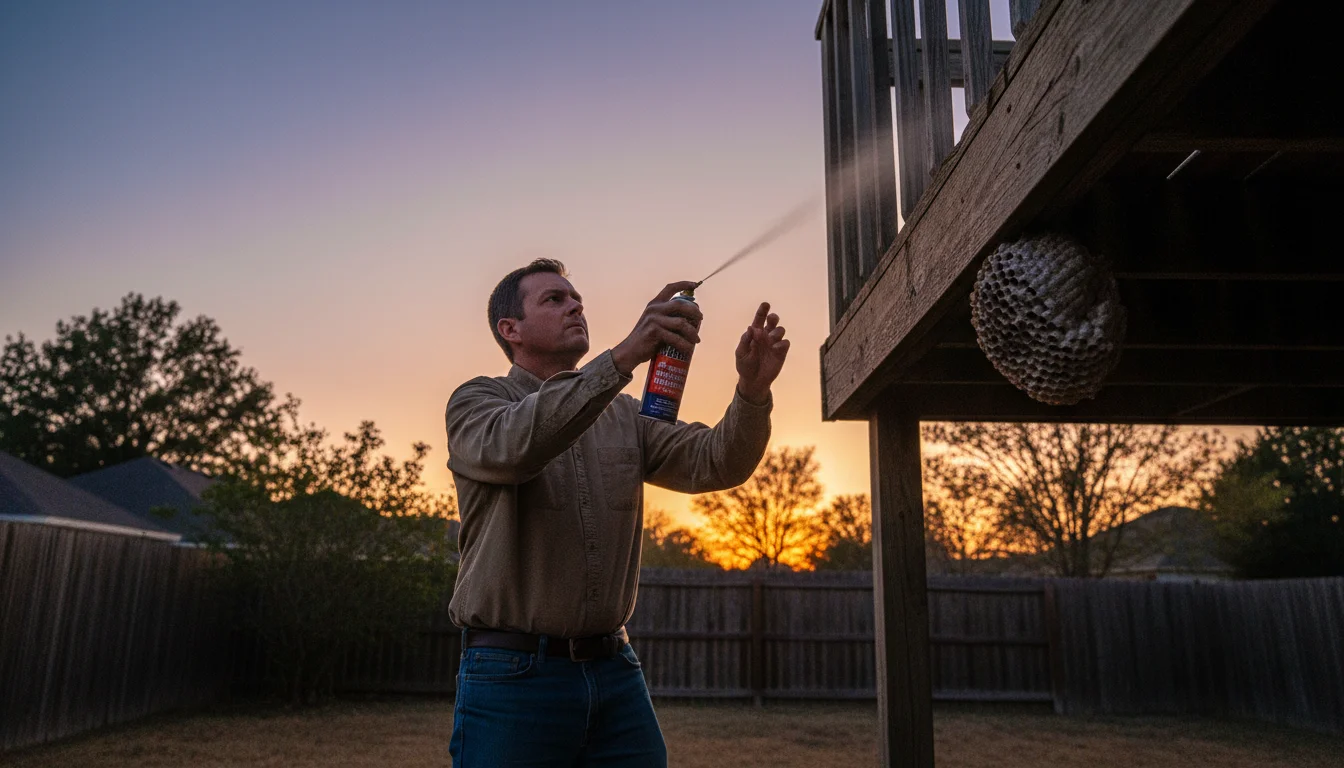
The clear winner for most situations. Get a can of wasp and hornet killer that shoots 20+ ft (6+ m) so you can stay well back. Wait until dusk when wasps are calmer and most of the colony is inside. Aim directly at the nest entrance and drench it. Come back the next morning and hit it again if there’s still any movement.
For hidden nests in wall voids or brick cavities, use a can with a directional straw (like the WD-40 attachment). Insert it into the crack at night and spray – this is the only way to reach them without tearing into the wall.
Wear long sleeves, pants, and closed shoes even from a distance. Wasps are fast when disturbed.
2. Boiling Water
Free, and effective for ground nests. Boil a large kettle and pour it directly into the nest entrance in a slow, controlled stream – you want the water to penetrate deep rather than run off the surface. Early morning is best when the colony is still clustered near the entrance.
It may take two or three treatments on consecutive days for a full knockdown. Unlike chemical sprays, there’s no residual effect, so reinfestation is possible if any queen survived.
Don’t attempt this on aerial or wall-void nests. Boiling water is for nests you can pour directly into.
3. Dish Soap Spray
Mix 2 tablespoons (30 ml) of dish soap with 17 fl.oz (500 ml) of water in a spray bottle. Spray wasps directly on contact – the soap coats their breathing pores and suffocates them within minutes.
This works well as a daytime option when you find foragers near the nest or spot a small exposed paper nest at close range. It doesn’t have the knockdown power of commercial spray for a large colony, but it’s immediate, non-toxic, and costs nothing if you’ve got dish soap under the sink. Use regular dish soap, not the "gentle formula" – you want the degreasing action.
4. Peppermint Oil Spray
A natural repellent that won’t eliminate an established nest but will discourage wasps from returning or nesting in a treated area. Mix 15-20 drops of peppermint essential oil with 2 cups (475 ml) of water and a teaspoon of dish soap (which helps it stick). Spray around eaves, window frames, and deck rafters where you’ve seen activity.
Reapply every 3-5 days or after rain. Most useful as a follow-up after the nest is dealt with – it makes the treated surfaces less appealing for scouts looking to rebuild. If you have cats, note that peppermint oil is toxic to them and shouldn’t be used in areas they frequent.
5. Remove the Nest Physically
Once a nest is dead or dormant (late autumn through winter), you can knock it down and dispose of it. Old paper nests won’t be reused by the same colony, but they can attract new queens scouting for nesting materials in spring.
Use a plastic bag over your hand, invert it over the nest, seal it, and drop it in the bin. For nests in eaves or attics, sweep them down with a broom while wearing protective gear. Always verify the nest is inactive first – shine a torch on it at dusk. No movement means no live wasps.
6. Wasp Traps
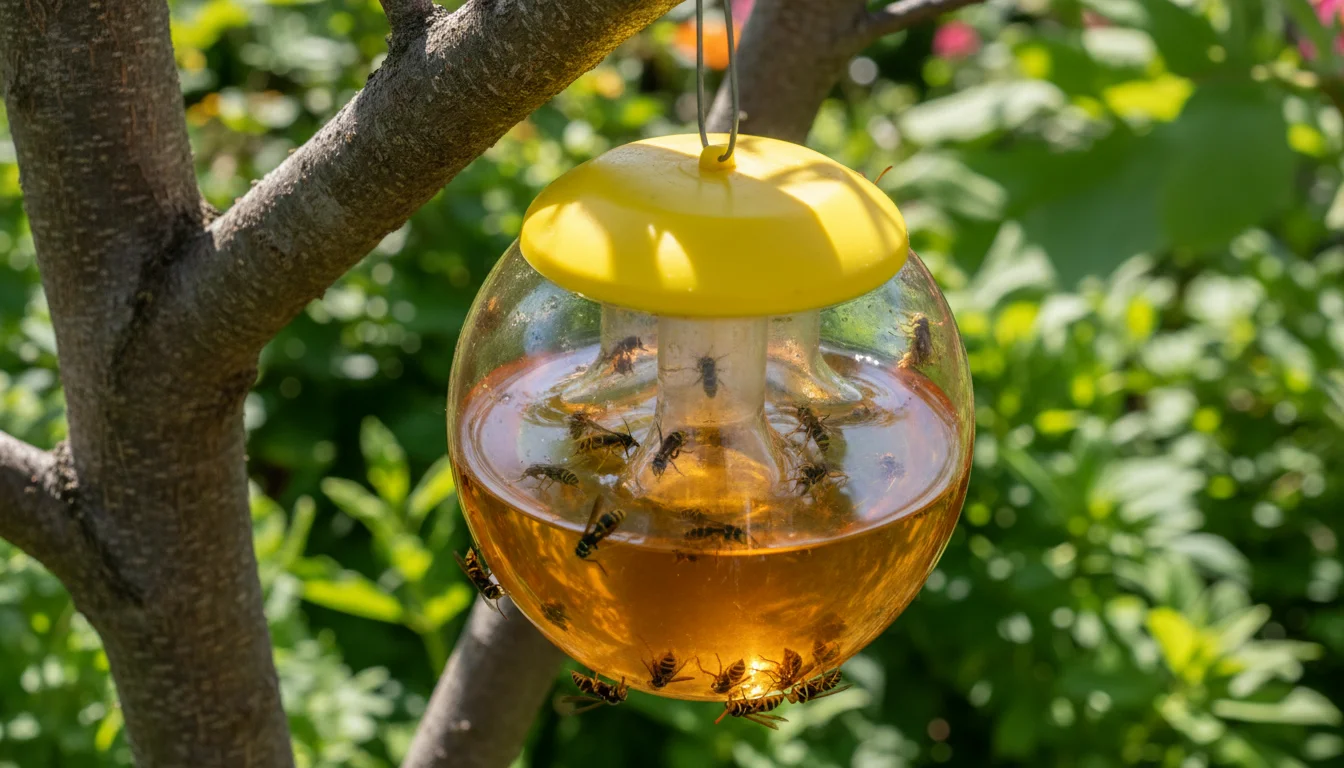
Commercial wasp traps with sweet bait solutions catch workers before they return to the colony, gradually reducing its workforce. Fill trap bases with 2 parts water, 1 part fruit juice, 1 part vinegar, and 4 tablespoons of sugar. Hang them near – but not right at – the nest entrance.
These won’t take down a large established colony alone, but they’re a useful supplement and work well for keeping wasps away from outdoor dining areas once the main nest is dealt with. Empty and refill every few days as the solution loses effectiveness.
7. Fake Nest Decoy
Wasps are territorial – they won’t build near what looks like an existing colony. Hanging a paper decoy nest (a crumpled brown paper bag stuffed loosely and hung under the eave works fine) in early spring can prevent a colony establishing in the first place.
Timing is everything here. Deploy decoys when daytime temperatures first reach 50°F (10°C) – that’s when queen wasps start scouting. Once a colony is established, a decoy does nothing; the resident wasps already know it’s fake. One decoy covers roughly 200 sq ft (18 sq m). Replace them each spring as weathering degrades the convincing appearance.
8. Call Pest Control
Some situations aren’t worth tackling yourself. Call a professional if: the nest is inside a wall void or ceiling cavity where you can’t reach the entrance; the colony is large (basketball-sized or bigger); you or anyone nearby is allergic to stings; or you’ve treated twice and still have activity.
Pest controllers have foam insecticides that expand to fill cavities and specialist PPE for roof-space work. Worth the cost when the alternative is getting stung repeatedly in a confined space.
Prevention
After dealing with the nest, the goal is making your property less attractive for next year’s queens.
Seal gaps in soffits, fascia boards, and siding where utility lines enter. Wasps favour small dark cavities – caulk or steel wool in any opening wider than a pencil. Check under eaves and around shed rooflines in early spring before temperatures warm up. Remove old inactive nests before spring; they can serve as building materials for new colonies.
Keep bin lids closed and clean up any fallen fruit promptly. Wasps feeding on sugary waste in late summer are at their most aggressive – this is when most stings happen, and it’s usually a foraging problem rather than a nesting one.
Frequently Asked Questions
What kills wasp nests instantly?
Commercial pyrethroid sprays with 20+ foot range are the fastest option. Soapy water works but takes a few minutes and requires getting closer than is comfortable with an active nest.
Will a wasp nest go away on its own?
Yes, eventually. Colonies die off in autumn when temperatures drop – workers die and the queen overwinters alone. A dead nest won’t be reused, but a new queen may establish one nearby the following spring if conditions are right. If the nest isn’t causing problems, leaving it until winter is a reasonable option.
How do I get rid of a wasp nest in a wall?
Commercial spray with a directional straw inserted into the cavity at night. One or two treatments usually collapses the colony. If the nest is large or deeply embedded, pest control is the faster route.
How do I get wasps to leave without killing them?
Wetting a small nest repeatedly may encourage relocation – wasps recognise a poor nesting site when it’s consistently damp. Realistic only for very small nests. For any established colony, removal or treatment is the practical answer.