Table of Contents
Getting rid of skunk smell in house quickly comes down to chemistry, not cleaning. That’s why opening windows, lighting candles, or spraying Febreze accomplish nothing. The compound responsible – a family of sulfur-based molecules called thiols – binds to surfaces and fabric fibers on contact and doesn’t just evaporate. You have to chemically break those bonds apart. The methods below do that. They’re ordered from most effective first: start with the H2O2 formula on surfaces, handle fabrics separately with enzyme detergent, then use vinegar, charcoal, and ozone for follow-through and residual smell.
One thing to do before anything else: if a skunk sprayed near your HVAC intake vent or under the house, your entire duct system has been distributing the smell through every room. Change the filter immediately. That alone cuts recirculation significantly.
1. Apply Skunk Deodorizing Formula
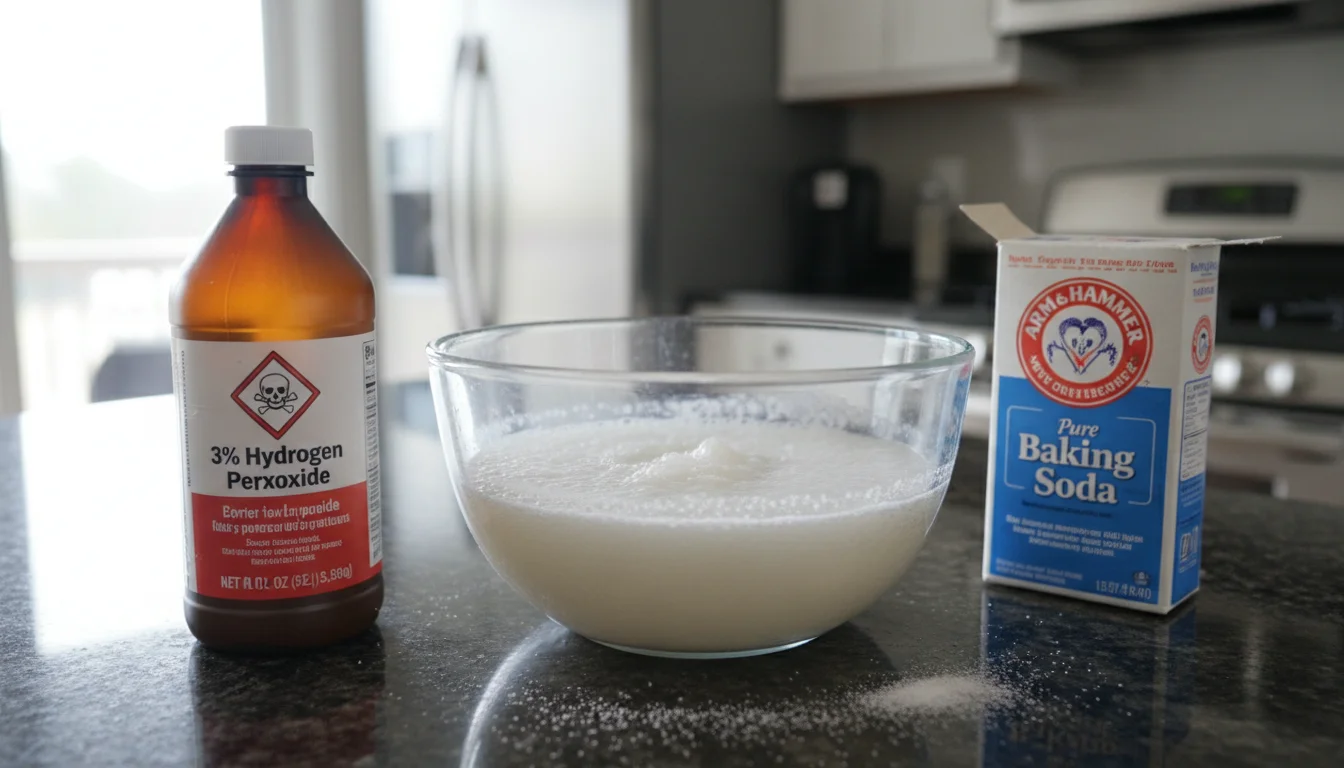
The only DIY treatment that actually neutralizes thiols rather than masking them. Mix 1 quart (950 ml) of 3% hydrogen peroxide with 1/4 cup (60 ml) of baking soda and 1 teaspoon of dish soap. The peroxide oxidizes the thiol molecules, chemically converting them into odorless compounds. The baking soda raises pH to improve the reaction. The dish soap breaks down the oily carrier so everything rinses away.
Apply within an hour of mixing – the formula loses oxidizing power as the peroxide reacts with the baking soda. Work it into affected surfaces (carpets, upholstery, hard floors, baseboards) with a cloth or brush, let it sit 5-10 minutes, then rinse thoroughly.
Do not store this mixture in a closed container. CO2 from the reaction builds pressure and will burst a sealed bottle.
Two things worth flagging: hydrogen peroxide can bleach dark fabrics. Test an inconspicuous area first, or dilute the peroxide to half strength for anything you care about. And yes, tomato juice is a myth – it only triggers olfactory fatigue (your nose stops registering the skunk because it’s overwhelmed by tomato), but the thiols are still there when the tomato smell fades.
2. Launder Fabrics with Enzyme Detergent
Clothing, curtains, upholstery, and bedding are the biggest smell carriers after a spray event. Standard laundry detergent doesn’t touch thiols. You need an enzymatic detergent – look for "enzymatic" or "bio" on the label, or add a dedicated pet odor booster like Nature’s Miracle Laundry Boost to a regular wash.
Wash in the warmest water the fabric tolerates. Add 1 cup (240 ml) of baking soda to the wash cycle alongside the enzyme detergent – the alkaline environment helps the enzymatic reaction work faster.
Air dry. Do not put items through the dryer before the smell has cleared. Dryer heat sets residual thiols into fabric fibers, and items that go through a hot dryer prematurely will need multiple additional wash cycles to clear.
For items that can’t go in the machine – upholstered furniture, area rugs, car seats – saturate the fabric with liquid enzyme cleaner, let it dwell for 15-30 minutes, then blot and air dry. Work from the outside of the affected area inward to avoid spreading contamination.
3. Spray Surfaces with Vinegar Solution
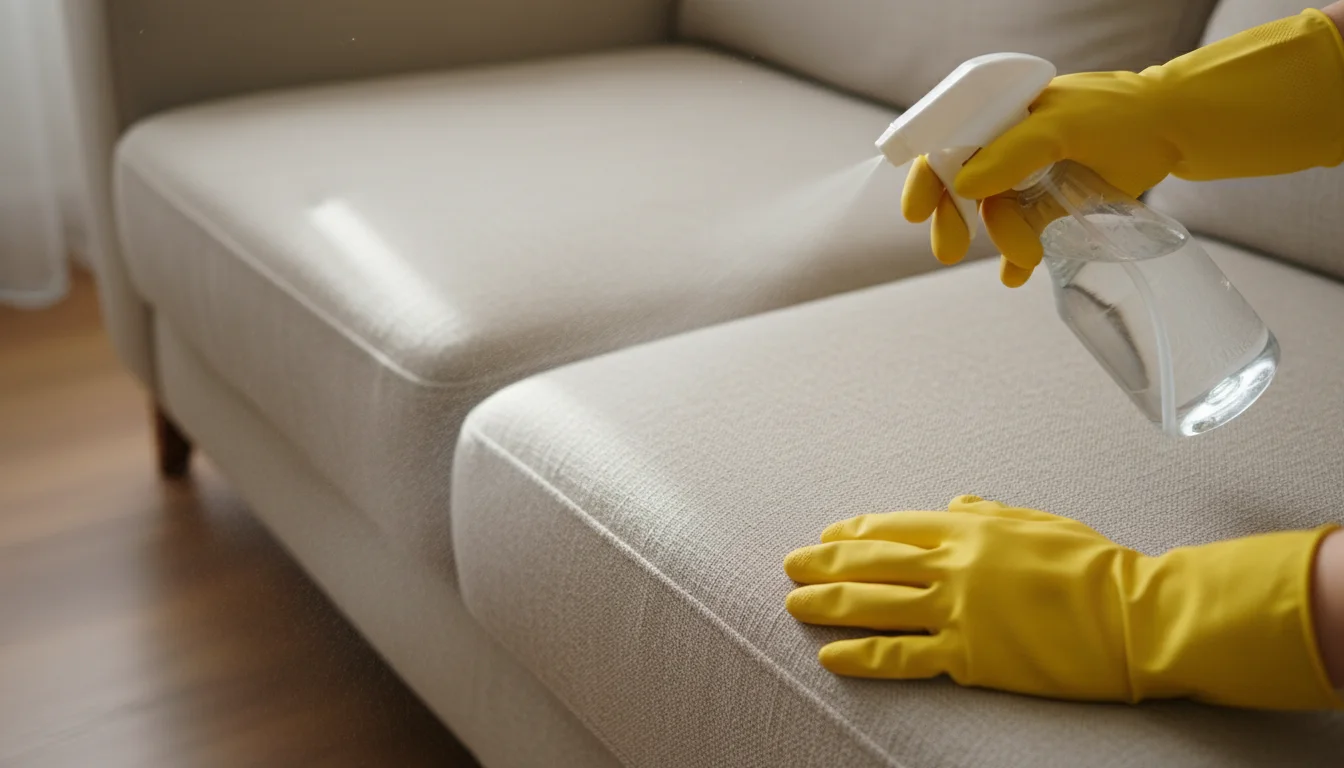
Vinegar is less effective than the H2O2 formula for direct-contact thiol neutralization, but it’s useful as a follow-up on hard surfaces and for treating airborne odor molecules throughout the house.
Mix equal parts white vinegar and water in a spray bottle. Wipe down hard surfaces – counters, floors, walls, baseboards – that the formula didn’t reach or that need a second pass. For airborne smell throughout multiple rooms, boil 1 cup (240 ml) of vinegar in a saucepan for 15 minutes. The acetic acid steam neutralizes airborne thiol molecules as it circulates through the space.
The vinegar smell itself fades in 10-15 minutes and takes residual skunk odor with it. If you’re getting questions about whether boiling vinegar actually works: yes, but only for airborne odor. It doesn’t do anything for surfaces or fabrics that have absorbed the spray directly. Use it alongside the H2O2 formula and enzyme washing, not instead of them.
4. Place Activated Charcoal Around the House
After the active treatments above, activated charcoal handles residual odor over the following 24-48 hours. It doesn’t neutralize thiols chemically – it adsorbs volatile molecules, pulling them out of the air and trapping them in its porous structure.
Place charcoal sachets or bowls in affected rooms: near carpeted areas, in closets, by upholstered furniture. Leave them in place for 24-48 hours while the post-treatment air clears. This is a passive cleanup step, not a primary treatment – don’t skip the formula and enzyme washing in favor of just charcoal.
Recharge charcoal monthly by spreading it in direct sunlight for a few hours. UV releases trapped molecules and restores adsorption capacity.
5. Run an Ozone Generator
For severe or whole-house contamination – especially when the skunk sprayed directly under the house, into a crawlspace, or near an HVAC intake – ozone is the nuclear option. Ozone (O3) oxidizes odor compounds on contact and, unlike sprays, it’s a gas that diffuses into wall voids, ductwork, and porous materials that surface treatments can’t reach.
Seal the affected room or space. Run the generator for 2-4 hours. Everyone leaves – people, pets, plants all need to be out. The ozone concentration required for odor treatment is a lung irritant. After the treatment window, open windows and run fans for at least 2 hours before re-entry.
One session handles most cases. For severe contamination, run a second session 24 hours later. Ozone generators are available to rent from equipment rental shops if you don’t want to buy one.
FAQ
How long does skunk smell last in the house?
Untreated, 2-3 weeks for a mild outdoor spray that drifted inside, and up to several months if the spray happened indoors or near an HVAC intake that distributed it through the ducts. With the H2O2 formula on surfaces and enzyme treatment on fabrics, most of the smell clears within 24-48 hours. Residual traces in porous materials may take another week.
How do you neutralize skunk odor in a house?
Apply the H2O2/baking soda/dish soap formula to all affected hard surfaces and carpets. Launder fabrics with enzyme detergent and air dry. Place activated charcoal in affected rooms for 24-48 hours. For severe or airborne contamination, run an ozone generator with all people and pets out of the space.
Does boiling vinegar get rid of skunk smell?
Partially – for airborne odor only. Boiling vinegar releases acetic acid steam that neutralizes some of the airborne thiol molecules circulating through the room. It won’t do anything for surfaces and fabrics that absorbed the spray directly. Use it as a supplementary step alongside the H2O2 formula and enzyme washing.
Is skunk spray toxic to breathe?
At typical concentrations from a skunk spraying outside near the house, you’ll get nausea, headache, and eye irritation but no lasting harm to healthy adults. At extreme close-range or confined-space concentrations (sprayed directly indoors), it can cause temporary breathing difficulty and eye irritation. Ventilate the house immediately regardless of exposure level.