Table of Contents
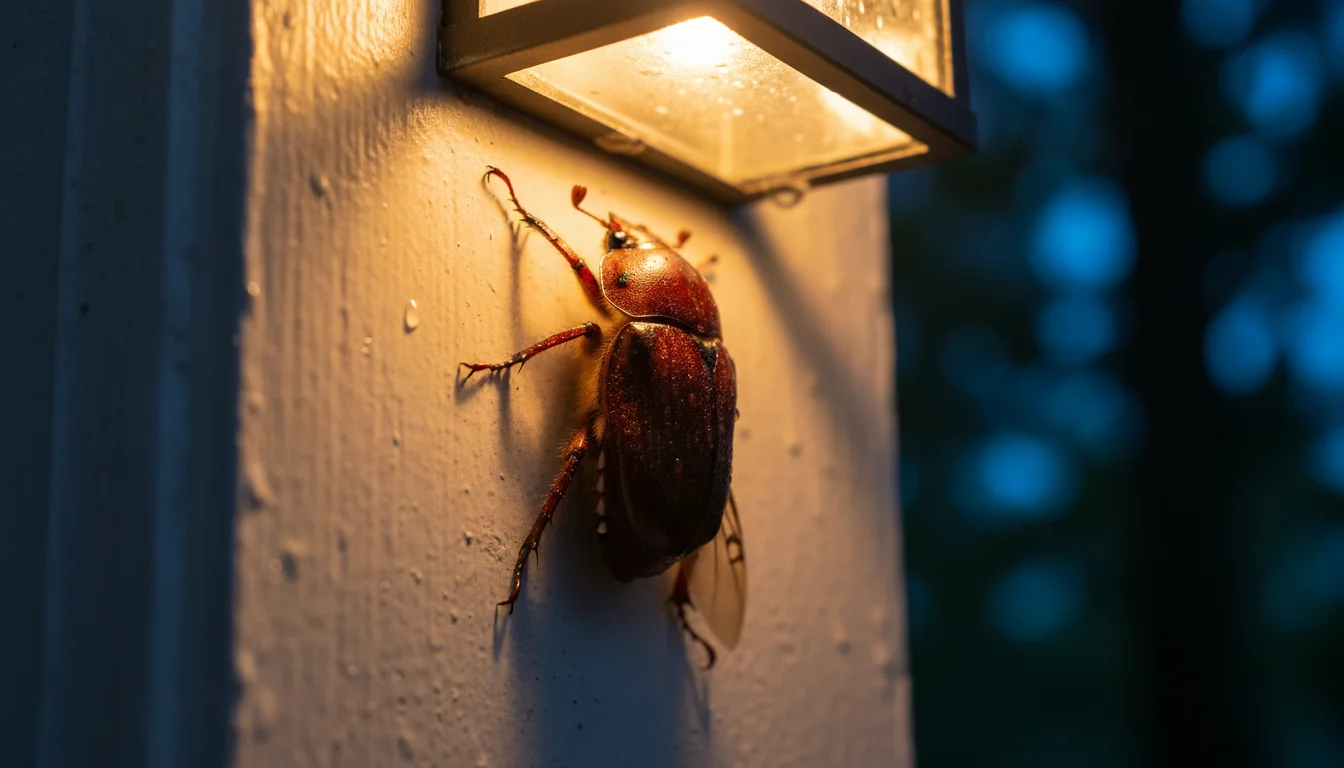
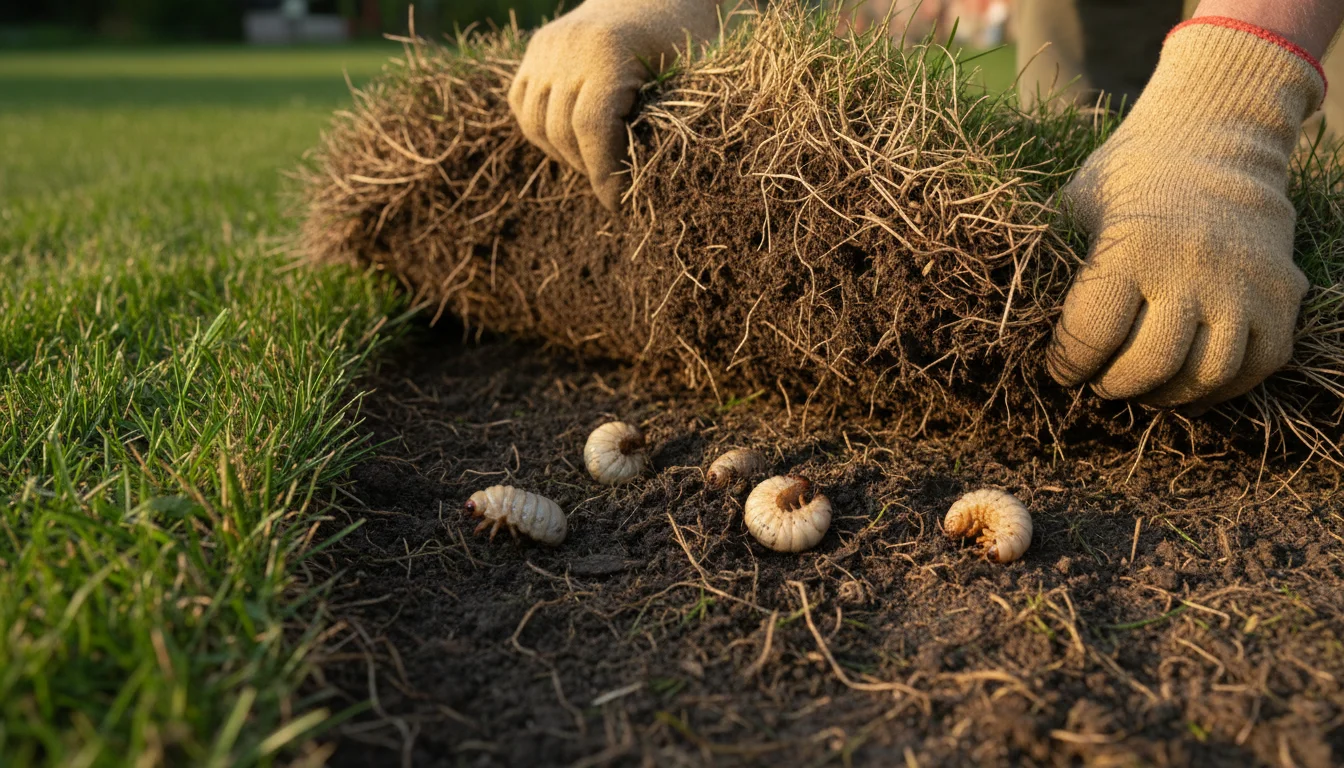
Knowing how to get rid of june bugs means treating two separate problems in one insect. The brown beetle slamming into your porch light is the adult – a nuisance that lives for a few weeks, attracted to light, and not much else. The real damage comes from its larval stage: fat, C-shaped white grubs that spend one to three years eating grass roots underground. Those irregular dead patches in your lawn that lift up like carpet? Grubs. The raccoons tearing up your yard at night? Also grubs.
Methods 1 and 2 target the adults at your porch. Methods 3 and 4 target the grubs in the soil. Method 5 protects ornamental plants and trees when beetles are defoliating them. Pick based on where your actual problem is. If you have both – swarming adults now and dead lawn patches from last season – work through both sets in parallel, since they’re caused by the same insect at different life stages.
1. Reduce Outdoor Lighting
The quickest fix for a beetle-swarmed porch, and it costs whatever a pack of light bulbs costs.
June bugs navigate by light. Specifically, they’re drawn to short-wavelength light – the cool white and daylight bulbs (5000-6500K) that most outdoor fixtures use. Switch exterior lights to warm amber or yellow LEDs in the 2200-2700K range and you’ll see a dramatic reduction. They’re not zeroing in on you – they’re flying toward whatever bright white source is closest.
Motion-activated lights are better still. Security without drawing beetles all night. And if a particular light is right above your door, moving it even six feet to the side reduces how many get inside when the door opens.
2. Set Outdoor Light Trap with Soapy Water
The flip side of method 1: use a bright light to draw adults away from where you are and into a kill trap.
Fill a bucket with water and add a few tablespoons of dish soap – enough to break surface tension, not enough to foam. Position a bright white or UV bulb directly above it. Set the whole thing out at dusk, 15-20 feet from your seating area and porch. Beetles fly toward the light, hit the water, and drown. The soap stops them from bouncing off the surface.
Empty and refill daily – standing water becomes a mosquito breeding site within a few days. This method works best during peak adult activity: late May through July, especially on warm evenings.
3. Apply Grub Preventive Granules to Lawn
If you have dead grass patches, spongy turf that lifts at the edges, or you’ve been finding raccoon dig-outs overnight, you have a grub problem. Granular preventives are how you stop this.
Products containing chlorantranilliprole (Scott’s GrubEx is the most common brand) or imidacloprid create a toxic zone in the root layer that kills newly hatched grubs before they establish. Chlorantranilliprole has the longer effective window – it can be applied as early as April and stays active through late-season hatching. Imidacloprid needs to go down closer to hatch time.
Spread with a broadcast spreader at the manufacturer’s rate, then water in immediately with at least half an inch of irrigation. The active ingredient does nothing sitting on dry turf – it needs to move down into the soil where grubs feed.
One caveat: preventives work on young grubs in the first instar. If you’re already looking at visible lawn damage, you’ve missed the preventive window. At that point you need a curative product containing trichlorfon or carbaryl, which handles larger established grubs. To confirm you actually have a grub problem before treating: dig up a square foot of turf to about 3 inches deep. More than five or six grubs per square foot justifies treatment.
4. Beneficial Nematodes
The organic alternative to granules, and the right choice if you’re avoiding synthetic chemicals near edible gardens or children’s play areas.
Beneficial nematodes are microscopic roundworms that parasitize soil-dwelling grubs. For june bug larvae specifically, use Heterorhabditis bacteriophora – this species targets deep-dwelling grubs in lawn soil. It hunts larvae down, enters the host, releases bacteria that kill it from within, and reproduces inside the dead grub. Safe for earthworms, beneficial insects, pets, and people.
Apply in early morning or evening when soil temperatures are below 85°F (29°C) – heat and UV kill nematodes before they can work. Water the treatment area before application, apply according to package directions, then water again. Nematodes need moist soil to move and reach their target depth. They’ll remain effective for several weeks in consistently moist conditions but die off quickly during dry spells.
Nematodes work best on young grubs. Pair with grub granules in alternating years if you want chemical-free seasons, or use them as the primary treatment if you’ve caught the problem early in the season. Don’t apply during a drought – without moist soil they’ll die before reaching grub depth and you’ll have wasted the purchase.
5. Apply a Systemic Insecticide
For adults, not grubs. Use this when june beetles are causing real defoliation damage on roses, fruit trees, or high-value ornamentals.
Imidacloprid applied as a soil drench around the plant’s drip line in early spring absorbs into root tissue and moves up into leaves. Adult beetles feeding on treated foliage are poisoned. Takes one to two weeks to reach effective concentration in the leaves, so apply before the beetles emerge. The protection lasts through the adult season.
One firm rule: do not apply to vegetables, herbs, or any plant that bees visit regularly. Imidacloprid moves into pollen and nectar and is toxic to pollinators. Reserve this for ornamentals and established fruit trees where you’ve confirmed the beetles are causing significant damage and other methods aren’t enough.
FAQ
What is the problem with june bugs?
Two problems. The adults are mostly a nuisance – they swarm lights, blunder into people, and occasionally chew on leaves. The real problem is larvae. June bug grubs live in the soil and feed on grass roots for one to three years before emerging as adults. A heavy grub infestation kills irregular lawn patches and attracts raccoons and skunks digging for them.
What do june bugs turn into?
Adults. The full lifecycle runs one to three years depending on species: eggs laid in midsummer, larvae feeding underground through fall and following seasons, pupation in spring, then adult beetles emerging May through July. The adults you see at your porch lights live only a few weeks.
What attracts june bugs to your house?
Light, primarily – specifically short-wavelength white light. They navigate by natural light and artificial sources disrupt their orientation. They’re not drawn to you, they’re flying toward whatever bright source is nearby. Switch exterior lights to warm amber LEDs (2200-2700K) and the problem drops significantly.
Do june bugs bite?
Rarely, and not deliberately. June bugs have small mandibles meant for feeding on foliage, not defense. The sensation of one landing on you and scrabbling around with its legs can feel alarming, but it’s disoriented movement, not aggression. They don’t sting and aren’t medically significant in any way.