Table of Contents
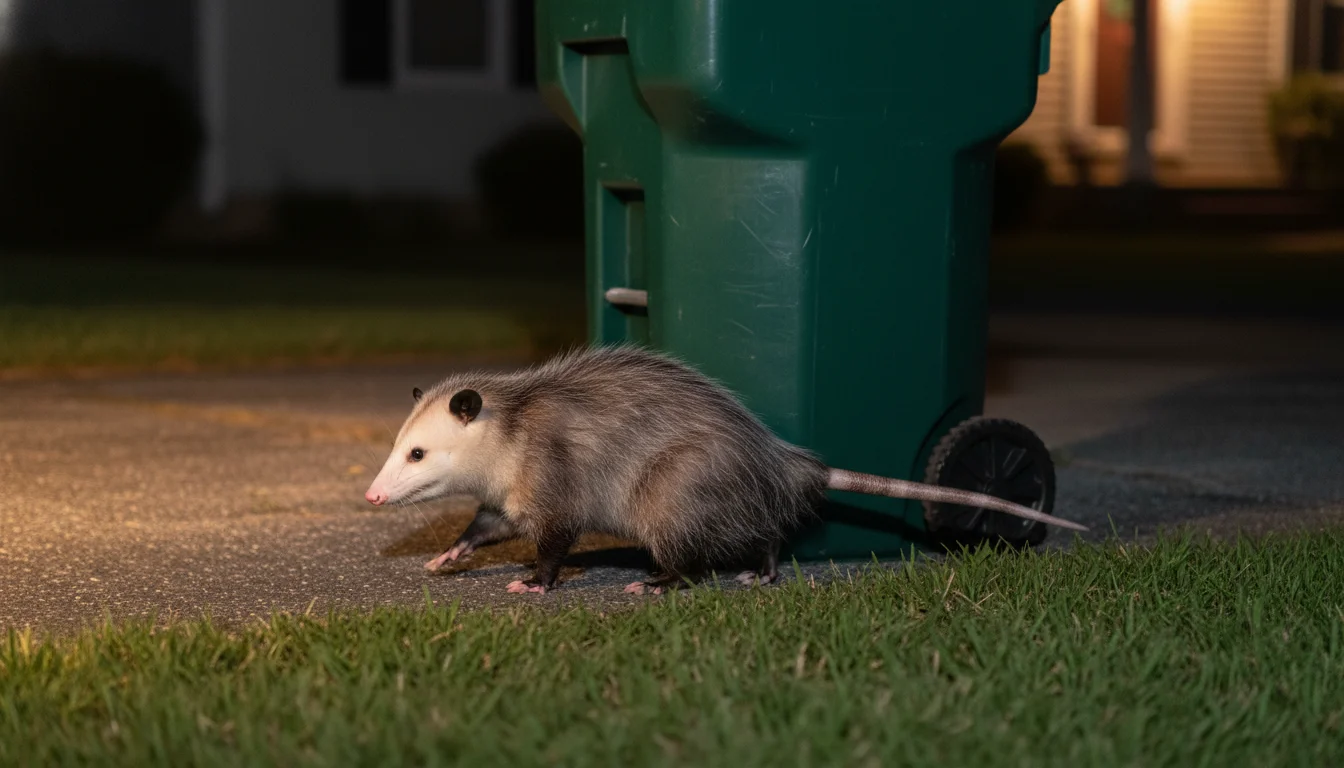
Knowing how to get rid of possum depends on what you’re actually dealing with: a visitor wandering through at night (rooting through bins, eating pet food), or one that’s settled in under a deck, shed, or porch. These need different approaches. A visitor you can usually deter. A settled animal needs active removal first, then exclusion.
1. Live Trap and Relocate
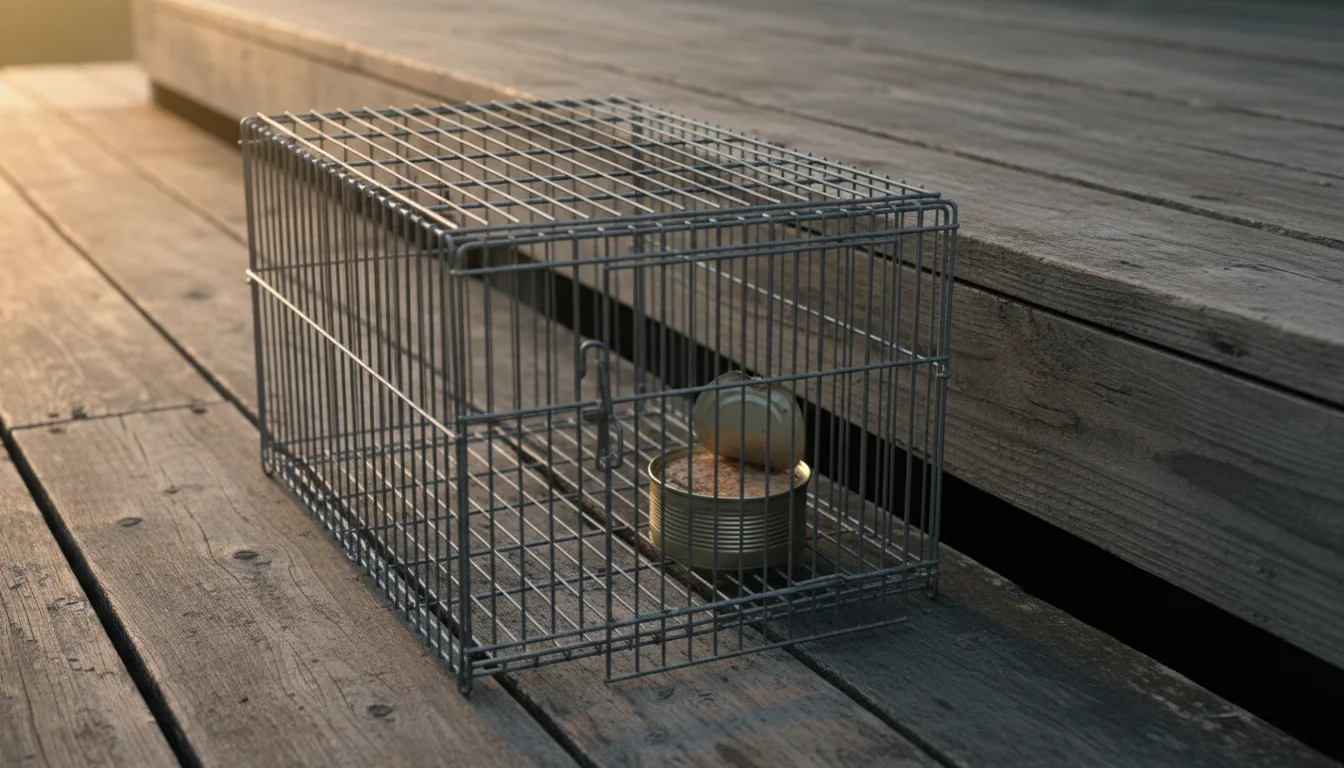
The most direct method for an animal that’s denning on your property. Bait a live cage trap with wet cat food, tuna, or sardines placed at the very back – the animal needs to step on the trigger plate to reach it. Set the trap at dusk when possums are active. Check every few hours and never leave an animal trapped overnight in heat or cold.
Once caught, cover the trap with a towel to calm the animal during transport. Release at least 5-10 miles away in suitable habitat. Possums have a reasonable homing instinct and shorter distances often don’t stick. Check your local regulations first – some areas require a permit or restrict relocation of wildlife.
One practical note: if you catch something else (raccoon, cat), open the trap door from a distance and let it go on site. Non-target animals are fine to release where you caught them.
2. Use Light and Noise to Harass the Den
Free, and often all it takes for a recently settled animal. Possums den under structures for dark, quiet conditions – remove those and they’ll relocate within a few days.
Shine a bright work light directly into the den entrance and leave it running dusk to dawn. Add a battery-powered radio nearby playing talk radio or anything with varied sound levels. Run both for at least two nights. Most dens are abandoned within 48-72 hours.
Don’t seal the entrance while you’re doing this – wait until there’s been no activity for 14 days before blocking it off. A trapped possum will claw and chew through walls to get out. Once the space is confirmed clear, seal with hardware cloth or treated lumber.
3. Install One-Way Exclusion Doors
For animals that have established a regular entry point under a deck or shed, a one-way door lets them leave but not return. The door hinges outward freely – the animal pushes through to exit – but won’t swing back in. After a few days all the residents are out and you seal the gap permanently.
This works because possums are opportunists, not fighters. When their usual entrance stops working, they move to easier accommodations rather than persisting. Best used outside of breeding season – if young are sheltering inside while the adult forages, they’d be trapped by an exclusion door. If you’re unsure whether young are present, check the timing against your local possum breeding season before installing.
4. Remove Food Sources
Possums are generalists. They’ll eat garbage, pet food, fallen fruit, bird seed, and compost. If your property is providing regular meals, new animals will keep appearing even after you’ve removed existing ones.
The key steps: secure bin lids with bungee cords or latches (not just lids that lift off), bring pet food inside at night, pick up fallen fruit from under trees, and move bird feeders to poles with baffles or bring them in at night. Compost bins need to be secured or switched to a sealed tumbler design.
Food removal works better as prevention than as a cure – a settled possum that has other food options nearby won’t simply leave because one source dried up. But combined with trapping or harassment, it stops the cycle of replacement.
5. Predator Urine Spray
Fox or coyote urine triggers an avoidance instinct in possums. Apply around the property perimeter, bin areas, and near potential den sites. Available at garden centers and hunting supply stores as liquid spray or granules.
Honest expectation: this works much better at preventing possums from establishing territory than at evicting one that’s already settled and has adapted to local smells. Reapply after rain. Keep it away from seating areas and doorways – the smell is detectable to humans too, especially on warm days.
6. Use Motion-Activated Sprinklers
A motion-activated sprinkler fires a burst of water when it detects movement, startling possums passing through. Place them near bin areas, garden beds, or den entrances.
Effective for deterring roaming visitors from making themselves at home. Less effective at evicting a settled animal that’s learned where the blind spots are. Move the sprinkler position weekly to prevent habituation. These work best as a layer on top of other methods – not as a standalone fix for an established resident.
7. Call Professional Wildlife Removal
Some situations are worth handing off. Call a wildlife removal operator if: the possum has young and you’re unsure about timing exclusion, the animal is under a structure you can’t access, you’ve tried trapping twice without success, or the den is inside the building envelope rather than under an outbuilding.
Professionals have experience reading whether young are present, can seal entry points properly after removal, and handle odor remediation if droppings have accumulated. Expect $200-$600 depending on location and complexity.
Prevention
Once the current resident is gone, the goal is making your property less attractive to the next one. Seal all gaps larger than 4 inches (10 cm) under decks, sheds, and porches with hardware cloth before they get occupied. Secure food sources year-round. A property that offers no easy food and no accessible den sites rarely has possum problems.
Motion-activated lights at likely entry points add another discouragement layer. Unlike sprinklers, lights are low maintenance and cover larger areas.
FAQ
What will keep possums away?
Securing food sources (bins, pet food, fallen fruit) is the most reliable long-term deterrent. Predator urine spray helps prevent new animals from establishing territory. Motion-activated sprinklers deter visitors in open areas. Nothing reliably repels an animal that has already settled in a den.
What smell do possums hate?
Fox or coyote urine, garlic, and camphor are cited as deterrents. Effectiveness is inconsistent once an animal is settled. Use scent deterrents to prevent establishment, not to evict an animal already denning.
How do you get rid of possums permanently?
Remove food sources, trap and relocate any settled animal at least 5-10 miles away, then seal all den entrances once vacated. Permanent exclusion requires closing off every accessible space under decks, sheds, and porches. Settled animals need to be removed first – exclusion alone just relocates them to the next available den on your property.
How do you get a possum to leave?
For a one-time visitor: it will move on on its own. For an animal denning under a structure: set a live trap with tuna bait at dusk, or run lights and talk radio at the den entrance for 2-3 nights. Most animals abandon the site within 48-72 hours of sustained disruption.