Table of Contents
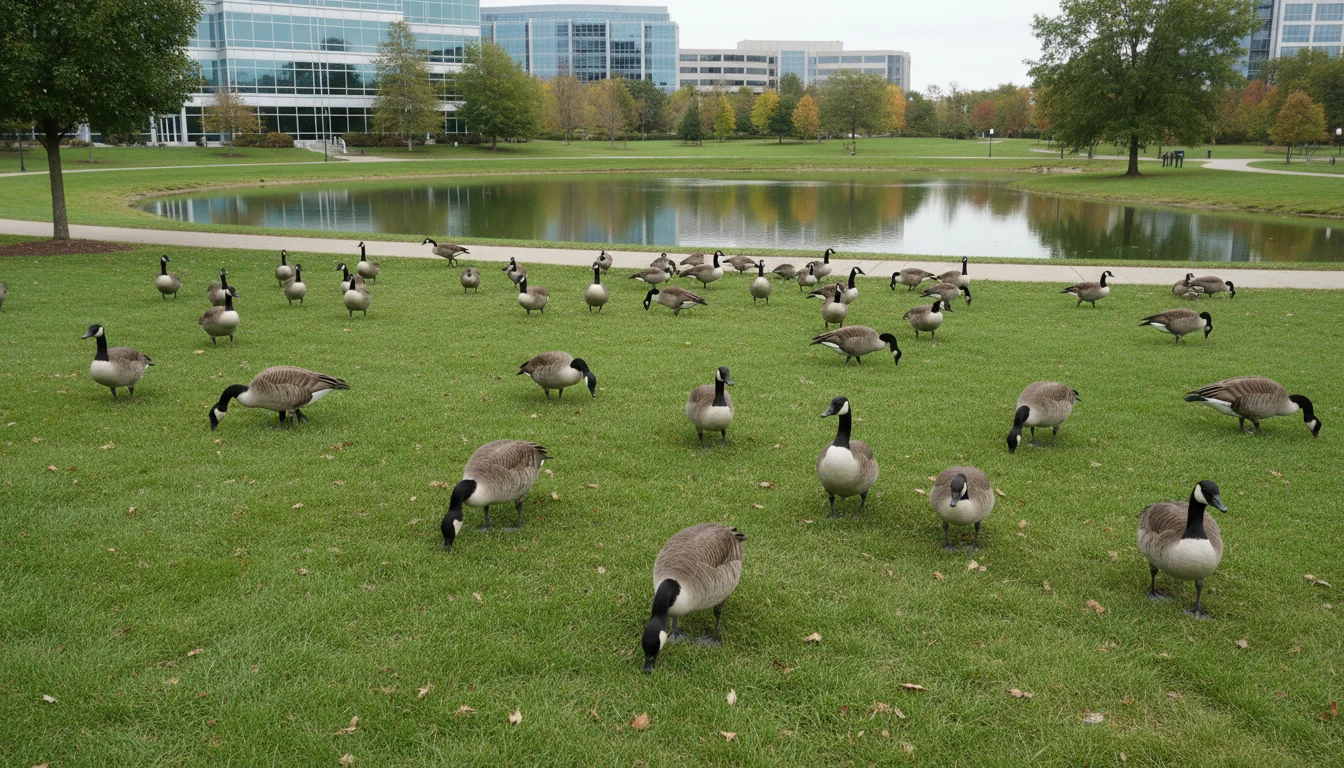
Getting rid of geese legally means accepting one constraint upfront: Canada geese are protected under the Migratory Bird Treaty Act in the US (and equivalent legislation in Canada). Knowing how to get rid of geese is really knowing how to deter them. Harming, killing, or capturing them without a federal permit is a federal offense. Everything here is legal deterrence and hazing. The other constraint: no single method works permanently. Geese habituate to static deterrents within weeks. The solution is layering methods and rotating them so the birds never feel settled.
1. Modify Habitat to Discourage Geese
The most durable fix – removes the reason geese want to be there rather than scaring off birds that have already arrived.
Canada geese need two things from a site: short, open grass to graze and clear sightlines to water so they can spot predators. Remove either and the site becomes structurally unattractive.
Replace mowed turf within 6-10 feet (1.8-3 m) of shorelines with tall native plantings – ornamental grasses, native rushes, or willowherb. Geese won’t wade through vegetation taller than their body height because it blocks their view of approaching threats. The buffer needs to be at least 6-10 feet wide; a narrower strip gets walked through. Plantings take one full growing season to reach effective height, so start in spring and pair with active deterrents while vegetation establishes.
On the land side: raise mowing height to 6+ inches where possible. Geese graze short grass almost exclusively.
2. Install Goose Wire on Water Edges
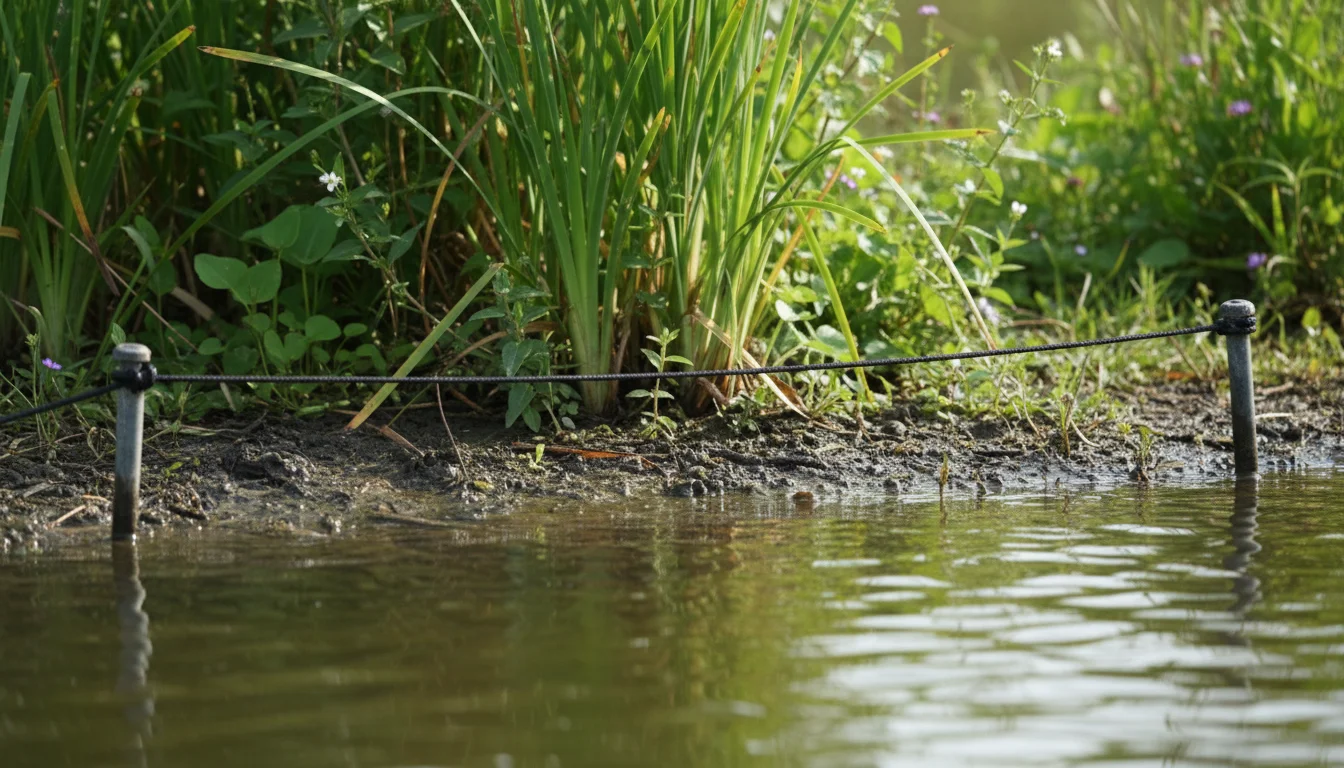
For waterfront properties where the primary approach is from water. Canada geese typically land on water and walk ashore rather than flying directly onto land – a horizontal wire barrier at the water’s edge blocks that walking route entirely.
String stainless steel or nylon wire 6-8 inches (15-20 cm) above the water surface, running parallel to the shoreline, on posts spaced every 5-8 feet (1.5-2.5 m). A single strand at 6 inches stops most movement; two strands at 4 and 8 inches is more reliable. Close every gap in the shoreline perimeter – even a 10-15 foot opening is enough for geese to identify and use as a regular entry point.
This method works specifically where geese approach from water. If birds are arriving overland or flying directly to a lawn area away from water, goose wire doesn’t address that. Combine with habitat modification and repellents for full-site coverage.
3. Apply Repellents to Key Areas
Methyl anthranilate and anthraquinone are the active ingredients in EPA-approved goose repellents – they create an unpleasant taste and smell specific to grazing birds. Products like Flight Control and RejeX-it use methyl anthranilate; Avipel uses anthraquinone. Neither smells unpleasant to humans at application rates, but both make treated grass aversive to geese.
Apply to the grass in areas where geese feed. Reapply after rain – that’s the main maintenance requirement. For a lawn or park, focus on the areas nearest the water where feeding is heaviest.
One important distinction: predator urine (fox, coyote) works for many burrowing animals but isn’t meaningfully effective for geese. Geese aren’t deterred by predator scent the way chipmunks or groundhogs are. Stick to the methyl anthranilate products labeled specifically for geese.
4. Use Motion-Activated Sprayers
A reliable low-effort deterrent that provides a real consequence – a blast of water – rather than just noise or an image. Place units at the feeding areas geese frequent or at the land approach routes from water.
The key maintenance step most users skip: change the position every week. Geese figure out blind spots faster than expected. A sprayer left in the same spot for two weeks stops working as geese learn which path to walk to avoid it. Move it, and the deterrence resets.
Works best as one layer of a broader approach – as the only deterrent, determined birds work around it within a few weeks.
5. Use Auditory Deterrents to Scare Wildlife
Distress call units play recorded alarm calls from geese, triggering a predator-threat response in birds that hear them. At the right volume and placement, geese interpret the calls as danger and leave the area.
Place speakers at the perimeter of the affected area, facing inward toward where the birds congregate. Run calls at irregular intervals – not a fixed timer. Predictable patterns accelerate habituation; geese learn that the sound doesn’t produce an actual threat and start ignoring it within 2-3 weeks. Move units every 5-7 days and vary the intervals, and you extend the effectiveness significantly.
Don’t rely on auditory deterrents alone. They’re most effective as part of a rotation – combine with visual deterrents and repellents, and the birds never have one clear predictable signal they can habituate to.
6. Use Visual Deterrents to Repel Wildlife
Reflective tape, predator decoys (coyote silhouettes, hawk kites, owl decoys), and mylar balloons all exploit geese’ wariness of unfamiliar or predator-associated stimuli.
These work initially – geese are cautious of new objects in familiar territory. Habituation happens within weeks if objects don’t move or change. Reposition decoys weekly. Use hawk kites that move in wind rather than static owl statues that become invisible to birds within days.
As standalone deterrents, visual methods are the weakest category. As part of a rotation with repellents and motion sprayers, they add useful pressure.
7. Use Trained Dog Hazing
The single most effective non-lethal deterrent. A trained border collie (or similar herding breed) working with a handler is the one thing geese consistently respond to without habituating – they recognise the dog as an actual predator, not a decoy, and the threat doesn’t diminish with repeated exposure the way static deterrents do.
The dog chases geese at the handler’s direction without making contact. Geese that are repeatedly hazed across multiple visits learn the site is dangerous and relocate. Commercial services run daily visits for 2-4 weeks initially, then taper to weekly maintenance once the population has moved on. A full initial program costs $1,500-5,000 depending on site size and goose pressure; ongoing maintenance runs $150-400 per visit.
One operational note: a site’s dangerous reputation fades within 6-12 months after hazing stops. Annual spring hazing before flocks establish is more cost-effective than reacting to an established population.
This is a professional service – hire a licensed wildlife hazing operator, not someone with an untrained dog.
When to Call a Pro
If a pair of geese has established a nest on your property, your options are severely limited until the nesting season ends. Disturbing an active nest without a federal permit is illegal. A licensed wildlife control operator can advise on legal egg management options – egg addling (oiling or shaking eggs to prevent hatching) requires a permit from the US Fish & Wildlife Service but is available through licensed operators.
For established flocks on corporate campuses, parks, or large waterfront properties, a professional hazing program is the practical starting point.
FAQ
What do geese hate the most?
Trained border collies. Geese recognise them as real predators and don’t habituate the way they do to decoys or noise. For DIY, methyl anthranilate repellent applied to grass is the most consistent option – it makes feeding unpleasant without wearing off from habituation.
How do you get rid of geese permanently?
There’s no permanent solution. Geese are legally protected and new birds arrive each season. The closest you’ll get: modify the habitat structurally (tall native plantings at shoreline, reduced mowing) so the site is persistently unattractive, then run active hazing each spring before flocks establish. Consistent annual effort is more effective than any one-time fix.
How do you get a goose to leave?
For an individual bird: approach calmly and persistently from behind, herding it toward open water. Don’t chase – that triggers short-distance flight and the bird lands 50 feet away. Consistent pressure over multiple approaches works better than a single chase. For an established group, combine motion-activated sprinklers and distress call units running simultaneously.
What smell will keep geese away?
Methyl anthranilate (a grape-derived compound found in products like Flight Control and RejeX-it) is the most studied and effective chemical deterrent for geese. Anthraquinone-based products like Avipel are an alternative. Both are aversive to grazing birds at application rates that aren’t noticeable to humans.