Table of Contents
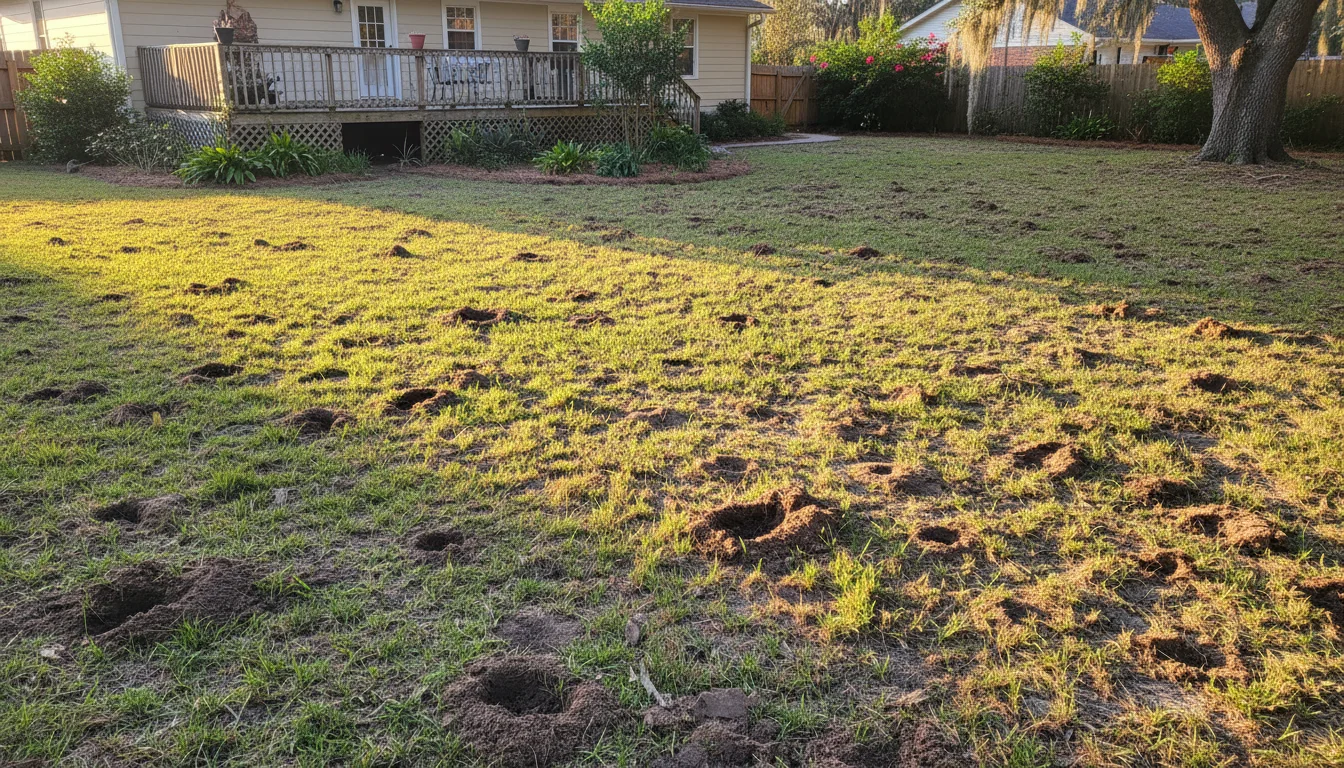
Armadillos don’t bite. They won’t charge at you. The problem – and the reason you’re looking up how to get rid of armadillos – is what they do to your yard when you’re not looking: cone-shaped holes everywhere, lawn rolled up like a bad rug, and 5-foot burrows dug under your deck or foundation. One armadillo can excavate dozens of these overnight.
They’re after grubs and earthworms, following their nose through your soil. And once they find a good foraging ground, they come back. Every night.
The good news is that armadillos are creatures of habit, which makes them predictable. Trap them out or make the yard hostile enough and they move on. Here’s what actually works.
1. Live Trap and Relocate
This is the only method that physically removes the animal. Everything else is deterrence – which means the armadillo is still nearby, still interested, and might be back tomorrow. Trapping ends the problem at the source.
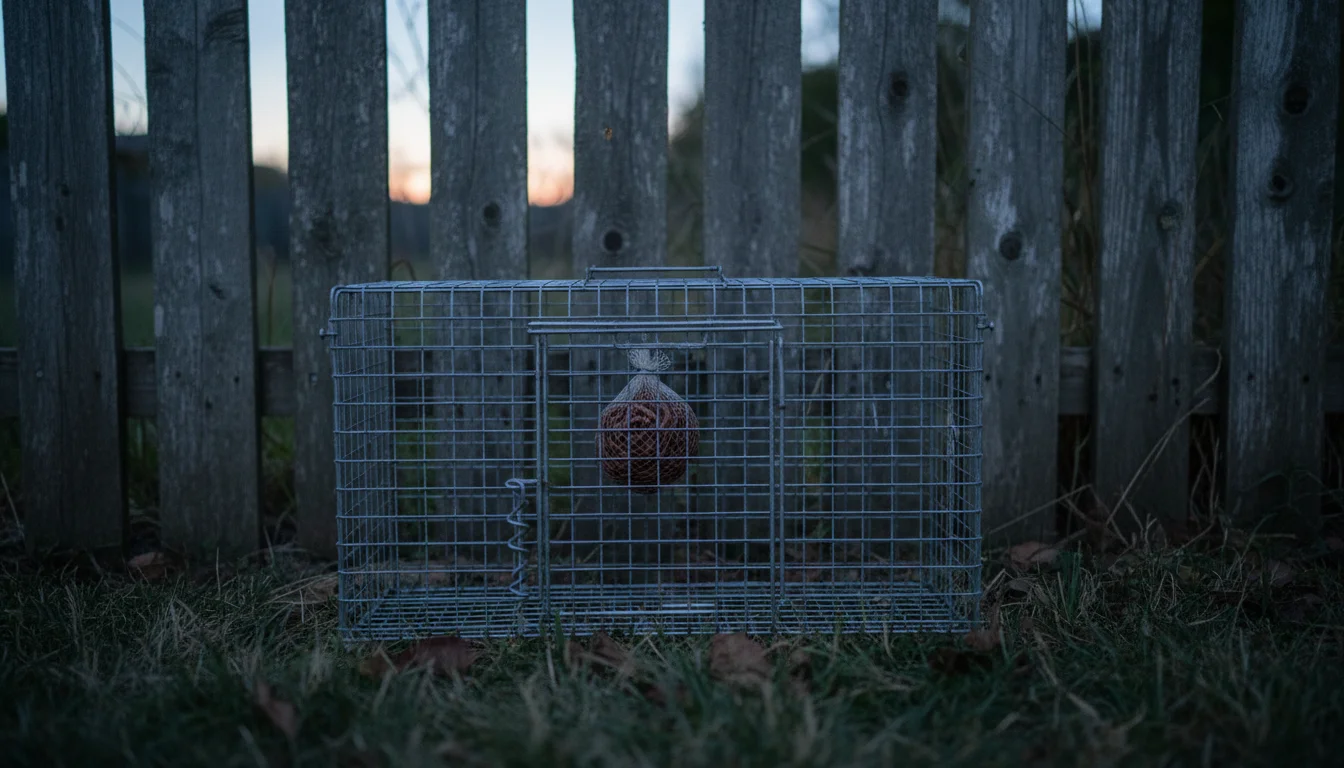
Use a cage trap at least 10 x 12 x 30 inches – armadillos are stocky and their shell needs room. Bait with earthworms placed in a nylon stocking at the back of the trap (the mesh holds scent while keeping the bait in place), or use overripe fruit. Sardines work too. Set the trap at dusk along a fence line or wall – armadillos travel edges and are far more likely to enter a trap positioned along their route than one left in the open.
Check the trap at first light. Never leave a trapped armadillo in heat or direct sun; they overheat quickly. Cover the trap with a towel or tarp once the animal is caught to reduce stress during transport.
Release at least 10 miles (16 km) away in a wooded area with soft soil. Five miles is the minimum cited by most wildlife agencies, but 10 is a safer margin given their homing instinct.
One important note: armadillos are a known carrier of Mycobacterium leprae, the bacteria responsible for leprosy. The actual transmission risk from casual contact is very low – most cases require prolonged direct exposure – but wear leather gloves when handling occupied traps and wash your hands afterward. Don’t handle dead armadillos barehanded.
Check your state regulations before you trap. In most southern states, trapping nuisance armadillos on your own property is legal, but relocating them across county lines may require a permit.
2. Install Exclusion Fencing
For gardens, foundation perimeters, and under-deck areas, physical exclusion is the most permanent fix. It’s work upfront, but it doesn’t need reapplying after every rain.
Armadillos are poor climbers, so height isn’t the issue – burial depth is. Use 16-gauge welded wire mesh with openings no larger than 3 x 3 inches. Bury the bottom edge at least 12 inches (30 cm) deep and bend it outward underground in an L-shape. That L-foot is what stops them: they’ll dig straight down at the base of a fence and miss the buried extension entirely, but an outward flare blocks horizontal digging.
For above ground, 24-36 inches (60-90 cm) is plenty. Armadillos don’t jump or climb. Seal gaps under gates with gravel or concrete pavers.
Under decks and sheds, use the same hardware cloth along the foundation perimeter and staple it to the structure framing. Armadillos that burrow under structures are harder to trap (they get comfortable) and do real structural damage over time – this is worth doing right.
3. Block Active Burrow Entrances
Armadillo burrows are 7-8 inches (18-20 cm) wide at the entrance and can run 5 feet (1.5 m) or more underground. They may have multiple entrances. Walk the perimeter of your property and find them – fresh loose soil at the opening means it’s active.
To fill an active burrow: pack gravel in first, then top with soil and tamp it hard. Gravel is the critical step. Loose soil alone they’ll push out in a night. Cover the sealed entrance with hardware cloth staked flat to the ground for good measure.
Also cut off daytime shelter. Armadillos rest during the day in dense cover – brush piles, woodpiles, thick vegetation close to structures. Remove anything that sits within 20 ft (6 m) of your house and you take away the habitat that makes your yard appealing in the first place.
4. Apply Castor Oil Repellent
Castor oil is the most credible non-lethal repellent for armadillos. It penetrates soil and coats grubs and earthworms – their primary food source – making them unpalatable. Armadillos move on to find better hunting.
Mix a concentrate: 8 tablespoons castor oil + 2 tablespoons dish soap in 1 cup warm water. The dish soap is the surfactant that helps the oil bind to soil. To apply, mix 2 tablespoons of that concentrate per gallon (3.8 L) of water and spray it across active foraging areas and your yard perimeter. A standard hose-end sprayer works fine.
Reapply every two weeks and after any significant rain. Commercial castor oil repellents (Mole Scram, Nature’s MACE) use this as their active ingredient – buy the concentrated version and dilute yourself; the ready-to-spray bottles are mostly water at a steep markup.
Set honest expectations: castor oil works better at redirecting transient armadillos that haven’t established burrows than at evicting ones that have already settled in. For established residents, trap first, then apply castor oil to discourage the next one from moving into the vacated territory.
5. Scatter Hot Pepper Deterrent
A lower-commitment option for garden beds and known foraging spots. Capsaicin irritates the nose and any skin it contacts – armadillos, like most animals, learn to avoid areas where the ground burns their snout.
Scatter cayenne pepper, chili powder, or red pepper flakes generously around the perimeter of beds and directly on disturbed soil. For surfaces like fence bases or ground-level barriers, a spray holds better: 2 tablespoons cayenne per liter of water applied directly to the soil.
The limitation is persistence. Rain washes it out immediately. In wet weather you’re reapplying every couple of days to maintain any effect. In dry conditions, once a week is usually enough. Wear gloves when handling cayenne in bulk and keep it away from areas where children or dogs walk – it transfers to paws and then eyes.
Use this as a complement to castor oil, not a replacement. Cayenne at the surface, castor oil in the soil – together they make the whole yard unpleasant.
6. Motion-Activated Sprinklers
Sudden water startles armadillos mid-forage and they associate the area with danger. With consistent placement, most armadillos decide your yard isn’t worth the hassle and shift their foraging route.
Place sprinklers near burrow entrances, along garden perimeters, and in known digging areas. Since armadillos are nocturnal and most active between dusk and dawn, make sure whatever unit you use has reliable night-mode detection. The Orbit 62100 and Havahart 5277 are commonly recommended for this – both handle low-light detection without false triggers on blowing branches.
Reposition every week. Armadillos map their routes and figure out sprinkler blind spots faster than you’d expect. Move the unit 8-10 ft each week to keep them off-balance.
This works better as a deterrent for newcomers than as an eviction tool for armadillos already settled in. Combine with trapping if one is already using your yard as a base.
7. Predator Urine Spray
Weakest option on this list, but worth knowing about. Coyote or fox urine triggers a threat response in prey animals – including armadillos, which are naturally prey. Apply the liquid spray or granules around your property perimeter, especially near burrow entrances and foraging areas. Reapply after rain.
The honest caveat: armadillos across much of the southern US coexist with actual coyotes and don’t always respond to coyote urine cues the way northern animals might. An armadillo that’s been foraging near coyote territory for years may simply ignore it. This is useful as an extra layer alongside other methods – not reliable on its own.
FAQs: How to Get Rid of Armadillos
Can armadillos give you leprosy?
Technically yes – they’re a known reservoir for the bacteria. Actual transmission to humans is rare and usually requires prolonged direct contact with infected tissue, not casual handling. Basic precautions cover it: leather gloves when handling traps, wash hands after, don’t handle dead armadillos without gloves.
What smells do armadillos hate?
Castor oil is the most consistently effective. Cayenne pepper works short-term but washes out fast. Predator urine (coyote or fox) has inconsistent results – armadillos in areas with real coyote presence often don’t react to it.
Is it legal to trap armadillos?
In most southern US states, yes – trapping nuisance armadillos on your own property is legal. Relocating them across county lines may require a wildlife permit. Texas, Florida, Georgia, and Alabama all allow on-property trapping without a permit; check your specific state’s wildlife regulations before you release elsewhere.
Will another armadillo move in after I remove one?
Possibly, especially if the burrows and shelter are still accessible. That’s why trapping alone isn’t enough – seal the burrows, remove brush cover, and apply castor oil to the foraging areas after you relocate the resident. Make the yard look unappealing to whoever comes sniffing next.
When to Call a Professional
If you’re finding more than three or four active burrows, if the armadillo is tunneling under your foundation or slab (you’ll see cracking or settling), or if two weeks of trapping hasn’t produced a catch – call a wildlife removal service. Structural burrow damage can be expensive to repair and gets worse the longer it’s left.