
Table of Contents
Figuring out how to get rid of household clutter isn’t really the hard part – deciding what to keep is. Once you’ve made the call on that sofa, that stack of duvets, or the drawer full of old phones, the harder question is where any of it actually goes. Most people default to the bin, which is a shame, because most of it doesn’t need to go there. According to the British Heart Foundation, 62% of us throw away homeware items in good enough condition to donate to charity.
Here’s what to do with it instead.
1. Donate Unused Furniture
If the piece is in reasonable condition, donation is the lowest-effort exit. The British Heart Foundation, Sue Ryder, and Emmaus collect furniture in good enough condition to resell – they handle the transport, which takes the logistics off you. Freecycle works well too; giving something away for free is fast, and the new owner comes to collect it.
Be realistic about projects you’ve been putting off. That dresser you planned to refinish has probably been waiting long enough. If you haven’t started it in six months, donate it to someone who will use it now.
2. Sell Online
The secondhand furniture market is genuinely strong. A sofa bed listed at £100 sold the same day on Facebook Marketplace. Storage pieces and sideboards move quickly; quirky or vintage items often fetch more than you’d expect.
A few things that actually matter when listing: include measurements (an obvious step that surprisingly few people bother with), give a sense of weight so buyers know how many people they’ll need, and don’t overprice – check what similar items are selling for first. Facebook Marketplace suits larger items; Vinted works better for smaller pieces like lights or soft furnishings. If it’s flatpack, photograph it assembled so buyers can see what it looks like, then dismantle it before collection.
Books, CDs, and DVDs can go on Music Magpie or World of Books – scan, box, and send via free courier. Vinted also has a thriving book market.
3. Recycle Furniture
When something is too far gone to donate or sell, check whether the retailer you’re buying a replacement from will collect the old piece. Some collect mattresses and sofas when delivering new ones. Certain flat-pack retailers run buy-back schemes – items in decent condition go to a resale section; the rest are recycled under a zero-waste-to-landfill policy. This needs to be arranged at point of purchase, not as an afterthought.
Local household waste recycling centres (tips) accept furniture if none of the above works. Phone ahead to check what the facility separates out versus what goes to landfill – it varies.
4. Repaint Furniture
Before you get rid of a piece entirely, it’s worth checking whether all it needs is a refresh. Water-based furniture paint transforms dated or scuffed items for very little money. Start with something simple: a chest of drawers or blanket box is a good first project. Roller for flat surfaces, brush only for detail areas and edges.
One gotcha: don’t sand veneer. The layer is thin enough that sanding through it wrecks the piece. Use a chemical varnish stripper instead, wipe back thoroughly, then paint directly. A paint wash (30% paint, 70% water) gives a lighter, more contemporary finish if you want something less opaque.
If you’d rather not DIY, Facebook groups like Furniture Painters Unite UK connect you with people who do this professionally.
5. Reupholster Furniture
If the frame is solid but the fabric is done, reupholstering is cheaper than replacement and keeps the piece in use. Dining chairs with drop-in seats are the easiest entry point – the upholstered section lifts straight out. Headboards are similarly beginner-friendly and offer more visual impact for the same technique.
What you need: a heavy-duty staple gun (not a light-duty office type – it won’t hold), upholstery fabric with 15cm of overlap on each side for tucking, and the old fabric kept until you’re done. The original fabric tells you exactly how the cuts and tucks were made.
For fixed sofas and armchairs with complex shapes, get a quote from a local upholsterer before assuming it’s beyond DIY. Often it’s not as expensive as replacing the piece.
6. Donate Bedding to Animal Shelters
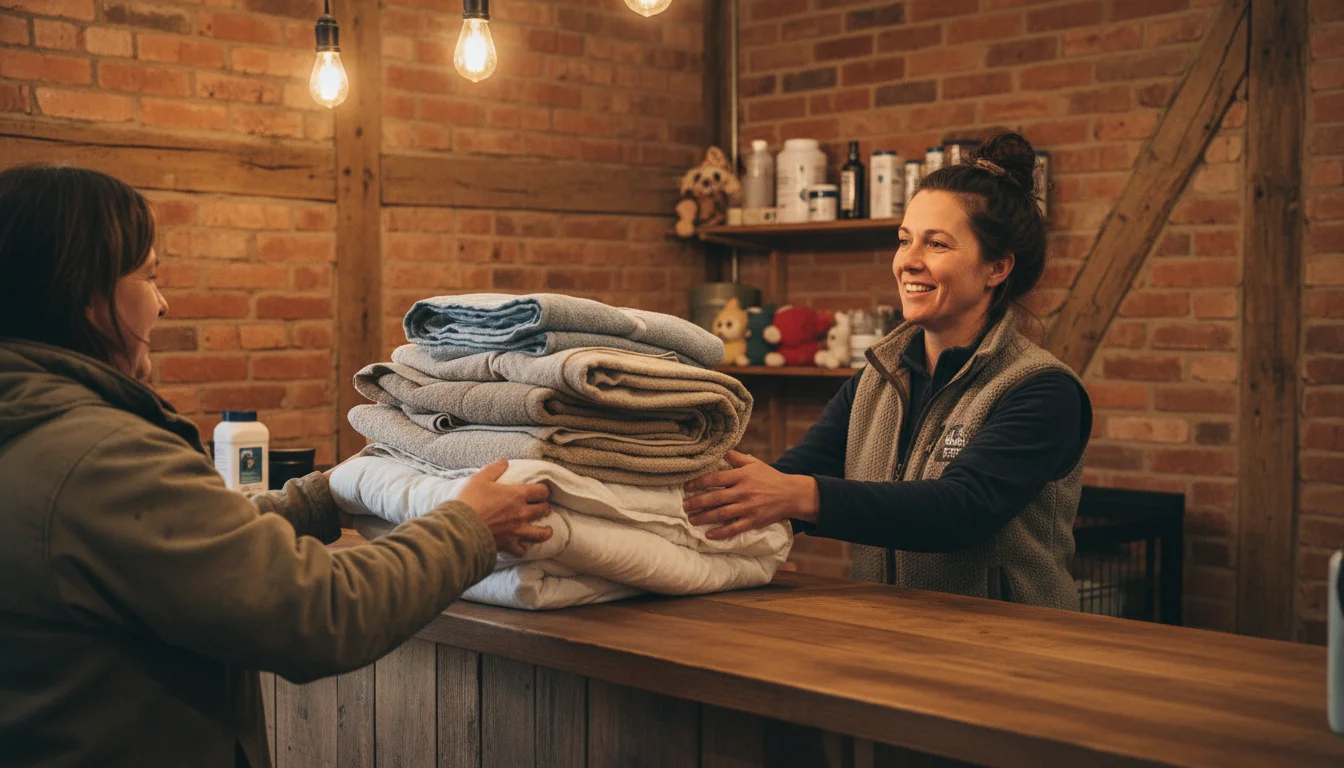
Duvets, pillows, towels, and blankets that are too worn for charity shops have a direct use at animal shelters and vet practices. Shelters go through huge amounts of soft bedding for kennelled animals – condition requirements are much more relaxed than charity shops. Wash before dropping off (strong detergent scents can distress animals; rinse well or avoid fabric softener). Call ahead to confirm they’re accepting donations and whether they have specific preferences.
7. Recycle Textiles
For worn textiles that can’t be donated anywhere – old curtains, threadbare towels, mismatched duvet covers – some home retailers run in-store textile recycling drop-off schemes. Bag them up and leave them in the collection point; they get sorted for reuse, repurposing, or fibre recycling. Textile banks in supermarket car parks and council-run sites accept most conditions.
Worth knowing: duvet covers and tablecloths in good condition are actively sought by upcycling fashion brands looking for natural-fibre fabric. Charity shops are a better route than textile banks for anything in reasonable shape.
8. Recycle Electricals
Anything with a plug, battery, or cable can’t go in the regular bin – it contains recoverable metals (copper, aluminium, sometimes rare earth elements) that get lost to landfill and introduce toxins alongside them. Drop-off points at recycling centres, electrical retailers, and some supermarkets accept e-waste free of charge.
Before dropping off a phone, tablet, or computer: factory reset, verify data is wiped, sign out of all accounts. Remove any SIM or memory cards. If it still works, selling or donating is a better first option than recycling.
9. Repair Electricals
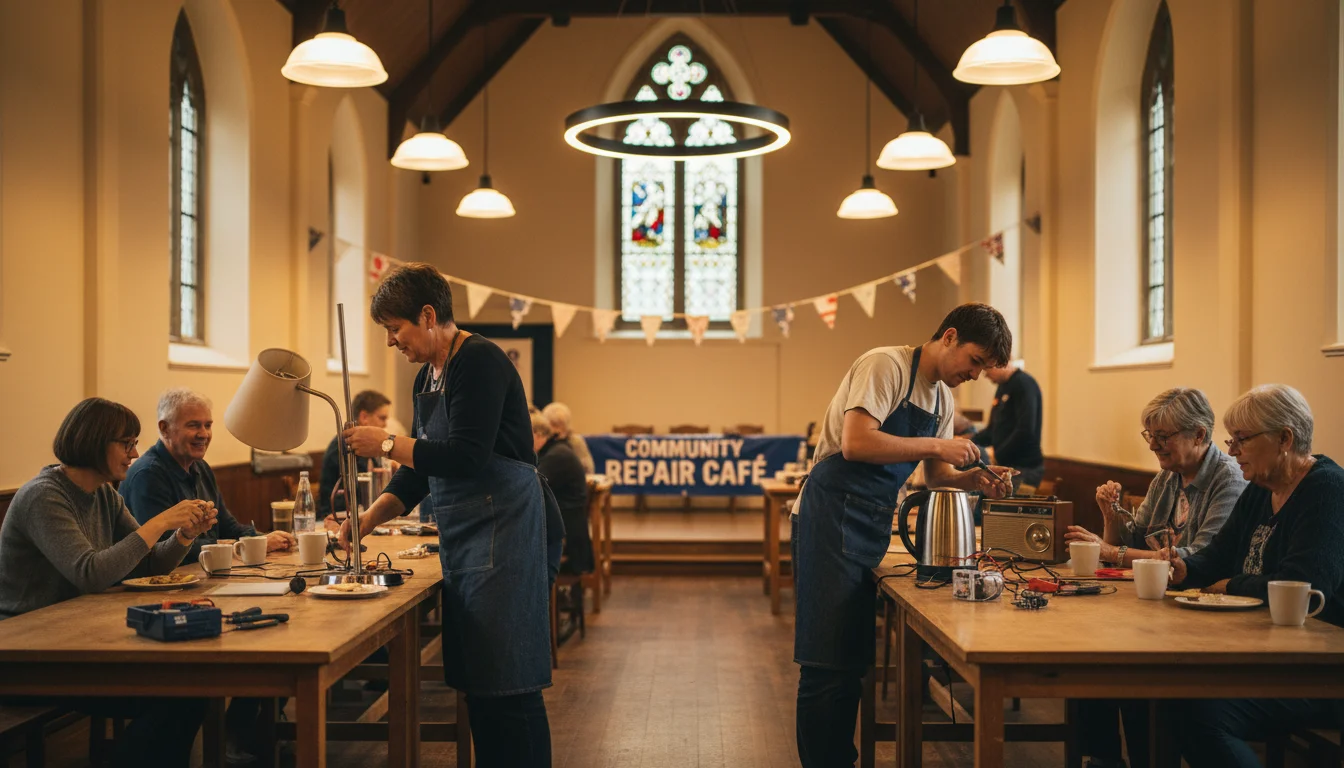
Before recycling a broken item, check whether it can be fixed. Community repair cafes are volunteer-run sessions where people bring in broken items – lamps, radios, kettles, toasters – to be diagnosed and repaired on the spot. Most towns now have one; use an online directory to find the nearest. It’s free or by donation, and you often get to watch and learn.
For devices specifically: refurbishment services accept smartphones, tablets, and laptops for testing, cleaning, and battery replacement. Keeping a phone for five years instead of upgrading after two and a half – with a battery replacement in between – reduces its annual carbon footprint by 49% (Back Market, 2025). Refurbished coffee machine sales went up 146% in the same year, which tells you the market for this has genuinely normalised.
10. Donate Old Books
Libraries, charity shops, and literacy programmes take book donations. If your local charity shop is selective, World of Books and We Buy Books run schemes where you scan ISBNs, box them up, and post via free courier – straightforward for anyone with a shelf to clear.
For children’s books specifically, local schools are often grateful for donations and will put them to immediate use.
One thing to accept before storing books "temporarily": paper absorbs moisture over time. A book left in a damp room for long enough warps, grows mould, and becomes unreadable. If it’s been in storage for more than a year and you haven’t gone back for it, let it go now. If your problem is basement clutter specifically, there’s a dedicated guide covering what typically piles up down there.
FAQ
Where can I donate furniture for free collection?
The British Heart Foundation, Sue Ryder, and Emmaus collect furniture in good enough condition to resell. Freecycle connects you with local people who will collect for free. Facebook Marketplace works similarly if you price it at zero.
What is the 20 rule for getting rid of clutter?
The 80/20 rule applied to clutter: roughly 20% of your possessions cause 80% of the congestion. Focus your attention on identifying that 20% – the furniture you’ve been stepping around, the textiles filling a wardrobe you can’t access – rather than trying to tackle everything at once.
What do I do with electricals I can’t donate or sell?
Any item with a plug, battery, or cable goes to an electrical recycling drop-off, not the general bin. Most recycling centres have a dedicated bay. Many electrical retailers accept old electricals at the door, even if you’re not buying a replacement.
How do I clear clutter quickly?
The one-in-one-out rule is the fastest ongoing fix: whenever something new comes in, something equivalent goes out. For a backlog, work room by room rather than category by category. One room finished is more motivating than partial progress everywhere.