Table of Contents
You walked out to the garden and found your seedlings decapitated. Stems cut clean through at soil level, plant tops lying wilted on the ground. That’s cutworms – and if you’re trying to figure out how to get rid of cutworms, the short answer is: collars, hand-picking, and a biological spray. The caterpillar does its work at night, curled in the soil during the day, and by the time you see the damage it’s already done.
The good news: once you know how to get rid of cutworms, the damage is almost entirely stoppable. The methods below range from free (toilet paper rolls, your hands) to slightly less free (a bottle of Btk from the garden center). Start with collars – they work before any damage happens and you probably already have the materials.
How to identify cutworms: They’re hairless caterpillars, 1-2 inches (2.5-5 cm) long, in shades of gray, brown, green, or black. Solid or striped. When disturbed, they curl into a tight C-shape. The moths that produce them are nondescript tan or gray – you won’t notice them. What you’ll notice is decapitated seedlings, partially cut stems that sag and wilt, or small holes chewed through larger leaves later in the season. Check at night with a torch if you want to catch them in the act. During the day, dig a few inches into the soil next to a freshly damaged plant – you’ll often find one curled just beneath the surface.
1. Plant Collars for Seedling Protection
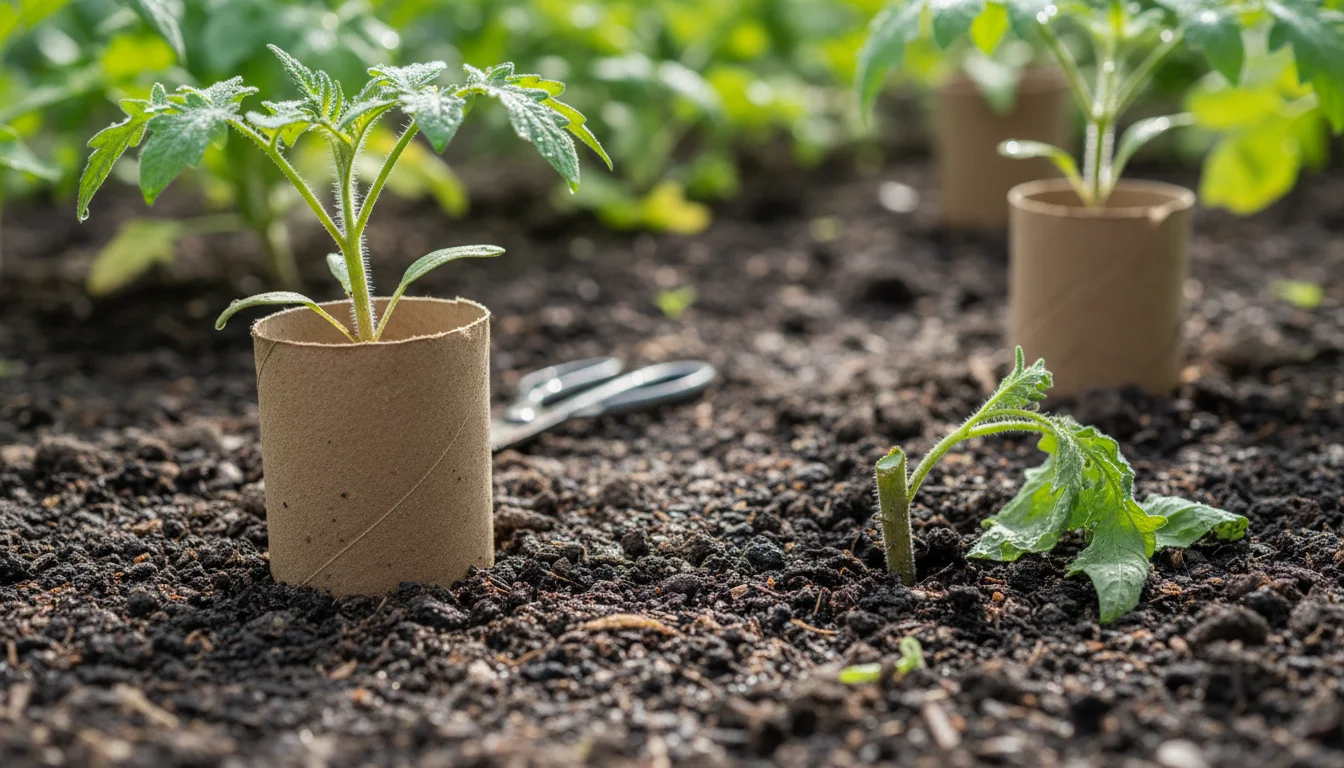
The collar method is the consensus solution across every gardening forum, extension service guide, and experienced vegetable gardener. It works because cutworms attack the stem at or just below soil level – a collar blocks that attack point entirely.
Make a ring about 3-4 inches (7-10 cm) tall and press it 2 inches (5 cm) into the soft soil around the seedling. Leave 2 inches (5 cm) above ground. The below-ground portion is what matters – that’s where the cutworm tries to reach the stem.
Material options you likely already have:
- Toilet paper rolls – cut in half lengthwise if too tall, or leave whole. Biodegradable, free.
- Cardboard strips – cut into 4-inch (10 cm) strips, staple into a ring.
- Yogurt or cottage cheese containers – cut off the bottom. Reusable for years.
- Aluminum foil – wrap loosely around the stem. Some evidence it also deters other pests.
Install at transplanting time, not after damage starts. Once stems toughen and become woody (4-6 weeks), the risk window closes and you can remove or leave them to decompose.
A few details that matter: make the collar snug against the soil so there are no gaps at the base – a gap is all a cutworm needs to get through. If you’re using biodegradable materials like toilet paper rolls, check them after heavy rain since they can soften and collapse. Yogurt containers and aluminum foil hold up longer. And protect every seedling individually – a collar on the plant next to an unprotected one does nothing for the unprotected one.
2. Hand-Picking at Dusk
Go out after dark with a torch. Cutworms feed at night and are on the soil surface then – during the day they curl up just below the soil surface next to the damaged plant.
Bring a bucket of water with a few drops of dish soap added. The soap breaks surface tension so cutworms can’t swim out. When you find one on the soil or a stem, drop it in.
Where to look: the soil surface around stems, especially next to plants that have already been cut. If you dig 2-3 inches (5-7 cm) down near a freshly decapitated seedling, you’ll often find the cutworm curled in a C-shape right there.
Ten minutes of this on two or three consecutive nights will clear a light infestation. For a heavy one, combine it with the collar method so you’re controlling the remaining population while blocking access to your seedlings.
One refinement: if you can’t get out after dark, check the soil surface at first light instead. Cutworms that fed during the night sometimes linger above ground a little after dawn before retreating. You won’t catch them all this way, but it’s better than waiting for the following night.
3. Apply Btk Biological Insecticide
Btk (Bacillus thuringiensis var. kurstaki) is a soil bacterium that kills caterpillars when ingested. It’s organic, safe for food crops, and won’t harm anything that doesn’t eat it – birds, earthworms, bees, and beneficial insects are all unaffected.
The catch: the caterpillar has to eat it. You spray the foliage, it gets ingested when cutworms feed, and they stop eating within hours. Death follows within 1-3 days.
Apply at dusk – Btk degrades in UV light so daytime application is mostly wasted. Mix as directed on the label (typically 1-4 tablespoons per gallon / 3.8 L of water) and spray all plant surfaces, including the soil near stems where cutworms emerge. Reapply every 5-7 days or after rain.
Btk works best on young, small caterpillars. Large near-mature larvae eat less and may not get a lethal dose before pupating. Use it early in the infestation, not as a last resort when larvae are already large.
Products: Monterey Bt is widely available at garden centers and online, typically $12-15 (£10-12) for a concentrate that makes several gallons of spray. Any product listing "Bacillus thuringiensis kurstaki" or "Btk" on the label will work. Store unopened in a cool, dark place – the bacterial spores remain viable for 2-3 years.
One thing Btk won’t do: kill cutworms in the soil. It only works when ingested from foliage or soil surface. If your cutworm population is spending most of its time underground and only emerging briefly to feed, Btk will reduce feeding damage but won’t eliminate the population the way a physical barrier would.
4. Cornmeal Bait
This one comes from gardening forums rather than university extension guides, so take it as a supplement rather than a primary fix. The premise: cutworms eat cornmeal, can’t digest it, and die. Some gardeners swear by it; the controlled evidence is thin.
Sprinkle a light dusting around each stem – about half a teaspoon (2.5 ml) per plant. Create a short trail leading away from the stem to draw pests away from the most vulnerable point. Reapply after rain, as wet cornmeal clumps and loses palatability.
Free if you have cornmeal, takes 30 seconds per plant, no downside to trying it alongside the other methods. Just don’t rely on it as your only defense.
A related approach worth knowing: diatomaceous earth (food-grade) sprinkled around plant bases works as a physical irritant to soft-bodied larvae. It damages their outer coating on contact and causes dehydration. Apply a ring a few inches wide around each stem, and reapply after rain. It’s slightly more evidence-backed than cornmeal and costs a few dollars for a bag that lasts a season. Neither method replaces collars, but both are worth layering in if cutworm pressure is high.
Prevention
The best time to deal with cutworms is before they arrive.
Till in early spring. Cutworms overwinter as pupae or larvae in the soil. Tilling your beds at least two weeks before planting exposes them to drying, cold, and predators – birds will follow the tiller and do some of the work for you. UC Davis IPM recommends tilling 2+ weeks before planting to disrupt the overwintering population before they can damage newly transplanted seedlings.
Control weeds around garden edges. Adult cutworm moths lay eggs in weedy grasses and plant debris around the garden perimeter. Keeping edges mowed and cleared removes egg-laying sites and reduces the population that emerges into your beds the following season.
Install collars before planting, not after. The window of vulnerability is the first 4-6 weeks after transplanting, when stems are soft and easily cut. Collars installed at transplant time cost nothing extra in effort. Collars installed after damage has started are still worth doing, but you’ve already lost some plants.
Encourage predators. Ground beetles, birds, toads, and parasitic wasps all prey on cutworm larvae and pupae. Leaving some ground cover at the garden edges (not weedy grasses specifically, but low perennial plants and leaf litter) gives beneficial predators habitat without giving cutworm moths egg-laying sites.
FAQ
What is the best thing to kill cutworms?
For immediate control, hand-picking at dusk into soapy water is the most direct. For ongoing protection, plant collars stop them reaching your seedlings in the first place. If the infestation is persistent or widespread, Btk spray is the most reliable chemical-free escalation. Use all three together if you’re dealing with a serious problem.
Will dish soap kill cutworms?
Yes – soapy water drowns them. Drop hand-picked cutworms into a bucket of water with a few drops of dish soap and they can’t escape. A diluted spray of dish soap solution applied directly to cutworms on the soil will also kill on contact, but you’d need to find them first (which means going out at night).
Do eggshells deter cutworms?
Possibly. Crushed eggshells create a sharp physical irritant at soil level, similar to diatomaceous earth. The evidence is mostly anecdotal, but the cost is zero if you have eggshells, and there’s no harm in scattering them around seedling bases. Don’t rely on them as your primary defense.
Will tilling the soil kill cutworms?
Yes, and it’s a useful preventive step. Tilling in early spring (at least two weeks before planting) exposes cutworm pupae and larvae to weather, drying out, and predators like birds and ground beetles. It won’t eliminate all cutworms but it reduces the population before they become your problem.
How do I find cutworms during the day?
Dig 2-3 inches (5-7 cm) into the soil a few inches from a freshly cut seedling. Cutworms spend daylight hours coiled just below the surface next to their feeding site. They curl into a C-shape when disturbed. Once found, drop them in soapy water.
Can cutworms climb into raised beds?
Yes, if the sides aren’t a barrier. A raised bed with open soil at the base gives cutworms a path in from surrounding ground. Plant collars still work in raised beds – install them around individual seedlings. If you’re building raised beds, a layer of hardware cloth (6 mm / 1/4 inch mesh) at the base helps with many soil pests, though cutworms are more of a surface threat than a below-ground one.
Do cutworms affect established plants?
Rarely the same way. Cutworms target soft young stems – once a plant has a thick, woody stem they can’t cut through it. You’ll occasionally see cutworm damage to larger plants later in summer (holes chewed through leaves), but it’s usually minor. The critical protection window is the first 4-6 weeks after transplanting.
What vegetables are most at risk?
Tomatoes, peppers, brassicas (cabbage, broccoli, kale), corn, and beans are among the most commonly targeted. Any vegetable seedling with a soft stem is vulnerable. Squash seedlings are somewhat less targeted due to their larger, faster-hardening stems, but they’re not immune. If cutworms are present in your garden, protect everything you transplant regardless of species.