Table of Contents
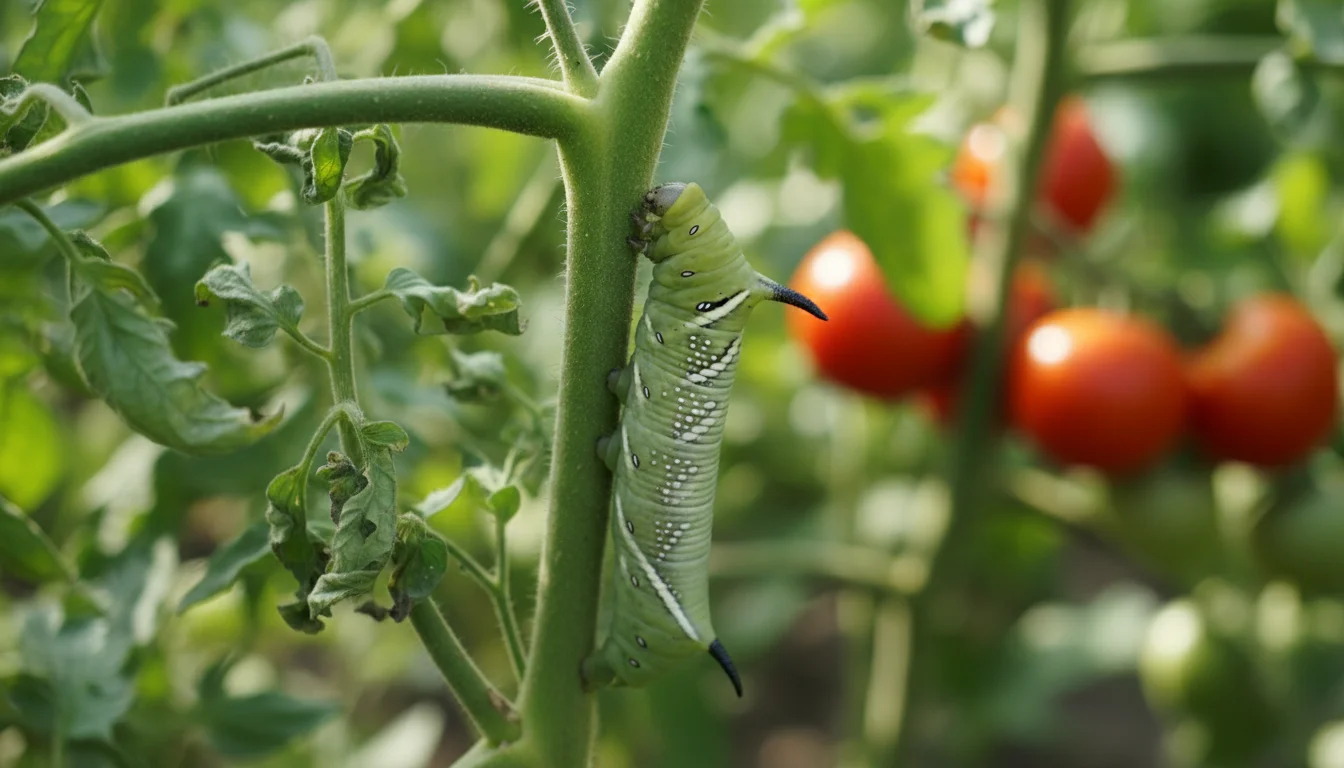
You found the damage before you found the culprit. A branch stripped bare, ragged holes in the leaves, black droppings (called frass) scattered on the foliage below. If you’re trying to figure out how to get rid of tomato hornworms on tomato plants, the culprit is probably right there – you’re just not seeing it yet. These caterpillars are pale green with white V-shaped markings along the sides and a dark horn at the rear. They’re large (3-4 inches at full size) but they press flat against stems and blend in well against green plant tissue. Check again at dusk or grab a UV flashlight after dark: hornworms glow fluorescent green under ultraviolet light, which makes detection embarrassingly easy once you know the trick.
Once you’ve found them, you have six solid options. Most infestations don’t need all of them.
1. Hand-Pick Them Off
For hornworms, your hands are genuinely the best tool. These caterpillars are large – often 3-4 inches long – and visible once you know what you’re looking for. No spray, powder, or contraption beats direct removal for a small-to-medium infestation.
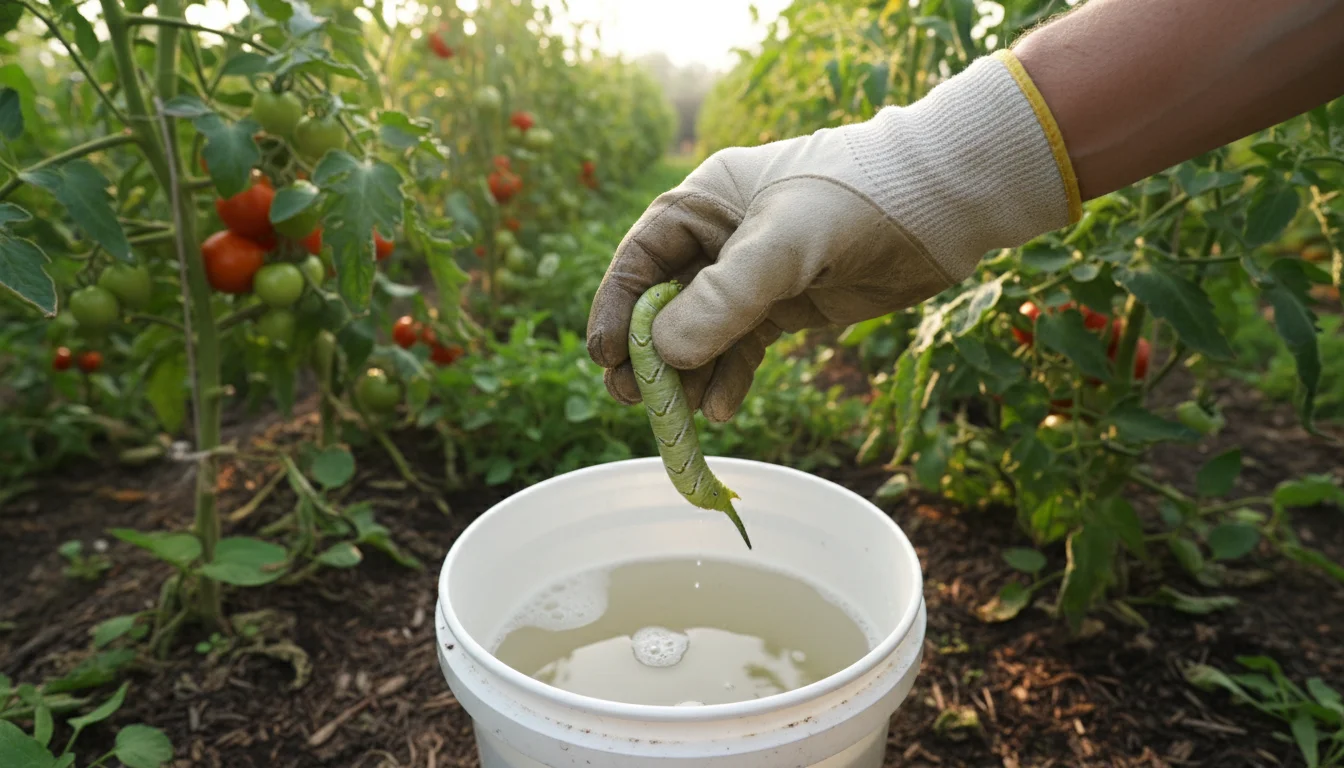
Hunt at dusk, dawn, or after dark when hornworms feed in the open. During the day they flatten against stems and become nearly invisible. Drop captured hornworms into a bucket of soapy water – don’t just toss them in the lawn, they’ll climb back onto your plants.
One thing to check before you kill: if a hornworm is covered in small white rice-shaped cocoons along its back, leave it alone. Those are braconid wasp eggs. The larvae will kill the hornworm from the inside, then the adult wasps will go on to control other caterpillars in your garden. Parasitized hornworms are doing more for you dead and being eaten than alive and eating your plants.
A five-minute check every few days during peak season (late July through early August in most of the US) keeps populations from exploding. Once you’re in the habit, you’ll catch them before they do serious damage.
2. Spray Plants with a Hose
A strong blast from a garden hose knocks hornworms off your plants and onto the ground, where birds and ground beetles will find them. It won’t kill the hornworms outright, but it disrupts feeding and dislodges caterpillars that haven’t anchored themselves deeply into the foliage.
Use the highest-pressure setting you have and work methodically – target the undersides of leaves and along stems where hornworms grip tightest. Don’t just spray the tops of plants; the caterpillars almost always cluster on leaf undersides and where stems meet branches. Do this in the morning so foliage dries before nightfall. Wet leaves left overnight invites fungal disease, and tomatoes are already prone to it.
This works best as a first-pass method before you go in to hand-pick or apply a spray treatment. Hosing the plant down first shakes loose caterpillars you’d otherwise miss and makes the follow-up inspection faster. After a good hose-down, check the ground around the base of your plants – that’s where displaced hornworms land, and they’re easy to collect before they climb back up.
Repeat every 3-4 days if you’re using this as your primary control method. The effect is temporary, but regular disruption keeps feeding pressure low while you work through other approaches.
3. Apply Bt Insecticide
Bt (Bacillus thuringiensis var. kurstaki) is the go-to for serious hornworm infestations. It’s a naturally occurring soil bacterium that produces proteins toxic to caterpillars when ingested – harmless to humans, pets, birds, and most beneficial insects including bees. Sold under brand names like DiPel and Thuricide, and available at any garden center.
Spray it on the foliage and hornworms eat it along with the leaf tissue. The proteins destroy the caterpillar’s gut lining within 24-48 hours. They stop feeding almost immediately, then die within a few days.
Apply in the evening. UV light breaks down Bt proteins within 1-3 days on exposed surfaces, so evening application gives you maximum residual time. Reapply every 5-7 days and after any significant rain that washes the product off the leaves.
For large hornworms over 2 inches long, expect to apply 2-3 times over consecutive days – bigger caterpillars have more robust gut tissue and a single dose may not finish them. Small, newly hatched caterpillars are the most vulnerable. If you’re seeing new feeding damage after treatment, that’s a sign coverage lapsed or new eggs hatched – keep the schedule.
Bt doesn’t affect eggs, so continue monitoring for hatchlings for two weeks after treatment ends.
4. Deploy Cayenne Pepper Spray
Cayenne pepper spray works as a feeding deterrent – the capsaicin irritates hornworms’ sensory organs and makes your plants unpleasant to eat. It won’t kill an established infestation on its own, but it’s useful as a preventive layer or alongside other methods.
Mix 2 tablespoons of cayenne pepper powder with 1 qt (950 ml) of water and a few drops of dish soap (the soap helps the solution stick to leaves). Let it steep for 24 hours before using – skipping this step results in weak concentration. Strain it thoroughly, transfer to a spray bottle, and coat your plants, focusing on the top and underside of leaves.
Reapply after rain. Keep pets and children away from treated areas while wet – it’ll irritate eyes and skin. Once dry, it’s fine.
This is a good option if you want to avoid any spray residue on produce and Bt isn’t available. It’s also genuinely inexpensive – a standard container of cayenne at the grocery store makes several batches and costs less than a dollar per application. The steeping step is the only real time investment.
5. Insecticidal Soap
Insecticidal soap works on contact – it has to physically touch the pest to do anything. That makes it less efficient than Bt against hornworms specifically, since these caterpillars are good at hiding. But if you’ve already spotted them and want something to hit them with directly, or if you’re dealing with a mixed pest situation (hornworms plus aphids or spider mites), insecticidal soap handles all of them in one application.
Mix 1 tablespoon of pure liquid castile soap with 1 quart (1 L) of water. Dish soap with degreasers or antibacterial additives can scorch plant tissue – stick to castile. Spray directly onto caterpillars and coat both surfaces of infested leaves thoroughly. The solution needs to physically contact the pest, so coverage matters more than volume.
Apply in cool, shady conditions – morning is ideal, not midday. Soap can cause leaf burn on hot, sun-exposed foliage. Because it leaves no residue once dry, beneficial insects that land on your plants after treatment won’t be affected.
Reapply every 5-7 days. If you’re seeing active feeding damage after two applications with no visible reduction, switch to Bt – it’s more effective against caterpillars at any life stage.
6. Companion Planting (Prevention)
Companion planting won’t rescue a plant that’s already infested, but it reduces how often hornworms set up camp in the first place. Basil planted near tomatoes is the most targeted option – it specifically deters tomato hornworms. Plant it between tomato plants, not just nearby.
Marigolds work as a general pest deterrent along garden borders. They repel aphids and whiteflies while attracting hoverflies and other predatory insects that eat hornworm eggs. Dill, borage, parsley, and thyme also deter hornworms according to experienced gardeners and some extension service recommendations.
If you do companion planting, plan it before the season starts. You need the companion plants established and growing alongside your tomatoes from transplant time, not planted in July after you’ve already found hornworms. It’s a long-game strategy that works on cumulative exposure, not instant results.
One underrated companion: dill. Dill attracts braconid wasps, the parasitoid wasps that kill hornworms by laying eggs on them. Plant dill nearby and you’re creating habitat for your best natural ally. Just don’t plant it too close to your tomatoes – dill and tomatoes are reportedly allelopathic at close range and can inhibit each other’s growth.
Prevention
The hornworm life cycle gives you a seasonal advantage. Adult sphinx moths lay eggs on tomato plants in late spring and early summer. The eggs are pale green and tiny – almost impossible to spot without deliberate inspection. The caterpillars hatch and begin feeding, growing rapidly, and showing up as a visible problem in late July and August when they’ve grown large enough to do obvious damage. By that point they’ve been eating for a while.
Till your soil in fall and again in early spring to disrupt overwintering pupae and expose them to birds and cold. Hornworm pupae are dark brown and shaped like a small football with a curved handle – the "handle" is the developing moth’s proboscis case. Birds and rodents will eat exposed pupae readily, so tilling doesn’t need to be deep. Four to six inches is sufficient.
Row covers on young tomato plants in early summer prevent moths from landing to lay eggs in the first place. Remove them once flowers appear so pollinators can reach the blossoms.
The most practical prevention, though, is checking your plants regularly. A five-minute scan every few days during growing season catches hornworms early, when they’re small and easy to deal with. Black frass on the lower leaves of a plant is usually the first visible sign. Look up from the frass along the stem above it – that’s where the hornworm will be. Early-caught means small caterpillar, which means hand-picking handles it without any spray at all.
Frequently Asked Questions
How do you spot tomato hornworms before the damage gets bad?
Look for black frass (droppings) on foliage – it drops down from wherever the hornworm is feeding. Once you see frass, look up along the stem directly above. After dark, a UV flashlight makes them glow fluorescent green and removes all the guesswork.
Should I kill a hornworm covered in white cocoons?
No. Those white rice-shaped cocoons are braconid wasp eggs. The larvae are parasitizing the hornworm – it will die on its own, and the adult wasps that emerge will go on to control other caterpillars in your garden. Leave it where it is.
Is it safe to touch a tomato hornworm?
Completely safe. The horn at the rear end looks threatening but is decorative. Hornworms can’t bite, sting, or cause skin irritation. Pick them up barehanded if you want.
Do tomato hornworms attack other plants?
Yes. Tomato hornworms feed on all plants in the nightshade family – tomatoes, peppers, eggplant, and potatoes. If your tomatoes are clean but a neighboring pepper plant has chewed leaves and frass, same culprit.
What do tomato hornworms turn into?
Five-spotted hawk moths (also called sphinx moths or hummingbird moths). They’re large, brown-and-grey moths with a four-to-six-inch wingspan that fly at dusk and pollinate flowers. Whether that makes you feel better about killing the caterpillars is up to you. Practically speaking, the moth population in your area isn’t going anywhere, and letting hornworms feed freely to "save the moths" just means more moth eggs on your tomatoes next season.