Table of Contents
A lisp is fixable. It’s one of those speech patterns that feels permanent until you actually work on it, then it starts shifting faster than you’d expect. Most lisps come down to tongue placement during the "S" sound. Your tongue’s pushing forward when it should pull back, or it’s sitting too high, or the airflow’s hitting the wrong spot.
Kids usually outgrow them. Adults don’t, but the same exercises that work for a seven-year-old work for you too. You just need consistency and a bit of self-awareness about what your mouth’s actually doing when you talk.
1. Tongue Placement Drill
The core problem with most lisps is the tongue tip pushing against or through your front teeth during "S" sounds. It needs to stay behind your teeth, not touching them.
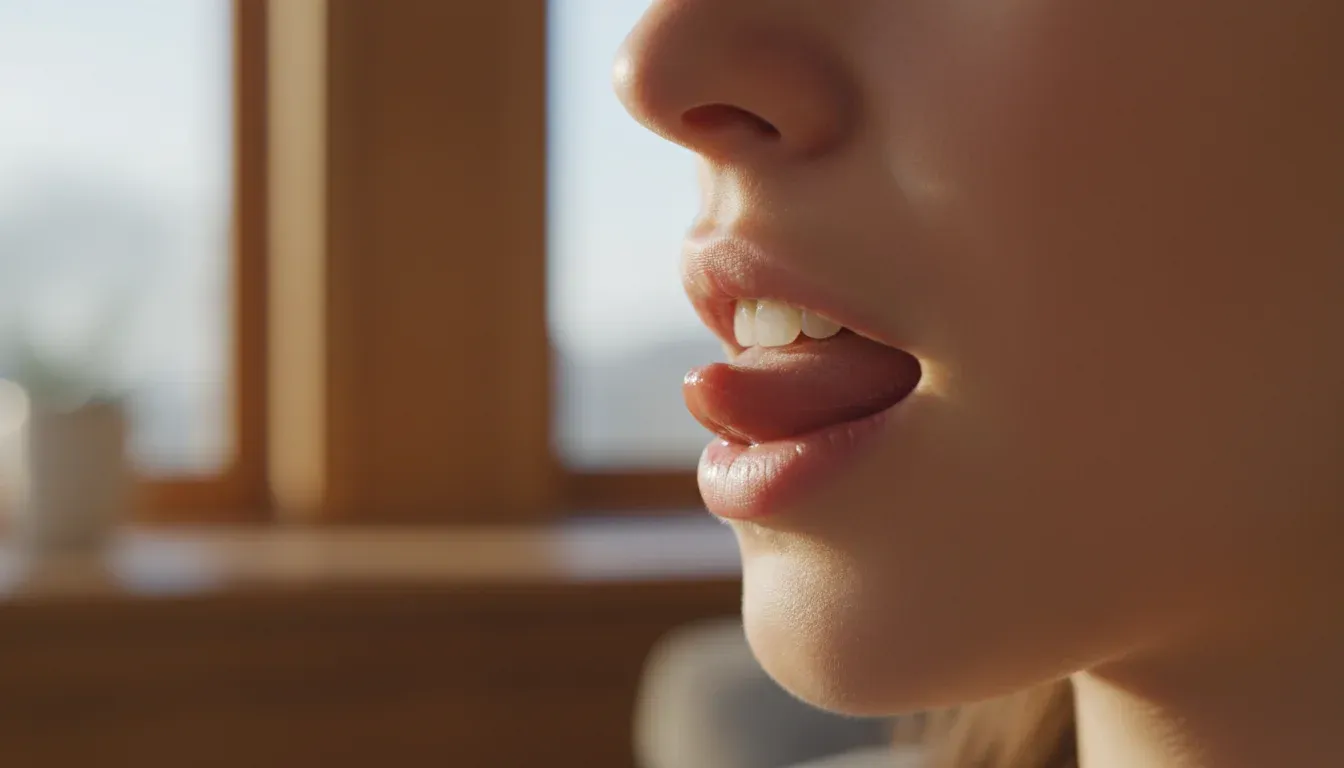
Put your tongue tip just behind your top front teeth, on that ridge where the gums meet the roof of your mouth. Keep it there. Now push air through the small gap between your tongue and the roof of your mouth while keeping your teeth slightly apart. That hissing sound is a proper "S."
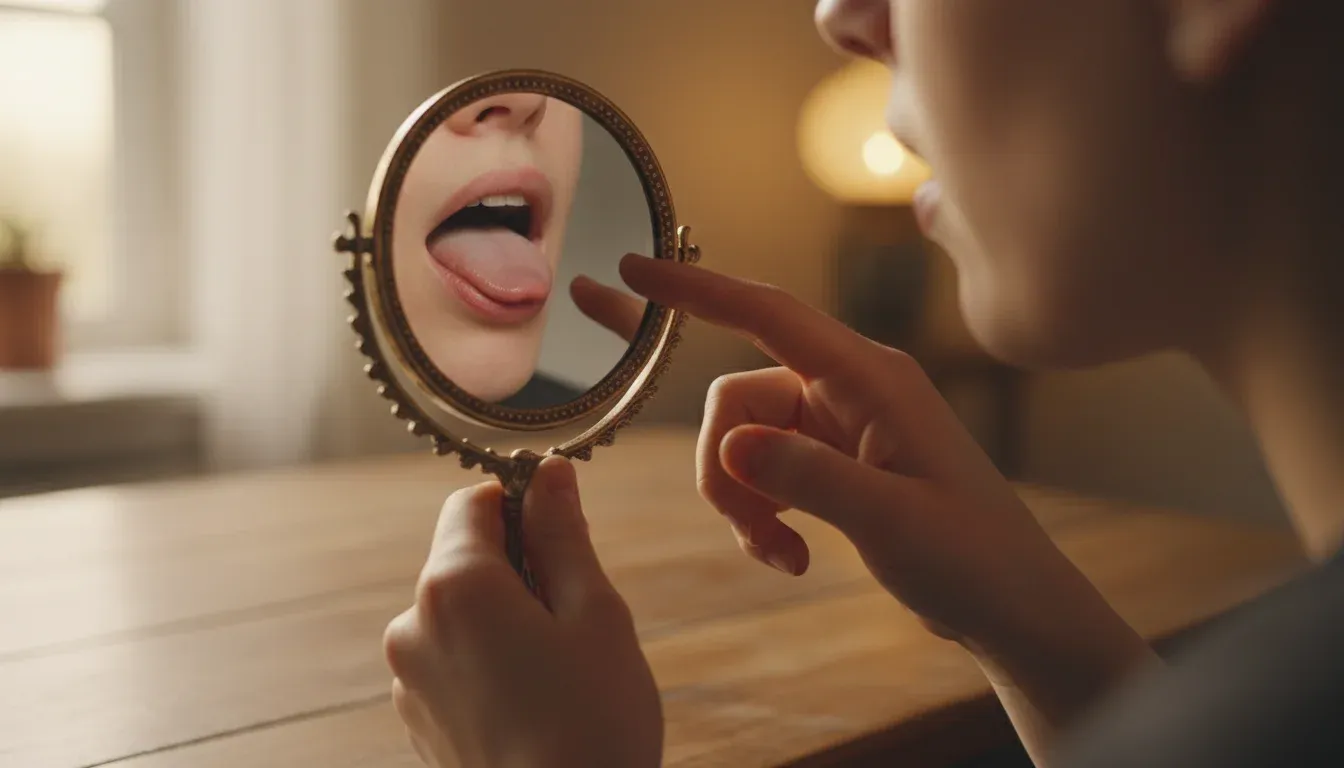
Practice with "S" words in front of a mirror. Say "sun," "soft," "sister," "asse ss," "snake" slowly, watching your tongue. If it pokes through your teeth or touches them, pull it back. Do this for five minutes twice a day. Boring, but it rewires the muscle memory.
2. Air Direction Exercise
A frontal lisp happens when air escapes forward over your tongue instead of through the narrow channel that creates the "S" hiss. You can feel the difference.
Put your hand in front of your mouth and make an "S" sound. If you feel a strong burst of air hitting your palm, that’s a lisp. A correct "S" directs air downward in a thin stream, not forward in a puff.
Now try directing the air down by raising the sides of your tongue to touch your upper molars while keeping the tip anchored behind your front teeth. The air should shoot out in a focused stream between your tongue and the roof of your mouth. Practice this until the air hits your chin, not your hand.
3. Tooth Position Check
Some lisps come from keeping your teeth too far apart or too close together during "S" sounds. There’s a sweet spot.
Your teeth should be nearly together but not touching, about the width of a toothpick apart. Clench your jaw gently, then relax it just enough to slip a fingernail between your front teeth. That’s the gap you want.
Practice "S" sounds while maintaining that exact tooth distance. If you’re opening your jaw too wide (common habit), it changes the air channel and causes a lisp. If you’re clenching too hard, same problem.
4. Syllable Isolation
Sometimes you can nail the "S" sound alone but lose it in actual words. Breaking words into syllables helps.
Start with "S" by itself. Hold it for three seconds. Then add vowels: "sssss-ay," "sssss-ee," "sssss-oh." Long pause between the "S" and the vowel so you lock in the correct tongue position before moving to the next sound.
Once that’s smooth, shrink the pause. "Ss-ay… ss-ay… say." Then move to two-syllable words, keeping the focus on the "S" at the start: "simple," "seven," "certain." Then three syllables: "Saturday," "sassafras," "seriously."
5. Reading Aloud with S-Heavy Text
Controlled practice is one thing. Real speech is another. Reading aloud from S-heavy passages forces you to maintain proper form across longer stretches.
Find a paragraph with a lot of "S" words (news articles work well). Read it slowly, exaggerating the tongue placement and air direction at first. Speed up gradually over several sessions. Your goal is making the correct "S" automatic, not something you have to think about mid-sentence.
Record yourself. Listen back. You’ll catch when you slip into the lisp and when you don’t. It’s uncomfortable to hear yourself, but it shows progress faster than guessing.
6. See a Speech Therapist
If you’ve drilled these exercises for a month and the lisp isn’t budging, you might have a structural issue (tongue tie, jaw misalignment, bite problems) or a habit that’s too ingrained to fix solo.
A speech therapist can spot what you’re missing in ten minutes. They’ll give you targeted exercises based on your specific lisp type (frontal, lateral, dentalized). Insurance often covers it, especially for kids. Adults usually pay out of pocket, but most therapists charge for a single session if you just want a diagnostic and a personalized plan.
Some lisps are neurological or tied to hearing issues. A therapist can identify those and point you toward actual solutions instead of having you do tongue exercises that won’t work for your situation.