Table of Contents
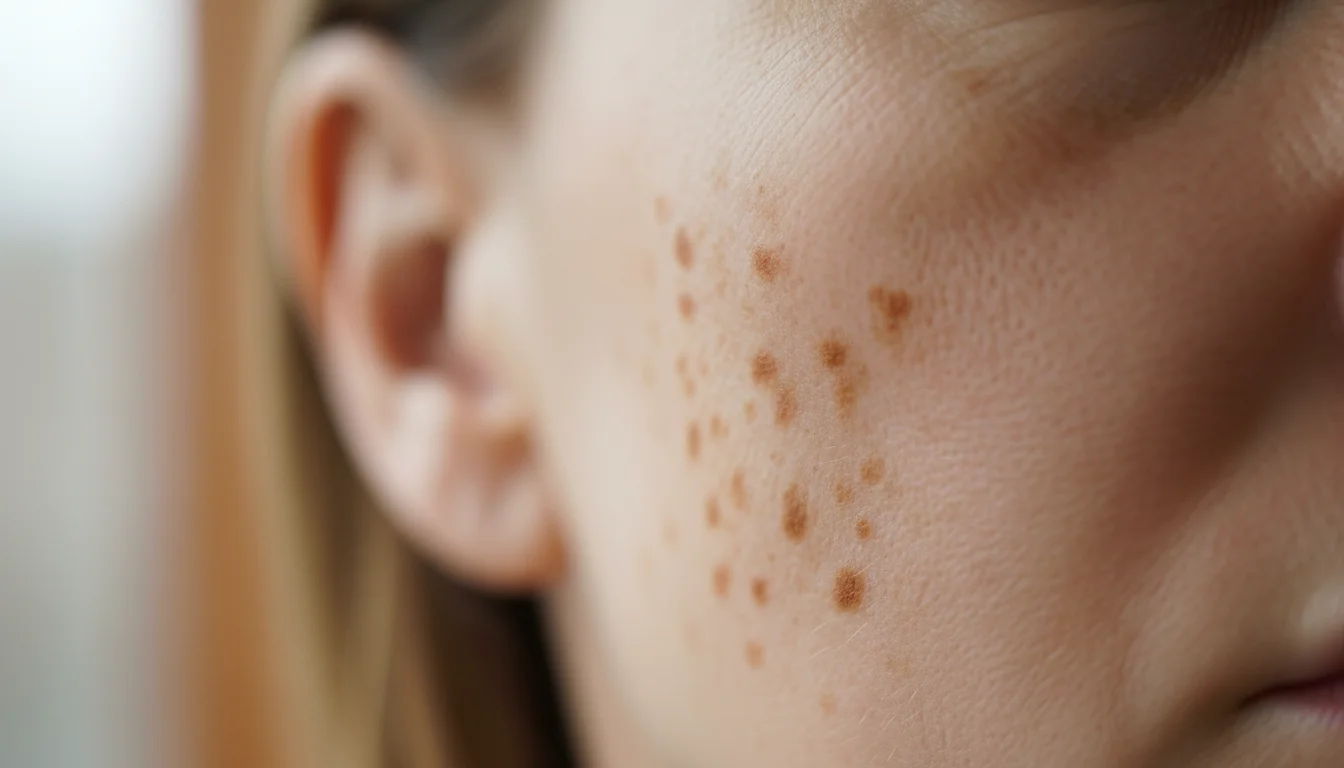
Age spots on face appear when skin produces too much melanin in one spot, usually from years of sun exposure. They’re flat, brown, and completely harmless, but they make you look older than you feel.
You can’t erase decades of sun damage overnight. But you can fade those spots significantly with consistent treatment over several weeks. Here’s what works.
1. Lemon juice
The citric acid in lemon juice is a natural bleaching agent. It won’t make age spots vanish instantly, but daily application will lighten them over time.
Squeeze fresh lemon juice (not the bottled stuff), dip a cotton ball in it, and dab it directly on the spots. Leave it on for 30 minutes, then rinse with cool water. Do this once a day.
Your skin might tingle slightly. That’s normal. But if it burns or gets red, you’re either using too much or your skin’s too sensitive for straight lemon juice. Try diluting it with water or rose water.
Don’t go out in the sun right after using lemon juice. It makes your skin photosensitive, which means you’ll end up with worse spots than you started with.
2. Apple cider vinegar
Apple cider vinegar contains acetic acid, which lightens pigmentation gradually. Mix equal parts apple cider vinegar and water, apply it to the spots with a cotton ball, and leave it on for 20-30 minutes. Rinse and moisturize.
Do this daily. You should see the spots start to fade after 2-3 weeks.
Some people leave it on overnight. You can try that if the diluted version doesn’t irritate your skin, but test it on a small area first.
3. Aloe vera gel
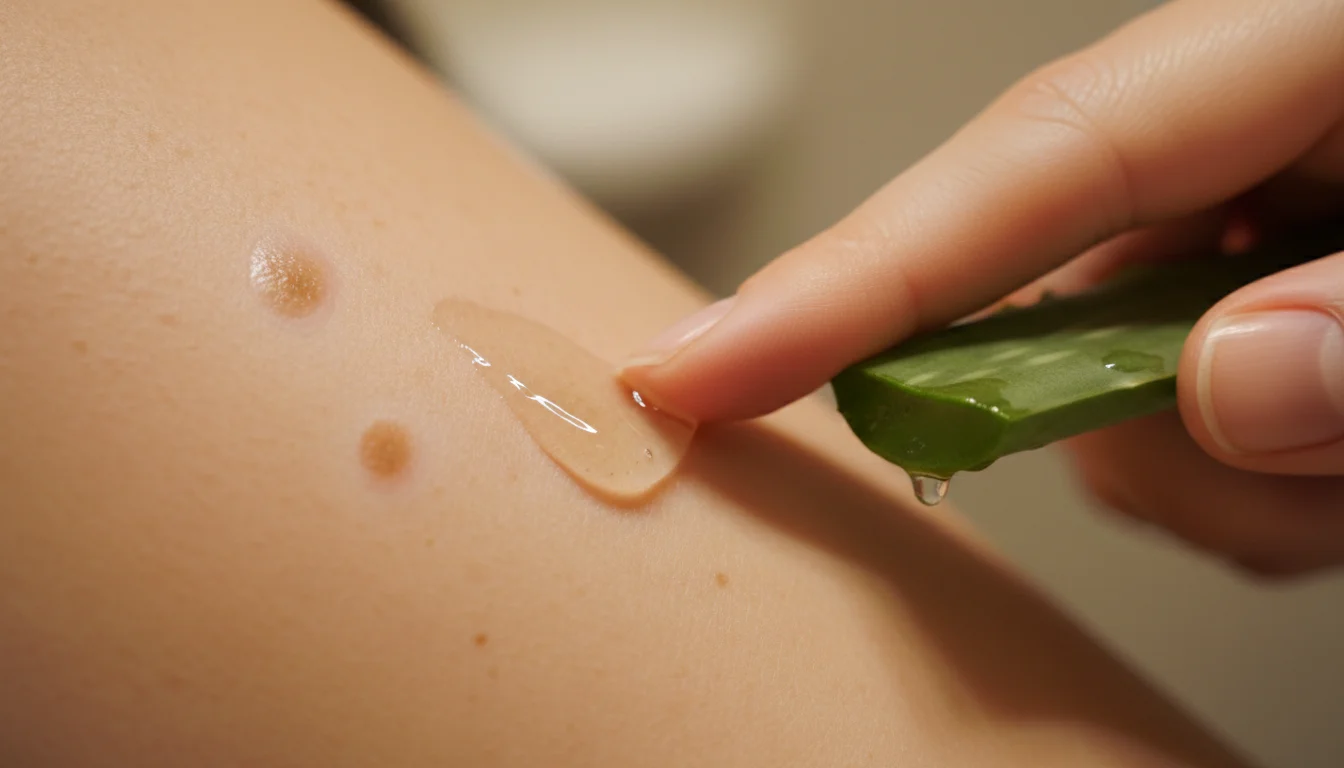
Fresh aloe vera speeds up skin cell turnover, which helps fade age spots naturally. Break off an aloe leaf, scoop out the gel, and rub it directly on the spots. Leave it on for 30 minutes, then rinse.
This one’s gentle enough to use twice a day. It won’t fade spots as fast as lemon juice, but it won’t irritate sensitive skin either.
4. Onion juice
Onion juice is one of those remedies that sounds ridiculous but works surprisingly well. The sulfur compounds in onions have skin-lightening properties.
Blend or grate an onion, strain out the juice, and apply it to the spots with a cotton pad. Leave it on for 15 minutes, then wash it off. Do this once or twice a day.
Your face will smell like onions for a bit. That’s the trade-off.
5. Vitamin E oil
Vitamin E is an antioxidant that helps repair damaged skin cells and fade discoloration. Pierce a vitamin E capsule, squeeze out the oil, and massage it into the age spots before bed. Leave it on overnight.
This method takes longer than the acidic treatments (think months, not weeks), but it’s moisturizing and completely safe for sensitive skin.
6. Castor oil
Castor oil penetrates deep into the skin and can gradually lighten age spots with regular use. Apply it directly to the spots, massage it in for a minute or two, and leave it on. You can do this morning and night.
It’s thick and sticky, so use a small amount. Most people prefer to do this before bed so they’re not walking around with greasy spots on their face.
What actually causes age spots
Sun exposure is the main culprit. Every time UV rays hit your skin, they trigger melanin production as a defense mechanism. Over decades, that melanin can clump together in concentrated patches instead of spreading evenly.
Age spots usually show up after 40, but if you’ve spent a lot of time in the sun without protection, they can appear earlier. Genetics play a role too. If your parents got them young, you probably will too.
Prevention matters more than treatment
Once you’ve got age spots, you can fade them, but you can’t completely undo decades of damage. The best strategy is stopping new ones from forming.
Wear sunscreen every single day. Not just when you’re at the beach. Every day. SPF 30 minimum. Reapply every two hours if you’re outside.
Wear a hat. Sit in the shade. Avoid peak sun hours (10am to 4pm). This isn’t paranoia, it’s basic maintenance.
How long this takes
Home remedies don’t work overnight. You’re looking at 4-8 weeks of consistent daily application before you see noticeable fading. Some spots will respond faster than others.
If you’re not seeing any improvement after two months, the spots might be too deep for topical treatments. At that point, see a dermatologist about laser therapy or prescription creams.