Table of Contents
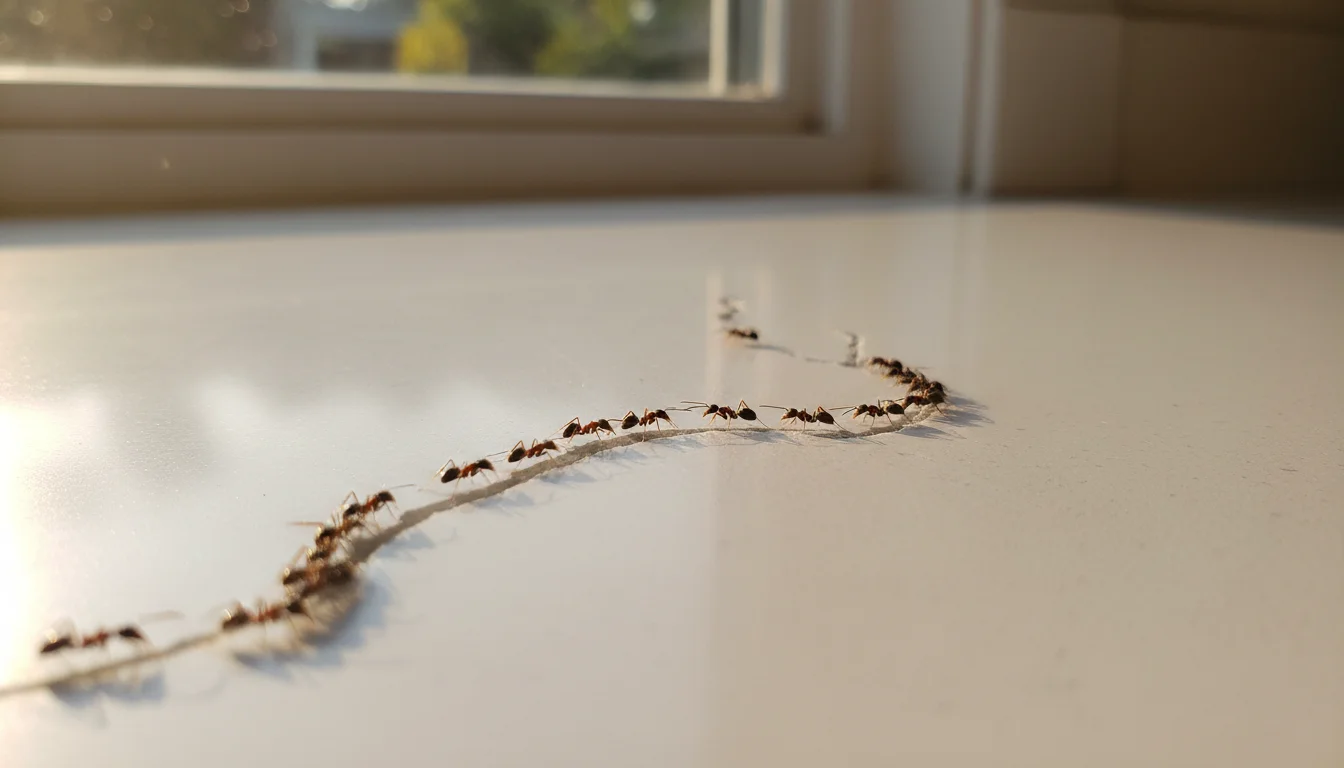
One ant on the counter is never just one ant. That scout already laid a chemical trail back to the colony, and within hours you’ll have a highway of foragers running from some crack in the foundation straight to whatever you left on the counter. Ants are colony organisms. The ones you see are maybe 10% of the actual population, and killing them with contact spray is like bailing water from a leaky boat. The colony keeps sending more.
The fix depends entirely on where they are and what they’re after. Kitchen ants raiding your sugar bowl need different treatment than carpenter ants boring into your deck joists. A colony nesting inside your walls requires a different approach than one farming aphids on your tomatoes. And the methods that work indoors (bait stations, sanitation) are mostly useless in a garden context where you need biological controls and natural repellents.
We’ve broken this down by location and situation. Pick the guide that matches where you’re actually seeing them.
Ants in the House
The general indoor invasion. You’re seeing trails along baseboards, around windows, or coming out of nowhere in the bathroom. Species identification is the first step – and it matters more than most people realize. The wrong bait for the wrong ant wastes weeks. Odorous house ants, carpenter ants, pharaoh ants, and pavement ants all need different approaches. This guide covers species ID, baiting strategy that targets the colony rather than just the visible foragers, trail disruption with vinegar, and knowing when DIY has hit its limit. The key insight: baiting is the only method that actually kills the colony. Everything else just manages symptoms. But bait requires patience – you’ll actually see activity increase for the first few days as more workers get recruited to the poison source. That’s working. Give it 2 to 4 weeks before expecting full colony collapse.
How to get rid of ants in house
Ants in the Kitchen
The most common complaint, and usually the first place people notice a problem. Ants found the food and they’re not leaving voluntarily. This guide covers 12 methods spanning bait placement, sanitation, and structural fixes. On the bait side: standard traps, boric acid bait, and dish soap spray for immediate kills. But the real game is sanitation – and it’s more specific than "keep it clean." Certain overlooked spots are scout magnets: crumbs under the toaster, residue behind the fridge, the gap between the stove and counter where grease accumulates. Washing dishes promptly and taking out trash daily eliminate the signals that attract foragers. The structural side covers sealing entry points, installing door sweeps, and fixing the moisture problems under sinks that attract species you’d rather not have.
How to get rid of ants in kitchen
Ants in Walls and Foundation
The structural problem. You’re finding ants emerging from cracks in the foundation, behind outlet covers, or along baseboards with no obvious outdoor trail. Carpenter ants nesting in damp wood are the worst-case scenario here – they don’t eat wood like termites, but they excavate it for nesting, and they prefer wood that’s already softened by water damage. This guide covers sealing entry points with caulk and expanding foam, diatomaceous earth barriers, moisture elimination (fixing leaks, addressing condensation), replacing water-damaged wood before it becomes ant real estate, and trimming vegetation that bridges outdoor colonies to your siding. The perimeter work matters too – clearing mulch and debris from the foundation creates a defensive zone that scouts can’t cross undetected. Preventive treatment in late winter catches colonies when they’re smallest and most vulnerable.
How to get rid of ants in walls and foundation
Ants from Food Sources
Cut off the supply line. If ants keep coming back no matter what you spray, the problem is what’s feeding them – and the answer is usually something you forgot about. A single open bag of sugar in the back of a cabinet can feed a colony for months. This guide covers airtight food storage (transferring flour, rice, cereal, and pet food into sealed containers), handling contaminated pantry items (once ants find a package, that food is done – the colony has already marked it with pheromones), pet food bowl management, and the birdseed situation that nobody thinks about until they see a trail running to the garage. It’s not glamorous work, but eliminating food sources is what makes every other method actually stick.
How to get rid of ants from food sources
Ants in the Garden
Outdoor colonies that are wrecking flower beds, farming aphids on your plants, or building mounds in the lawn. The approach here is completely different from indoor treatment. You can’t bait a garden the way you bait a kitchen, and you probably don’t want to dump pesticides on soil you’re growing food in. Instead, this guide covers natural repellents (cinnamon around plants, citrus peels in beds, coffee grounds as both repellent and soil amendment), neem oil for aphid-ant symbiosis, biological controls like beneficial nematodes that attack colonies underground, and companion planting that makes your garden less hospitable. Boiling water on visible mounds works as a direct strike. For structural issues – ants getting into deck wood or exploiting rot – there’s specific guidance on blocking vegetation contact points and maintaining outdoor wood.
How to get rid of ants in garden
Ants in Potted Plants
A surprisingly specific problem with its own set of solutions. Ants in pots are usually doing one of two things: farming aphids on the plant (they protect aphids in exchange for honeydew) or nesting directly in the soil. Repotting with fresh growing media is the nuclear option. Short of that, this guide covers 12 methods ranging from dunking the pot in water to flush out colonies, to creating water moats and sticky barriers that prevent re-infestation. Soil-surface treatments with cinnamon or diatomaceous earth deter nesting. If the underlying problem is aphids, systemic plant spikes and wiping honeydew from leaves break the ant-aphid cycle. Indoor plant owners: always inspect new plants before bringing them inside. One infested nursery pot introduces a colony to your entire collection.
How to get rid of ants in potted plants
What Causes Ant Infestations
Three things: food, water, and shelter. Any gap in your defenses invites them.
Ants run a constant surveillance operation on your house. Scout ants range out from the colony in random patterns, and when one finds food or water, it lays a pheromone trail back to the nest. That chemical highway recruits hundreds of foragers within hours. The trail gets stronger with every ant that walks it, which is why you see those highways rather than scattered individual ants.
Different species target different things. Sugar ants (odorous house ants) go for carbohydrates – fruit, syrup, anything sweet. Grease ants go after protein and oily residue near stoves. Carpenter ants don’t care about your food at all – they seek out damp, damaged wood to excavate for nesting. Pavement ants nest in foundation cracks regardless of food supply. Pharaoh ants are the worst – they nest inside heated structures year-round and split into multiple colonies when threatened, making them nearly impossible to eliminate without coordinated professional treatment.
Seasonal timing matters too. Colonies expand in spring and peak in summer. A house that was ant-free all winter can be overrun by April if conditions are right.
Prevention
The best ant control happens before you see a single ant.
Seal cracks in the foundation, around windows, and at utility penetrations before ant season hits in early spring. Ants exploit gaps smaller than a millimeter, so caulk everything – especially where pipes enter the house. Store all food in airtight containers, including pet food and birdseed in garages. Fix leaks immediately; ants need water as much as food, and a dripping faucet is as attractive to them as an open sugar bowl.
Trim vegetation back from the house at least two feet so there’s no direct bridge from outdoor colonies to your siding. Branches touching the roof are ant highways. Clear mulch and organic debris from the foundation perimeter – a 12-inch bare zone of gravel or stone removes cover for scouts.
Run bait stations preventively around the exterior every March. Colonies are smallest in early spring after winter dormancy, and a single bait station can wipe out a colony that would take five stations to kill in July. The $10 you spend on bait before you see ants saves $300 on an exterminator after they’ve moved in.
When to Call a Professional
Call if the infestation persists beyond six weeks of consistent DIY treatment. At that point, either the colony is inaccessible (inside a wall void, under a slab) or you’re dealing with a species that needs specialized treatment.
Other red flags: frass (sawdust-like debris from carpenter ants boring into structural wood), winged ants indoors, or multiple ant trails in different parts of the house suggesting satellite colonies. Winged ants mean the colony is mature and producing new queens – that’s an established operation, not a casual raid. Multiple trail locations suggest the colony has fragmented, which is common with pharaoh ants and extremely difficult to handle without coordinated baiting across the entire structure.
Don’t wait on carpenter ants. They cause real structural damage. A professional can drill into wall voids and inject dust or foam that you can’t reach with retail products. Most exterminators offer warranties – if ants return within 90 days, they retreat for free. Initial treatment runs $150 to $400 depending on severity and accessibility.
Frequently Asked Questions
What is the fastest way to get rid of ants?
Bait stations kill the colony within 2 to 4 weeks. For immediate visible relief while the bait works, dish soap spray kills ants on contact. But contact killers alone won’t solve the problem – the colony keeps sending more.
What keeps ants away permanently?
Sealed entry points, clean surfaces, and no standing water. There’s no permanent one-time fix because new colonies can always move in from outside. Maintenance is the real answer – preventive bait in spring, sealed cracks, and no food left out.
Does Dawn dish soap kill ants?
Yes. Mixed with water, it breaks down their exoskeleton coating and dehydrates them within minutes. But it only kills the ants you spray directly. It does nothing to the nest. Use it for immediate relief alongside a baiting strategy that targets the colony.
How do I know what kind of ants I have?
Collect a specimen in a sealed bag and compare it to online identification guides, or take a close-up photo for a university extension service. Size, color, and where they’re nesting narrow it down fast. Tiny black ants near food are likely odorous house ants. Large black ants in damp wood are probably carpenter ants. Small reddish-brown ants that split into multiple groups when disturbed are pharaoh ants, and those need professional treatment.