Table of Contents
Getting rid of bees outside starts with knowing what you’re dealing with – and knowing how to get rid of bees outside correctly depends entirely on the species. Honeybees, bumblebees, yellow jackets, and hornets all look "bees outside" to most people, but the right response differs significantly. Honeybees should be relocated by a beekeeper, not killed. Yellow jackets and hornets can and should be eliminated. Bumblebees, if not directly causing a hazard, are best left alone or deterred.
Once you know what you have, the approach becomes obvious.
1. Contact a Beekeeper for Live Removal
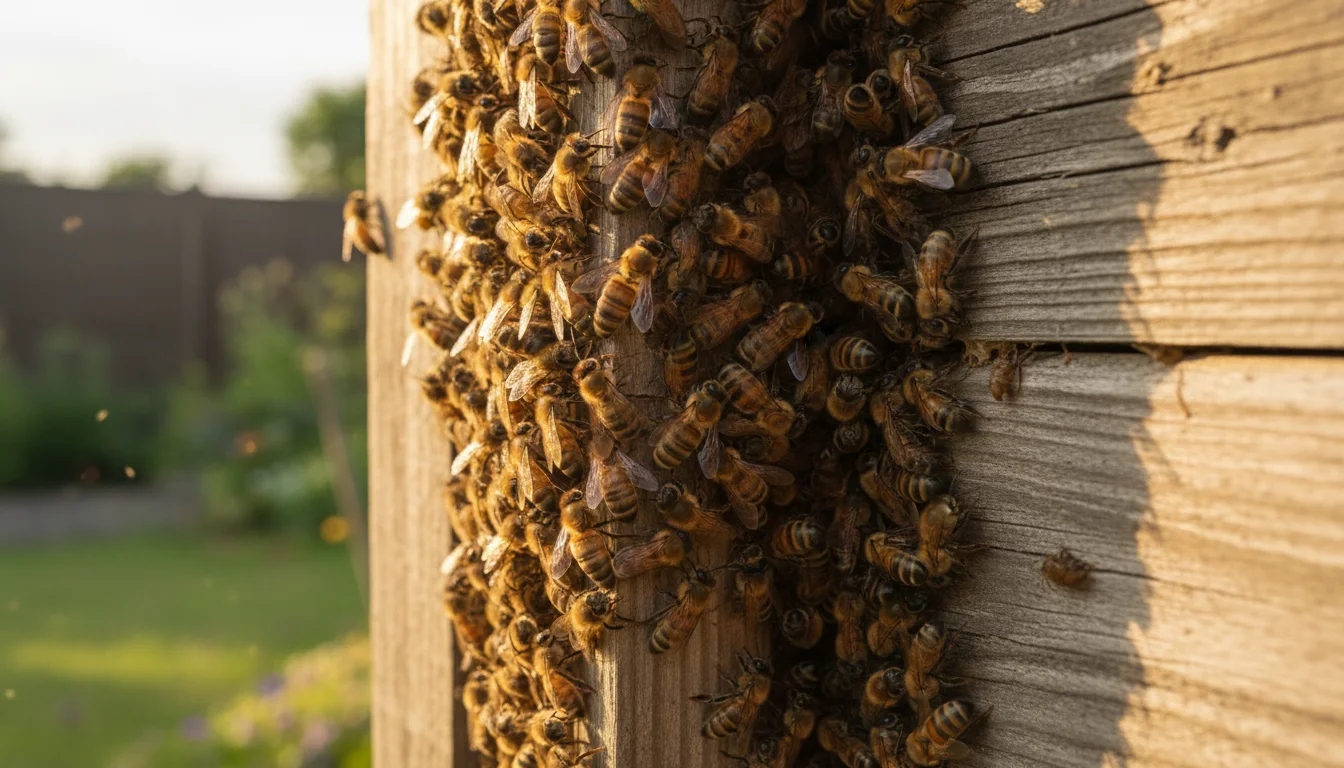
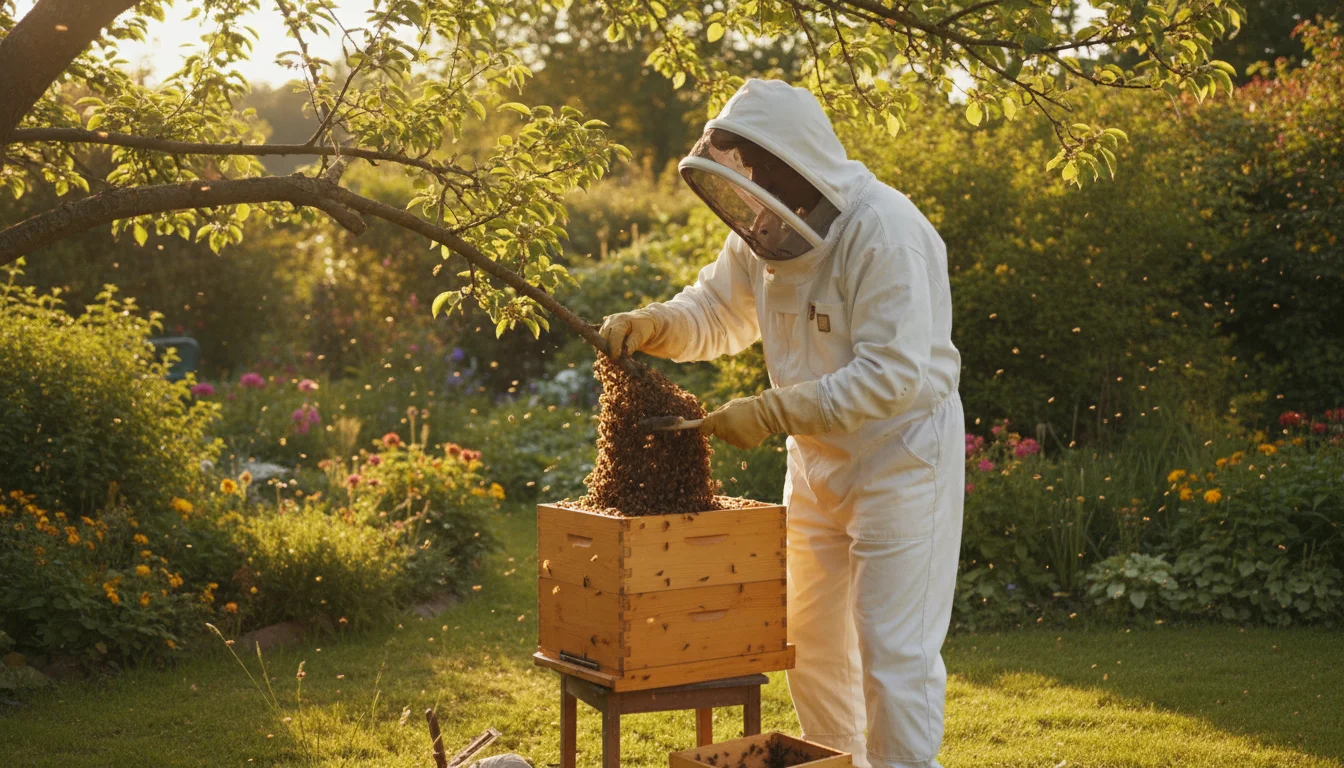
If it’s honeybees, this is the right call before you try anything else. Swarms – that ball of bees hanging from a branch or fence post – are docile because they have no nest to defend. Most beekeepers collect them in under an hour, and swarm removal is usually free because the beekeeper gains a new colony.
Established colonies inside walls or under eaves require more work and may involve a fee, but beekeepers handle this regularly. The key reason to go this route: if you kill a honeybee colony inside a wall and leave the wax comb behind, it melts in summer heat, leaks honey through the wall, and attracts a new colony next spring. Live removal solves the problem permanently.
To find a local volunteer: search your county beekeeping association website, or search "swarm removal" plus your zip code.
2. Spray Bee and Wasp Nest Killer to Kill Bees Outside
Aerosol nest killer spray with pyrethrin, permethrin, or deltamethrin reaches 15 to 20 ft (4.5 to 6 m) – enough to treat from a safe distance without getting close to the entrance. Apply at dusk when all foragers are back inside and activity is at its lowest. Soak the entrance in one pass, then back away immediately.
Do not seal the entrance after spraying. Let it stay open for 24 to 48 hours so returning pests walk through the treated residue and die. Most colonies are gone within 48 hours. Check for activity. If pests are still flying after two days, reapply.
For ground nests, pour or direct the liquid into the tunnel entrance at night. For wall voids, use dust insecticide rather than spray (see method 3).
3. Apply Insecticide Dust for Wall and Cavity Nests
Liquid spray can’t reach deep into wall voids, soffit cavities, or gaps behind siding. Dust can – and it’s the right tool for any nest you can’t see directly.
Use a bulb duster to puff deltamethrin or carbaryl dust into the entrance hole. Apply a thin amount – barely visible is the right quantity. A heavy application repels rather than kills. Leave the entrance unsealed for 48 to 72 hours so returning colony members contact the residue as they enter.
If the nest is completely inaccessible, drill a small access hole, puff in a few seconds of dust, and then seal it. Wettable powder formulations (mixed as a spray that dries to a residual film) outlast liquid pyrethroid sprays on sun-exposed surfaces by 60 to 90 days if you need ongoing protection.
4. Peppermint Oil Spray
A natural repellent – not a killer, but useful for deterring bees and wasps from treating a specific area as their territory. Mix 15 to 20 drops of peppermint essential oil with 2 cups (475 ml) of water and a teaspoon of dish soap (which makes it stick). Spray around eaves, deck rafters, window frames, and anywhere you’ve seen consistent activity.
Reapply every 3 to 5 days or after rain. Most useful as a follow-up once a nest has been dealt with, to make the area less appealing to scouts looking to rebuild. Don’t use around cats – peppermint oil is toxic to them.
5. Hang a Fake Nest Decoy
Wasps and some bee species avoid setting up next to an established colony. A paper decoy nest hung under an eave or porch ceiling signals occupied territory and deters scouts from building nearby.
The timing is critical: deploy decoys in early spring when daytime temps first hit 50°F (10°C), before queen wasps begin scouting. Once a colony is established, a decoy does nothing – they already know it’s not real. A commercial decoy works, but a paper bag stuffed with plastic bags and hung from twine is just as effective.
Place one per roughly 200 sq ft (18.5 sq m) of coverage area around problem zones. Replace them annually since weathering reduces their appearance.
6. Wait for the Colony to Die Off and Seal
For nests in inaccessible locations where you can’t safely spray, doing nothing and sealing afterward is a legitimate strategy. Most bee and wasp colonies are annual – the workers die when temperatures fall consistently below 50°F (10°C), leaving only the mated queen to overwinter elsewhere. The colony is naturally gone by mid-autumn without any intervention.
Wait until you see zero flight activity at the entrance for 14 consecutive days, then seal the opening with caulk, expanding foam, or hardware cloth depending on the surface. Knock down any remaining nest material first. The residual pheromones from old nests attract new scouts the following spring, so seal thoroughly – and consider puffing a small amount of residual insecticide into the void before closing it up.
Exception: honeybees overwinter as a full colony and won’t die off. This method doesn’t apply to them.
7. Professional Pest Control
Worth calling if the nest is inside a structural wall requiring drilling, you’re allergic to stings, you’ve done two treatments with no reduction in activity, or you can’t locate the entry point. Professionals identify the species correctly, bring commercial-grade products, and handle the protective gear themselves.
Typical cost is $150 to $400 (USD). Ask about a warranty – reputable companies offer a free retreat if the colony returns within 60 to 90 days.
Prevention
Once the nest is dealt with, three things prevent a repeat:
- Seal entry points before spring. Any gap in soffits, fascia boards, or siding is a potential nest site. Inspect in late winter and fill cracks with caulk or foam before queens start scouting.
- Deploy decoys early. Put up fake nest decoys in March or April before scouts are active (see method 5).
- Apply peppermint spray around problem areas. Treat eaves and deck rafters at the start of the season and refresh every few weeks.
When to Call a Pro
If you’re allergic to bee or wasp stings, don’t attempt any nest treatment yourself – even a small colony is a serious risk during treatment. Call a professional.
Also call if the colony is inside a wall and you can’t locate all entry points. Sealing one hole when another exists means the pests find their way into the living space instead.
FAQ
What is the quickest way to get rid of bees outside?
Aerosol nest killer spray applied at dusk eliminates most colonies within 24 to 48 hours. For a swarm with no nest built yet, call a beekeeper – they collect it in under an hour, often for free.
What naturally makes bees go away?
Peppermint oil spray discourages them from treating an area as territory. Fake nest decoys prevent new colonies from forming in early spring. Neither eliminates an established colony – they’re prevention and deterrence tools, not removal solutions.
What can you put outside to keep bees away?
Peppermint, citronella, or eucalyptus oil applied around doors, eaves, and patios. Commercial or DIY fake nest decoys for seasonal prevention. Once a colony is established, these don’t work – you need direct nest treatment or a beekeeper.
How do you get a bee to go away outside?
Move away slowly without swatting. Fast movement and swatting trigger defensive stings. If you’re dealing with a persistent presence rather than one bee, the issue is a nearby nest – individual foragers won’t stop visiting until the colony is addressed.