Table of Contents
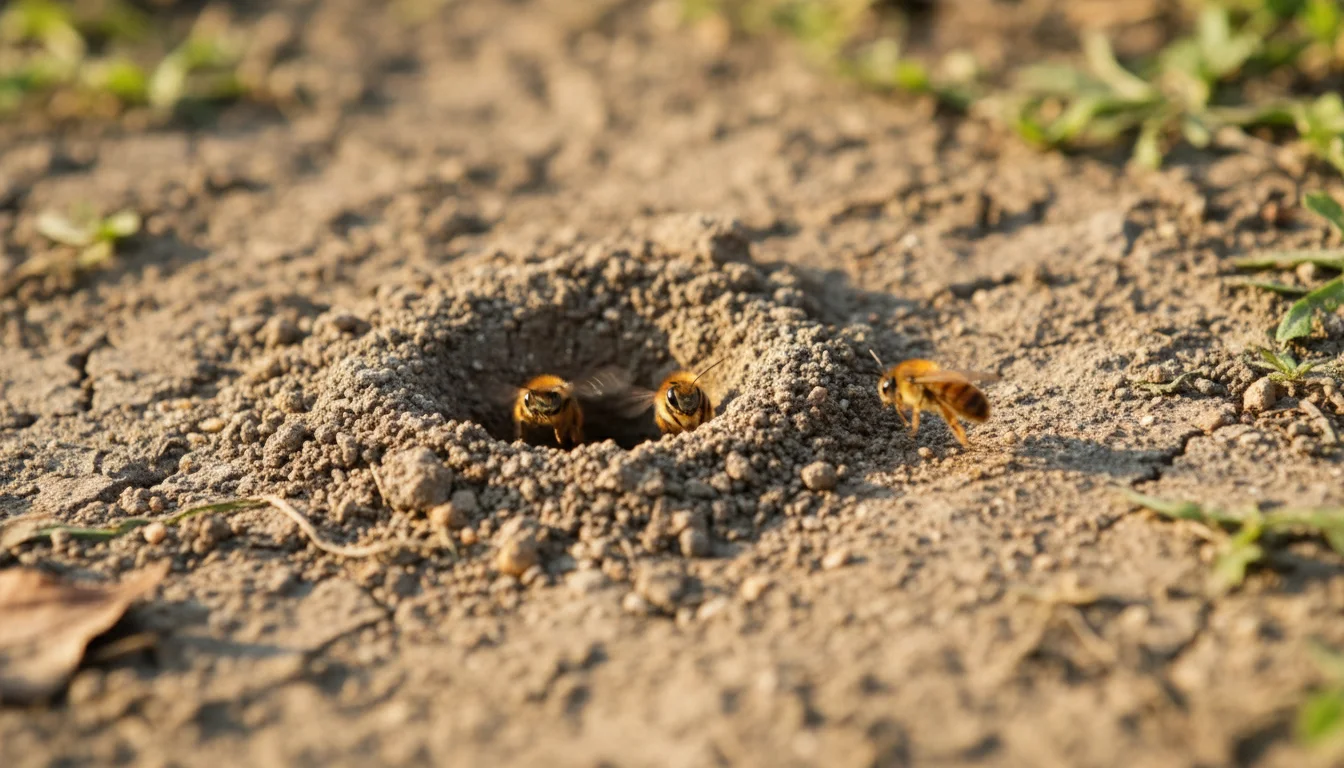
Before reaching for insecticide, figure out what you actually have. "Bees in the ground" is usually one of three things: solitary mining bees, yellow jackets, or occasionally ground-nesting bumblebees. The species matters because the right response is completely different.
Mining bees (small, fuzzy, often copper or black) are solitary and docile. They almost never sting unprovoked and their nesting season ends by summer. Yellow jackets are the aggressive ones – they’ll sting repeatedly if you disturb the nest. Bumblebees fall in between. If you’re seeing a high-traffic entrance with large numbers of yellow-banded insects in late summer or fall, assume yellow jackets and treat accordingly.
1. Spray Directly Into the Hole
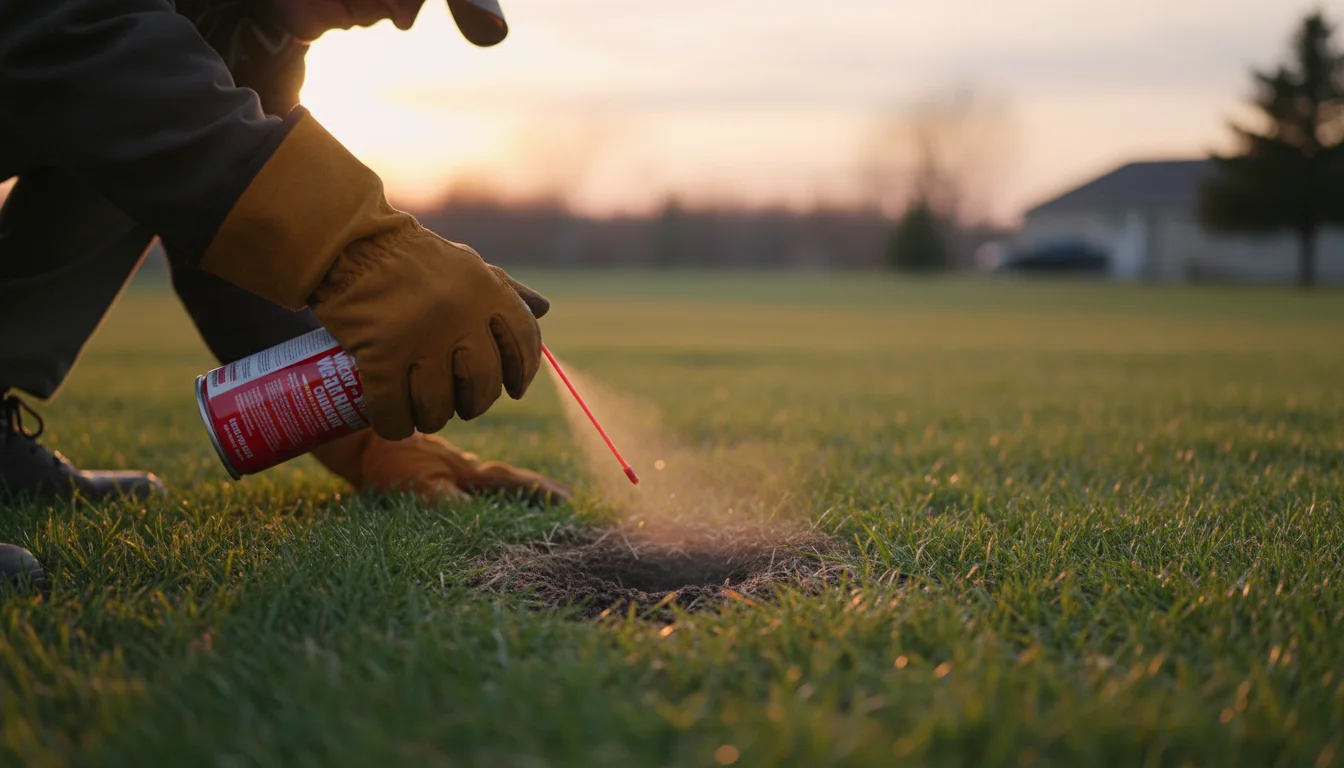
The fastest method for an established colony you need to deal with now. Do it at dusk when the full colony is inside and activity is at its lowest. Stand upwind, aim the nozzle of a wasp-and-hornet spray directly into the entrance hole, and give it a solid 5 to 10 second burst. The spray needs to penetrate deep – not just coat the entrance surface.
Back away immediately. Workers can still emerge even after treatment. Check the following morning: if you still see activity, repeat the next evening. Two treatments handle most nests.
One option that works on smaller or early-stage nests: mix 1 to 2 tablespoons of dish soap per gallon (3.8 L) of water and pour it slowly into the entrance. Soapy water kills bees on contact by blocking their breathing pores. Less reliable than commercial insecticide for established nests, but useful if you prefer not to use chemicals.
2. Pour Boiling Water Into the Entrance
Chemical-free and immediate. Boil a full kettle and pour slowly and directly into the nest entrance. The goal is penetration, not splash – slow and controlled gets the water where it needs to go.
One application rarely finishes the job because deeper chambers often survive. Repeat twice daily for three days for a meaningful knockdown. Good for garden beds where you don’t want to spray insecticide near plants, and effective for small or early-season nests.
Not the right tool for an aggressive, established yellow jacket colony in a high-traffic area – getting close enough to pour is the problem.
3. Water the Area Regularly
Ground-nesting bees require dry, loose, undisturbed soil. Consistent watering changes all of that. Run a sprinkler or soaker hose over the area for 20 to 30 minutes daily for two to three weeks. The moisture and surface disturbance make the soil unsuitable and may push an active colony to relocate.
This doesn’t kill the colony – it persuades it to move somewhere drier. Best for early-stage nests or as prevention before nesting season. Deep, established yellow jacket colonies won’t shift this way – they need direct treatment. Once you’ve disrupted the site, follow up with mulch or groundcover (method 5) to prevent re-nesting at the same spot.
4. Wait Out the Season
If the nest is in a low-traffic corner and the bees aren’t causing problems, doing nothing is a legitimate choice. Most ground-nesting species are solitary and annual – they complete their cycle and die off each fall. By October in temperate climates, activity stops on its own.
Mark the entrance with a stake so people know to step around it. Keep children and pets away. Don’t block it while the colony is active – that’s the main trigger for stinging. After activity stops, wait two to three weeks to confirm it’s done, then apply mulch to prevent re-nesting next season.
5. Cover Bare Soil After the Colony Clears
Ground-nesting bees need bare, dry, exposed soil to establish nests. Take that away and they move on. After an existing colony has died off or been treated, apply a 3 to 4 in (7.5 to 10 cm) layer of wood chip or bark mulch over the bare patches. Thinner layers dry out and get pushed aside – depth matters.
For long-term prevention, plant groundcover: creeping thyme, clover, or dense grass seed fill in bare patches and permanently change the soil surface conditions. These plants stay moist and dense enough that ground-nesting bees won’t select the site.
Don’t apply this over an active nest. Active colonies will simply dig around a thin covering. Treat or wait out the colony first.
6. Call a Beekeeper (for Honeybees)
Honeybees occasionally nest in the ground, though it’s less common than wall or tree cavities. If you’re seeing large golden-brown bees with a honeycomb visible near the entrance, it’s honeybees – and insecticide is the wrong call.
Contact a local beekeeper or beekeeping association. Swarm removal is usually free because the beekeeper gains a new colony. Established ground colonies require more work but live removal is still possible and prevents the honeycomb from being left behind – which would melt in summer heat and attract pests.
To find a volunteer: search "swarm removal" plus your zip code or contact your county beekeeping association.
FAQ
What is the fastest way to get rid of ground bees?
Wasp-and-hornet spray applied directly into the entrance at dusk. Give it a 5 to 10 second burst and back away immediately. Check the following morning and repeat if activity continues. Two treatments clear most nests.
Will Dawn dish soap kill ground bees?
Yes – 1 to 2 tablespoons of dish soap per gallon (3.8 L) of water poured or sprayed into the entrance kills on contact by blocking their spiracles. Less reliable than commercial insecticide for an established nest, but a viable option for small or early-stage infestations.
Are ground bees aggressive?
Depends entirely on the species. Solitary mining bees, digger bees, and sweat bees are very unlikely to sting unless you physically grab one. They don’t defend nests the way colony insects do. Yellow jackets that nest in the ground are a completely different situation – they will sting repeatedly to defend the nest, especially in late summer and fall when the colony is at its largest. If you’re unsure what you have, watch the entrance from a safe distance: yellow jackets show visible defensive behavior when you approach. Mining bees will largely ignore you.
Will ground bees come back next year?
Likely, if the site conditions haven’t changed. Ground-nesting bees return to productive nesting areas season after season. Once a colony dies off naturally or is treated, cover the bare soil with 3 to 4 in (7.5 to 10 cm) of mulch or establish groundcover plants to eliminate the site as an option.