Table of Contents
Knowing how to get rid of bleach smell starts with understanding what it is: chlorine gas clinging to surfaces and hanging in the air. That’s why candles and air fresheners don’t fix it – you can’t mask a reactive chemical, you have to move it out or neutralize it. Methods 1 and 2 move it out. Methods 3 and 4 neutralize it. Methods 5 and 6 absorb the residual. Use them in order for the fastest results.
1. Open Windows for Ventilation
Free, immediate, no supplies needed – and for airborne bleach fumes, the most effective thing you can do.
Open windows on opposite sides of the room or house to create cross-ventilation. A single open window creates a dead zone of still air; two windows on opposing walls pull fresh air through and push the bleach-laden air out. In a well-ventilated room, fumes dissipate in 2-4 hours. In a sealed room with no airflow, the smell can persist for days.
It’s cold out. Open them anyway. Even a 1-inch crack moves enough air to help – the goal is exchange, not comfort. Start ventilating while you’re still cleaning, not after you notice the smell has built up. And focus on the room where the cleaning happened rather than trying to air out the whole house at once – diluting a concentrated area works faster than spreading it thin.
2. Run Exhaust Fans
Bathrooms and kitchens are where most bleach cleaning happens, and they both have exhaust fans for exactly this purpose. Use them.
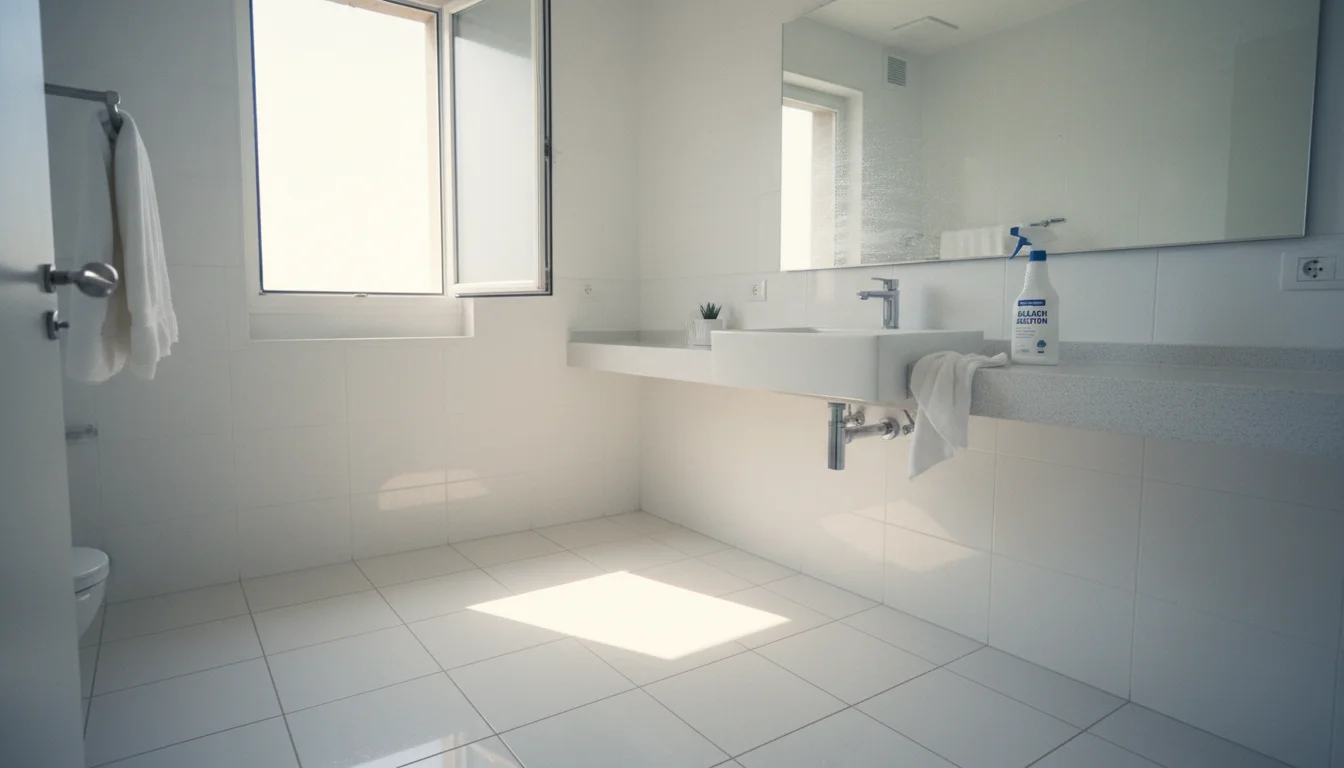
Run the bathroom exhaust fan during bleach cleaning and for at least 20 minutes afterward. Most people turn it off when they leave the room, but chlorine gas continues evaporating from wet surfaces long after you’ve wiped down. Keep it running. If your exhaust fan cover is thick with dust, clean it first – a clogged fan moves a fraction of the air it should.
For kitchen counter and sink bleach work, the range hood does the same job. Run it on high for 10-15 minutes after cleaning. Combine this with open windows for faster clearance. The two together – mechanical exhaust pulling air out one direction while fresh air enters from a window – work significantly faster than either alone.
3. Spray Surfaces with Vinegar Solution
Ventilation clears the airborne fumes. Vinegar handles the bleach residue that’s stuck to surfaces.
Mix white vinegar and water 50/50 in a spray bottle. Spray down any surface you cleaned with bleach – counters, sinks, floors, tile. Let it sit for 2 minutes, then wipe clean. The acetic acid in vinegar neutralizes the alkaline bleach compounds chemically, which is why this works where just rinsing with water doesn’t. The vinegar smell itself is gone in 10-15 minutes.
One warning: don’t use on marble, granite, or other natural stone. The acid etches the surface. For stone, stick with thorough rinsing and ventilation.
4. Neutralize Chlorine with Ascorbic Acid
The chemically correct solution for bleach smell on fabric, clothing, and skin – and the method most competitors don’t mention.
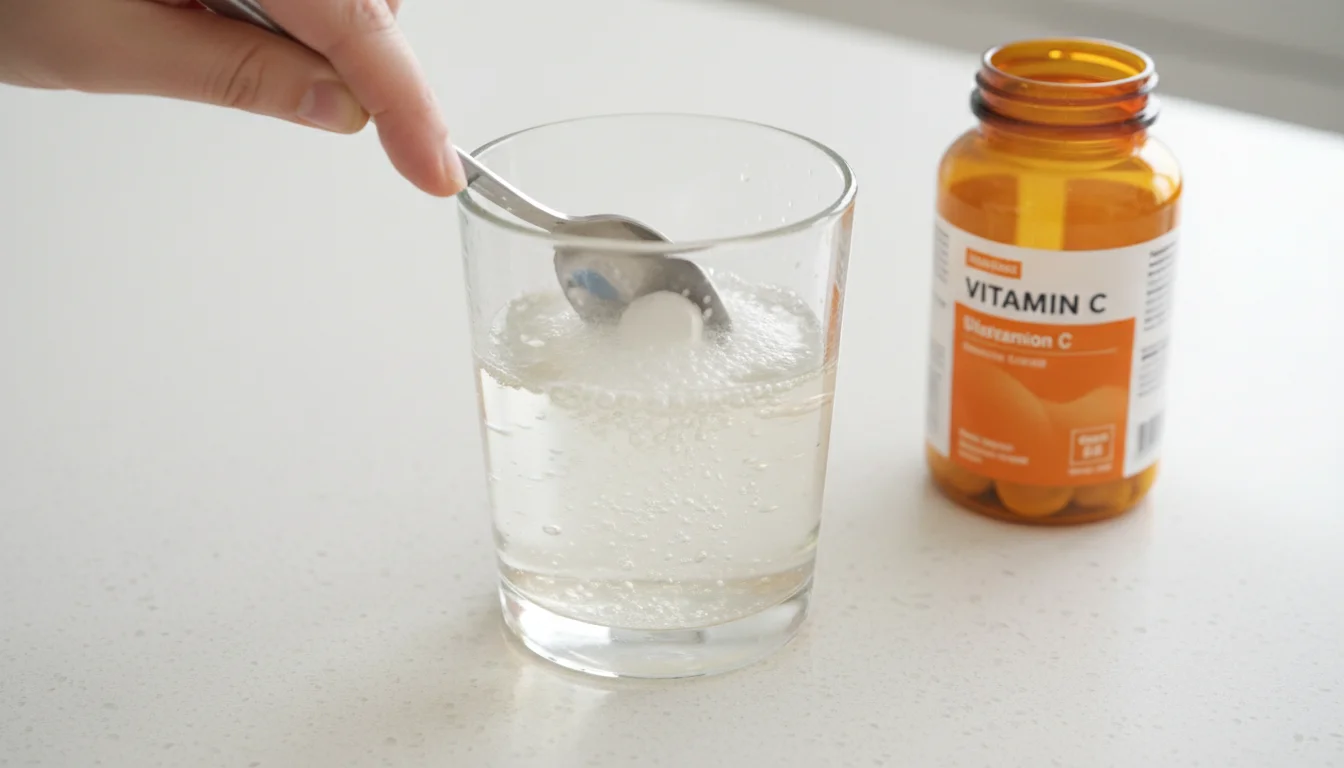
Ascorbic acid (vitamin C) reacts with chlorine and converts it instantly into harmless, odorless compounds. This isn’t slow absorption; it’s a complete chemical reaction within seconds. Crush one 1000mg vitamin C tablet and dissolve it in a cup of warm water. That’s a full dose for one treatment application.
For fabric and clothing: Add the solution to the final rinse cycle, or soak the item for 10 minutes before washing normally. Works on any washable fabric. For heavy bleach exposure on clothes, a full soak before washing gives better results than adding to the rinse cycle alone.
For skin: If your hands or skin smell like bleach after cleaning, apply the vitamin C solution directly, leave for a minute, then rinse. It addresses the chlorine residue, not any irritation already caused.
For surfaces: Wipe down with the solution, wait 2 minutes, rinse with water. No residue remains.
This is the same chemistry used to dechlorinate tap water for aquariums – well-established, completely safe, and it works where masking agents don’t.
5. Use Baking Soda
For residual room smell after you’ve done the ventilation and surface treatment – or for carpet and upholstery that absorbed bleach fumes.
Leave open bowls of baking soda in the affected room. Open bowls, not sealed containers – the surface needs to be exposed to absorb airborne odor molecules. In a heavily bleach-scented room, replace every 24-48 hours; it saturates faster than in a mild odor situation.
For carpet that absorbed fumes, sprinkle baking soda liberally across the affected area, leave overnight, then vacuum thoroughly. It pulls the odor molecules from the fibers in a way that surface ventilation can’t reach. Don’t rush the dwell time – one hour barely does anything, overnight is what makes the difference on fibrous materials.
6. Place Activated Charcoal
The longer-duration passive absorber. Better than baking soda for whole-house or multi-room situations, or when you want something running for days rather than hours.
Place charcoal sachets or open bowls in rooms that smell of bleach. A single sachet works well in a bathroom – small enclosed spaces are where charcoal performs best. For larger rooms, use multiple sachets rather than scattering a small amount thinly. Charcoal absorbs continuously for 2-4 weeks before needing recharging. To recharge, spread it on a baking sheet and leave in direct sunlight for a few hours – the UV releases trapped molecules and restores absorption capacity. Sachets are cleaner than loose granules for placing on furniture or shelves where spillage would be a problem.
FAQ
What does it mean if I smell bleach when there is none?
A phantom bleach smell most often comes from a sinus infection, tooth or gum infection, or chlorine residue on recently laundered clothing. It was also commonly reported as a symptom of COVID-19. If the smell is persistent and you can’t trace it to a cleaning product or recent laundry, it’s worth a conversation with a doctor – especially if accompanied by other symptoms.
How long do bleach fumes stay in the air?
In a well-ventilated room with windows open and exhaust fans running, bleach fumes clear in 2-4 hours. In a sealed room with no airflow, the smell can persist for days. Open windows on opposite sides of the space for cross-ventilation – that’s the fastest way to clear it. The lingering smell after the first hour is usually surface residue rather than airborne fumes; that’s when the vinegar spray and ascorbic acid steps become relevant.
Is inhaling bleach fumes dangerous?
Brief exposure during normal household cleaning isn’t harmful to healthy adults. The concern is prolonged exposure in enclosed spaces: chlorine gas at sufficient concentrations irritates the respiratory tract, and long-term repeated exposure has been linked to bronchitis. Always ventilate when using bleach – open a window before you start, not after. Never mix bleach with ammonia or other cleaners; the chemical reaction produces chloramine gas, which is significantly more toxic than bleach fumes alone. If you experience coughing, eye irritation, or difficulty breathing after bleach use, leave the area and get fresh air immediately.