Table of Contents
Knowing how to get rid of book lice starts with recognising what they actually are: a humidity problem. The insects themselves (psocids, if you want the technical name) don’t bite, don’t carry disease, and won’t damage structural elements – they eat mould and cellulose, which means books, paper, and cardboard in damp conditions. The key fact: below 50% relative humidity, they can’t breed and die out in 2-3 weeks without any pesticide. Everything in this article is about getting there and keeping it there.
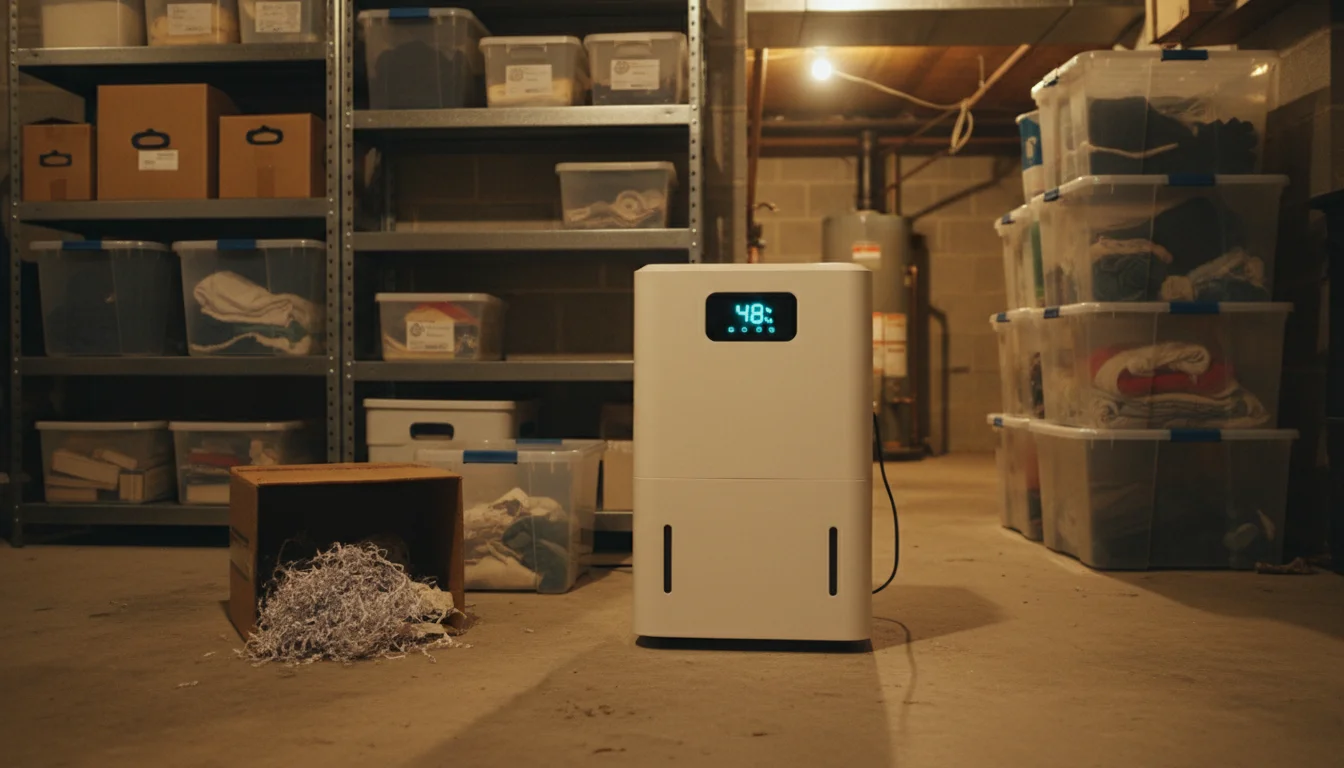
1. Dehumidifier
The single correct answer. Penn State Extension states it plainly: at 50% relative humidity or below, booklice die within 2-3 weeks without any pesticide treatment.
Size the unit correctly. A 30-50 pint capacity per 1,000 sq ft (93 sq m) is what you need for a genuinely damp room – an undersized unit runs constantly and never actually pulls the humidity down far enough. Set the target to 45-50% and leave it there.
Skip the daily reservoir-emptying if you can. Run a hose to a floor drain or sump pump for continuous drainage. You’re not going to empty it every day, and the moment it fills and shuts off, humidity creeps back up. Set it and forget it.
One useful timing note: in late fall and winter when heating runs, indoor humidity drops naturally and book lice populations decline without intervention. If you’re seeing them in summer, that’s when a dehumidifier does the most work.
2. Fix Leaks and Eliminate Moisture Problems
A dehumidifier running in a room with an active leak will never win. Fix the moisture source before or alongside running the unit.
Check under sinks, around window frames, and anywhere condensation forms regularly. Book lice colonise wherever humidity consistently spikes above 50%, so a dripping pipe or chronic condensation zone is a persistent breeding site regardless of what you do elsewhere. Cold pipes that sweat are just as problematic as a drip – wrap them with foam pipe insulation to eliminate the condensation source.
Fix leaks as soon as you find them. Then run the dehumidifier. In that order, the humidity drops and stays down. Reversed, you’re fighting the humidity at the edges while it’s being fed at the source.
3. Discard Infested Paper and Cardboard
Cardboard stacks are a persistent problem that most competitors underexplain. The interior of a cardboard box can run 10-15 percentage points higher humidity than the room reading on your hygrometer – even in a room you’ve successfully dried down to 50%, the cardboard microhabitat inside those boxes holds moisture well above that threshold. Book lice living in stacked cardboard are essentially insulated from your dehumidifier.
Seal infested material in a plastic bag at the point of removal – don’t carry an open box through the house scattering frass and eggs. Dispose of it outside.
Replace all cardboard storage boxes in affected areas with sealed plastic bins. That’s not a one-time fix; it’s a permanent change. Cardboard will re-infest.
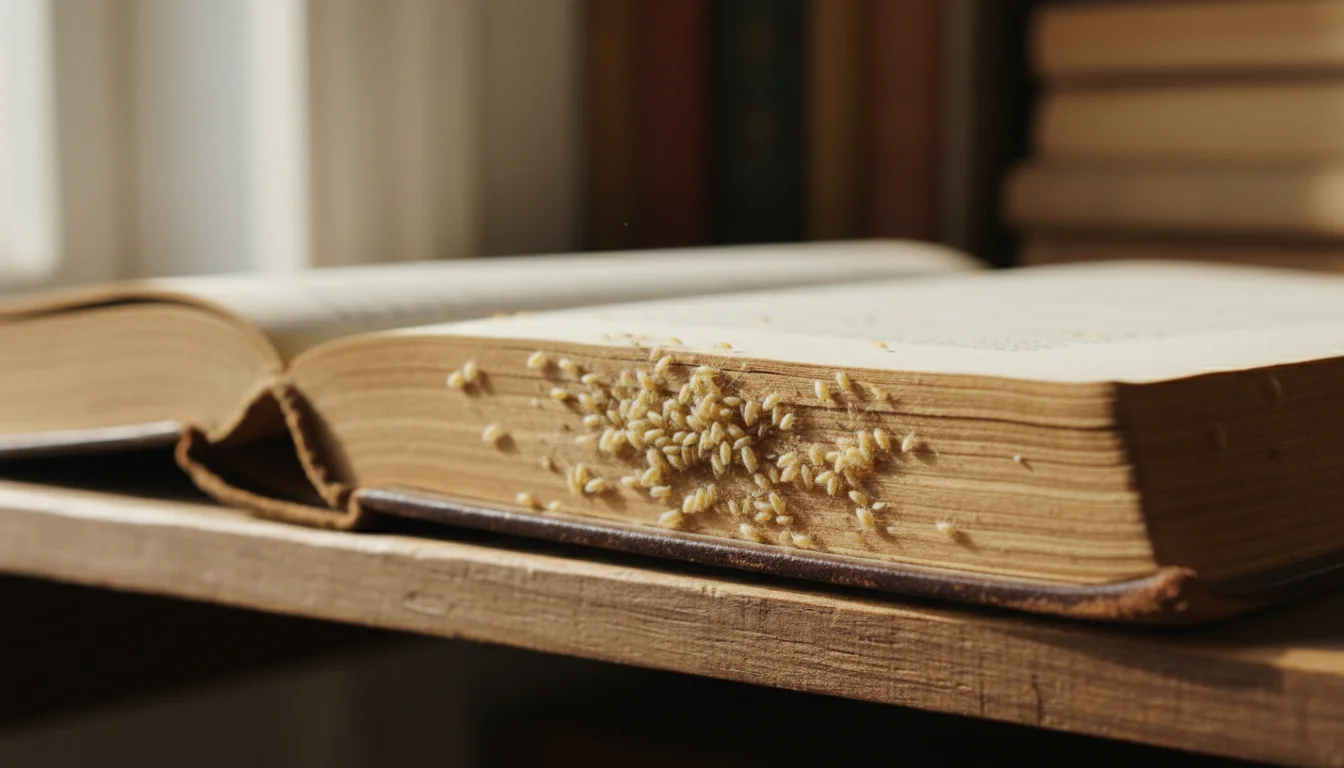
For books: frass visible throughout a book (fine brown powder in the spine and between pages) means the book is a lost cause. If it has sentimental value, freeze it first (see method 5), then make the call. Otherwise, bag and discard.
4. Vacuum Regularly in Dark Corners
Mechanical removal while the humidity fix takes hold. Once you’ve discarded the worst-infested material, vacuum the shelves and surrounding area.
Focus on shelf surfaces and the gaps between books where book lice congregate on mould. Work the crevice tool along shelf edges, behind books, and along baseboards in affected rooms. Book lice cluster anywhere visible mould staining or moisture damage is present – those are your priority zones.
Empty the canister immediately into an outside bin. Eggs can hatch inside a warm vacuum canister, which just relocates the problem. Don’t vacuum, tie off the bag, and leave it in the room for a week.
5. Freeze Infested Items
For books worth saving that can’t simply be discarded. Freezing kills all life stages.
Seal the book or item in a plastic bag, press out the air, and put it in the freezer for at least 72 hours. A full week is safer. Most home freezers run between 0°F and 5°F (-18°C to -15°C), which is cold enough for complete kill if you give it the full time.
Let items return to room temperature while still sealed in the bag before opening. Opening cold books in a warm room causes condensation directly on the pages – that moisture is exactly what you don’t want. Once sealed at room temp, remove from the bag and dry thoroughly before re-shelving.
Wipe down the freezer interior after treatment. Eggs and larvae dislodged during handling can survive on the freezer surface long enough to transfer to the next items you put in.
6. Diatomaceous Earth
Passive, persistent control for shelf edges and baseboards after the main infestation is addressed.
Apply a thin line of food-grade DE along shelf edges, behind books on the shelf, and along baseboards in affected rooms. Book lice are tiny crawling insects that contact DE as they move across surfaces – the powder damages their exoskeleton and they dehydrate within 48-72 hours. It’s completely non-toxic to humans and pets.
Two maintenance rules: reapply after any moisture exposure, since wet DE clumps and stops working entirely. And use food-grade only – the pool or filter grade is not safe for indoor use.
DE doesn’t work fast and won’t clear an infestation on its own. It’s a secondary layer that keeps pressure on the population at entry points and movement corridors while the environmental fixes do the main work.
7. Apply Residual Insecticides
Last resort for severe infestations that haven’t responded to the environmental approach after 3-4 weeks.
Pyrethrin-based products (bifenthrin, permethrin) applied along shelf backs, baseboards, and any areas where book lice are visible kill on contact and leave a residual. Apply along the back of bookshelves, along baseboards in affected rooms, and around any other surfaces where activity is concentrated.
One firm caveat: insecticide without humidity reduction is temporary. New book lice recolonise as long as conditions stay above 50% RH. Killing the current population while conditions remain favourable just resets the clock. Run humidity reduction in parallel, or the insecticide treatment won’t hold.
Keep pets and children out of treated areas until dry. Don’t apply on food storage shelves. Don’t apply near fish tanks or water sources.
FAQ
Will book lice get in your hair?
Extremely unlikely. Book lice are cellulose-feeders that live on mould and paper – they have no interest in human hair or skin. The research on scalp infestation involves specific species in specific geographic regions, not common household psocids. If you have a household infestation, you won’t find them on your body.
How long does it take for book lice to go away?
At 50% relative humidity or below, they die in 2-3 weeks without pesticide, according to Penn State Extension. The practical timeline: 1-2 days for humidity to start dropping, 2-3 weeks for the population to collapse, with vacuum passes to remove stragglers. Insecticide works faster on visible insects but doesn’t address conditions – combine it with humidity reduction for lasting results.
Can book lice live in bed?
They can be found in a mattress or bedding if moisture damage or mould is present – but they’re feeding on the mould, not on you. They don’t bite and don’t seek out beds deliberately. If they’re in your bedroom, they followed the moisture there. Check for moisture damage under the mattress and around the bed frame, and address the humidity.