Table of Contents
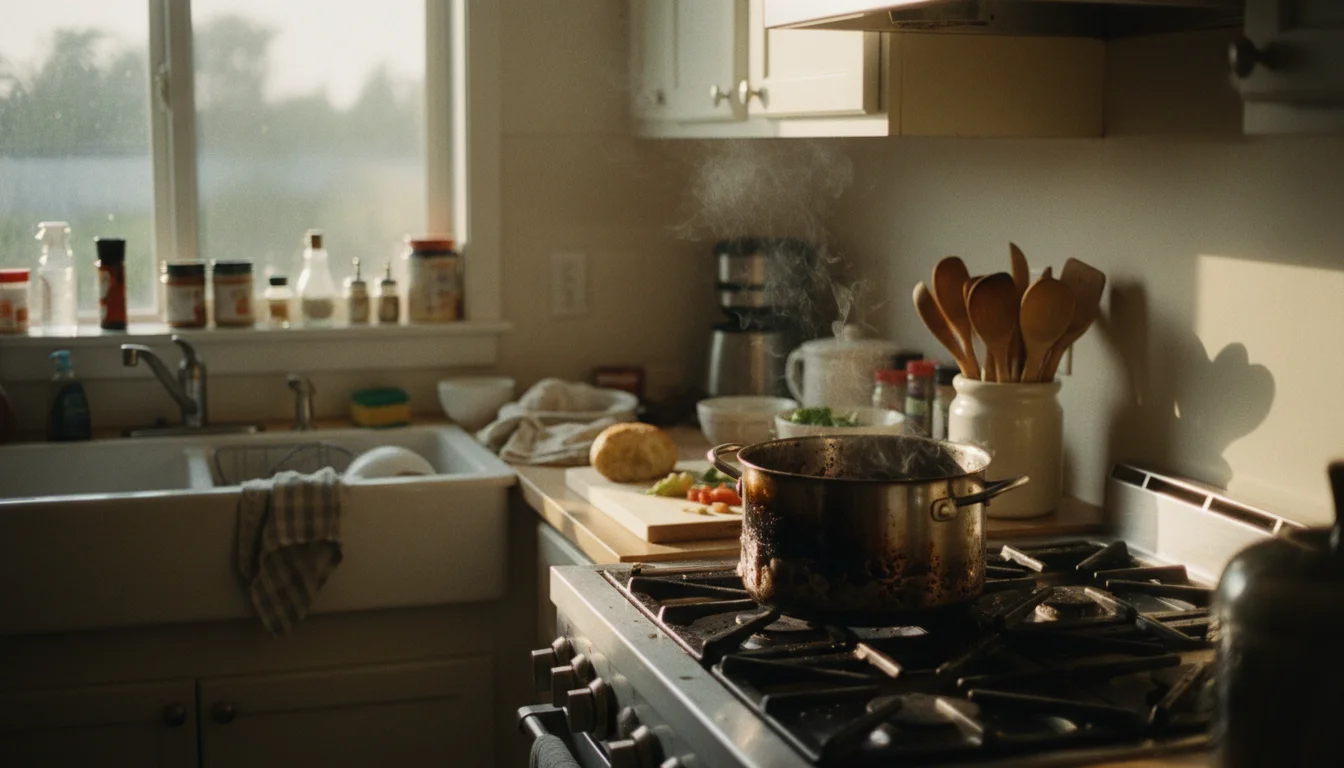
A burnt smell in house interiors travels fast. Smoke particles don’t stay in the kitchen – they attach to every soft surface they touch: curtains, carpet, couch cushions, the clothes hanging in the next room. Most people open a window, decide it smells fine after an hour, and wake up the next morning wondering why the house still reeks. It didn’t air out. The odor embedded itself in everything porous.
The fix is a two-phase approach: flush the airborne particles out immediately, then pull the embedded ones out of every surface they’ve colonized. Here’s how to do both, in order of speed.
1. Open Windows for Ventilation
Do this first, before anything else. Open windows on opposite sides of your home to create cross-ventilation – this pulls air through the space rather than just letting it drift out one side. A single open window barely moves the air; two on opposing walls create actual airflow that flushes contaminated particles out.
Even in winter, crack them for at least 10-15 minutes. The cold discomfort is worth it. If the burning was bad, run ceiling fans on high and point any box fans outward in the windows to actively exhaust the smoke-laden air rather than just recirculating it. Don’t just focus on the kitchen. Open the doors between rooms and treat the whole house as a connected airspace, because the smell already spread through all of it the moment it started.
Ten to fifteen minutes of proper cross-ventilation removes a large portion of the airborne particles. But it won’t touch what’s already soaked into fabric and carpet – that requires the rest of this list.
2. Place Bowls of Vinegar to Absorb Odors
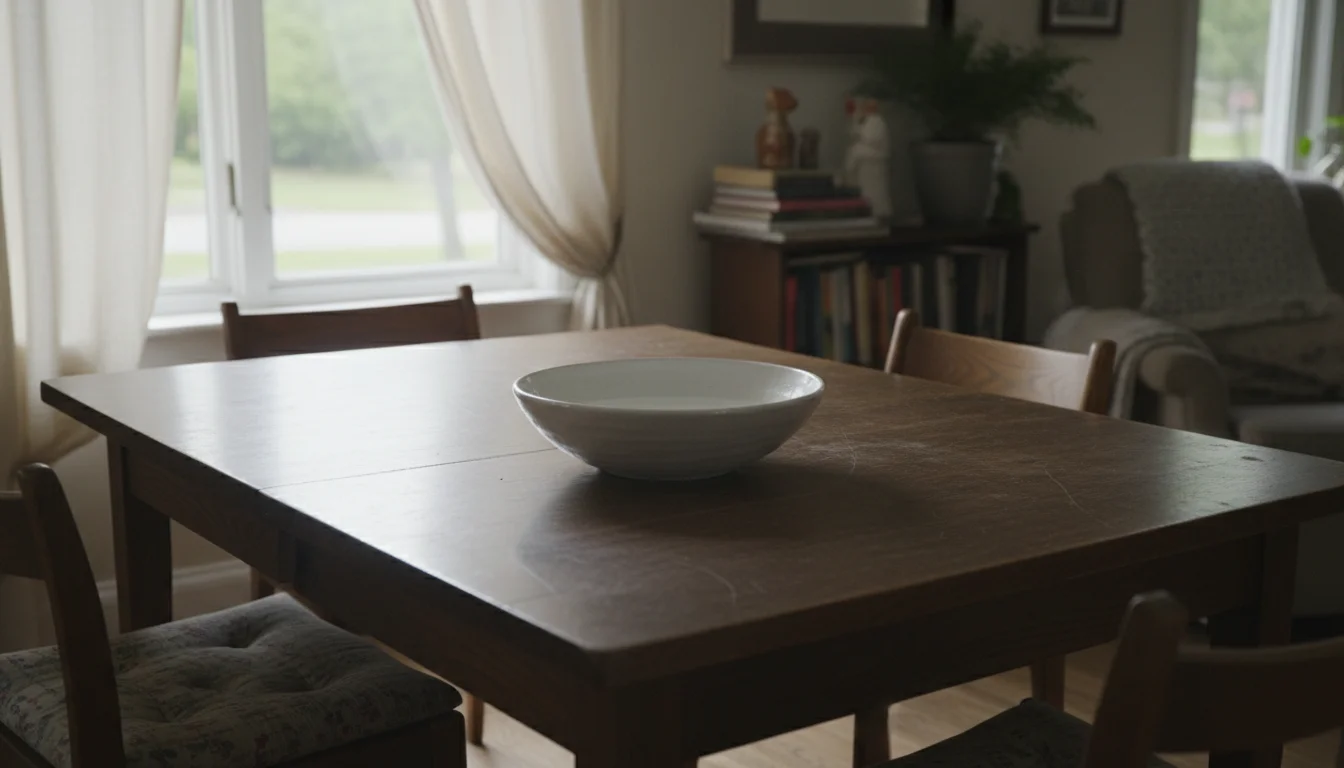
While the windows are open, set up vinegar bowls in every affected room. Fill shallow, wide containers with full-strength white vinegar – not diluted. Surface area matters. More liquid exposed to air means more acetic acid vapor working on the odor molecules. Use 1-2 cups (240-480 ml) per bowl, one bowl per room.
Once you’re done airing out, close everything up and let the bowls sit. Leave them for at least 4-8 hours. For a significant burn, leave them overnight. The acetic acid in the vinegar reacts with the alkaline compounds in smoke and burnt residue, converting them into non-odorous compounds. It’s neutralization, not masking.
The vinegar smell is strong while the bowls are in place. That’s normal. Once you remove them and ventilate briefly, the vinegar smell dissipates completely – and the burnt smell doesn’t come back, because it’s been chemically neutralized rather than covered up.
3. Spray Surfaces with Vinegar Solution
The bowls handle what’s floating in the air. The surfaces near the burn source need direct treatment.
Mix 1 cup (240 ml) white vinegar with 1 cup (240 ml) water in a spray bottle. Wipe down stovetops, counters, cabinet fronts, backsplashes, and the inside of any appliance that was near the smoke. Spray, let it sit for a minute, wipe clean with a damp cloth. The vinegar scent clears in 10-15 minutes and takes the burnt smell with it.
For a serious burn – something significantly charred, a grease fire that filled the kitchen with smoke – go further. Pour 1 cup (240 ml) of straight vinegar into a small saucepan and bring it to a gentle simmer while you clean. The steam neutralizes airborne molecules simultaneously with your surface work. It smells bad while it’s happening. That’s fine. Give it 15 minutes.
Don’t skip the inside of the microwave, the oven door, and the range hood filter if yours is greasy. Those surfaces hold onto burnt odors and keep releasing them.
4. Wash Fabrics Exposed to the Odor
This is the step most people skip, and it’s the main reason the smell persists for days after everything else seems handled.
Curtains absorb smoke. Kitchen towels absorb smoke. The throw blanket on the couch nearest to the kitchen absorbs smoke. They look completely fine, they don’t smell immediately obvious when you put your nose to them, and they are absolutely radiating burnt particles back into your rooms every time air moves through the space.
Anything machine-washable needs to go through a cycle. Add 1 cup (240 ml) of white vinegar to the rinse cycle specifically – not the wash cycle, because you want the vinegar in contact with the fabric at the end, not washed away before it can work. Regular detergent in the main wash, vinegar in the rinse. That combination handles both cleaning and deodorizing.
For upholstered furniture and anything that can’t go in a machine, sprinkle baking soda directly on the fabric. Press it in lightly so it makes contact with the fibers. Leave it for at least an hour – this step requires time, the powder needs to sit long enough to pull odor molecules out. Then vacuum thoroughly. Don’t rush it. An hour minimum, and longer for heavy odors is better.
5. Sprinkle Baking Soda on Carpets
Carpet is the worst fabric offender in the house for this. Every foot of carpet has thousands of fibers and every step after a burning incident drives particles deeper into them. Vacuuming alone clears the surface but doesn’t reach what’s embedded.
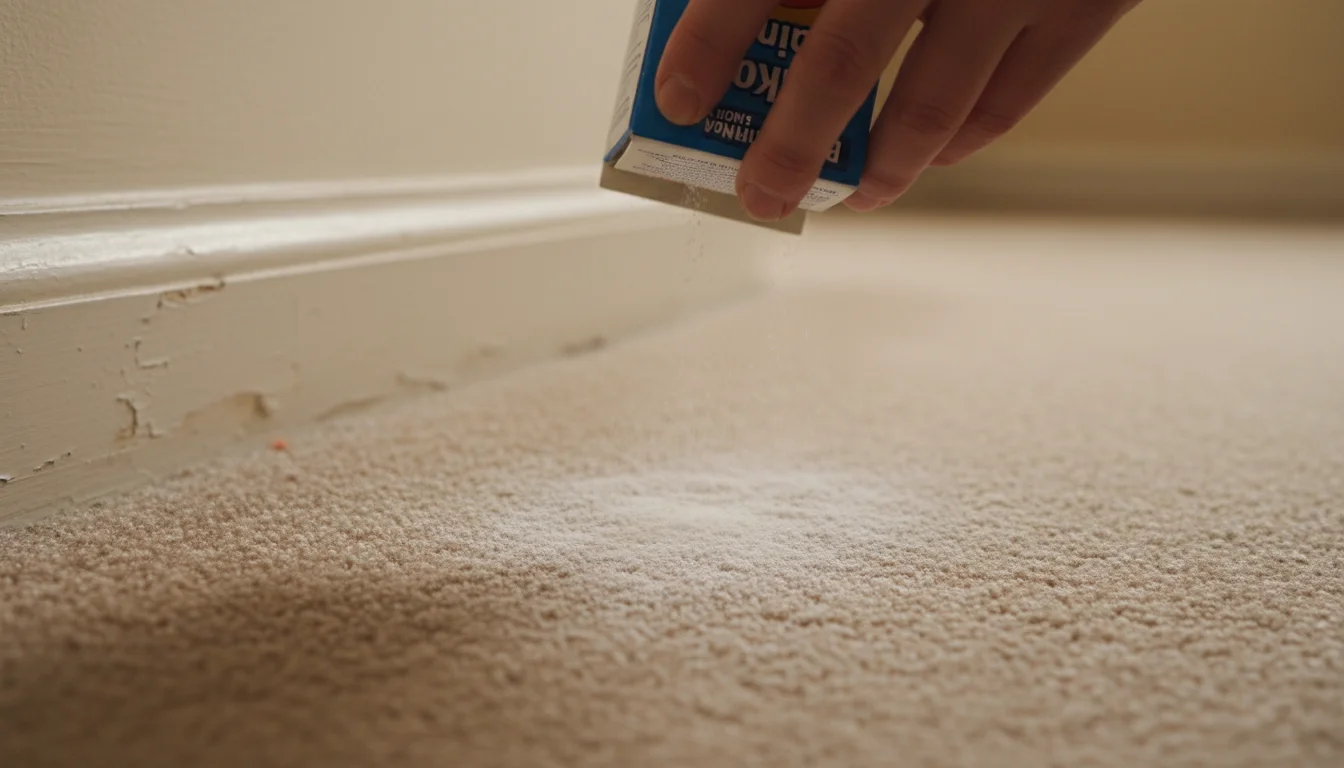
Sprinkle baking soda generously over all carpeted areas that were exposed. For a whole-house burning incident, that’s everything. Work the powder in lightly with a brush or the back of a broom if it’s a significant deposit. Let it sit for at least 15 minutes for a light incident, and several hours or overnight for anything serious. Then vacuum thoroughly in overlapping passes.
You’ll sometimes smell a faint burnt odor during vacuuming. That’s a good sign – it means the baking soda absorbed the odor and is releasing it as it’s disturbed. The carpet will smell clean once the baking soda is fully vacuumed out.
For rooms with heavy exposure, repeat this process a second time the following day.
6. Place Activated Charcoal Around the House
For odors that hang on after everything else has been done, activated charcoal is the persistent solution.
Buy it in sachets or as loose granules. Place sachets or small open containers of granules in the rooms that still smell off – particularly in smaller, enclosed spaces like closets, the pantry, or any room with limited airflow. Activated charcoal works through adsorption: its extremely porous surface physically traps odor molecules and holds them. It doesn’t mask anything, doesn’t add its own scent, and works continuously over days and weeks without attention.
When a batch becomes saturated (usually after about a month), you can recharge it rather than throwing it away. Spread the charcoal granules on a baking sheet and leave it in direct sunlight for a few hours. UV exposure releases the trapped molecules and restores the charcoal’s absorptive capacity for another cycle. Most sachets can be recharged several times before they need replacing.
It’s slower than vinegar and baking soda, but it catches what those methods leave behind.
7. Run an Air Purifier with a Carbon Filter
If you have one, run it. If the burning situation was significant, it’s worth getting one.
An air purifier with both a true HEPA filter and an activated carbon layer handles what physical cleaning misses – fine particles still circulating in the air after ventilation. The HEPA layer catches particulate matter; the carbon layer targets volatile organic compounds and odor molecules specifically. Neither layer alone is as effective as both together.
Run it in the room where the burning originated, on the highest setting, for at least a few hours after completing the surface and fabric cleaning. It’s not a replacement for the other steps – it won’t absorb what’s already in your carpet – but it handles the airborne residue and maintains air quality while the other treatments work.
Keep filters on schedule. A filter loaded with absorbed particles is no longer absorbing anything. Most manufacturers recommend replacing the carbon filter every 3-6 months in regular use.
8. Simmer a Pot on the Stove
This is the finishing step, not a treatment. Everything else removes the burnt smell. This one makes the house smell actively good.
Fill a pot with water and add orange slices, a few cinnamon sticks, and a splash of vanilla extract. Bring it to a gentle simmer on the lowest heat setting. Within a few minutes the scent moves through the whole house – warm, clean, grounded. Not synthetic. Not air freshener. Just something that smells like a home.
Other combinations: lemon slices and rosemary for something brighter. Cranberries and star anise for winter. Apple and cloves. You can’t really go wrong if you’re working with whole spices and citrus.
Keep it simmering on low while you’re home. Top up with water as it reduces. Never leave it unattended, and turn the burner off when you go out.
Don’t do this until the burnt smell is actually eliminated. Layering a pleasant scent on top of lingering smoke just gives you complex burnt-vanilla, and that’s worse.
FAQ
How do you get burnt smell out of your house fast?
The fastest combination: open all windows immediately to create cross-ventilation, set up vinegar bowls in each room, and spray down surfaces near the burn source while the air is moving. Running those three simultaneously tackles airborne particles, passive room absorption, and surface contamination at once. Most light burning incidents are resolved within a few hours this way. The common mistake is stopping after just opening windows – the smell returns because it’s still embedded in everything porous.
How long does it take for a burnt smell to get out of your house?
It depends on the severity of the burn and how quickly you treat it. Light incidents – toast, something briefly scorched, a candle that got away from you – clear up in a few hours with good ventilation plus a vinegar spray. A significant burn that had time to embed in fabrics and carpet takes 24-48 hours with the full treatment: vinegar bowls overnight, fabric washing, carpet baking soda, maybe a second round. Actual fire damage with heavy smoke throughout the structure is a different category – professional odor remediation and the timeline shifts to days or weeks.
Does opening windows help with a burnt smell?
Yes, and it should be the first thing you do. Cross-ventilation (windows on opposite sides of the space) is significantly more effective than a single open window. Even 10-15 minutes of proper airflow removes a large portion of the airborne particles. But ventilation alone doesn’t remove what’s absorbed into curtains, carpet, and upholstery. You need the surface and fabric treatments for that. Ventilation is phase one, not the whole plan.
How long does smoke smell last in a house?
From a minor cooking burn treated promptly: a few hours to a day. Note that smoke smell embedded in clothes needs separate treatment – fabric holds odor differently than open air. From a significant incident where the smell had time to embed throughout the house before treatment: a couple of days with thorough treatment. From actual fire damage with smoke penetrating walls, insulation, and HVAC systems: months, and often indefinitely without professional remediation. The chemistry is different at that scale – normal cleaning methods can’t reach what’s inside the structure itself.