Biocontrol with predatory fish is a long-game strategy. Neither largemouth bass nor tiger muskies can eat a 10-pound adult carp. What they can do is intercept juvenile carp before those juveniles grow large enough to dominate the ecosystem. Used alongside initial adult removal through mechanical means, predator fish create a maintenance layer that suppresses carp recruitment across subsequent generations.
Biocontrol with Largemouth Bass
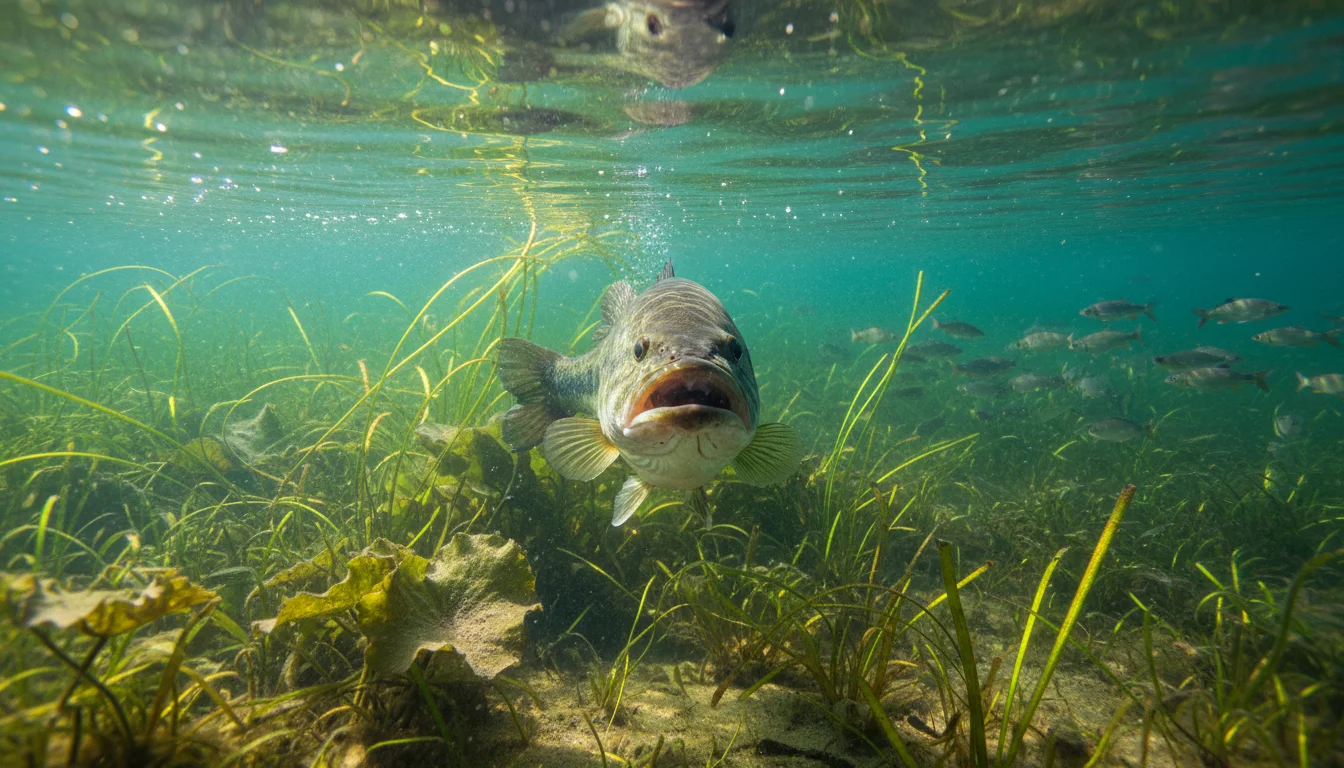
Largemouth bass are the practical choice for most managed lakes and ponds because they’re already present in many water bodies, they’re popular with recreational anglers, and they eat carp at the size that matters most: under 3 in (7.5 cm). A carp that survives its first season is essentially out of reach for any bass in the lake.
Stock at 50-100 fingerlings per acre to establish a predation pressure on young-of-year carp. The bass need 2-3 years to reach effective predation size and numbers, so this isn’t a quick fix. Healthy vegetation is essential – bass are ambush predators and need structure to hunt effectively. If the carp have already destroyed the aquatic plants (which they do), you may need to restore vegetation before bass populations can establish themselves properly.
This method works best as a follow-on to an initial mechanical removal campaign. Remove the adult population first, then stock bass to prevent the next generation from taking hold. Supplemental baitfish stocking helps sustain the bass population during establishment.
Biocontrol with Tiger Muskies
Tiger muskies extend predation capability to carp up to about 12 in (30 cm) – large enough to control the carry-over population that bass miss. These sterile hybrids of muskie and northern pike are aggressive top predators, growing to 30-40 lb (14-18 kg) and consuming their body weight in prey weekly at peak feeding.
Stock at 2-5 fish per acre, using fingerlings of 10-15 in (25-38 cm) for best survival. Because tiger muskies are sterile, they don’t reproduce – the population needs annual supplementation to stay effective. Stock each spring to replace natural attrition.
The combination creates a two-tier predation system. Bass take the smallest carp. Tiger muskies take the intermediate fish that escape bass predation. Large adult carp still need to be addressed through mechanical removal, but the two predator species substantially slow the pipeline of juveniles reaching breeding age.
Tiger muskies also function as trophy sportfish, which creates an additional incentive for anglers to support the management program. A lake managed for tiger muskies gets angling traffic; a lake managed for carp removal alone does not.