Table of Contents
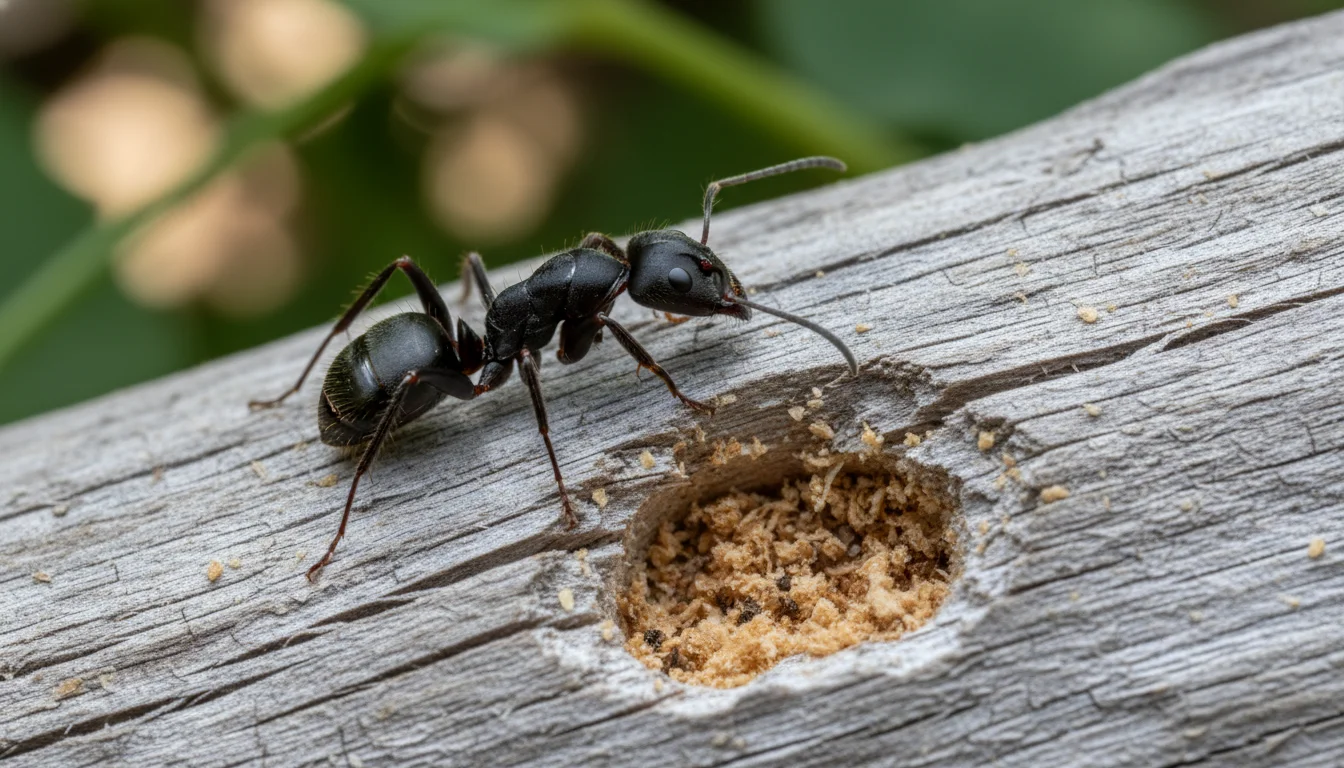
Carpenter ants don’t eat wood. They excavate it. Knowing how to get rid of carpenter ants means understanding that distinction: frass (the coarse, sawdust-like debris they leave behind) tells you there’s a nest inside the structure, not just ants passing through. If you’re seeing large black ants in your home, especially after dark, you’ve almost certainly got a satellite nest somewhere in the walls or framing. (For smaller ants or kitchen infestations, see how to get rid of ants.)
Here’s the thing most people don’t know: the ants inside your house are almost never the main colony. They’re a satellite nest connected by trails to a parent colony outside, usually in a dead tree, a rotting stump, or a wood pile. Kill the satellites and the parent colony sends replacements within weeks. You have to deal with both.
These methods work. Start with the habitat fixes first. Then treat.
1. Replace Water-Damaged Wood
This is the root cause fix. Carpenter ants don’t nest in sound, dry wood – they go for wood that’s already soft from moisture damage. If your siding, foundation framing, window sills, or deck posts have rot, you’re offering them ready-made real estate.
Probe suspect areas with a screwdriver. If it sinks in with minimal resistance, that section has rot and needs to come out. Look especially around plumbing penetrations, where gutters overflow against siding, and at deck ledger boards. Replace with pressure-treated lumber rated for ground contact. Don’t just treat the rot with preservative and cover it up – carpenter ants will find it anyway.
Fixing the leak stops new damage. But wood already compromised stays compromised until you physically remove it.
2. Eliminate Moisture Sources and Leaks
Fix dripping faucets, repair pipe leaks, and address any HVAC condensation routing near walls. Check under sinks and around toilet bases for hidden moisture. Even small, slow leaks create the soft wood that carpenter ants prefer for nesting.
Basement dehumidifiers help. So does making sure outdoor spigots drain fully after use – a slow drip creates a reliable water source. If you’re seeing ants specifically in the bathroom, the satellite nest is likely in the wall cavity behind or near the plumbing.
Pet water bowls left out overnight are a minor point but worth mentioning: empty and dry them. You’re not going to solve a carpenter ant problem with this alone, but it removes one more attractant.
3. Prune Branches and Remove Wood-to-House Contact
Carpenter ants need only branch-tip contact to establish a trail from an outdoor colony into your structure. Any branch, twig, or shrub that touches the building is a potential access bridge. This includes wood piles stored against the house, lattice in contact with siding, and dead stumps adjacent to the foundation.
Trim all vegetation so there’s at least 12 inches (30 cm) of clearance between branches and the structure. Move firewood away from the house entirely – stacked against the exterior isn’t just an access route, it’s prime parent-colony habitat. If there’s a dead or dying tree on your property and you’re having carpenter ant problems, that tree is probably where the parent colony lives. Removing it (or at minimum treating the trunk base) breaks the infestation at the source.
4. Seal Entry Points
Once you’ve removed the habitat draws, seal the physical entry points. Carpenter ants use the same gaps as everything else: utility line penetrations, gaps at the foundation sill plate, cracks in mortar, spaces under door thresholds.
Caulk or foam seal gaps around pipes, conduits, and cables where they enter the house. Check where siding meets the foundation and where window and door frames meet exterior walls. Steel wool packed into larger gaps before caulking adds a physical barrier against anything that tries to chew through. This step won’t fix an active infestation – the ants are already inside – but it’s essential after treatment to prevent re-entry.
5. Deploy Bait Stations and Gel
Bait is the only method that kills the colony rather than just the foragers you see. Worker ants carry poisoned bait back to the nest and feed it to larvae and the queen. For carpenter ants, commercial gels and granule baits based on fipronil or hydramethylnon are effective.
Place bait along active trails, near entry points, and in corners where you see regular activity. Gel bait on small cardboard pieces works well indoors. Don’t spray any pesticides near bait stations – you’ll kill foragers before they transport the poison home, which defeats the entire mechanism.
Replace baits every two weeks even if they look untouched. The active ingredient degrades. Expect two to four weeks before seeing significant decline, and don’t give up at week one because the trails look worse (that’s normal – foragers are recruiting before the bait takes effect).
6. Use Borax Bait (DIY Option)
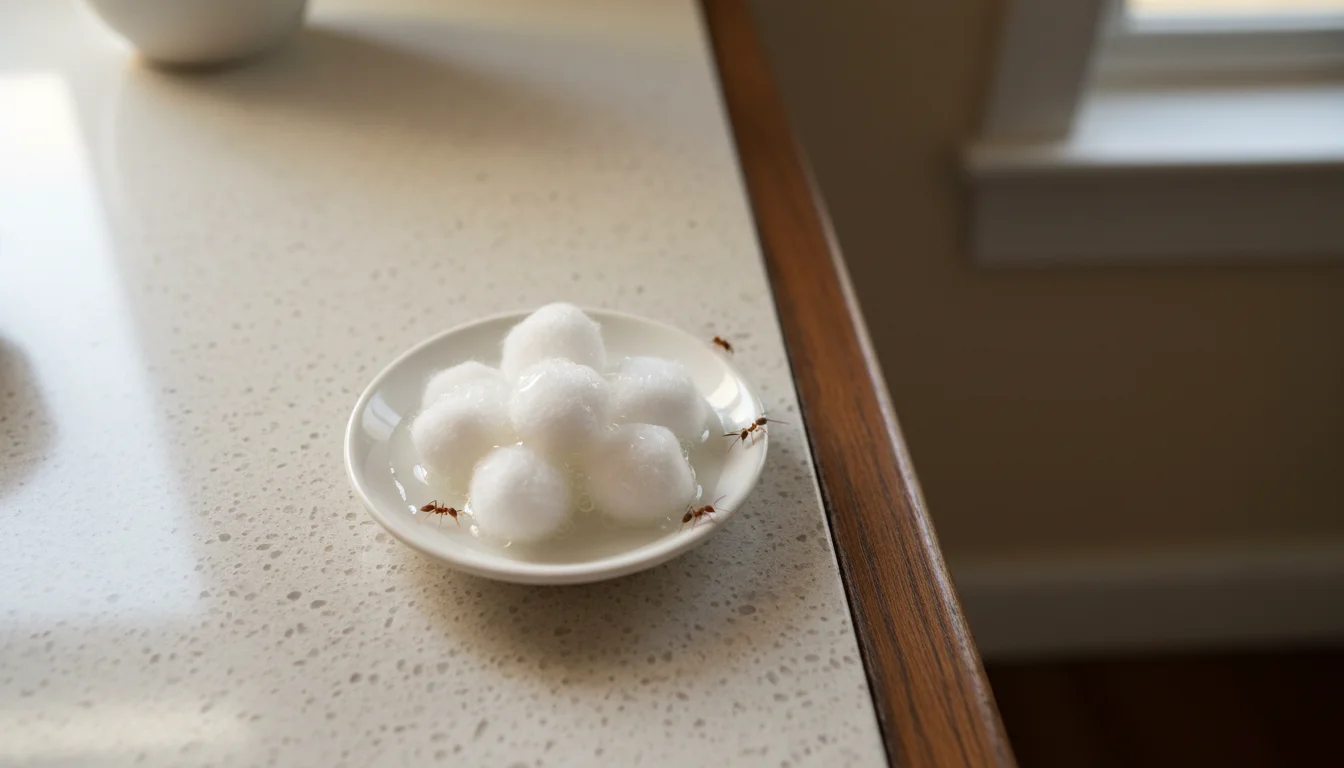
Reddit’s most-cited solution, and it works. Mix 1/2 cup (120 ml) sugar with 1.5 tablespoons borax and 1.5 cups (355 ml) warm water. Stir until dissolved. Soak cotton balls in the solution and place them near active trails in spots that pets and children can’t reach (behind the fridge, under the stove, inside a cabinet corner).
The sugar draws them in; the borax kills slowly enough that foragers carry it back to the nest before dying. Replace every few days as the cotton balls dry out. Keep concentration low – too much borax kills foragers too quickly and the colony doesn’t get dosed.
If liquid bait is impractical, make a paste: 3 parts sugar to 1 part boric acid (slightly different from borax but same mechanism), enough water to form a spreadable consistency. Dab small amounts on cardboard and place along trails.
7. Apply Insecticide Dust in Wall Voids
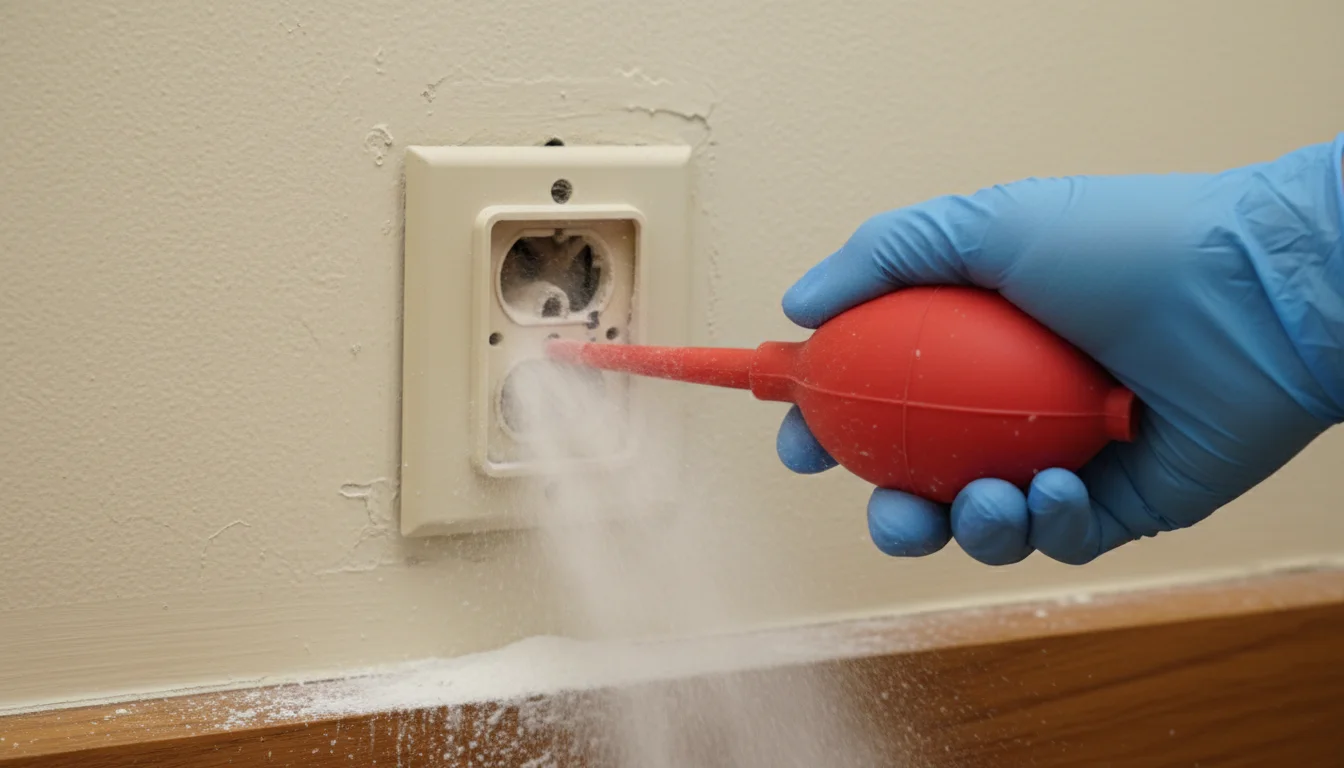
For indoor satellite nests in structural voids, dust is the right tool. Liquid sprays can’t get into wall cavities effectively. Dust particles settle into the space, contact ants as they move through, and stay active for months in protected areas.
Products containing deltamethrin or cyfluthrin as dusts work well. Use a bulb duster or hand duster to puff a thin layer into gaps around electrical outlets (remove the cover plate first), under baseboards, and into any cracks at the top of door frames where frass has appeared. Thin is the word – a heavy application actually repels ants. You want barely-visible coverage.
You can also drill small access holes at the infestation site and puff dust directly into the void before patching. If you’ve found where the frass is concentrated, that’s your target location.
8. Apply Residual Insecticide to the Perimeter
Outdoor perimeter treatment creates a chemical barrier that kills ants crossing it from the parent colony to the structure. Products containing bifenthrin or lambda-cyhalothrin work well for this application.
Spray a 3 ft (1 m) band along the foundation, up onto the lower siding, and around window and door frames. Apply on a calm day with no rain forecast for 24 hours. Follow label rates – these are legal documents and the rates exist for a reason. Wear gloves and eye protection.
Reapply every 90 days during active season. This doesn’t eliminate the outdoor colony but it disrupts the access corridor and knocks down foragers trying to re-enter after you’ve treated the interior.
9. Natural Predators
Woodpeckers are the most effective natural predator for carpenter ants – they can hear and detect colonies in wood and will excavate the nest themselves. If you’re seeing woodpecker damage on a tree or structural wood, that’s actually diagnostic of a carpenter ant nest, not just random drilling. The woodpecker already found what you’re looking for.
Ground beetles, spiders, and parasitic wasps also predate carpenter ants. Maintain habitat for these by avoiding broad-spectrum insecticide use around the yard perimeter, leaving leaf litter in garden beds, and planting native species that support insect diversity. Install a bird feeder and birdbath to attract insect-eating species – robins, wrens, and bluebirds all take carpenter ants. Leave some areas of bare soil for ground beetles.
This is long-game background support, not a primary fix for an active infestation. But once you’ve cleared the infestation, a balanced yard ecosystem is the best passive prevention against carpenter ants re-establishing.
When to Call a Professional
Call a pest control company if:
- You find frass in multiple rooms or frass appears consistently despite treatment
- The infestation is in load-bearing structural framing (joists, beams, sill plates) – you need to know the extent of the damage before cutting anything out
- You can’t locate the outdoor parent colony – pros have tools (thermal cameras, acoustic detectors) that find nests in walls without tearing out drywall
- The infestation keeps coming back after thorough treatment
Carpenter ant damage to structural wood is expensive. If you’re uncertain about the extent, a pest control inspection is cheaper than discovering the damage later.
Frequently Asked Questions
What’s the fastest way to kill carpenter ants?
Commercial bait gel reaches the colony fastest. For the indoor satellite nest specifically, insecticide dust puffed into the wall void produces quicker results than surface sprays. The combination of gel bait (to kill the colony over 2-4 weeks) plus dust in identified wall voids is the most effective fast-tracked approach.
What will keep carpenter ants away?
Dry wood and tight exclusion. Eliminate any moisture damage, keep firewood stacked at least 20 ft (6 m) from the house, trim branches that touch the structure, and seal entry points. Carpenter ants follow a clear hierarchy of preference: moist, soft wood first; dry wood with convenient access second. Remove both and they’ll establish colonies elsewhere. Annual perimeter spray in spring also helps – carpenter ant scouts are most active April through June when new colonies are forming and workers are searching for satellite locations.
How do I find the carpenter ant nest?
Follow trails in early morning or evening (they’re most active between 10pm and 2am). Look for frass – coarse sawdust mixed with insect parts – near baseboards, windowsills, door frames, and in closets against exterior walls. Tap suspected areas with a screwdriver handle; a hollow sound instead of solid thud indicates a void. If you find frass but no trail, the nest is within a few feet of that spot.
How long does it take to get rid of a carpenter ant infestation?
Bait stations take 2-4 weeks to collapse a satellite nest. But here’s why people get frustrated: if there’s a parent colony in a dead tree or stump outside, the satellite re-establishes from the same colony within weeks. Full elimination requires treating both locations. When the outdoor parent colony is large and established, complete control can take 2-3 months.
A mature carpenter ant colony can have 3,000 or more workers and multiple queens. It took years to build. It won’t collapse in a week. Consistent bait replacement, elimination of the moisture source, and locating the outdoor parent nest are the three variables that determine how long this drags on. Skip any one of them and you’re managing the problem, not solving it.