Table of Contents
Cat litter smell is primarily ammonia – a byproduct of urea decomposition by bacteria in the litter. The fix is removing the source before the bacteria have time to produce it. Everything else (deodorizers, purifiers, covered boxes) is managing what escapes. Do the source work first, then layer in the ambient management.
1. Scoop Every Day
Urine-soaked clumps start producing ammonia within hours of deposit. At 24 hours, you can smell it. At 48, the whole room knows. Scoop everything out once a day, minimum – twice daily if you have more than one cat using the same box.
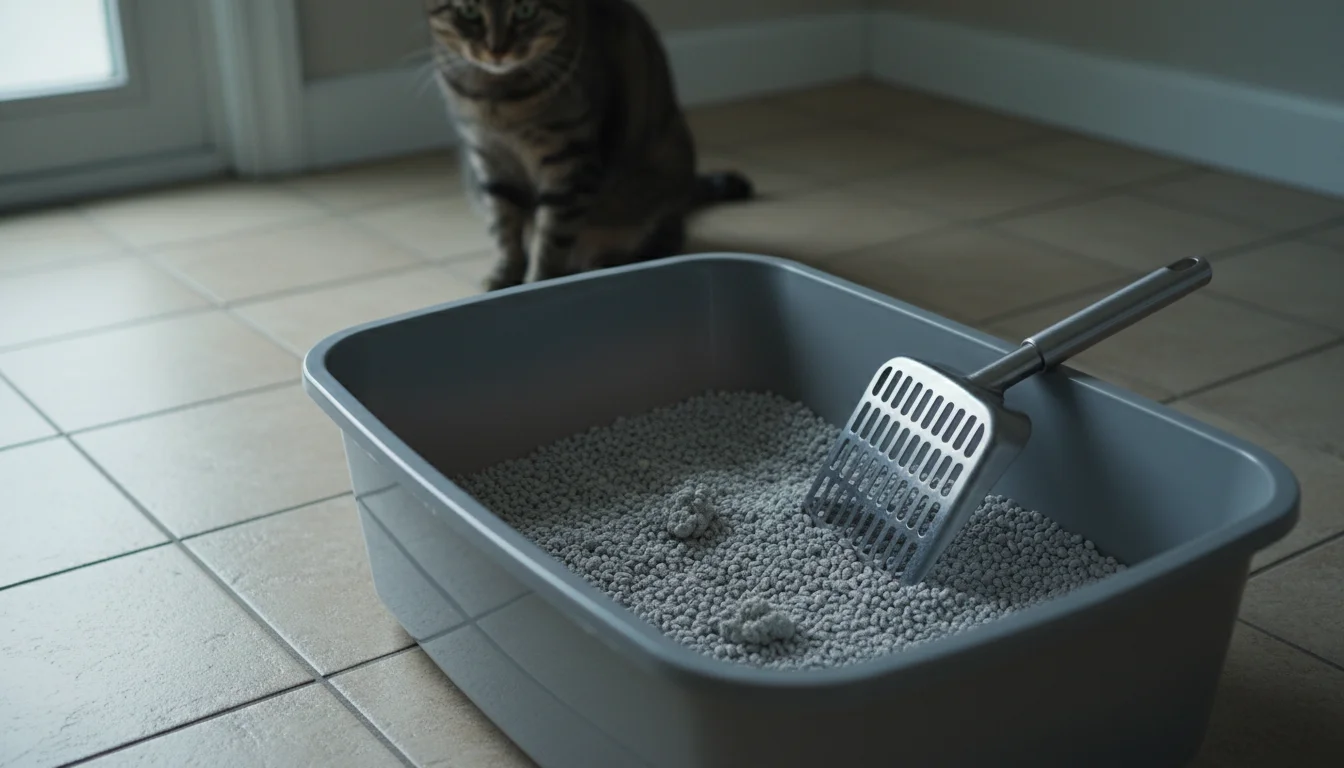
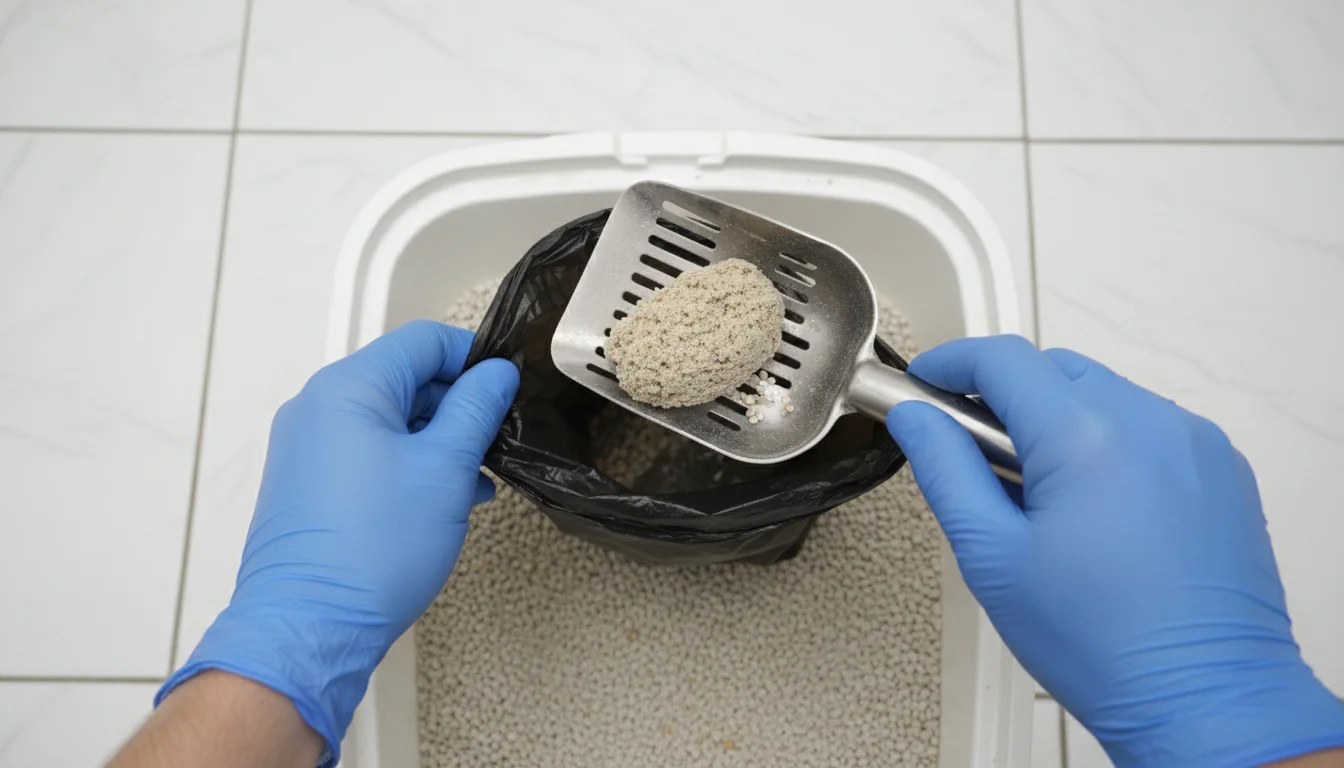
Use a slotted scoop to let clean litter fall through. Bag the waste and seal it immediately – don’t leave the bag open on the floor. After each scoop, level the litter surface and top up to 2-3 inches (5-8 cm). Shallow litter means paws hit the plastic before they finish digging, which spreads bacteria and makes the box smell worse between scoops.
No other method on this list compensates for skipping this step. (Pregnant women should have someone else handle litter duty – toxoplasmosis from cat feces is a real risk, not a myth.)
2. Replace All the Litter on a Schedule
Scooping removes clumps but not the contamination underneath. A fine layer of urine seeps past every clump and coats the granules below. After a few weeks, that baseline is saturated enough that the box smells within an hour of scooping no matter how thorough you are. That’s the diagnostic: if it smells within a couple of hours of a fresh scoop, it’s time for a full change.
Dump everything out, scrub the box with warm soapy water, rinse, and dry completely before refilling. Timing depends on how many cats you have – every 2-3 weeks for one cat, every week for two or more.
One other thing: sprinkle a thin layer of baking soda on the bottom of the empty box before you refill it. It sits under the litter and helps neutralize ammonia at the source, where cleaning is hardest to reach.
The box itself degrades too. Plastic absorbs urine residue over time. If a freshly cleaned, freshly filled box still smells off within a day or two, the box is the problem – replace it. They’re cheap.
3. Switch to Odor-Control Litter
Standard clay absorbs moisture but doesn’t neutralize ammonia. Clumping clay with activated carbon or baking soda additive performs noticeably better. Silica crystal litter works differently – it pulls moisture into the crystals and starves the bacteria of the environment they need to break down urea. That mechanism is what makes it more effective than standard clay for odor, not just absorption.
If you’re switching formulas, mix the new litter 50/50 with the old for about a week. Abrupt switches cause box avoidance in cats that are particular about texture, and an avoided box is a far worse problem than a smelly one.
4. Get a Covered Box
A hooded box with a carbon filter in the lid traps odor molecules before they drift into the room. The containment is real, but limited – it delays room odor, it doesn’t eliminate it. The box still needs daily scooping. Actually, it needs it more – odor concentrates faster inside an enclosure, and a covered box that isn’t scooped becomes intolerable to the cat before you notice the smell yourself.
Replace the carbon filter in the lid monthly. This is the step everyone skips, and a saturated filter stops working and also reduces airflow, which makes things worse.
If mobility is an issue for your cat (older animals), stick to a front-entry design. Top-entry boxes work well for keeping litter scatter down but require a jump.
5. Place Activated Charcoal to Absorb Cat Litter Smell
Activated charcoal’s porous surface traps odor molecules directly out of the air. Unlike baking soda left in an open dish, it works for weeks without replacing and doesn’t add any fragrance of its own. Place a sachet or open container within a few feet of the litter box area.
Recharge it monthly: spread it on a baking sheet and leave it in direct sunlight for a few hours. The UV releases the trapped molecules and refreshes the charcoal for reuse. A single bag lasts most of a year this way.
It’s not a substitute for cleaning – but for the residual odor that lingers in a room even after a fresh scoop, charcoal is the most effective passive option.
6. Run an Air Purifier in the Room
Once the box routine is sorted, an air purifier with a carbon filter handles the ambient odor that cleaning can’t address. The carbon filter specifically targets VOCs and ammonia, not just particulates – a HEPA-only purifier won’t do much for smell. Run it continuously in the room where the box lives, not just when you notice odor.
Replace the carbon filter on schedule (usually every 3 months). A saturated filter stops capturing new molecules and can start re-releasing old ones. Look for a unit rated for the room size; undersizing it means it’s cycling air too slowly to stay ahead of odor production.
FAQ
What kills the smell of cat litter?
Daily scooping eliminates the main source. Activated charcoal absorbs residual ammonia from the air. If the box still smells within a couple of hours of scooping, the litter substrate is saturated – do a full replacement and box scrub.
How to make a house not smell like cat litter?
Fix the box routine first: scoop daily, do a full change every 2-3 weeks, use an odor-control litter. Then layer in a charcoal absorber near the box and an air purifier with a carbon filter in the room. Box placement matters too – rooms with poor airflow concentrate odor faster than well-ventilated spaces.
Is breathing cat litter dust harmful?
Clumping clay litters contain crystalline silica dust, which is a known lung carcinogen with sustained high-level exposure. This is a real concern, not a marketing claim. If you or your cat have respiratory issues, switch to a low-dust or silica-free formula (plant-based or crystal litters generate significantly less dust). Scoop in a ventilated area; a dust mask isn’t overkill if you’re scooping multiple boxes daily.
What cancels out the smell of cat urine?
For litter box odor: activated charcoal and baking soda neutralize ammonia. For urine on surfaces outside the box, enzymatic cleaners break down uric acid crystals – the compounds that cause the persistent smell. Hydrogen peroxide works on hard surfaces. Don’t use ammonia-based cleaners: they smell like urine and can encourage the cat to mark the same spot again.