Table of Contents
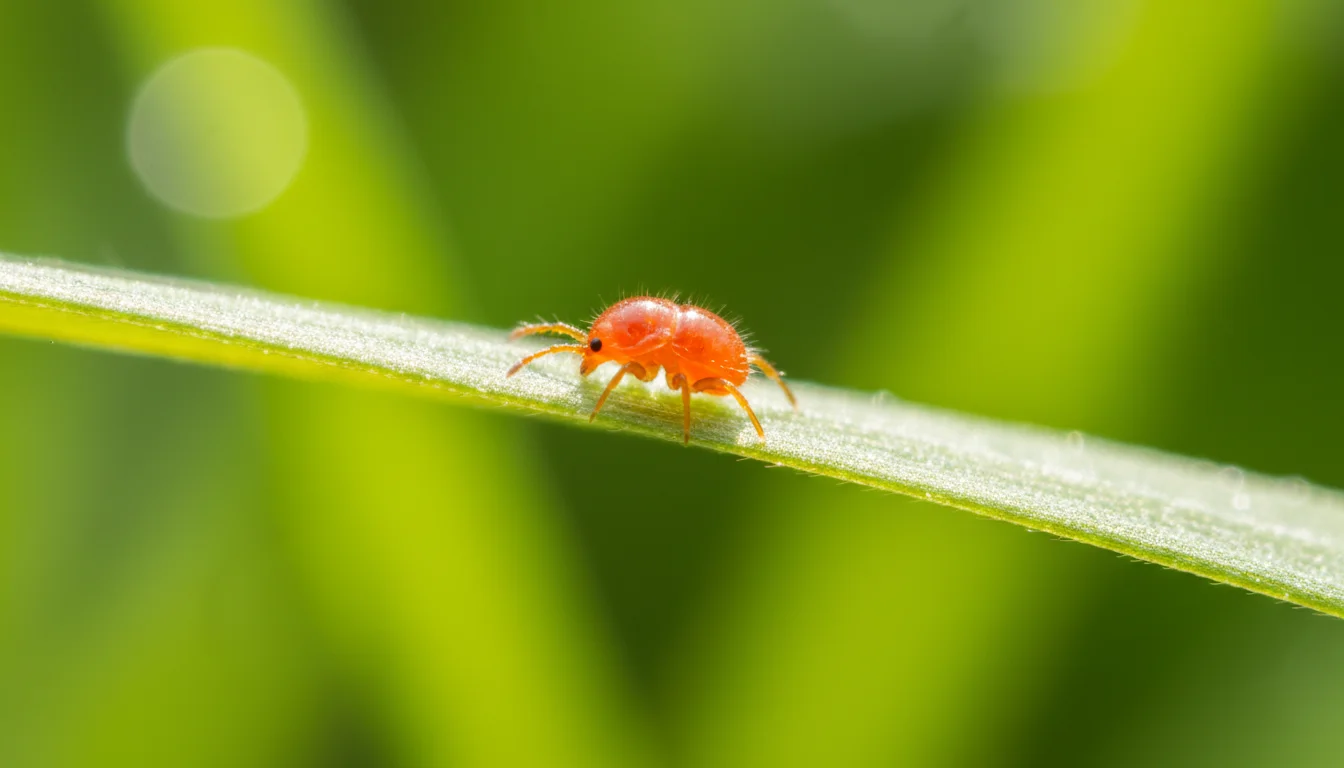
Chiggers are a yard-wide problem, not a spot problem. They don’t live in a nest you can locate and destroy. They’re distributed through grass, leaf litter, and vegetation edges across your entire property – concentrated in shaded, humid spots where wildlife passes through. Effective treatment means addressing the environment they live in, the host animals that reinfest your yard, and the active population on the ground. These eight methods cover all three.
Diatomaceous Earth
Food-grade diatomaceous earth is a fine powder that destroys the waxy coating on chigger exoskeletons, causing them to dehydrate and die. Spread it in the zones where chiggers concentrate – along fence lines, at vegetation edges, under low-hanging shrubs, around the perimeter of lawn areas adjacent to wooded or weedy spots. You want a light, even coating rather than piled powder.
DE works slowly, so don’t expect immediate results. And it only works when dry – one good rain washes it out of commission, requiring reapplication. Its value is as a persistent background treatment in areas you can’t easily spray. Non-toxic, safe for pets and kids once settled.
Treat Perimeter Zones with Sulfur Powder
Sulfur is the more aggressive option for perimeter treatment. Chiggers won’t cross a sulfur barrier and are killed on contact with it. Apply a 3 ft (90 cm) wide band of garden sulfur powder around your entire yard perimeter, paying extra attention to where your lawn meets woods, tall grass, or fields. Treat a similar circle around trees and shrubs that provide habitat.
Use garden sulfur specifically, not the agricultural sulfur sold for soil amendment – they’re different products. The smell is strong on day one but fades within a few days. Reapply every 2-3 weeks throughout the active season (late spring through early fall). For yards with heavy infestation along a wooded edge, sulfur perimeter treatment is one of the most reliable options.
Neem Oil
Neem oil disrupts chigger feeding, interferes with larval development, and functions as a repellent. It’s also safe for most plants and breaks down relatively quickly in soil without leaving persistent residues.
Mix 1-2 tablespoons of neem oil per 1 gallon (3.8 L) of water with a few drops of dish soap as an emulsifier. Spray thoroughly over lawn areas and ground cover, working through the vegetation where chiggers live rather than just over the top. Apply in the early morning or evening – hot direct sun degrades neem oil faster and can scorch foliage at high concentrations. Reapply every 7-10 days. Effective across all life stages, which makes it more useful than contact-only treatments.
Essential Oil Repellents
Peppermint, eucalyptus, lemongrass, and clove oil all have documented repellent activity against chiggers and other mites. These aren’t going to eliminate an active infestation, but they’re useful for treating vegetation borders and transition zones where chiggers concentrate.
Mix 10-15 drops of essential oil per 8 fl oz (250 ml) of water with a small squirt of dish soap to emulsify it. Spray along paths, at fence lines, and around seating areas in the yard. Reapply every 2-3 days since the oils evaporate quickly. More useful as a supplementary treatment in areas you want to use regularly than as a primary control strategy for the broader infestation.
Natural Predators
Ground beetles, predatory mites, birds, and ants all feed on chiggers and related mite species. A chemically saturated yard kills these allies along with the target pests, which often makes infestations worse the following season.
Attract ground-feeding birds like robins, thrushes, and wrens with birdbaths and brush piles at the yard edge. Avoid broad-spectrum insecticide applications across your lawn – treat specific problem zones rather than blanketing the whole property. Leave areas of bare soil for ground beetles. Native plantings support the entire beneficial insect community. This approach won’t produce rapid results, but it builds a yard ecosystem that suppresses chiggers persistently rather than requiring repeated chemical interventions.
Install Fencing to Exclude Wild Animals
Deer, rabbits, raccoons, and other wildlife carry chiggers into your yard on their fur and deposit them wherever they rest and travel. A yard that backs to woods or fields can be constantly reinfested by animal traffic regardless of how aggressively you treat. Physical exclusion breaks that cycle.
Install welded wire or chain link fencing at least 4 ft (1.2 m) high around your property perimeter. Bury the bottom edge 6 in (15 cm) underground to prevent burrowing. Deer require 8 ft (2.4 m) height or angled extensions to deter climbing. Seal gaps under gates with gravel or pavers. Studies in suburban areas bordering woodlands show that blocking wildlife passage cuts chigger reintroduction rates by 70% or more. The fence is a one-time investment that makes every other treatment more effective.
Use Visual Deterrents to Repel Wildlife
When full perimeter fencing isn’t practical, targeted deterrents at wildlife entry points reduce animal traffic significantly. Deer and other prey animals avoid areas that feel exposed or predator-associated.
Hang reflective tape, old CDs, or aluminum pie plates from trees and posts at the yard perimeter where animals tend to enter. Position motion-activated sprinklers at the most-used crossing points. Predator decoys – coyote silhouettes, realistic owl figures – work initially but require weekly repositioning to prevent habituation. These methods are most effective when paired with habitat modification: remove standing water, keep grass mowed short, and eliminate brush piles that provide cover. Animals that can’t find food or shelter in your yard don’t stay long enough to drop off their chiggers.
Get Free-Range Chickens or Guinea Fowl
This is the most effective live-removal option if your situation allows it. Guinea fowl in particular are relentless foragers that scratch through leaf litter, peck under shrubs, and patrol the exact microhabitats where chiggers live. Four to six guineas can manage a quarter-acre yard’s chigger population on their own.
Chickens work too but range less aggressively and stay closer to the coop. Either species needs predator-proof housing and access to clean water. Check local ordinances before acquiring birds – poultry keeping is restricted in many municipalities. The trade-off is real: scratched flower beds, bird droppings on hard surfaces, and the general presence of livestock. But if you have space and permitting, poultry is genuinely the most satisfying chigger control method available, and the eggs are a bonus.