Table of Contents
Chipmunks are small, fast, and relentless. They’ll tunnel under your foundation, hollow out your bulbs, and eat your birdseed before the birds do. Most people reach for traps first and miss the point: if you haven’t removed what’s attracting them, every catch just opens a vacancy. Start with habitat, then trap if you need to.
1. Remove Food Sources
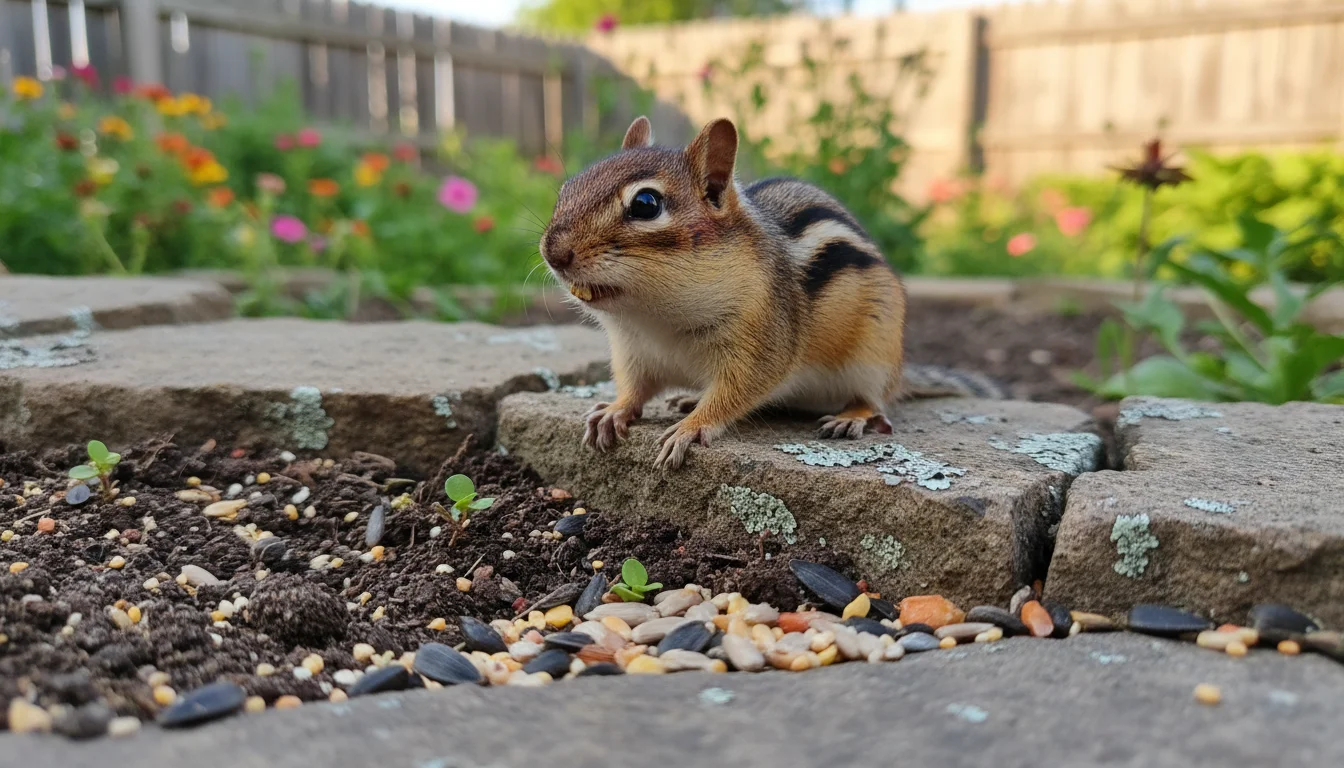
Chipmunks eat seeds, nuts, berries, and anything loose on the ground. Your yard is a free buffet if you’re not paying attention.
Secure garbage cans with locking lids. Store bags of birdseed, pet food, and dry goods in metal or thick plastic containers – cardboard and thin plastic aren’t obstacles. Pick up fallen fruit and nuts daily during the season. Keep bird feeding areas tidy; spilled seed under the feeder is basically a chipmunk diner. If you compost, use a sealed bin or bury wire mesh underneath an open pile to block burrowing access.
This alone won’t evict chipmunks already denning under your deck, but it stops new ones arriving and makes existing ones work harder to stay.
2. Remove Attractants
Same principle, broader scope. Beyond food, chipmunks need cover and easy travel routes.
Bring pet food bowls inside at night. Cut back dense ground cover that runs close to the house. Remove brush piles and clear leaf litter from against the foundation – the less cover between your property and the street, the more exposed they feel moving around. Combined with cutting off the food supply, you’re making your yard actively less interesting than the neighbor’s.
3. Block Access to Shelter
Chipmunks burrow anywhere with cover: under steps, along foundations, behind retaining walls, in rock piles. Entry holes are about 2 inches (5 cm) wide and usually sit close to structures. Walk the perimeter and find them.
Fill active burrows with gravel first, then top with soil and tamp it down hard. Gravel is the key – soil alone they’ll re-excavate in an afternoon. For a permanent fix, install quarter-inch (6 mm) hardware cloth along foundation edges, buried at least 6 inches (15 cm) deep and bent outward in an L-shape underground. Seal gaps in retaining walls with mortar. Remove woodpiles and brush piles that sit directly against the house.
4. Use Live Traps
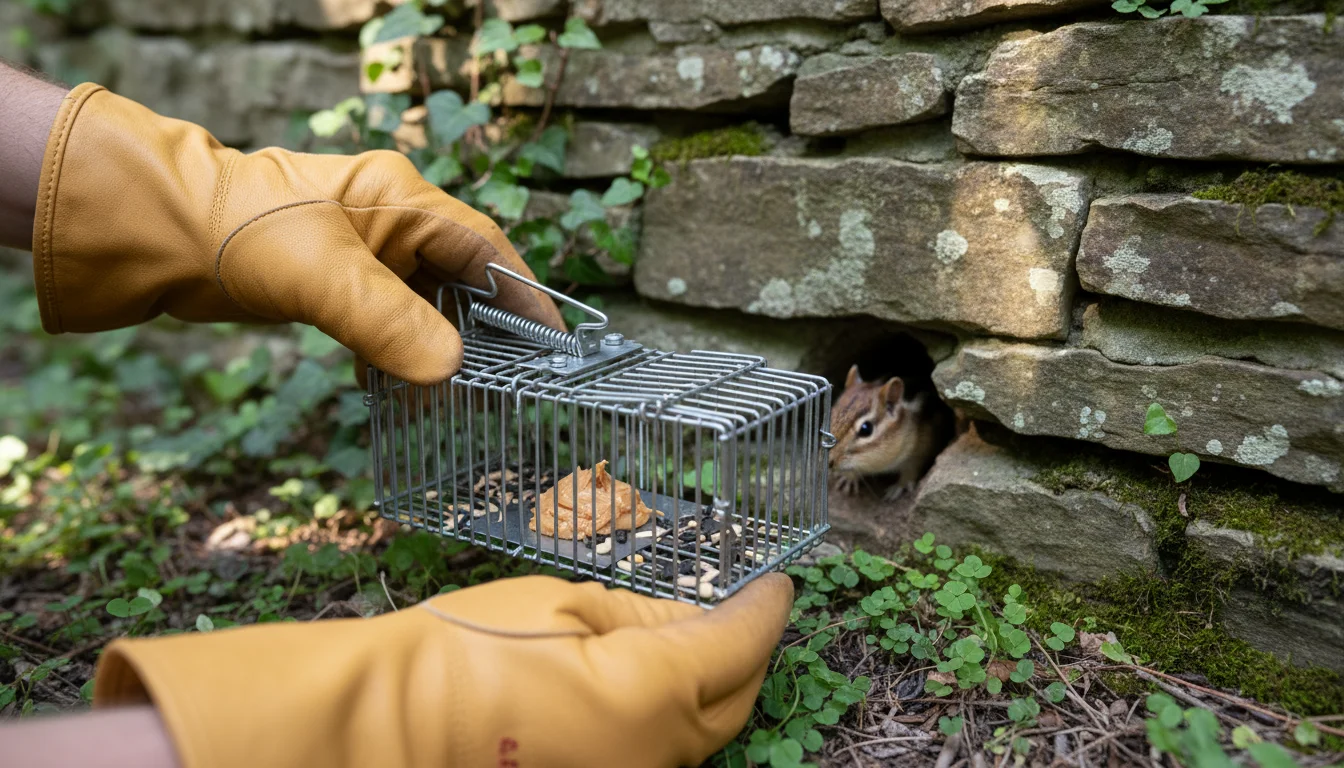
The most popular choice for people who don’t want to kill them. Metal or plastic box traps with one-way doors. Bait with 10-15 sunflower seeds, a smear of peanut butter, or both. Check every few hours – leaving one trapped in a metal box in the sun for half a day is cruel and defeats the purpose.
Release at least 1 mile (1.6 km) away in a wooded area well clear of other homes. Don’t dump them in a park or a neighbor’s yard. You’re dealing with multiple individuals, so set several traps and expect to catch 3-5 before numbers drop noticeably.
5. Fence Off Gardens and High-Value Areas
A 3-4 foot (90-120 cm) fence with an L-shaped footer buried 6-12 inches (15-30 cm) deep keeps chipmunks out of established garden beds. They don’t climb well and won’t bother if they can’t tunnel under. Use quarter-inch (6 mm) hardware cloth – not chicken wire, they’ll push through gaps and gnaw through the wire eventually. Angle the underground footer outward away from the garden.
Worth the investment if they’ve hit the same beds two years running.
6. Protect Specific Plants and Bulbs
When fencing an entire bed isn’t practical, go individual. Hardware cloth cylinders around vulnerable plants, wire mesh baskets for bulbs – roots grow through, rodents can’t get in. Especially worth it for tulips and crocuses, which chipmunks will prioritize over everything else in the garden.
Capsaicin spray on ornamental leaves and stems keeps them off foliage. Reapply every few days and after rain.
7. Apply Repellents to Key Areas
Predator urine (fox, coyote, or bobcat) signals active danger. Apply granular or liquid forms around garden beds, burrow entrances, and foundation edges. Fox urine works best because foxes actually hunt chipmunks. Reapply after rain – this is the failure mode most people skip.
Castor oil holds up too. Mix 2 tablespoons (30 ml) in 1 gallon (3.8 L) of water and spray soil and plant bases. Chipmunks won’t dig where it’s been applied. Won’t harm plants.
These aren’t standalone solutions. Layer them with exclusion and you’ll see results. Rely on them alone and you’ll be reapplying forever.
8. Use Strong-Smelling Deterrents
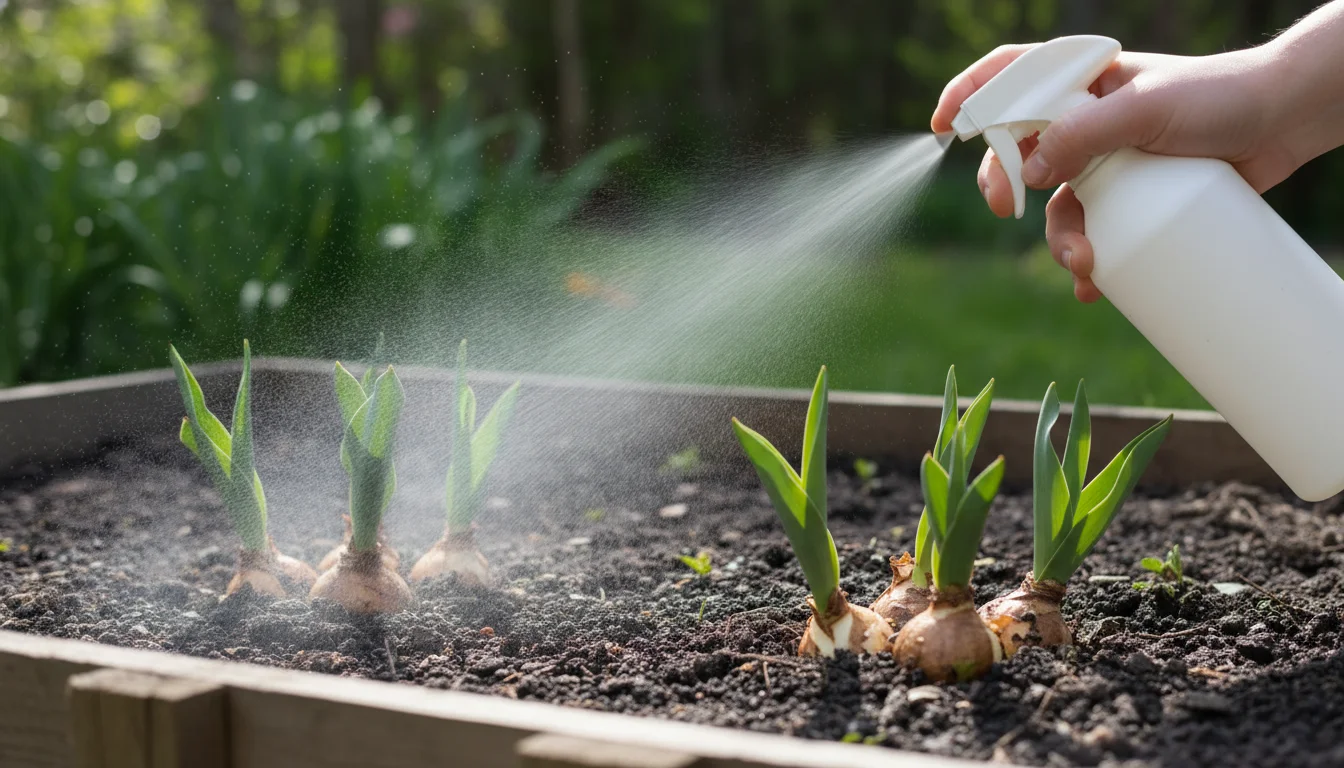
Peppermint oil, cayenne pepper, and garlic all repel chipmunks through scent and taste. Cheaper and more accessible than predator urine, but they wash away faster.
For peppermint oil: 10-15 drops in a spray bottle of water, applied to mulch, soil, and burrow entrances. Crushed fresh garlic scattered around problem spots takes even less effort. Cayenne powder sprinkled around garden beds works on the combined scent and taste – they hate digging through it.
None of these are set-and-forget. Rain washes them out within a few days. But for low-cost maintenance between bigger interventions, they’re worth keeping in rotation.
9. Plant Deterrent Plants
Daffodils, hyacinths, and alliums (onions, garlic, ornamental alliums) contain compounds chipmunks actively avoid. Marigolds, lavender, and mint round out the list.
Plant them as a border around vegetable gardens or in beds that keep getting raided. Long game only – you won’t eliminate chipmunks with lavender. What you’re doing is stacking deterrents until your yard is less worth the effort than the next one over.
10. Consider Snap Traps for Severe Infestations
If live trapping isn’t keeping up with a large population, rat-sized snap traps work. Place them inside covered boxes or along foundation walls to keep pets and birds out. Bait with peanut butter. Set multiples – you’re dealing with several individuals at once, not one scout.
The bucket method gets heavy search traffic but rarely gets honest coverage: a 5-gallon (19 L) bucket half-full of water, sunflower seeds floating on the surface, a wooden ramp leaning against the outside. Chipmunks climb in for the seeds and drown. It works fast for heavy infestations. Whether you’re comfortable with it is your call.
Dispose of catches promptly to avoid attracting other pests.
11. Use Ultrasonic Devices (Mixed Results)
Ultrasonic repellers emit high-frequency sound claimed to drive rodents away. The evidence is mixed. Some people see results near the device; others watch chipmunks ignore them completely.
If you try them, use outdoor-rated units, place near active burrows, and keep expectations low. Not a replacement for exclusion. At best, a low-effort supplement.
12. Get a Cat or Dog
Even without active hunting, a pet that spends time outdoors shifts the territorial calculation. The scent, movement, and noise of a predator make chipmunks nervous enough to relocate. Terrier breeds and outdoor cats are the most effective, but any dog with regular outdoor time helps.
FAQ
What can I pour down chipmunk holes to get rid of them?
Gravel is the practical answer. Fill the burrow with gravel, then top with packed soil. Gravel makes re-excavation slow enough that most chipmunks give up and move on. Folk remedies like bleach, boiling water, and hot pepper flakes are widely searched and mostly don’t work – the chipmunks just go around. For persistent burrows near structures, licensed pest controllers can use aluminum phosphide tablets (restricted use, requires a license in most states).
What’s the best chipmunk repellent?
Fox urine granules and castor oil outperform peppermint and cayenne for persistence. The failure mode with all repellents is reapplication – they work until you stop touching them up after rain. No repellent works long-term without also removing the food and shelter that brought chipmunks there in the first place.
What food is toxic to chipmunks?
Chocolate, onions, garlic, and heavily salted foods can be toxic to chipmunks. Don’t use food toxicity as a control method – it’s unreliable, risks harming other wildlife, and won’t be consumed in high enough quantities to be effective. Stick to traps if you want a lethal option.