Table of Contents
Pouring cooking oil down the drain feels like the easy solution—until your pipes clog or worse, you contribute to a fatberg in the municipal sewer system. That liquid oil solidifies as it cools, coating pipes and trapping other debris until water can’t flow through. The result is backed-up sinks, expensive plumber visits, and environmental damage.
Proper cooking oil disposal isn’t complicated, but it requires breaking the habit of rinsing everything down the drain. Small changes in your kitchen routine prevent big plumbing problems and protect wastewater systems. Here’s how to handle used cooking oil responsibly.
1. Wipe with Paper Towels for Small Amounts
For small quantities of oil left in pans after cooking, the simplest disposal method is also the most effective. Paper towels absorb the oil completely, allowing you to throw it in the trash where it belongs.
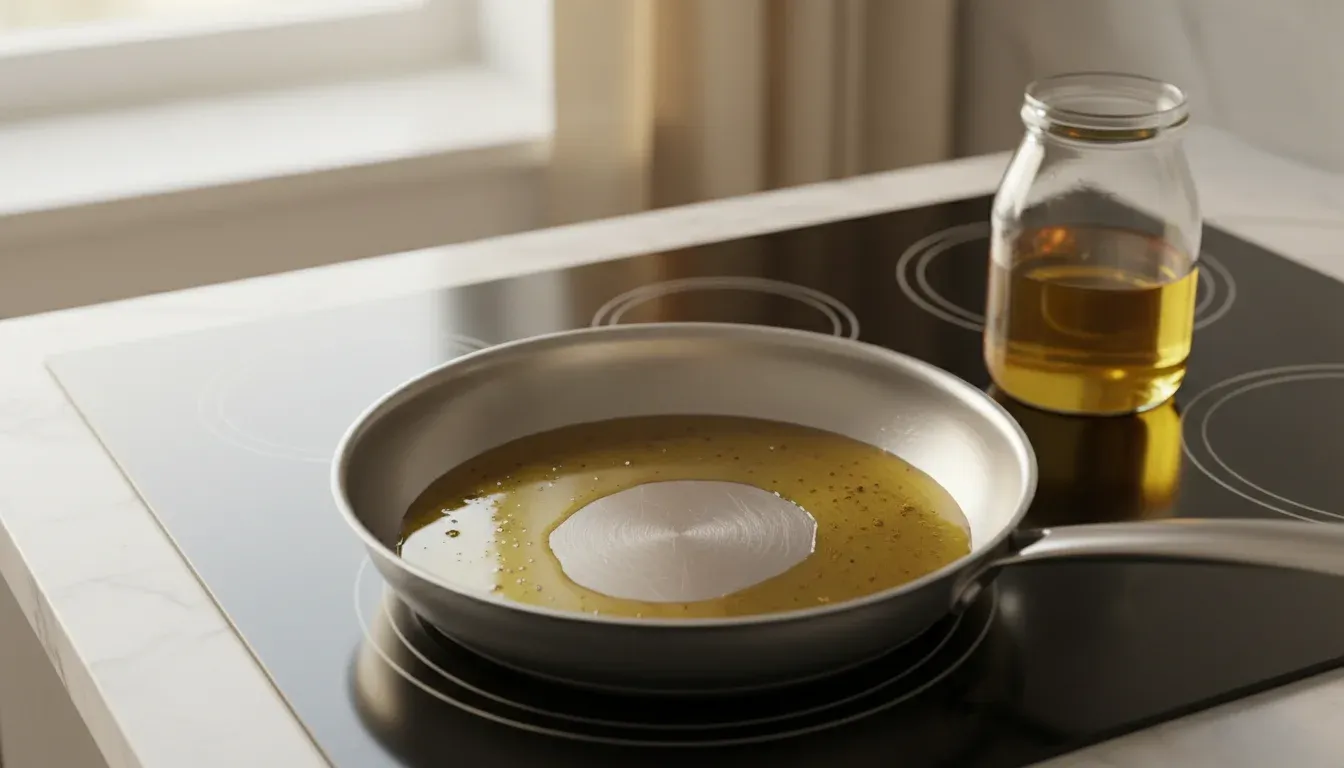
After cooking, let the pan cool slightly until it’s safe to touch but still warm—this keeps the oil liquid and easier to wipe. Fold a paper towel and use it to wipe the inside of the pan, soaking up as much oil as possible. Repeat with fresh towels until you’ve removed the bulk of the residue.
Throw the oily paper towels in your regular trash bin, not the recycling. Once the pan is wiped clean, you can wash it normally without worrying about oil entering your drain. This method works perfectly for the thin film of oil left after sautéing vegetables, frying eggs, or cooking bacon.
The key is wiping before rinsing. Most people rinse first, which sends oil down the drain, then wash with soap. Wiping first removes the oil physically so soap and water only handle the remaining residue.
2. Seal and Toss for Larger Quantities
When you’ve deep-fried foods or cooked with significant amounts of oil, wiping isn’t practical. You need a way to contain larger volumes for trash disposal.
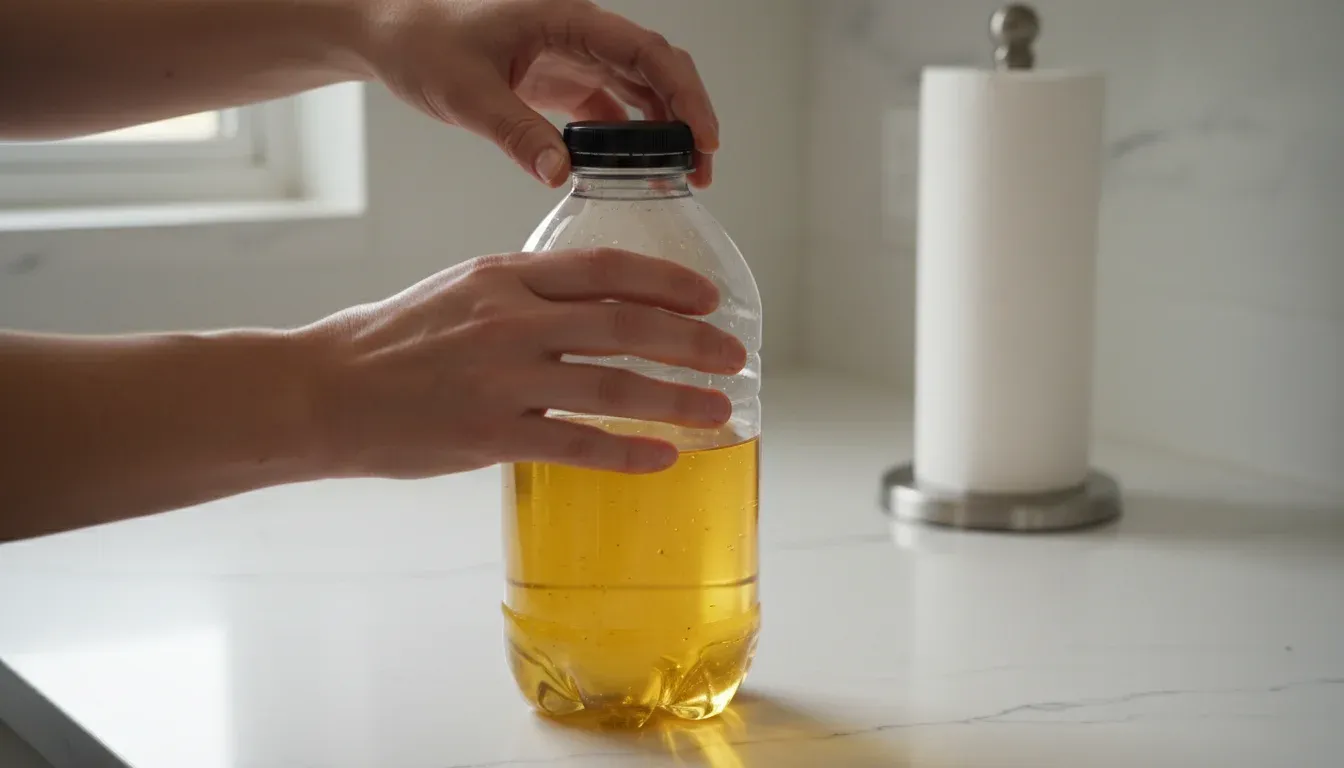
Let the oil cool completely in the pan or fryer. Hot oil can melt plastic containers and cause serious burns if handled carelessly. Once cooled, pour the oil through a fine-mesh strainer into a sealable container—old jars with lids, empty food containers, or even sturdy zip-top bags work well.
Seal the container tightly and place it in your regular trash. Don’t recycle oil-filled containers; they contaminate recycling streams. For very large quantities, like after deep-frying a turkey, pour the oil back into its original container if you saved it, or into sturdy plastic bottles.
Some areas offer cooking oil recycling programs that convert used oil into biodiesel. Check with your local waste management authority—if recycling is available, store oil in clean containers and drop it off at designated locations. This is the most environmentally friendly option when available.
3. Use a Sink Strainer to Catch Scraps
Prevention works better than cleanup. A sink strainer catches food particles and grease before they enter your pipes, making disposal easier and protecting your plumbing.
Place a mesh or perforated strainer in your sink drain whenever you’re washing dishes that might contain oil or food scraps. The strainer catches solid debris while allowing water to drain. After washing, simply dump the contents of the strainer into your trash or compost bin.
Clean the strainer regularly to prevent odors and bacterial growth. A quick rinse after each use keeps it functioning properly. For stubborn grease buildup, soak the strainer in hot soapy water or run it through the dishwasher.
This simple tool prevents the gradual accumulation of grease in pipes that leads to clogs. It’s especially valuable if you cook frequently with oils or have a garbage disposal—which, contrary to popular belief, doesn’t handle grease well.
4. Compost or Garden with Plant-Based Oils
Small amounts of vegetable-based cooking oils can actually benefit your garden or compost pile. This method only works for plant oils—never compost or garden with animal fats, which attract pests and create odors.
Mix leftover cooking oil with other compost materials like leaves, grass clippings, or vegetable scraps. The oil adds carbon and helps other materials break down. Use it sparingly—too much oil creates anaerobic conditions that smell bad and slow decomposition.
For garden use, dilute small amounts of vegetable oil with water and use it as a natural pest deterrent. A light spray on plant leaves can discourage certain insects. Some gardeners add a tablespoon of oil to watering cans for potted plants, claiming it improves soil structure.
Never pour oil directly onto soil or into compost in large quantities. It creates water-repellent barriers that harm plant roots and soil microorganisms. This method is for occasional small amounts only, not regular disposal of significant quantities.
5. Know What Never Goes Down the Drain
Understanding what shouldn’t enter your wastewater system helps you make better disposal decisions. Beyond cooking oil, several common household liquids cause serious problems when poured down drains.
Milk and dairy products contain fats that contribute to the same FOG (fats, oils, grease) problems as cooking oil. Pour out-of-date milk into sealed containers and trash them, or dilute small amounts heavily with water and use in gardens. Never rinse large quantities of milk down the drain.
Medications, paints, solvents, and pesticides should never enter wastewater systems. These chemicals pass through treatment plants and enter waterways, harming wildlife and contaminating drinking water sources. Return unused medications to pharmacy take-back programs. Take paints and chemicals to household hazardous waste collection events.
Even "flushable" wipes and personal care products cause blockages. The only things that should go down your drains are water, human waste, and toilet paper—what wastewater professionals call the "three Ps." Everything else belongs in the trash or appropriate recycling programs.
Proper cooking oil disposal requires minimal effort but prevents significant problems. For daily cooking, the paper towel method handles small amounts efficiently. After big cooking projects, seal cooled oil in containers for trash disposal. Use a sink strainer as backup protection, and consider composting tiny amounts of vegetable oil if you’re a gardener. The key is keeping all fats, oils, and grease out of your plumbing—your pipes, your wallet, and your local wastewater system will thank you.