Table of Contents
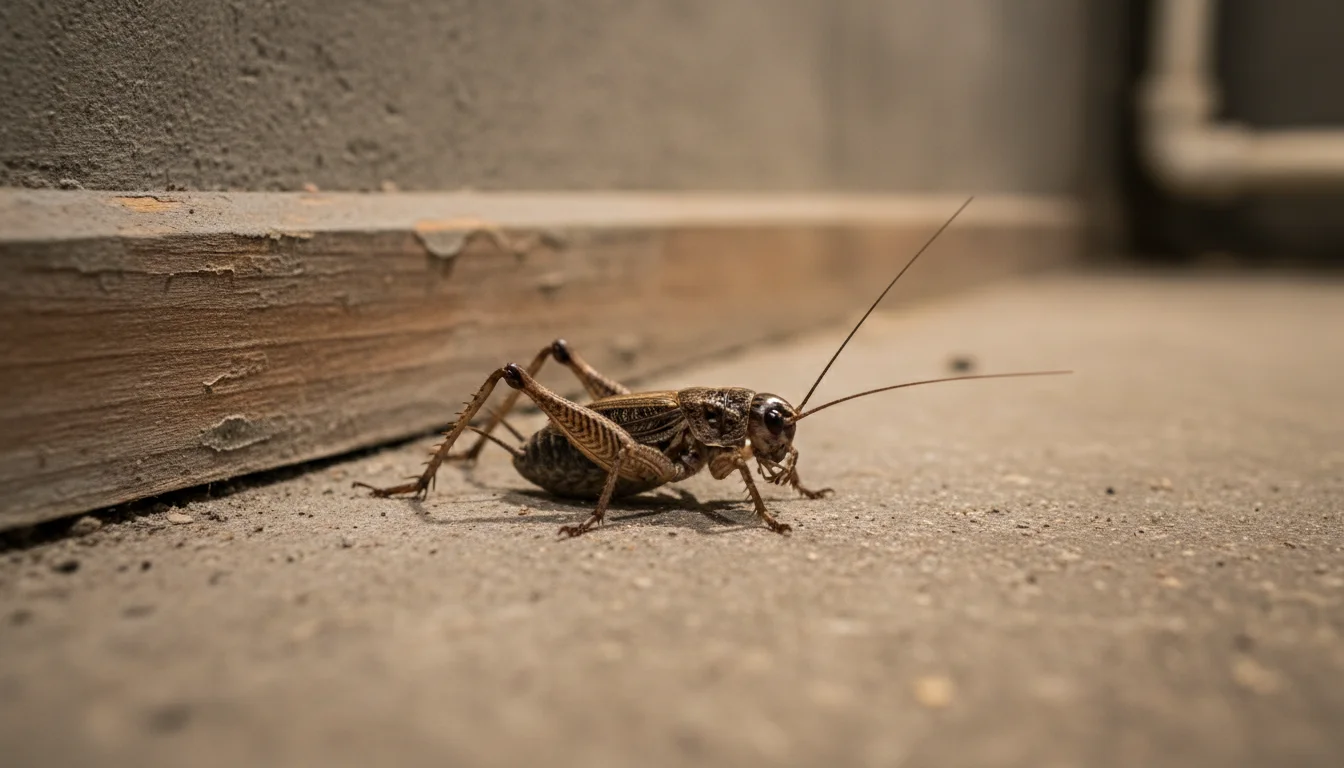
Getting crickets in the house is the same problem as ants – they use the same gaps, the same moisture sources, the same entry points. The difference is that crickets make themselves impossible to ignore. One chirping at 2am is all it takes. The chirping is the symptom; moisture, clutter, and open entry points are what’s keeping them there.
The fix has two parts: clear the ones already inside, then close the door on more coming in. The traps below handle the immediate population. The exclusion and environmental fixes prevent the problem from restocking itself. Do both, or the same conditions that brought the first wave will bring the next one.
1. Sticky Traps
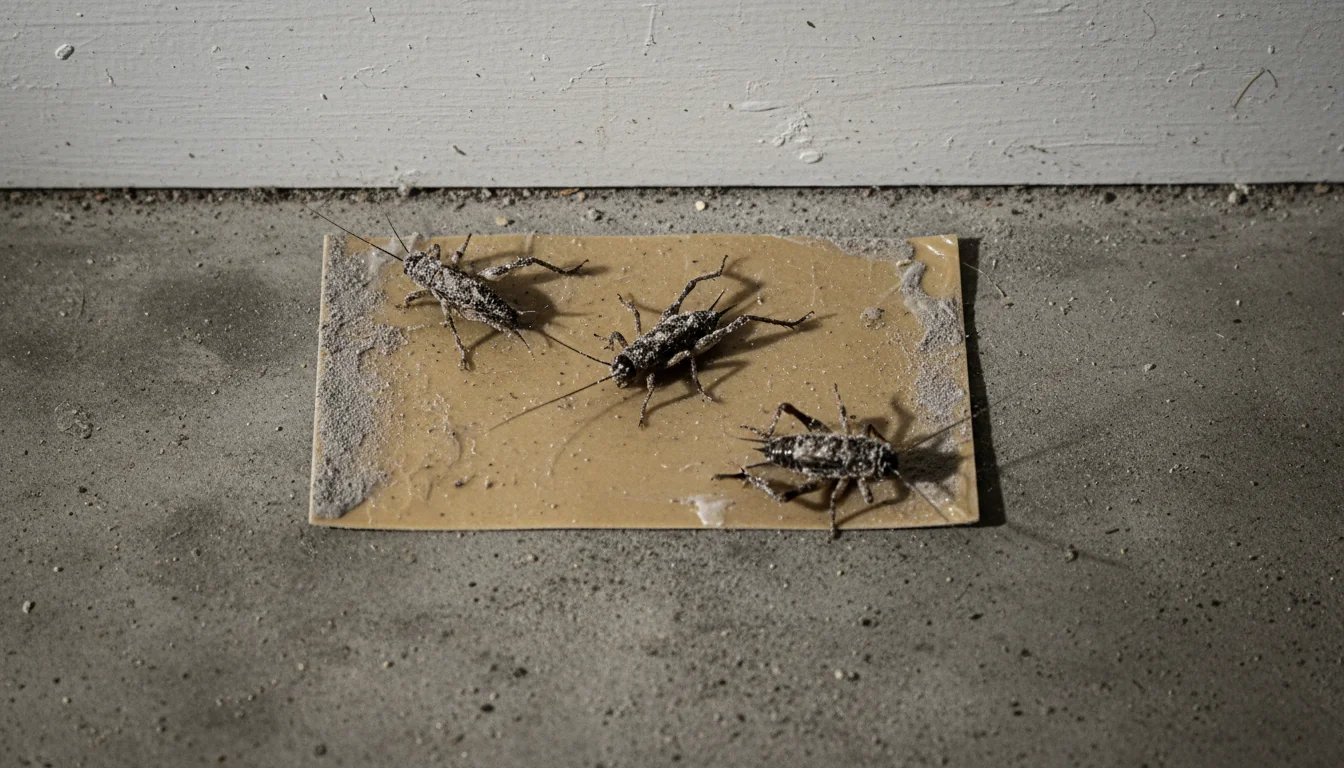
Glue boards catch crickets and – more usefully – show you exactly where they’re traveling. Crickets move along edges, not across open floor. Place traps along baseboards, in the corners of closets, under furniture, in the garage, and along basement walls. That edge placement is what makes them effective; a trap dropped in the middle of a room catches almost nothing.
Use more than you think you need: 3-4 in the garage, 2-3 in the basement, one per closet in main living areas. Check them every few days initially. The spots with the most catches tell you where to focus sealing work and where to lay down diatomaceous earth. Replace traps when they’re full or when they’ve gone dusty – debris coating kills the stickiness fast in a garage or basement, and a coated trap is just furniture at that point.
They won’t clear an infestation alone, but they work immediately and give you diagnostic information no other method provides.
2. Molasses Bait Trap
Mix 1 part molasses with 10 parts water in a shallow container – a wide-mouth jar, a small bowl, or a cut-down plastic bottle. Set it on the floor along baseboards and in corners, the same travel routes where sticky traps work. The fermented sugar scent draws crickets in from several feet away, and about 1 inch (2.5 cm) of liquid is enough that they can’t escape once they fall in.
Check and empty daily. Replace the mixture every 2-3 days before it dries out or loses its draw. Set several traps across the problem areas to cover more ground and map which spots are hottest.
Dark or blackstrap molasses outperforms light molasses. Plain sugar water works but is weaker – the fermentation byproducts are what attract insects, not just sweetness.
3. Diatomaceous Earth
Food-grade diatomaceous earth (DE) is a fine powder that physically damages the waxy coating on cricket exoskeletons, causing them to dehydrate and die within 48-72 hours. Spread a thin line along windowsills, at door thresholds, and around the perimeter of any room where crickets are active. Apply it at entry points, along baseboards, and anywhere your sticky traps have shown heavy traffic.
The key word is thin. A visible dusting is enough – you want crickets to walk through it, not avoid a visible pile. Thick deposits don’t work better; they just get tracked around and wasted. Reapply after any moisture exposure, since water clumps DE completely and shuts it down.
DE is non-toxic to humans and pets, doesn’t evaporate, and doesn’t degrade in dry conditions. It provides continuous low-level attrition on any cricket that crosses a treated zone, indefinitely. It’s not a fast solution – 48-72 hours per cricket, not instant kill – but it works without any attention from you once it’s laid. Use it as a persistent reinforcement layer after you’ve done the exclusion work.
4. Seal Entry Points with Caulk
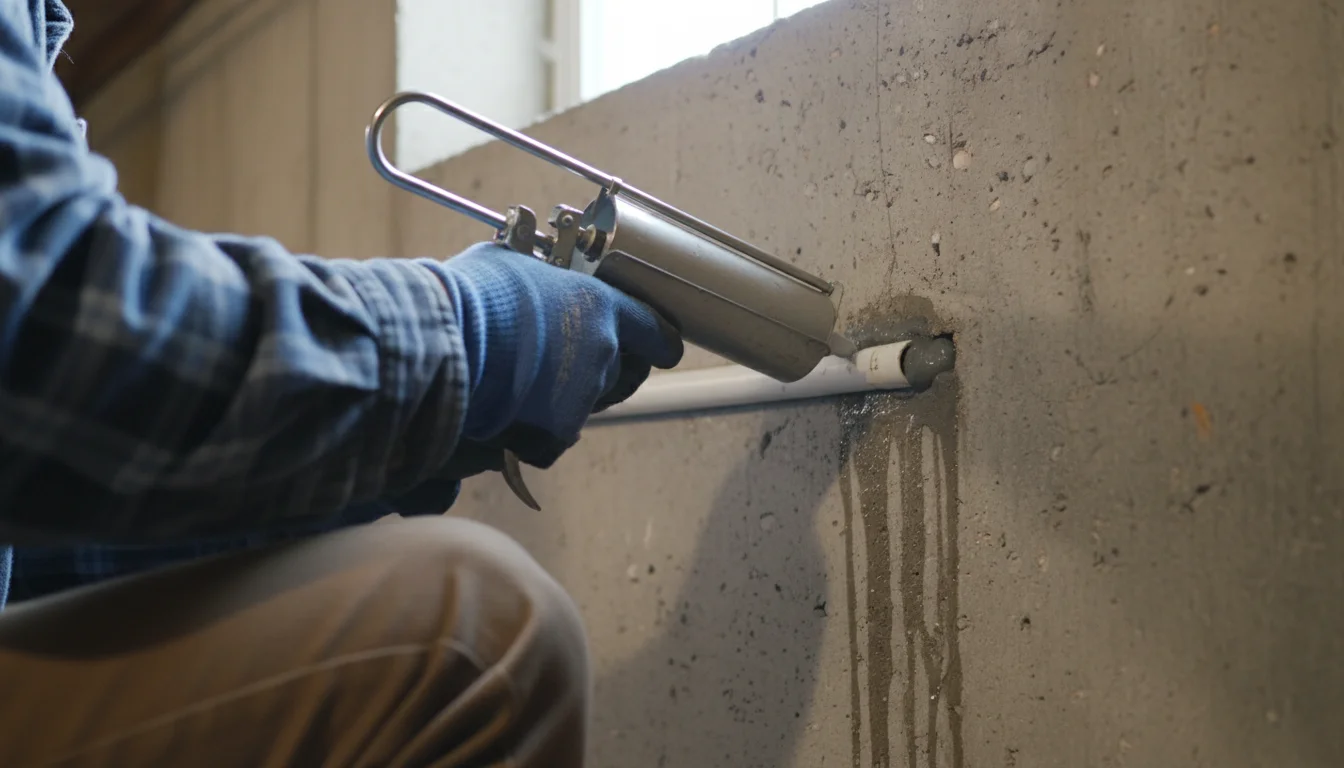
Crickets are flattened insects that can squeeze through surprisingly small gaps. Inspect your home’s exterior for cracks around windows, doors, utility penetrations (where pipes and wires enter walls), and foundation seams. Seal any opening larger than 1/16 inch with silicone caulk.
Focus on transition zones: where siding meets trim, where pipes enter walls, where the foundation meets the framing. These spots open up over time as materials expand and contract. A thorough caulking job in late summer, before crickets start moving indoors for warmth, prevents the bulk of seasonal invasions.
Silicone caulk is worth the slight price premium over latex – it stays flexible and doesn’t crack over time the way latex does.
5. Weatherstripping and Door Sweeps
Stand inside at night with the exterior lights on and the interior lights off. If you see light coming under or around a door, crickets can get through. Gaps that look minor are significant at cricket scale – you’re not trying to stop water, you’re trying to stop an insect that’s maybe half an inch long.
Install adhesive-backed foam weatherstripping around door frames to seal the sides and top. Add a door sweep with a firm rubber blade that makes full contact with the threshold – check that the blade actually drags on the floor across the full width of the door, not just in the middle. Pay particular attention to any door leading to the garage or basement, since those are the main indoor cricket staging areas. Check window weatherstripping too and replace anything that’s compressed flat or cracked.
Door sweeps cost a few dollars and install in ten minutes. They’re one of the highest-return exclusion steps you can take, and they also help with drafts and other insects as a bonus.
6. Run a Dehumidifier Continuously
Crickets need moisture. Basements, laundry rooms, and garages with high humidity are where they establish themselves. Drop the humidity and you make the space inhospitable.
Set a dehumidifier to maintain 30-50% relative humidity and run it continuously. Size matters: a damp basement needs 30-50 pint capacity per 1,000 sq ft (93 sq m). An undersized unit runs constantly, barely keeps up, and wears out faster. If you’re not sure, go bigger.
Route the drain hose to a floor drain so you’re not emptying a reservoir daily. That step – the five minutes it takes to route a hose – is what determines whether people actually run their dehumidifier continuously or let it fill up and forget it.
Once humidity drops below 60%, you’ll notice the improvement within a few days. Fewer crickets, fewer of the other insects they feed on, and generally a better-smelling basement. It also slows mold growth, which is a separate problem worth preventing.
7. Reduce Outdoor Lighting
Crickets are attracted to light. Bright outdoor lighting near doors and windows draws them close to the house, where they find entry gaps they wouldn’t otherwise encounter.
Switch exterior lights near entry points to yellow bug lights or warm-toned LEDs. These emit a spectrum that attracts significantly fewer insects than standard white bulbs. Motion-activated lights are even better – they provide security illumination when you actually need it without running as a constant insect beacon.
This won’t fix an existing indoor problem, but it substantially reduces the pressure of new crickets arriving at your doors each night.
8. Reduce Indoor Clutter
Crickets need cover. Stacked cardboard boxes, paper piles, bags of old clothing, and cluttered shelves give them dozens of places to hide, breed, and go undetected for months. Clearing that harborage forces them into the open where traps and treatments can reach them.
Focus on basements, garages, and laundry rooms first – the dark, low-traffic areas where clutter accumulates and crickets establish themselves undisturbed. Replace cardboard storage boxes with sealed plastic bins. Move items away from walls by at least 6 inches so you can see and treat behind them. Recycle paper piles and old newspapers immediately rather than letting them accumulate – paper absorbs moisture and gives insects both shelter and nesting material.
Quarterly sweeps of low-traffic areas make a meaningful difference. The point isn’t perfection – it’s denying crickets the undisturbed cover they need to breed and build numbers.
Clutter removal also makes every other method more effective. Sticky traps work better along clear paths. DE reaches more floor area. You can actually tell where activity is concentrated when there’s nothing blocking your view.
9. Perimeter Insecticide Treatment
For a serious infestation, or a property that consistently gets heavy cricket pressure in late summer, a residual insecticide around the foundation creates a barrier that kills crickets before they reach entry points. This is the heavy artillery – appropriate when the problem is large-scale or recurring despite exclusion work.
Apply around the entire foundation, all sides, with extra attention to warm sun-exposed walls and any side of the house facing a field, wooded area, or tall grass. Crickets congregate where it’s warmest before moving inside. Treat door thresholds, window frames, weep holes, and utility penetrations. Products containing bifenthrin or permethrin provide several weeks of residual activity after a single application.
Timing is the critical variable: treat in late summer or early fall, before crickets start moving indoors in force. A barrier applied in mid-August while they’re still outdoors is highly effective. The same treatment in November, after they’re already established inside, does almost nothing for the current infestation – it only prevents further entry, and the ones inside are already home.
FAQ
What causes crickets to come inside the house?
Crickets enter seeking warmth, moisture, and food as temperatures drop in late summer and fall. Basements, laundry rooms, and garages with high humidity are prime targets because they replicate the damp conditions crickets prefer outdoors. Bright outdoor lighting draws them close to the building, where they find entry gaps. Once inside, clutter gives them the cover they need to establish themselves.
How do I get rid of crickets in my house fast?
Sticky traps placed along baseboards and in corners catch crickets immediately. Molasses bait traps are equally fast and require no effort once set. For the specific cricket chirping at you right now: locate it by turning off all noise and following the sound, usually to a dark corner near a moisture source. Catching it directly is faster than any trap for a single cricket.
Do crickets go away on their own?
Individual strays that wandered in may die within a few days – they need specific conditions to breed indoors successfully, and most houses aren’t quite right for it. But if the conditions that attracted them persist (high humidity, entry gaps, bright outdoor lighting), new ones keep arriving to replace them. You can catch the current population with traps and still have crickets in the house next week if the root conditions aren’t addressed. Without exclusion and habitat work, the problem restocks itself.
What smell do crickets hate?
Peppermint oil and cedar are cited as repellents in many places online, but the evidence is weak and they require constant reapplication to maintain any effect – which most people don’t do. The practical reality is that elimination of attractants (humidity, light, clutter) and physical exclusion (caulk, door sweeps) are what actually solve the problem. Scent repellents might move crickets around within your house; they don’t make them leave. Spend the same effort on sealing gaps and you’ll get better results.