Table of Contents
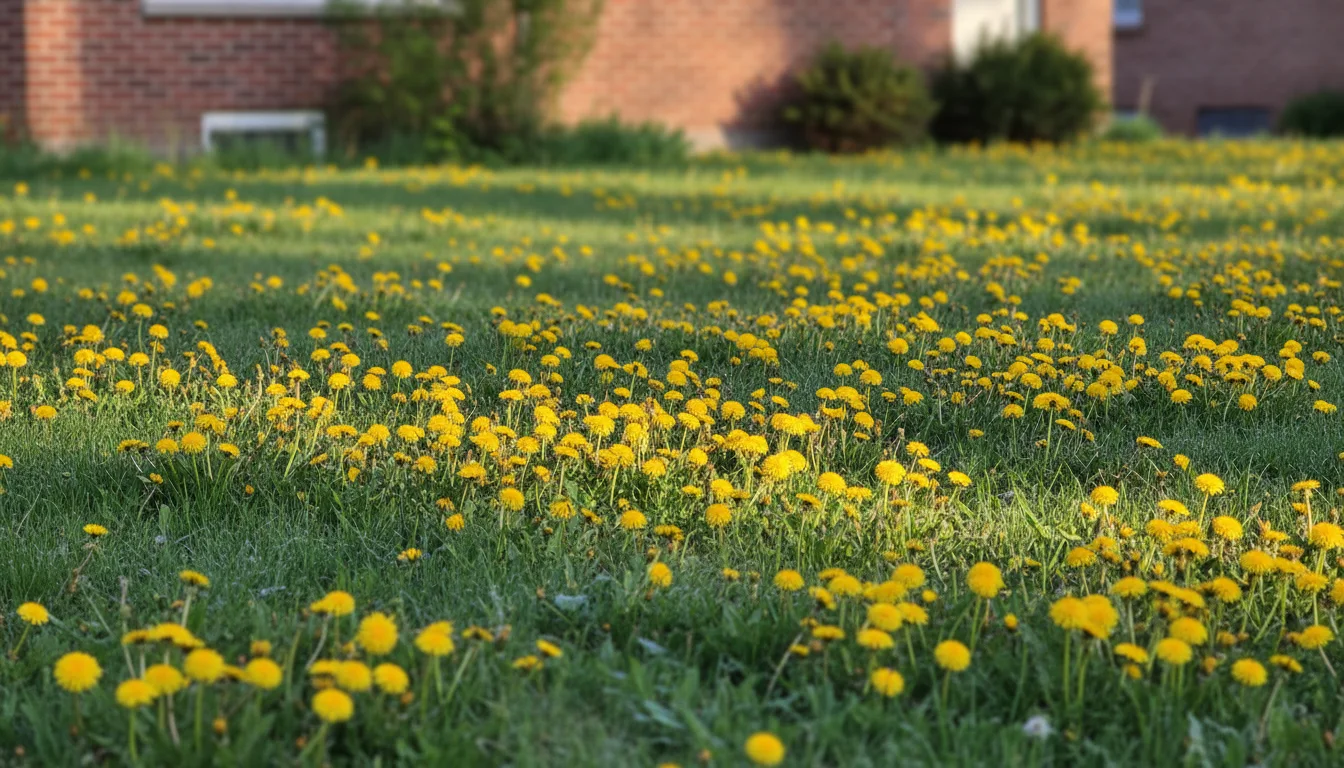
Knowing how to get rid of dandelions depends on scale. A handful in an otherwise decent lawn? Pull them. A lawn that’s more dandelion than grass? That’s a herbicide job. This guide covers both, plus the prevention steps that keep them from coming back next season.
1. Hand-Pull (The Right Way)
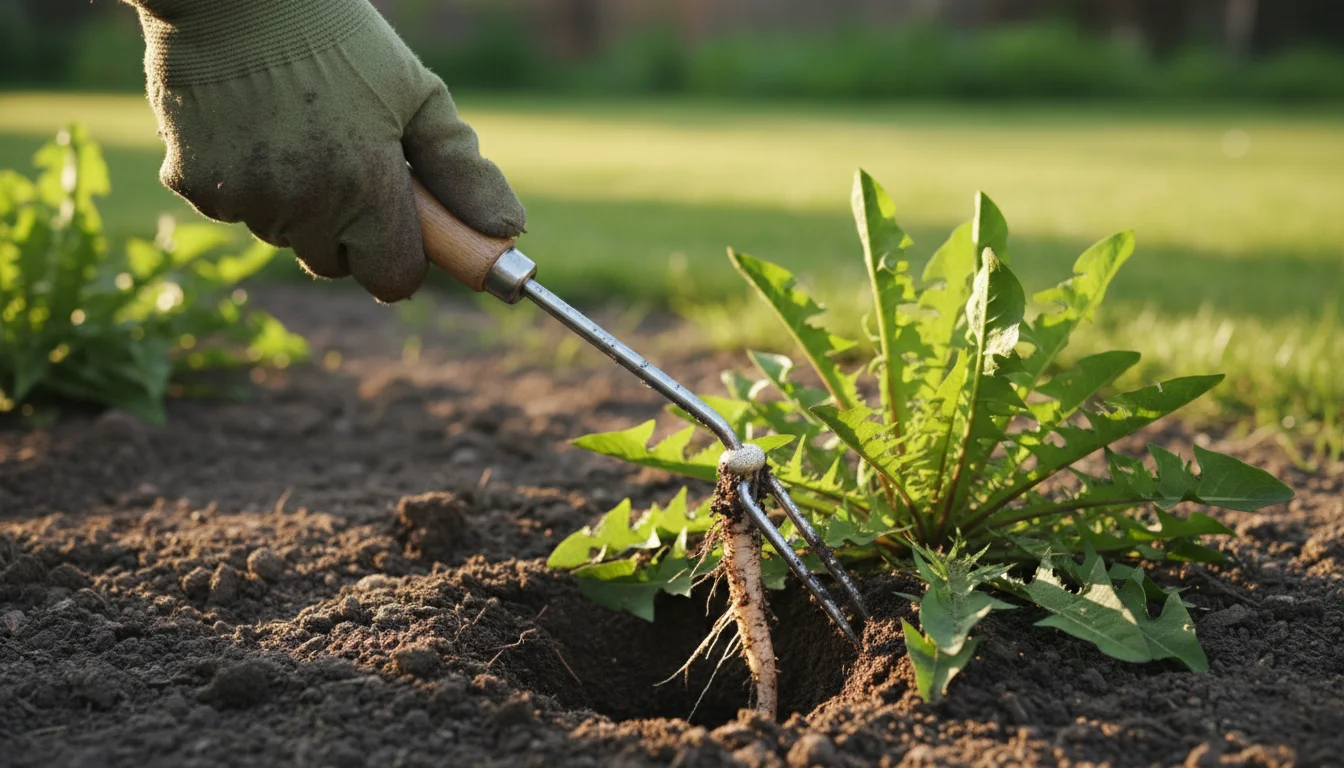
Pull when soil is moist – after rain or after watering. Dry soil pulls the top off and leaves the root behind, and that root grows back. You need the entire taproot out.
For a small seedling, a firm grip works. For anything established, use a weeding knife or dandelion digger and get at least 4 in (10 cm) down. A mature dandelion has a taproot that can reach 10 in (25 cm) – anything less than full extraction and you’re just pruning it.
Go after them young. The difference between pulling a two-week-old dandelion and a two-month-old one is the difference between a quick tug and a five-minute dig.
Don’t compost the pulled plants unless you’re certain they haven’t flowered yet. One dandelion head produces around 200 seeds. Trash them.
2. Apply a Broadleaf Herbicide in Fall
For a lawn with more than a dozen dandelions, hand-pulling is not realistic. This is where selective broadleaf herbicide earns its place.
Fall application (September through October) is more effective than spring. Dandelions are moving energy down into their roots for winter storage, so herbicide applied to the leaves travels deeper into the root system. Spring-applied herbicide works, but you’re fighting the plant at its most active. Fall hits it while it’s preparing to hunker down.
Use a product containing 2,4-D, triclopyr, or both – these are selective and won’t harm grass at label rates. Ortho Weed B Gon and Spectracide Weed Stop are widely available and specifically list dandelions. Apply when temperatures are between 50 and 85°F (10 to 29°C) with no rain forecast for 24 hours. Most lawns need a second application 2 to 4 weeks after the first. Dandelions are persistent.
One thing that doesn’t work: pulling the leaves after spraying. Let the herbicide travel through the plant. Removing the top cuts off the pathway.
3. Spot Treatment with Vinegar or Boiling Water
For dandelions in driveway cracks, patio joints, gravel paths, and any hardscaping where you don’t care about the surrounding ground: horticultural vinegar (20% acetic acid – not kitchen vinegar at 5%) kills top growth on contact. Boiling water does the same for free.
Neither kills roots. Both need repeated applications. That limitation is fine for pavement, where roots can’t establish deeply enough to matter – eventually the plant exhausts itself. In open ground or lawn? Not worth it. The taproot sits well below anything a surface application reaches, and the plant just pushes new growth up after each treatment.
Keep horticultural vinegar away from grass and garden plants – it’s non-selective and will damage whatever it touches.
4. Apply Pre-Emergent Herbicide in Early Spring
Pre-emergents stop dandelion seeds from germinating by creating a chemical barrier in the soil surface. They don’t affect established plants – if you already have dandelions, hand-pull or spray them first, then apply pre-emergent to prevent the next generation.
Timing matters more than product. Pre-emergent must go down before soil temperatures reach 60 to 65°F (16 to 18°C) – that’s when dandelion seeds start sprouting. In most regions, this means late February through mid-March. Don’t wait until you see weeds. By then it’s already too late.
Products containing pendimethalin, prodiamine, or dithiopyr work well. Apply evenly with a broadcast spreader at label rates, then water in with about 0.5 in (12 mm) of irrigation within 48 hours. This activates the barrier. One application covers roughly three months; in areas with long growing seasons a second application in late spring extends protection through summer.
5. Overseed to Deny Them Space
Dandelions move into thin, patchy lawn. Bare ground after a removal push is an open invitation for seeds blowing in from nearby. Overseeding after treatment is what stops the cycle.
Overseed in early fall for cool-season grasses (fescue, bluegrass, ryegrass) or late spring for warm-season varieties (bermuda, zoysia). Use a variety suited to your light conditions – shaded areas need a shade-tolerant cultivar, because thin grass in shade is the most reliable way to guarantee dandelions return. Water new seed consistently until established.
Mow high. Keeping your grass at 3 to 4 in (7 to 10 cm) shades the soil surface and prevents dandelion seeds from germinating in the first place.
Prevention
Once you’ve cleared an existing population, staying ahead of new seedlings is the real work.
Pre-emergent each spring is the most direct lever. Combined with tall mowing (3 to 4 in / 7 to 10 cm), which shades out germinating seeds, you cut off most of the seedling recruitment. Fill bare patches promptly after any removal – grass doesn’t seed itself into gaps fast enough, but dandelions do.
If you have neighbors with lawns full of them, windborne seeds will keep arriving. That’s normal. The prevention stack (pre-emergent + dense grass + tall mowing) doesn’t eliminate the pressure but keeps it manageable.
FAQ
What will kill dandelions but not the grass?
Selective broadleaf herbicides containing 2,4-D, triclopyr, or both. These disrupt growth in broadleaf plants but leave grass untouched at label rates. Ortho Weed B Gon and Spectracide Weed Stop are widely available and specifically labeled for dandelions. Spray on a calm day at 50 to 85°F (10 to 29°C) to avoid drift onto other plants.
How do you fix a lawn full of dandelions?
Broadleaf herbicide is the only practical approach at scale – hand-pulling hundreds of plants isn’t realistic. Apply in fall (September through October) when dandelions are moving energy to their roots and the herbicide penetrates deepest. Follow up with overseeding in the same fall to fill bare patches before dandelions reclaim them next spring.
What will kill dandelions permanently?
Nothing kills a dandelion permanently in a single treatment – new seedlings blow in all season. The combination that comes closest: hand-pull established plants to remove the taproot entirely, apply pre-emergent in early spring to stop new seedlings germinating, and overseed to deny them space. Repeat the pre-emergent each spring.
Will boiling water kill dandelion roots?
No. Boiling water kills top growth on contact but loses heat rapidly in soil and rarely reaches a dandelion’s taproot at 4 to 10 in (10 to 25 cm) depth. It works fine on dandelions growing in driveway cracks or patio joints – where there’s no taproot to worry about – but it won’t solve a lawn problem.