Table of Contents
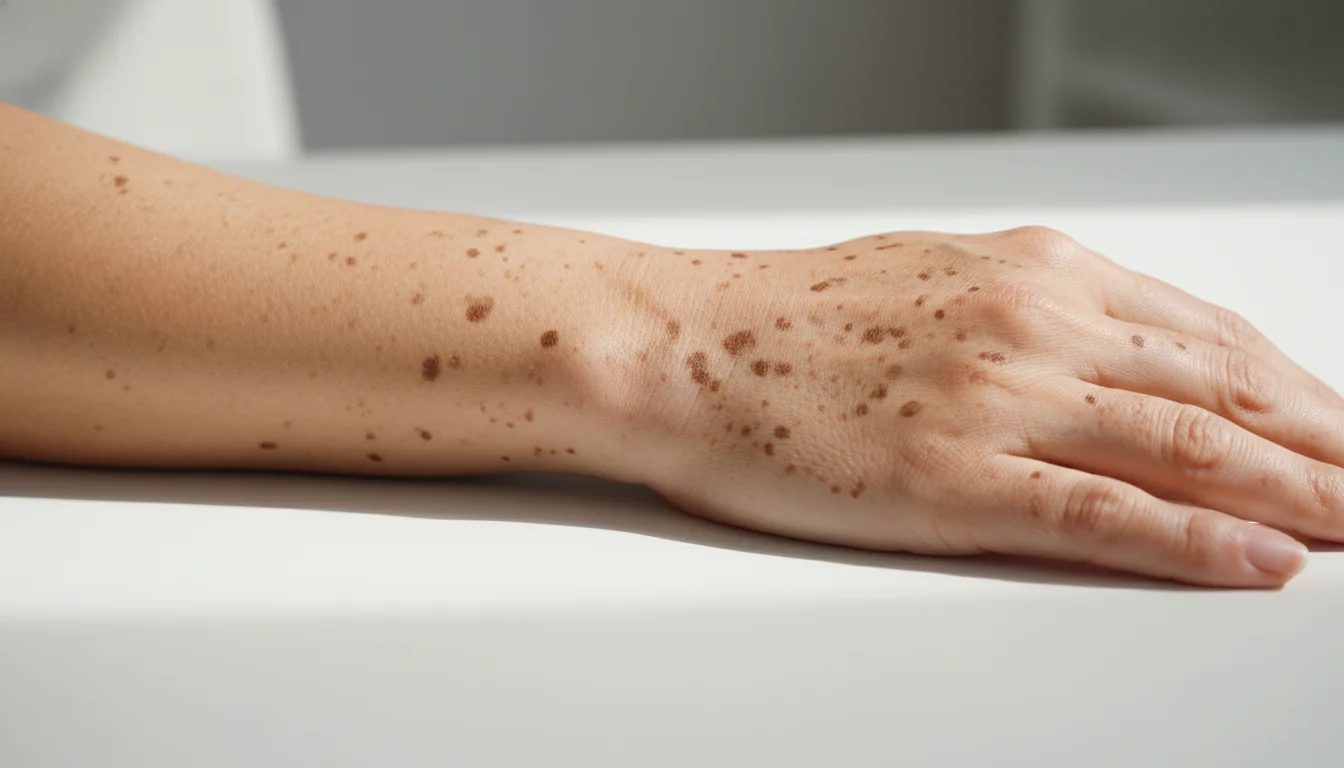
Knowing how to get rid of dark spots means interrupting the overproduction of melanin – or clearing the excess pigment already there. Dark spots form when melanocytes overproduce melanin in a localized area. Sun exposure is the most common trigger, but acne, hormonal shifts, skin injuries, and inflammation all cause the same result: a patch of skin that’s noticeably darker than the surrounding area.
The treatments below work by interrupting that overproduction or clearing the excess pigment that’s already there. Before any of them: daily SPF 30 or higher is non-negotiable. Sun exposure triggers melanin production and reverses the progress of every treatment on this list. Apply it every morning, reapply outdoors. Without it, you’re fighting against yourself.
Methods are ordered roughly by clinical evidence and effectiveness, with OTC options first, then professional treatments.
1. Hydroquinone Cream
The gold standard for dark spots. Hydroquinone is the most clinically validated topical brightening ingredient available, backed by decades of dermatology research. It works by inhibiting tyrosinase (the enzyme that produces melanin) and reducing the activity of overactive melanocytes in the treated area.
Prescription-strength 4% produces visible improvement in melasma and sunspots within 4-8 weeks of daily use. Apply to spots twice daily, morning and night. The morning application goes under sunscreen – UV exposure reverses overnight progress, so SPF isn’t optional here, it’s structural.
Don’t use it continuously forever. Dermatologists recommend cycles of 3-6 months on, then a 1-2 month break before resuming. This prevents diminishing returns as melanocytes adapt, and reduces the small risk of side effects with prolonged use.
In the US, 2% is available OTC; 4% requires a prescription. If you’ve been trying lower-potency brighteners without results, this is the escalation.
2. Tranexamic Acid Serum
Tranexamic acid is the best-tolerated brightening active for melasma specifically, and it works through a mechanism different from most other treatments. Rather than inhibiting tyrosinase directly, it blocks the signaling pathway between keratinocytes and melanocytes that triggers excess pigment production in the first place – working upstream before melanin synthesis even begins.
Apply 2-5% concentration twice daily to affected areas. Clinical studies show 20-30% improvement in melasma severity after 8-12 weeks. Side effects are minimal – it’s one of the least irritating brightening actives available, which makes it a good choice for sensitive skin or when other actives have caused reactions.
It also layers well. Tranexamic acid combined with niacinamide hits two different points in the pigmentation pathway and outperforms either ingredient alone.
3. Azelaic Acid Cream
Azelaic acid has a unique advantage over most brighteners: it selectively targets melanocytes that are overactive without significantly affecting normal skin cells. This reduces the risk of overtreating and creating lighter patches where you didn’t want them – a real concern with more aggressive inhibitors.
It works through two mechanisms: tyrosinase inhibition and direct suppression of abnormally active pigment cells. Available OTC at 10% and by prescription at 15-20%. Apply twice daily to clean skin; results typically appear after 4-8 weeks.
It’s particularly effective for post-inflammatory hyperpigmentation – the dark marks left behind after acne or skin injury. And it’s one of the few brightening actives considered safe during pregnancy (Category B), which makes it relevant for a population who can’t use retinol or hydroquinone.
4. Kojic Acid Serum
A solid OTC alternative when you want something gentler than hydroquinone for long-term maintenance. Kojic acid inhibits tyrosinase by chelating the copper ions the enzyme needs to function, gradually reducing melanin production in active pigment cells.
Most products contain 1-4% concentration. Apply once daily to affected areas after cleansing, before moisturizer. Results appear in 4-8 weeks with consistent use – slower than prescription hydroquinone but appropriate for ongoing maintenance once spots have faded.
Less potent than hydroquinone, but that’s partly the point: it can be used for longer stretches without cycling, which matters for conditions like melasma that require prolonged management. Combining it with glycolic acid increases penetration and boosts results.
Stability is its main weakness: kojic acid oxidizes in air and light. When your product starts turning pink or brown, it’s lost potency. Buy formulations in airless pumps or dark packaging.
5. Vitamin C Serum
Vitamin C brightens existing hyperpigmentation and, crucially, protects against the UV damage that triggers more of it. That dual role makes it the logical morning serum for anyone treating dark spots – it’s doing two jobs simultaneously.
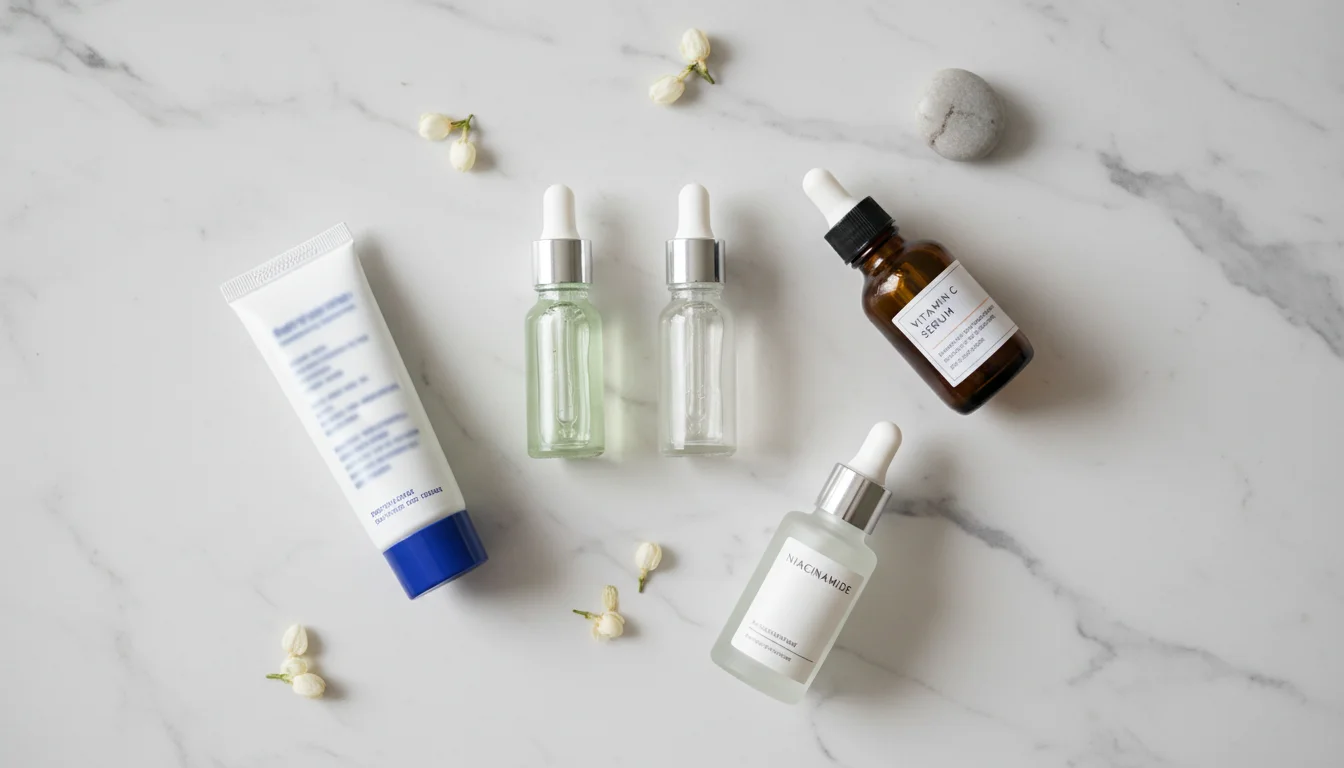
Look for a serum with 10-20% L-ascorbic acid. Apply in the morning before sunscreen. The protection it adds on top of SPF is meaningful, especially on sun-exposed areas like the face and hands.
Stability is the limitation: L-ascorbic acid oxidizes fast. When your serum starts turning orange or brown, it’s broken down and has lost efficacy. Keep it in a dark bottle, away from heat, and replace it when the color changes.
6. Niacinamide
Niacinamide (vitamin B3) inhibits dark spots through a different mechanism than the other actives on this list. Rather than blocking melanin production, it interrupts the transfer of melanosomes – the melanin-containing organelles – from melanocytes to the surrounding skin cells. Less melanin gets distributed into the skin surface even if it’s still being produced.
A serum with 5-10% niacinamide applied after cleansing (before moisturizer) adds to any brightening routine without interfering with other actives. It layers cleanly with vitamin C, retinol, AHAs, and tranexamic acid. This compatibility makes it an easy supporting player in a multi-active routine.
Results are modest when used alone. As a complement to tranexamic acid or hydroquinone, it contributes meaningfully.
7. Retinol
Retinol accelerates epidermal cell turnover – the rate at which the skin’s surface cells shed and are replaced by fresh ones underneath. Faster turnover means pigmented surface cells clear faster, and retinol also influences genes involved in regulating melanin production over time.
Start at 0.3% applied at night; work up to 0.5% or 1% gradually over several weeks. It takes 3-6 months for the full effect to become visible. In the short term, you may see some initial purging or mild flakiness as the skin adjusts – that’s the accelerated turnover working, not a sign to stop.
Don’t use it the same night as glycolic acid. The combination is more irritating than either alone. Alternate: retinol some nights, glycolic on others.
Avoid during pregnancy – retinol is teratogenic and this is non-negotiable.
8. Glycolic Acid Exfoliant
Glycolic acid works on dark spots by accelerating the shedding of surface skin cells – including the pigmented ones that give dark spots their visible darkness. As those cells clear, they’re replaced by unpigmented cells from deeper layers.
Use a toner, serum, or wash with 5-10% glycolic acid 2-3 times weekly, not daily. Apply at night, follow with moisturizer. The morning after any glycolic acid use, SPF 30+ is mandatory – freshly exfoliated skin is significantly more sun-sensitive, and UV exposure on that skin will drive more pigmentation, working against the treatment.
Results build over 6-8 weeks. Glycolic acid won’t resolve stubborn deep pigmentation on its own, but it meaningfully boosts the efficacy of other brightening actives by clearing the surface layer and improving their penetration.
On darker skin tones, start at 5% and increase slowly. Irritation on melanin-rich skin can trigger post-inflammatory hyperpigmentation – the opposite of what you want.
9. Laser Therapy
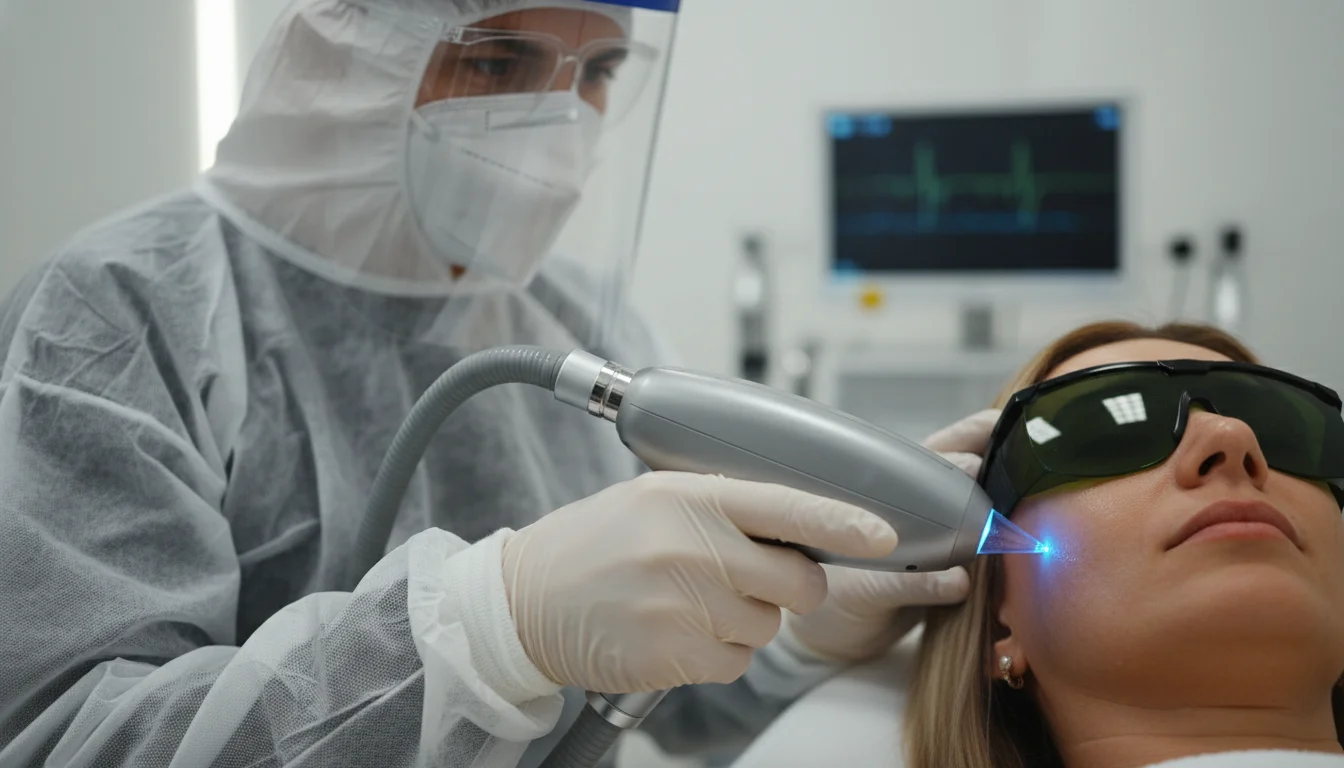
When topicals have plateaued, laser treatment is the next tier. Pigment-targeting lasers (Q-switched Nd:YAG, picosecond lasers) deliver pulses of energy that selectively destroy melanin-containing cells without damaging surrounding tissue. The destroyed pigment is then cleared by the immune system over the following weeks.
For broader textural improvement alongside pigmentation, fractional lasers (Fraxel, Clear + Brilliant) are often preferred. Non-ablative options mean 1-3 days of redness with 4-5 sessions needed; ablative lasers produce more dramatic results in 2-3 sessions but require 5-10 days of recovery.
Sessions cost $500-2,500 depending on laser type and treatment area. Results are durable but not permanent – sun exposure will create new spots over time. Most people do a maintenance session once a year after completing the initial series.
IPL (intense pulsed light) is a lower-intensity light-based option that works well for diffuse sun damage across larger areas. Less precise than pigment lasers for discrete spots, but useful when the whole face or neck has accumulated sun damage.
10. Liquid Nitrogen Cryotherapy
The fastest treatment for discrete, isolated sunspots on fair skin. A dermatologist applies liquid nitrogen (-196°C / -321°F) to individual spots using a spray device or cotton-tipped applicator. The extreme cold destroys the pigmented cells in the treated area. The spot blisters, darkens temporarily, then sheds over 1-2 weeks, revealing lighter skin underneath.
One or two sessions is typically sufficient. For the right candidate – isolated spots, Fitzpatrick skin types I-III – it’s more efficient than months of topical treatment.
The critical caveat: this is not appropriate for medium to dark skin tones. On Fitzpatrick types IV-VI, the risk of permanent hypopigmentation (white patches more visible than the original dark spot) is high. If you have medium to dark skin, ask about picosecond lasers instead.
11. Sunscreen (Use This With Everything)
Sunscreen isn’t a treatment but it’s the reason treatments work. UV radiation triggers melanogenesis – the production of new melanin – which means every brightening treatment you apply is working against ongoing UV-driven pigment production if you’re not wearing SPF.
Mineral sunscreen with zinc oxide, SPF 30 or higher, every morning. Reapply every two hours if you’re outdoors. Apply it to the hands and forearms if you’re treating spots there, not just the face.
Without daily SPF, none of the treatments above will hold.

Frequently Asked Questions
What fades dark spots the fastest?
Prescription 4% hydroquinone, used twice daily with strict SPF, produces the fastest results among topical treatments – visible improvement in 4-8 weeks. For even faster results on isolated spots on fair skin, liquid nitrogen cryotherapy by a dermatologist can treat individual spots in a single session. Laser treatment is faster than months of topical use when multiple spots need addressing.
How can I remove dark spots in 3 days at home?
You can’t, reliably. Home remedies circulating online – lemon juice, apple cider vinegar, raw potato – have no clinical evidence and carry real irritation risk. Irritating the skin causes inflammation, which triggers melanin production, which makes hyperpigmentation worse. The fastest safe home approach is vitamin C serum plus SPF, daily, for 6-8 weeks minimum.
What gets rid of dark spots permanently?
Nothing is unconditional. Professional treatments (laser, cryotherapy) can permanently destroy existing pigmented cells – but sun exposure creates new spots over time in any skin with melanocytes. Topical treatments fade existing spots but require maintenance to prevent recurrence. The closest thing to permanent is a combination of effective treatment followed by consistent daily SPF for the rest of your life.
Are dark spots the same as melasma?
No, though they look similar. Melasma is a specific type of hyperpigmentation – usually larger, more diffuse patches triggered by hormonal changes (pregnancy, birth control) combined with UV exposure. It’s more resistant to treatment than sunspots or post-inflammatory hyperpigmentation, and frequently recurs when hormonal triggers remain. Tranexamic acid and azelaic acid are particularly relevant for melasma; hydroquinone works but melasma returns without ongoing SPF and often hormonal management.