Table of Contents
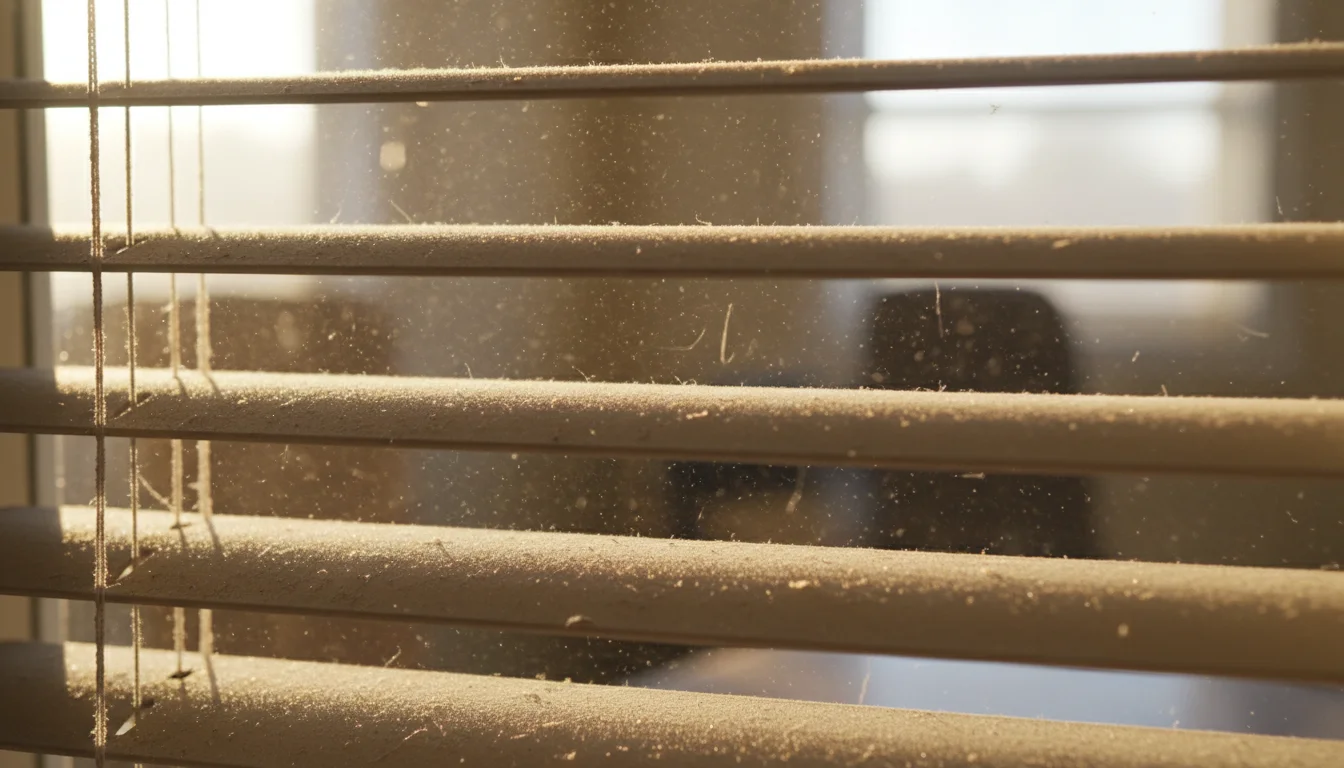
Window blinds are dust magnets. Their horizontal surfaces collect everything floating in your air—skin cells, pollen, pet dander, and outdoor grime. Over time, this buildup turns your blinds from functional window treatments into allergy triggers that spread particles every time you adjust them.
Cleaning blinds feels tedious because traditional methods are. Feather dusters just redistribute dust. Microfiber cloths require constant repositioning. Taking blinds down for soaking is impractical for regular maintenance. You need methods that work with the blinds in place and don’t require an entire afternoon.
Here are five effective approaches that make blind cleaning faster and more thorough.
1. Use the Sock Method for Horizontal Blinds
This cleaning hack turns an old sock into the perfect blind-cleaning tool. The fabric wraps around each slat, cleaning top and bottom surfaces simultaneously while reaching into tight spaces cloths can’t access.
Slide a clean cotton sock over your hand like a glove. For light dusting, spritz the sock lightly with water—just enough to dampen, not soak. For deeper cleaning, mix a solution of equal parts white vinegar and warm water with a few drops of dish soap.
Grip each blind slat between your thumb and fingers, pinching the sock firmly against both surfaces. Slide your hand from one end of the slat to the other in one smooth motion. The sock picks up dust rather than pushing it around.
Work from top to bottom so any falling dust lands on uncleaned slats below, not already-cleaned ones above. Rinse or replace the sock as it becomes dirty. One sock cleans approximately one standard window blind before needing refreshment.
This method excels because it cleans both sides of each slat simultaneously. The fabric conforms to the slat shape, pulling dust from edges and corners that flat cloths miss. And when you’re done, toss the sock in the wash—no cleanup tools required.
2. Vacuum with Brush Attachment
For routine maintenance, your vacuum cleaner handles blind dusting efficiently. The brush attachment agitates dust while suction removes it completely—no redistribution, no residue.
Attach the soft brush tool to your vacuum hose. Close blinds fully so slats present flat surfaces. Run the brush across each slat from center to edge, working top to bottom. The brush bristles reach into crevices while suction pulls dust into the vacuum bag or canister.
Use low suction power for delicate blinds like cellular shades or thin vinyl. Standard suction works for wood, faux wood, and aluminum blinds. Move slowly enough for the vacuum to capture dust but quickly enough to finish before fatigue sets in.
This method works best for blinds that aren’t sticky or greasy. If kitchen blinds have accumulated cooking residue, vacuuming alone won’t suffice—you’ll need wet cleaning. But for bedroom and living room blinds, vacuuming monthly keeps dust manageable.
3. Wipe with Dryer Sheets
Dryer sheets do more than soften laundry. Their anti-static coating repels dust, meaning blinds stay cleaner longer after treatment. This approach works best as a finishing step after removing accumulated dust.
After cleaning blinds with your preferred method, run a fresh dryer sheet over each slat. The sheet leaves a thin film that prevents dust from settling. Blinds treated with dryer sheets stay dust-free roughly twice as long as untreated ones.
The subtle fragrance is a bonus, lightly scenting rooms without artificial sprays. Choose unscented sheets if you’re sensitive to fragrances. The anti-static effect works regardless of scent.
Replace dryer sheets as they become saturated with dust and lose their coating. One sheet typically covers one standard window. Store used sheets in a bag for disposal—they’re covered in the dust you just removed.
4. Clean with Microfiber Blind Dusters
Specialized blind dusters feature fingers or prongs that slide between slats, cleaning multiple surfaces at once. These tools cost little and transform blind cleaning from tedious to tolerable.
Look for dusters with microfiber sleeves that attract and hold dust. The best designs have three prongs that clean the top of one slat and bottom of the next simultaneously. Slide the tool horizontally across closed blinds, working from top to bottom.
Microfiber’s electrostatic properties capture dust rather than pushing it airborne. When the duster becomes saturated, remove the sleeve and shake it outside or wash it. Reusable sleeves make this an eco-friendly option.
These tools work on horizontal blinds of any material—wood, faux wood, aluminum, or vinyl. They’re less effective on vertical blinds, which benefit more from the sock method or vacuuming.
5. Deep Clean with Warm Soapy Water
Sometimes blinds need more than dusting. Kitchen blinds accumulate grease. Bathroom blinds collect hairspray and humidity residue. Annual deep cleaning restores blinds that have become genuinely dirty.
For aluminum or vinyl blinds, remove them from the window and lay them in a bathtub filled with warm water and mild dish soap. Let them soak for 15 minutes, then wipe each slat with a soft cloth. Rinse with clean water and dry thoroughly before rehanging.
For wood or faux wood blinds, avoid soaking. Instead, dip a cloth in warm soapy water, wring it nearly dry, and wipe slats individually. Follow immediately with a dry cloth to prevent moisture damage.
Never use abrasive cleaners or scrub brushes on blinds—they scratch surfaces and create texture that attracts more dust. Stick to mild soap and soft cloths.
Dusty blinds don’t require special equipment or professional cleaning. The sock method offers the best combination of effectiveness and convenience for most homeowners. Keep a dedicated blind-cleaning sock in your cleaning supplies, dampen it when needed, and run it across your blinds monthly. Supplement with occasional vacuuming and annual deep cleaning, and your blinds will stay presentable with minimal effort. The key is consistency—five minutes monthly prevents the buildup that makes blind cleaning feel overwhelming.