Table of Contents
Fruit flies don’t appear from nowhere. They come in on your produce, lay eggs on overripe skin, and multiply fast enough that a single forgotten peach can seed your whole kitchen within a week. The trap-and-catch approach works for controlling adults, but it doesn’t stop the source. Traps just make you feel like you’re doing something while the real problem sits on your counter getting softer.
These six methods target the source. Handle your produce correctly and you cut off the infestation at the root.
1. Store Produce in the Fridge
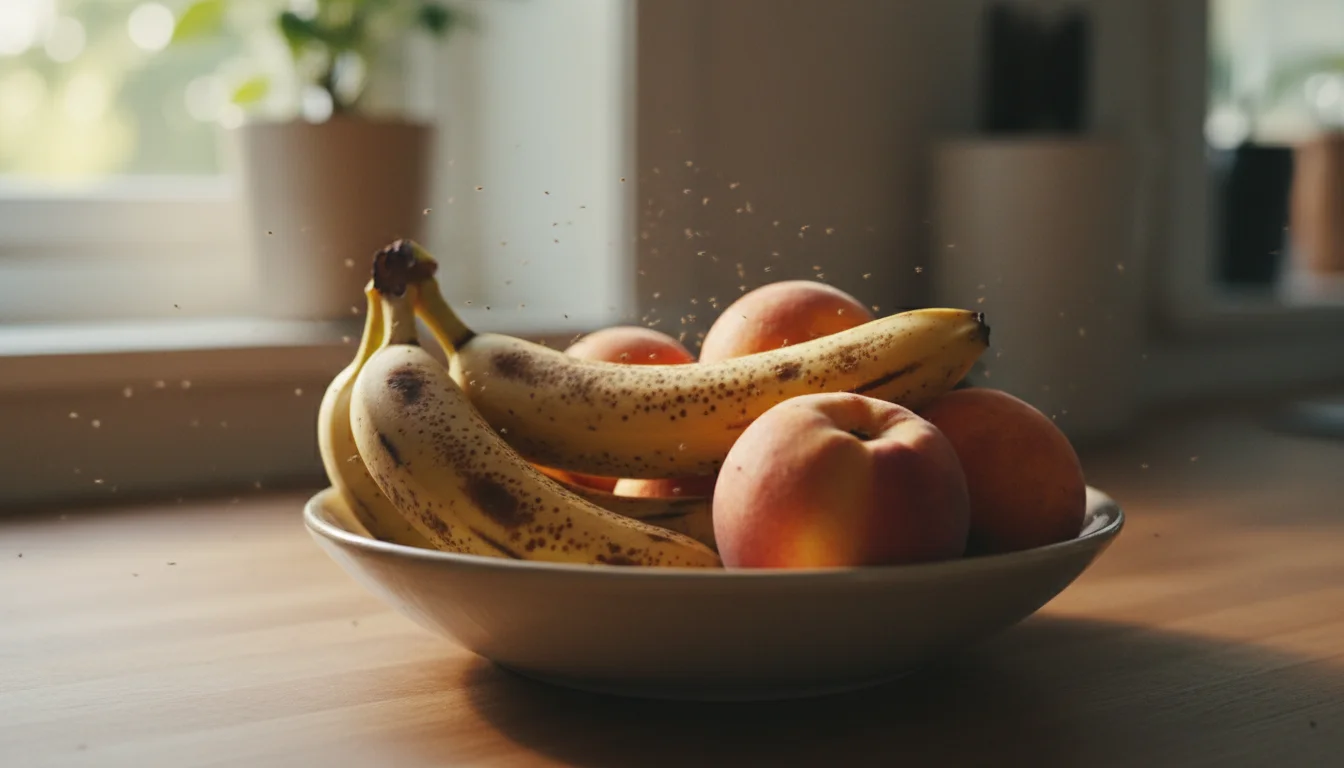
Most fruits don’t need to sit on your counter ripening. Stick them in the fridge instead. Apples, grapes, berries, citrus, and stone fruits all do fine cold. Slows ripening, prevents rot, eliminates the fruit fly buffet sitting on your counter.
Bananas are the exception because they turn black in the fridge, but you can refrigerate them once they hit the ripeness you want. The peel goes brown but the inside stays perfect. Tomatoes lose flavor when refrigerated, so if you’re keeping those out, eat them fast or expect flies. Two days on the counter is fine. Four days is not.
2. Store Quick-Fermenting Foods Properly
Onions and potatoes in an open basket on the counter? That’s the problem. Both release moisture and gases that speed up fermentation of nearby produce, which creates exactly the environment fruit flies hunt for. Move them to the fridge or into a sealed container.
Opened wine bottles need a stopper pushed all the way in, then into the fridge. Same goes for fruit juice, kombucha, beer, and anything else that ferments. Fruit flies can smell an open bottle from across a room. A loose-fitting cork is not a seal. If it can ferment, it needs a tight seal and cold storage.
3. Select Unblemished Produce at the Store
Bruised or damaged fruit starts rotting faster. Check every piece before you bag it. Skip anything with soft spots, cuts, or visible damage. Fruit flies lay eggs on damaged produce in store displays and in transit, so you may be bringing their nursery home before you’ve even unpacked.
Organic produce rots faster because there’s no preservative coating. That’s not a reason to avoid it, but it is a reason to buy smaller amounts more often instead of stocking up for two weeks. The three-day-old strawberries you forgot about in the back of the fridge are what started your last fly problem.
4. Wash Produce with Vinegar When You Bring It Home
Fill a bowl with three parts water to one part white vinegar. Dunk your produce and give it a gentle rub. Rinse under cold water before storing. This removes fruit fly eggs that hitched a ride from the grocery store or farmer’s market, and it takes about two minutes when you’re unpacking bags.
Berries and stone fruits carry eggs most often because they’re already ripening when you buy them. The vinegar kills eggs on contact without harming the produce or leaving any taste behind. It’s not a complex process: soak, rub, rinse, done. This is the step most people skip, and it’s the one that stops infestations before they start. If you’ve had a recurring fly problem with no obvious source, this is probably why.
5. Keep Bins and Food Waste Secure
Your kitchen bin is the main event. Swing-top lids and loose-fitting covers let fruit fly odors out and flies in. Get a step-can with a rubber gasket around the rim. During summer, empty it every day instead of letting it pile up.
Line your bin with a bag and tie it shut before you toss it. Wipe down the inside of the bin once a week with hot soapy water. That sticky liquid at the bottom is where fruit flies breed. You can scrub the rest of the kitchen all you want, but if that layer stays in the bottom of the bin, the flies aren’t going anywhere.
Compost bins on the counter need lids too. A ceramic crock with a charcoal filter works. A bowl covered with a plate does not.
6. Take Out Trash Regularly
Food scraps in your kitchen trash don’t need long. A day or two in warm weather is enough to start an egg-laying party. Take trash out every day or two, more often during the hot months.
As soon as you bag up contaminated food or produce scraps, take the bag outside to your outdoor bin. Don’t set it on the back porch and forget about it. Don’t let it sit in the garage. The goal is removing the food source from inside the house entirely, not relocating it to a room that’s slightly farther away from your kitchen.
Double-bag produce waste if you’re mid-infestation. It limits escapees during transport and means fewer flies when you open the outdoor bin.
Get the produce handling right and the fruit flies go away without any traps, sprays, or special products. The whole life cycle depends on overripe, damaged, or exposed food. Take that away and there’s nothing left for them.