Table of Contents
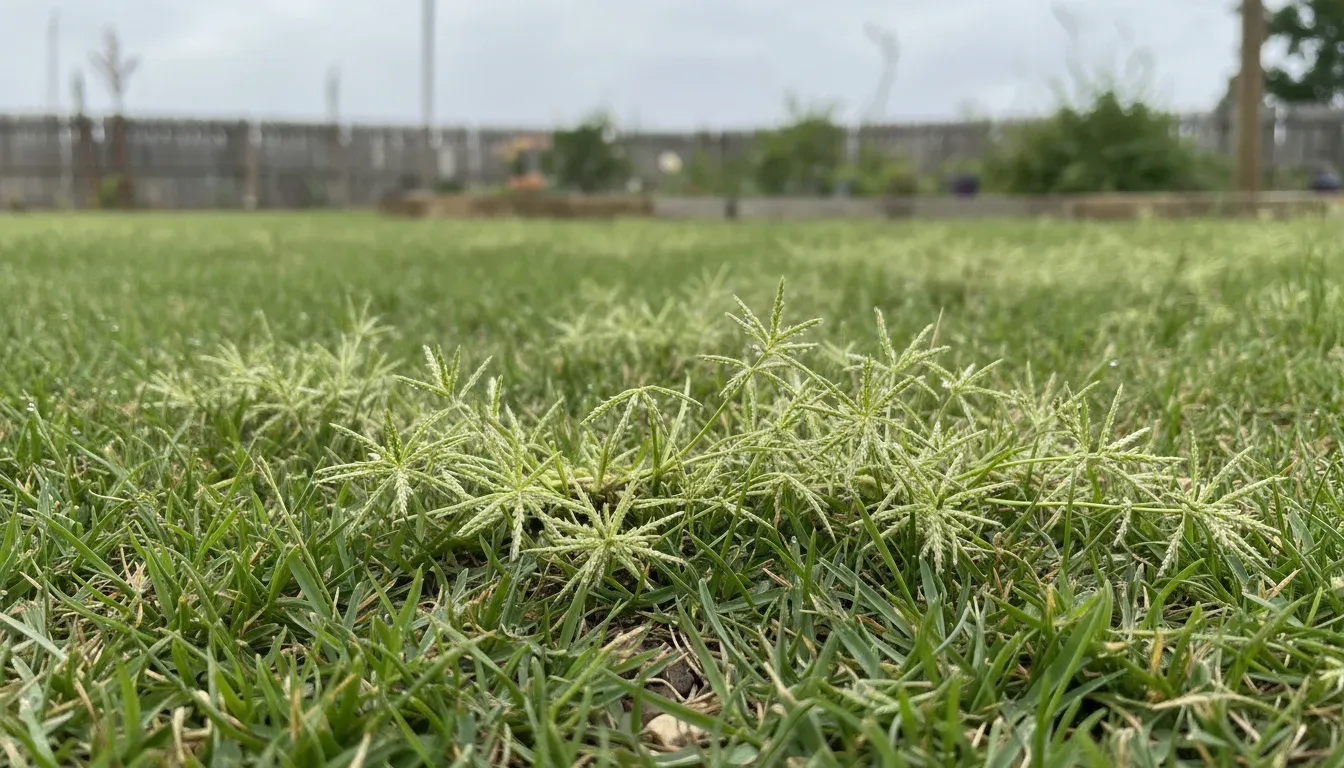
Goosegrass looks like crabgrass’s aggressive cousin. It grows in flat, star-shaped clumps that spread rapidly across thin or compacted turf, choking out desirable grass. Left unchecked, a single goosegrass plant produces up to 50,000 seeds, ensuring future generations will plague your lawn for years.
This summer annual weed thrives in compacted soil and areas with poor drainage. It loves heat and grows fastest when temperatures climb above 85°F. You’ll recognize it by its whitish-green, flattened stems and the way it hugs the ground in distinctive rosette patterns. Unlike crabgrass, goosegrass has a membranous ligule and no hairs on its leaves.
Getting rid of goosegrass requires a two-pronged approach: stopping seeds from germinating and eliminating plants that have already established. Here’s how to tackle both phases effectively.
1. Apply Pre-Emergent Herbicides in Early Spring
Pre-emergent herbicides create a chemical barrier that prevents goosegrass seeds from germinating. Timing is everything—these products must be applied before soil temperatures reach 60 to 65°F, which is when goosegrass seeds begin sprouting.
In most regions, this means applying pre-emergent in early spring, typically between late February and mid-March. Don’t wait until you see weeds. By then, seeds have already germinated and pre-emergents won’t work.
Look for products containing pendimethalin, prodiamine, or dithiopyr. These active ingredients effectively prevent goosegrass and other annual grassy weeds. Apply evenly across your entire lawn using a broadcast spreader, following label rates carefully.
Water the product in with about half an inch of irrigation or rainfall within 48 hours of application. This activates the herbicide and establishes the barrier in the soil. One application provides approximately three months of protection. In areas with long growing seasons, a second application in late spring extends control through summer.
2. Raise Your Mowing Height
Tall grass shades the soil surface, making it harder for goosegrass seeds to germinate and establish. Many homeowners scalp their lawns, creating the perfect environment for weeds to invade.
Set your mower deck to cut grass at 3 to 4 inches high. This applies to most cool-season grasses like fescue, bluegrass, and ryegrass. For warm-season grasses, maintain the recommended height for your specific variety—typically 1.5 to 2.5 inches for Bermuda, 2 to 3 inches for St. Augustine.
Never remove more than one-third of the grass blade in a single mowing. Cutting too short stresses the turf and creates openings where goosegrass can establish. Sharp mower blades make clean cuts that heal quickly; dull blades tear grass, creating stress entry points for weeds.
Tall turf also develops deeper root systems that outcompete shallow-rooted goosegrass for water and nutrients. A thick, healthy lawn is your best defense against this aggressive weed.
3. Improve Soil Drainage and Reduce Compaction
Goosegrass loves compacted, poorly drained soil. It thrives in high-traffic areas, along driveway edges, and anywhere foot traffic has compressed the soil. Addressing these conditions removes the environment goosegrass prefers.
Aerate your lawn annually using a core aerator that removes plugs of soil. This relieves compaction and improves drainage, making conditions less favorable for goosegrass. Focus on compacted areas and high-traffic zones. The best times to aerate are spring and fall when grass is actively growing.
For chronically wet areas, consider improving drainage. French drains, dry wells, or simply regrading to direct water away from problem spots can transform goosegrass havens into healthy turf. Reduce irrigation frequency but increase duration—deep, infrequent watering encourages deep grass roots while shallow, frequent watering favors shallow-rooted weeds.
In high-traffic areas where compaction is unavoidable, consider installing stepping stones or a small patio to redirect foot traffic. Less compaction means fewer opportunities for goosegrass to establish.
4. Use Post-Emergent Herbicides for Active Plants
Once goosegrass has emerged, pre-emergent herbicides won’t touch it. You’ll need post-emergent products designed to kill actively growing plants. Act quickly—goosegrass becomes harder to control as it matures and produces seeds.
For lawns with Bermuda grass, Zoysia, or other warm-season turf, products containing quinclorac or mesotrione effectively control goosegrass. These selective herbicides kill the weed without harming desirable grass. Apply when goosegrass is young and actively growing, typically 2 to 4 leaf stage.
Cool-season lawns face more challenges, as fewer selective herbicides work on goosegrass in fescue or bluegrass. Tenacity (mesotrione) is one option that can be used on cool-season lawns, though it may temporarily whiten grass. Always follow label instructions regarding application rates, timing, and grass type compatibility.
Spot-treat individual plants rather than blanket spraying the entire lawn. This reduces chemical use and protects beneficial organisms in your soil. Apply on calm days when temperatures are between 60°F and 85°F for best results.
5. Hand Pull Small Infestations
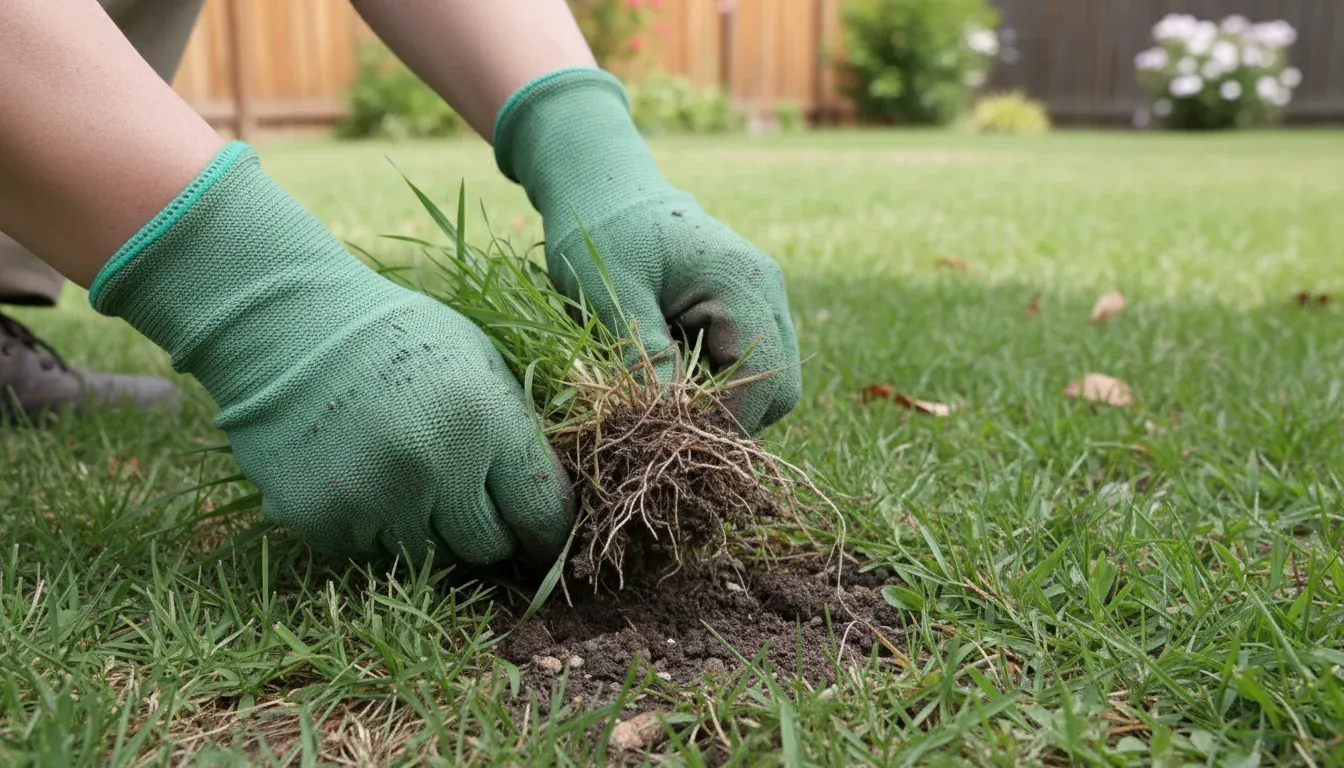
For isolated goosegrass plants or small patches, hand pulling is effective and chemical-free. This method works best when the soil is moist and plants are young, before they’ve developed extensive root systems or produced seeds.
Water the area thoroughly the day before pulling to soften the soil. Grasp the plant at its base and pull slowly, ensuring you remove the entire root system. Goosegrass has a fibrous root system that breaks easily—any remaining root fragments can resprout.
Check the pulled plants for seed heads. If you see developing seeds, bag the plants and dispose of them in the trash, not your compost pile. One mature plant can scatter thousands of seeds, creating next year’s problem.
Fill the holes left by pulled weeds with quality topsoil and overseed with your lawn grass variety. This prevents new weeds from filling the empty space and restores uniform turf appearance.
6. Maintain Vigorous, Healthy Turf
The ultimate goosegrass prevention is a thick, healthy lawn that leaves no room for weeds to establish. Focus on cultural practices that promote dense turf growth.
Fertilize appropriately for your grass type and climate. Underfertilized lawns are thin and weedy; overfertilized lawns grow too fast and become weak. Most lawns need 3 to 4 pounds of nitrogen per 1,000 square feet annually, split into multiple applications.
Water deeply but infrequently. Apply 1 to 1.5 inches of water per week, either from rainfall or irrigation, in one or two sessions. This encourages deep grass roots and drought tolerance. Light, frequent watering keeps surface soil moist—perfect for goosegrass germination.
Overseed thin areas in fall or spring, depending on your grass type. Thick turf crowds out weeds and prevents sunlight from reaching soil where seeds wait to germinate. A dense lawn is the only permanent solution to goosegrass problems.
Goosegrass is a formidable opponent, but it’s not unbeatable. Start with pre-emergent herbicides in early spring to stop seeds from sprouting. Maintain tall mowing height and proper watering to keep turf thick and competitive. Address compaction and drainage issues that favor this weed. For plants that break through your defenses, use post-emergent herbicides or hand pulling before they produce seeds. Consistent lawn care practices create an environment where desirable grass thrives and goosegrass can’t gain a foothold.