Table of Contents
Deterrents are most useful before a groundhog has set up a permanent burrow. Once they’ve dug in under your deck and raised a litter, the deterrent window has passed – that’s a trapping and exclusion job. But if you’re seeing fresh digging or early damage, deterrents can convince a groundhog to move along to someone else’s yard. Some of these work well. Others are a waste of time. Here’s the honest breakdown.
Confirm It’s Actually a Groundhog
Before you invest in fencing or repellents, make sure you’re dealing with groundhogs and not rabbits, voles, or neighborhood cats. Set up a game camera near the burrow entrance or damaged plants and check the footage.
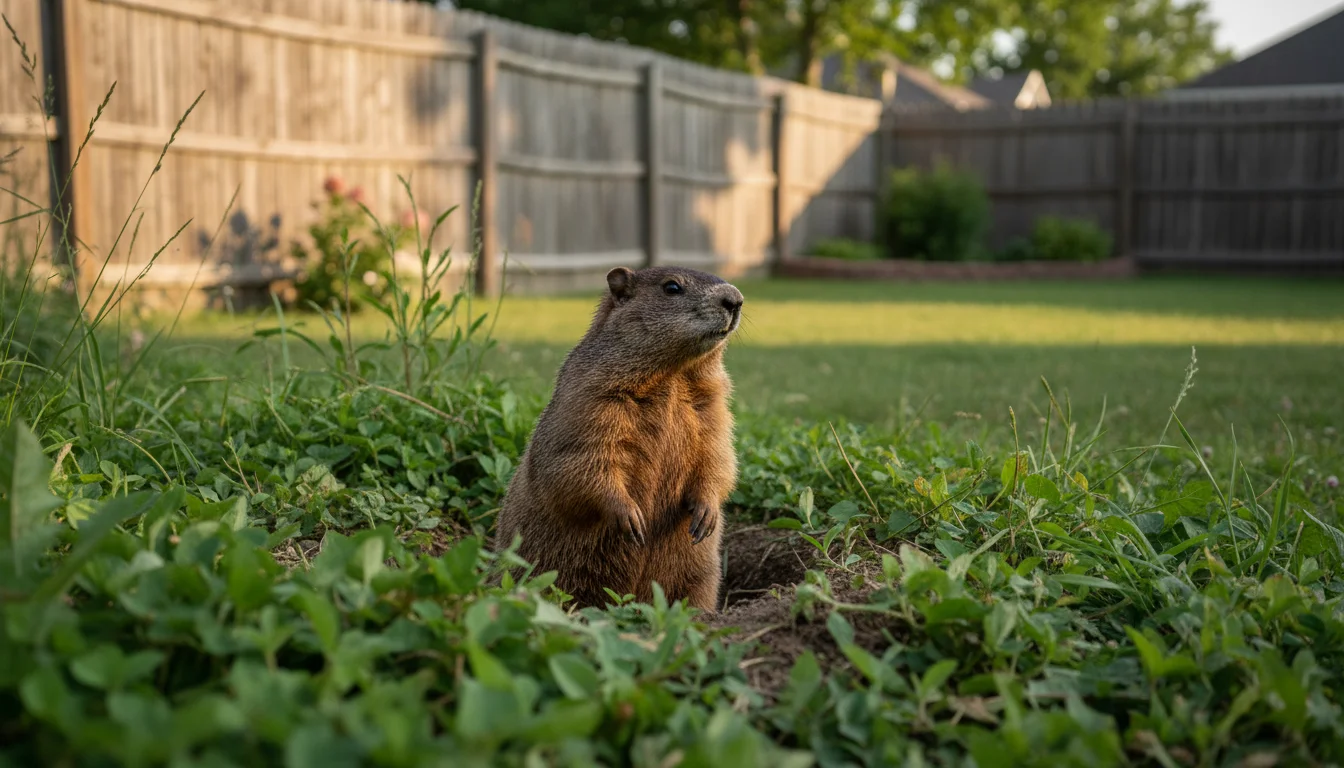
Groundhogs are active during the day – especially morning and evening. They’re chunky and low to the ground, with short bushy tails. If you’re seeing activity at night, it’s probably something else entirely and you’re about to buy the wrong solution.
Use Motion-Activated Sprayers
Motion-activated sprinklers startle groundhogs when they enter the detection zone and they eventually decide your yard isn’t worth the hassle. Place them near burrow entrances, garden perimeters, or known feeding areas.
They’re most effective early in the season before groundhogs establish routines. Change the position every week or so – they’ll figure out the blind spots faster than you’d expect. These work better as a discouragement tool for newcomers than as an eviction tool for established residents.
Try Commercial Repellents
Granular or liquid repellents containing capsaicin, garlic, or predator urine might work temporarily, especially on new arrivals. Apply around burrows and garden edges after rain.
Results are genuinely mixed. Treat these as a supplement to fencing rather than a replacement. They’re better for discouraging groundhogs from setting up shop than for evicting ones that have already established a burrow and know the territory. Need constant reapplication, which adds up in both cost and effort.
Use Ammonia-Soaked Rags
Soak old rags in household ammonia and stuff them into burrow entrances. The sharp smell mimics predator urine and can drive groundhogs out temporarily. Replace the rags every few days and reapply after rain.
This works best on new or secondary burrows before groundhogs are fully established. It won’t evict a groundhog that’s already raised young in the burrow, and they’ll often just dig a new entrance a few feet away. Use this as an immediate deterrent while you set up fencing or traps, not as a standalone solution.
Eliminate Food and Cover
Groundhogs are in your yard because it offers food and shelter. Mow grass short, clear brush piles, remove fallen fruit, and fence off vegetable gardens. Keep bird feeders away from the house and pick up spilled seed.
They won’t leave immediately, but they’re less likely to settle in if there’s nothing to eat and nowhere to hide. This is the unglamorous work that actually shifts the odds. A yard with short grass, no brush, and no accessible food is a less appealing place to dig a burrow.
Install Proper Fencing
This is the most effective long-term deterrent. Use three-foot tall woven wire fencing with 2-inch or smaller mesh. Bury the bottom 12 inches in an L-shape pointing away from the garden, and bend the top 6 inches outward at a 45-degree angle.
Groundhogs are decent climbers but the floppy top throws them off. The buried base stops them from digging under. It’s tedious to install but it actually works, unlike the flimsy decorative stuff from big-box stores that a groundhog will walk through without breaking stride.
Add an Electric Wire at Ground Level
If you’ve already got a fence and they’re digging under it, add a single strand of electric wire 4-5 inches above the ground on the outside. Use a low-impedance charger designed for small animals.
One zap usually convinces them to move along. This works well in combination with standard fencing but less reliably on its own. It’s cheap to add if you’re already running a fence, and the deterrent effect is immediate.