Table of Contents
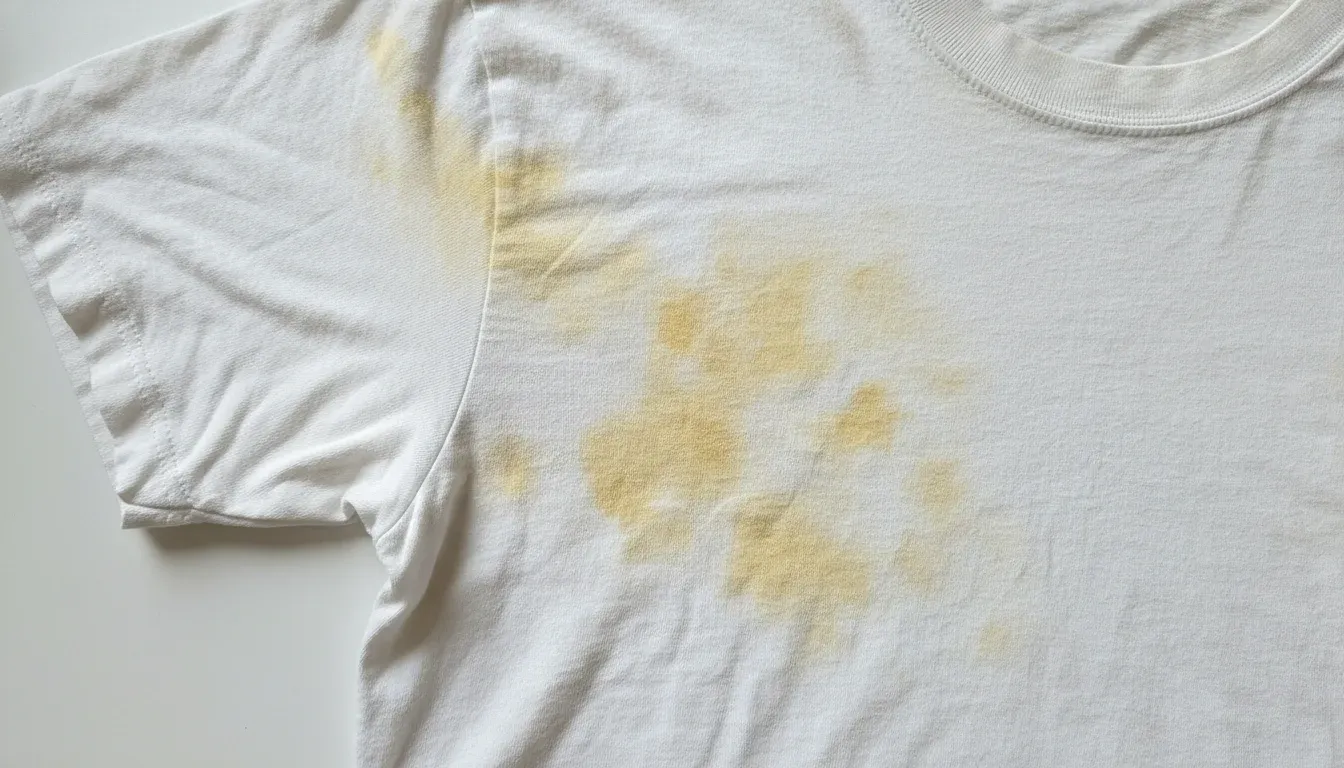
Chlorine bleach on white clothes should be foolproof. It’s not. Too much, too hot, or left too long and you get a yellow cast that won’t budge no matter how many times you rewash it. That’s bleach residue bonded to the fiber – not a surface deposit that detergent can shift.
Fabric type determines your options. On cotton and linen, the yellowing is reversible with the right oxidizing agent. On synthetics (polyester, nylon, spandex), bleach damages the fibers structurally and the yellow is permanent. Synthetics: skip to methods 7 and 8 for visual masking only.
Before you start: if you’re using vinegar, rinse the garment under cold running water for a full minute first. Mixing white vinegar with chlorine bleach residue produces chlorine gas.
1. Soak in hydrogen peroxide
The best fix for cotton and linen. Hydrogen peroxide is a mild oxidizer that targets chlorine residue without stripping color.
Fill a basin with cool water and add 1 cup (240 ml) of 3% hydrogen peroxide – the standard brown-bottle drugstore kind. Soak for 30 to 60 minutes for light yellowing, or up to 8 hours for stubborn cases. Wash normally when done. For concentrated spots, apply undiluted hydrogen peroxide directly and let it sit 15 minutes before rinsing. Don’t dry until treated – heat sets the stain permanently.
2. Baking soda and hydrogen peroxide paste
The spot-treatment version of method 1, for concentrated yellow patches a soak alone won’t shift. Mix 2 tablespoons (30 g) of baking soda with enough hydrogen peroxide to make a thick paste. Spread it over the stain, let it sit for 30 minutes, then scrub lightly with an old toothbrush. Rinse with cold water and wash normally. The baking soda adds mild mechanical action while the peroxide handles the chemistry.
3. Oxygen-based bleach soak
Heavy duty, for yellowing that the peroxide soak didn’t crack. Products like OxiClean are essentially sodium percarbonate, which releases hydrogen peroxide when dissolved in water – a more concentrated version of method 1. Dissolve per package directions in warm water and soak the garment for 1 to 4 hours, then wash normally. This is where you go after hydrogen peroxide fails, not before.
4. White vinegar soak
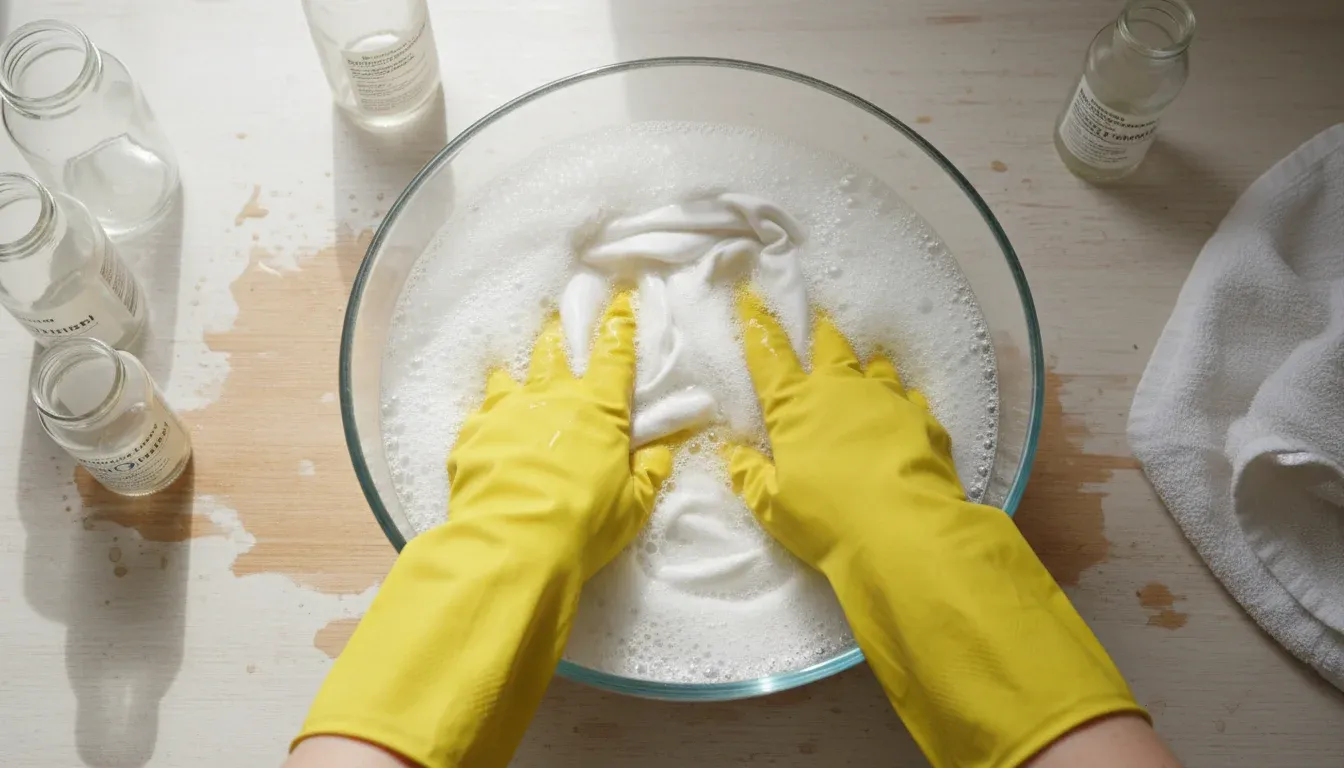
Works on light yellowing and chlorine residue, but only after the garment has been thoroughly rinsed of any remaining bleach (see intro). Acetic acid neutralizes chlorine compounds on contact.
Pour undiluted white vinegar onto the yellow patches, let it sit for 10 minutes, then rinse with cold water. For a full-garment soak, use 1 cup (240 ml) of white vinegar per gallon (3.8 L) of cold water, 30 to 60 minutes. If the stain doesn’t move after two rounds, it’s deeper than vinegar can reach.
5. Lemon juice and salt in direct sunlight
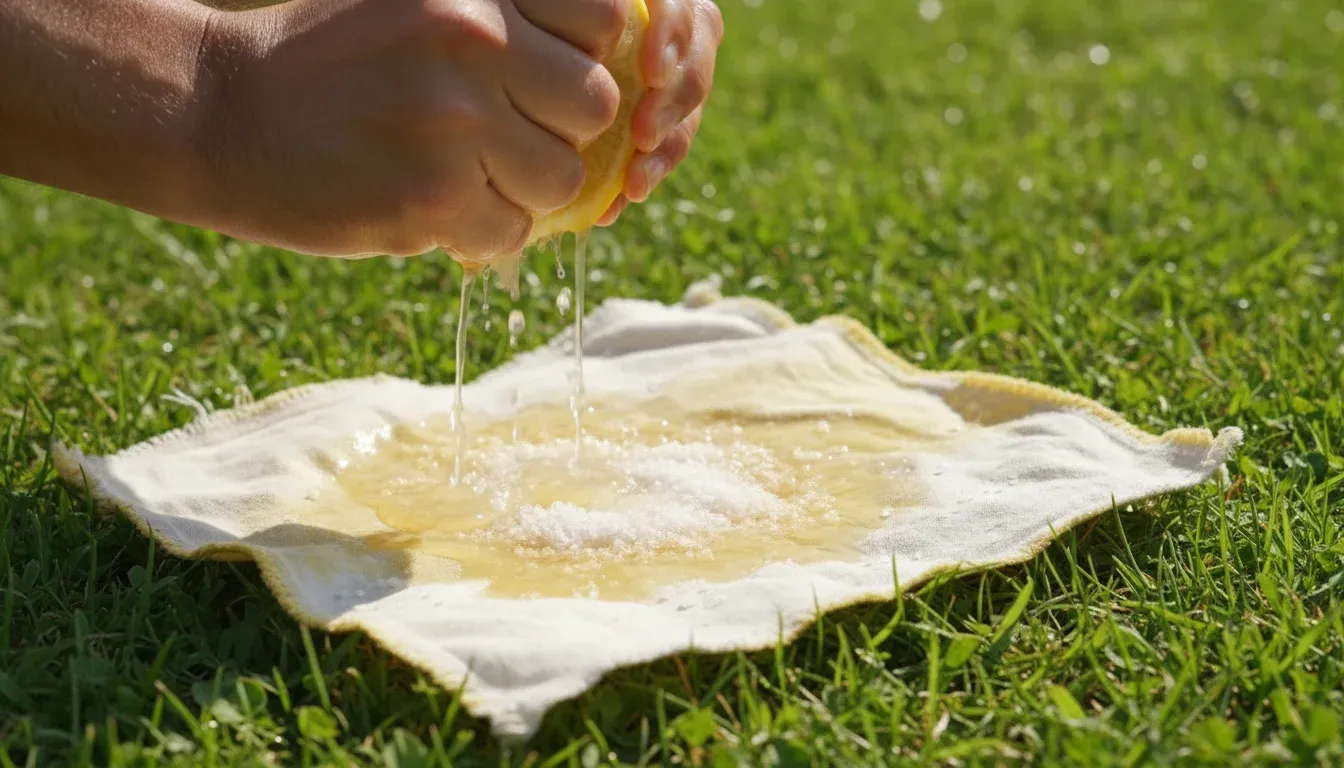
Slow but effective on cotton. Squeeze fresh lemon juice onto the yellowed area, sprinkle salt, rub gently with a soft brush. Lay flat in direct sunlight for 2 to 3 hours. Citric acid and UV light work together as oxidizing agents – this isn’t just drying out. Rinse cold afterward.
6. Baking soda cold-water soak
For a slight yellow cast across the whole garment. Dissolve 4 tablespoons (60 g) of baking soda in a basin of cold water, soak overnight. The alkaline solution breaks down chlorine residue gently. Wash normally in the morning. Won’t touch heavy yellowing.
7. Bluing agent in the rinse cycle
Not a fix. A visual trick. Bluing deposits a microscopic amount of blue dye that optically cancels out yellow tones. Add a capful to the rinse cycle (follow the bottle’s instructions). Don’t pour it directly on the fabric or you’ll swap yellow for blue. The yellow is still there – it just doesn’t look yellow anymore. For synthetics where actual reversal isn’t possible, this is a legitimate solution.
8. Optical brightener treatment
Same category as bluing: visual masking, not chemistry. Fluorescent compounds in brightening detergents absorb UV light and emit it as blue-white, which makes fabrics appear whiter. Wash with a brightener-heavy detergent and dry in sunlight for maximum effect. Works best on mild yellowing where there’s not much to overcome.