Table of Contents
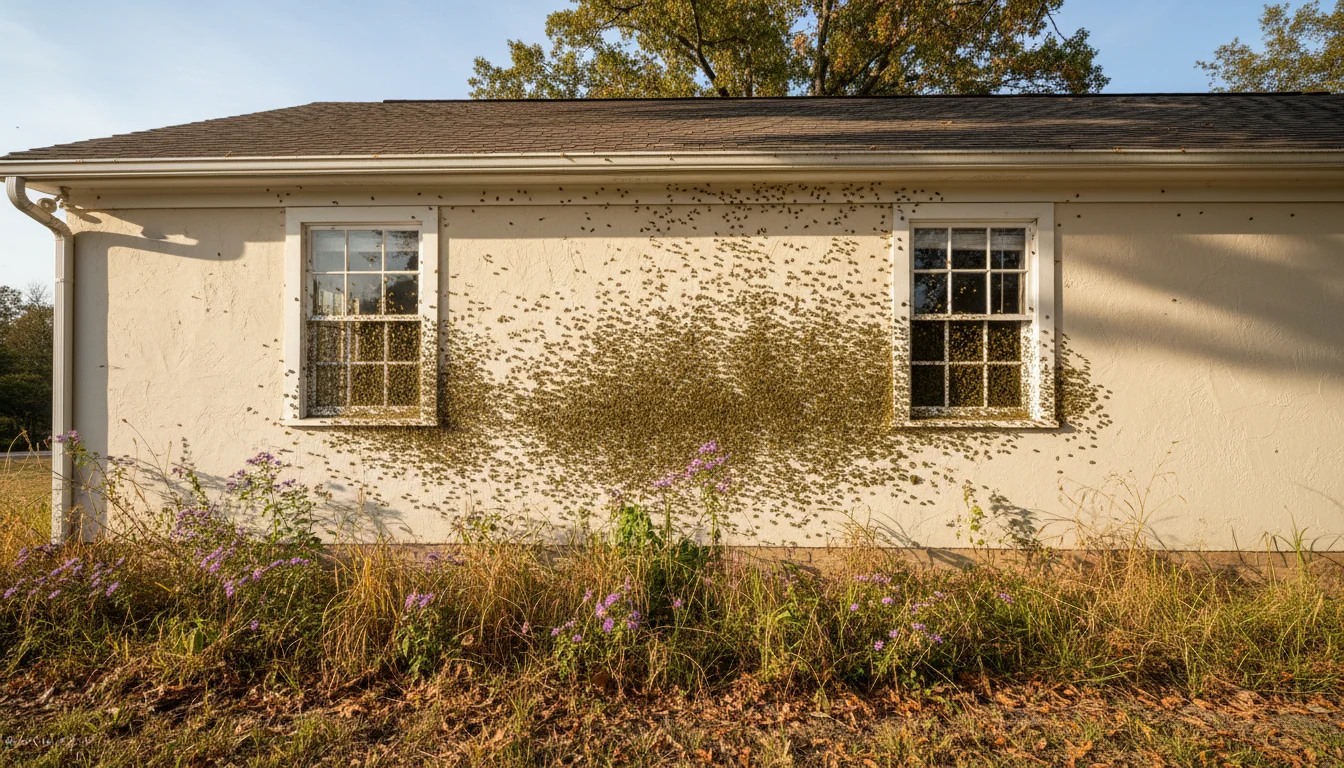
Every fall, homeowners in the Southeast open their blinds to find the south-facing wall of their house absolutely carpeted in small, olive-green beetles. That’s kudzu bugs. If you’re trying to figure out how to get rid of kudzu bugs in your home, the first thing to understand is what they actually want: not food or shelter in any interesting sense, but somewhere warm to wait out winter. Your house looks great from the outside. Light-colored siding especially. White or cream-colored houses consistently get hit harder than darker ones.
Once temperatures drop below 50°F (10°C), they start squeezing through every crack they can find to get into wall voids and attics. The aggregations on south and west-facing walls – the sides that stay warmest into the afternoon – can be genuinely alarming if you haven’t seen it before. But the invasion is predictable, which means you can get ahead of it with the right timing. Here’s what actually works.
1. Seal Entry Points
This is the foundation of the whole approach. If you skip this and jump straight to insecticides, you’re killing bugs while hundreds more walk in behind them.
Kudzu bugs are small enough to fit through gaps you’d never notice at a glance. Go around the entire exterior of your house and look for: cracks in the foundation, gaps where utility lines enter the wall, holes in soffits and fascia, openings around vents and pipe penetrations, and anywhere siding meets trim or corners. Pay extra attention to the south and west-facing walls – those warm surfaces get the heaviest traffic in fall and are where most entry points get exploited first.
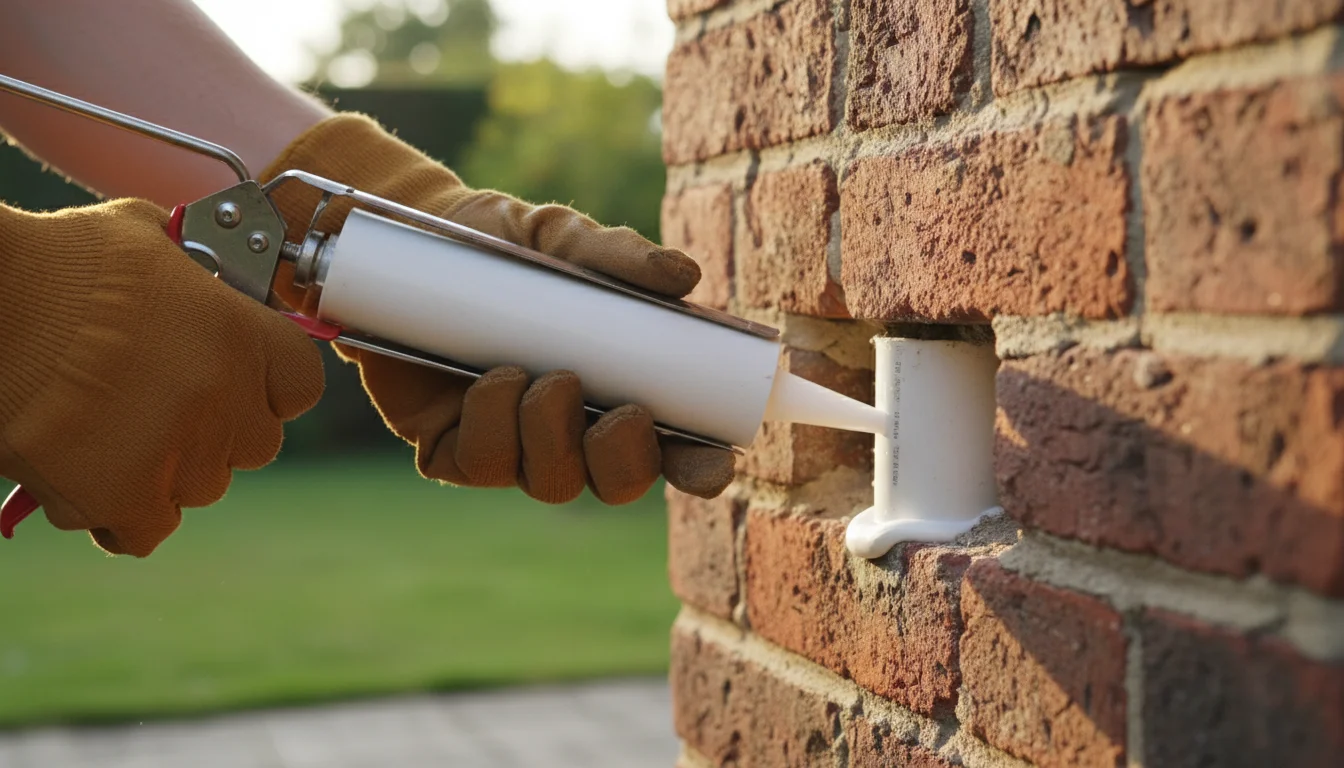
Seal gaps with caulk or expandable foam for smaller openings. For larger holes, cut hardware cloth or metal mesh to size and secure it with screws before caulking the edges. The combination is important – caulk alone can crack over time, but the mesh holds. Don’t rush this – a single overlooked gap undoes everything else.
Secondary structures matter too. A gap in the garage or shed wall gives them a foothold that’s one step from your living space. If your garage has an interior door to the house, seal the exterior first but also weatherstrip that interior door. Treat secondary structures with the same thoroughness you apply to the house itself.
2. Install Door Sweeps and Weatherstripping
The gap under an exterior door is a kudzu bug welcome mat – especially in kudzu bug territory in Alabama and neighboring states where infestations are heaviest. Stand inside with the lights off on a sunny day. If you see light under the door, they can get through.
Replace any worn door sweeps with ones that have a firm rubber blade making full contact with the threshold. Add adhesive-backed foam weatherstripping around the door frame if there’s any play in the seal. Check every door that leads outside, including the door to an attached garage – that gap is consistently overlooked and consistently exploited.
Same goes for window screens. A torn screen or a gap in the frame is an opening. Fix it before October.
3. Clear Vegetation Near the House
Kudzu bugs don’t just fall from the sky onto your house. They walk there, often from nearby host plants – kudzu (obviously), but also wisteria, soybeans, and other legumes. Vegetation touching or overhanging your exterior walls gives them a direct route from feeding grounds to overwintering site.
Trim shrubs and any climbing plants back at least 12 inches (30 cm) from the foundation and siding. Clear leaves and yard debris and compost piles away from the base of the house. If there’s actual kudzu growing on or adjacent to your property, that’s a year-round reservoir – trim it back aggressively before September and keep it away from the house perimeter.
This step alone won’t stop the invasion (bugs can walk across open ground), but it reduces the population that makes it to your walls and eliminates their most convenient staging area. Combine it with sealing and you’re working the problem from both ends.
4. Apply Residual Insecticides
For active fall migration, a pyrethroid perimeter spray is the most effective single treatment. Products with bifenthrin or lambda-cyhalothrin are the standard recommendation from extension services. Apply to the exterior foundation, siding, around windows and doors, and under eaves.
Time it right. The window is late September through October, before temperatures stay below 50°F (10°C). Once bugs are already in the wall voids for winter, spraying the exterior does almost nothing.
One catch: pyrethroid sprays break down fast on sun-exposed surfaces. During peak migration, reapply every 1-2 weeks. Apply on a calm day, wear gloves and eye protection, and keep kids and pets away until the spray dries. Don’t spray near water sources or on plants where the label doesn’t permit it.
5. Apply Insecticide Dust
Liquid spray can’t reach into wall voids, the gap behind siding panels, or deep in soffit cavities. Dust can. This is where wettable powders and insecticide dusts earn their place in the toolkit.
Use a hand duster or bulb applicator to puff a thin layer of dust into cracks, openings around soffits, and any gaps in the exterior where bugs are clustering. Aim for barely visible – a heavy application actually repels pests rather than killing them. For existing wall voids, drill a small access hole, puff in a few seconds of dust, then seal it.
Wettable powder formulations (mixed as a spray that dries to a residual film) outlast liquid pyrethroid spray on sun-exposed siding by 60-90 days. Synthetic dusts containing deltamethrin or cyfluthrin kill on contact. Diatomaceous earth works more slowly but is useful in sensitive spots. Check the label – re-entry intervals and application rates vary.
One important thing about kudzu bugs specifically: don’t crush them. They release a foul-smelling compound when disturbed that can stain surfaces and leaves a lingering odor. Vacuum them up instead – use a shop vac or a vacuum with a bag, and empty it outside immediately. If you’re finding live bugs inside during winter, they’ve overwintered in wall voids and are emerging when interior heat is sufficient to wake them up. Vacuuming is the only practical indoor response at that point – insecticide inside the living space isn’t warranted.
6. Call Pest Control
If the same walls get covered every year despite your best efforts, or if you’re finding bugs emerging from wall voids inside the house during winter (a sign they’ve already established inside), a professional can reach places you can’t. Licensed exterminators have access to stronger formulations and equipment for injecting treatment into wall voids and attic cavities where DIY methods can’t effectively reach.
The case for calling before fall is stronger than most people realize. Treating preemptively in late August or early September – before peak migration – is significantly more effective than scrambling when bugs are already on the walls in October. If you’ve had a serious infestation before, get a perimeter treatment scheduled in advance. One professional treatment at the right time beats two reactive ones after the fact.
Frequently Asked Questions
Why are kudzu bugs attracted to my house?
They’re overwintering. When fall temperatures drop, they look for protected spots to survive winter. Light-colored siding absorbs warmth, which makes it attractive. South and west-facing walls get the most sun exposure and consistently see the highest concentrations.
What keeps kudzu bugs away?
Sealing entry points is the core answer – nothing keeps them from landing on your exterior, but exclusion stops them getting inside. A perimeter insecticide spray before peak migration (September-October) adds seasonal protection. Some sources suggest marigolds as a deterrent plant, but the evidence is thin. Stick with physical exclusion and timely insecticide application.
What spray kills kudzu bugs?
Pyrethroid sprays with bifenthrin or lambda-cyhalothrin are the go-to. Apply to the exterior perimeter – foundation, siding, around windows and doors. Reapply every 1-2 weeks during peak fall migration since residual breaks down fast on sun-exposed surfaces.
Do kudzu bugs go away on their own?
They go dormant in winter and tend to disperse in spring, so the house eventually clears out. But they’ll be back next fall unless you deal with entry points and staging habitat. Annual infestations without intervention are common in the Southeast. The pattern usually escalates year over year as they learn (in a very non-thinking-insect sense) that your house is a reliable overwintering site.
Can I use soapy water on kudzu bugs?
Yes, for light infestations on plants where insecticide labels don’t permit treatment. A few drops of dish soap per quart (liter) of water kills on contact. It’s not practical for large outdoor aggregations but works as a targeted spot treatment on host plants near the house.