Table of Contents
Ladybirds might look charming in the garden, but when they swarm into your home by the dozens (or even hundreds), they quickly become a problem. These spotted beetles seek indoor shelter during autumn and winter, clustering around windows, attics, and warm walls. They don’t bite, but large infestations leave stains and feel like you’re living inside a bug convention. Here’s what actually works.
1. Lemon Essential Oil Spray
Ladybirds hate citrus. The intense scent of lemon oil overwhelms their sense of smell and messes with their navigation. Mix 10-15 drops of lemon essential oil with a cup of water in a spray bottle. Hit window frames, door frames, and any visible cracks or gaps. The smell makes your home uninhabitable to them (while smelling perfectly fine to you). Reapply every 3-4 days during autumn when they’re looking for winter shelter.
2. Peppermint Oil Spray
Peppermint works the same way lemon does, just with menthol instead of citrus. 10 drops per cup of water, spray around entrances and anywhere they’re clustering. Safe for pets and kids. Also works on spiders, which is a nice bonus.
3. Fresh Citrus Peels
Don’t have essential oils? Use fresh orange or lemon peels. Place them near windows, doorways, vents, attic access points. The natural oils do the same job as the spray, just less concentrated. Replace every 2-3 days when they dry out. This is better for prevention than active removal, but it costs nothing and smells good.
4. Vacuum Removal
For immediate results when you’ve already got a swarm, just vacuum them up. Use the hose attachment, work methodically across walls and window frames, then empty the bag or canister outside immediately (or they’ll crawl back out). Release them far from your house if you’re feeling generous, or don’t. This doesn’t prevent future invasions but it handles the ones you’ve got right now.
5. Eucalyptus Oil
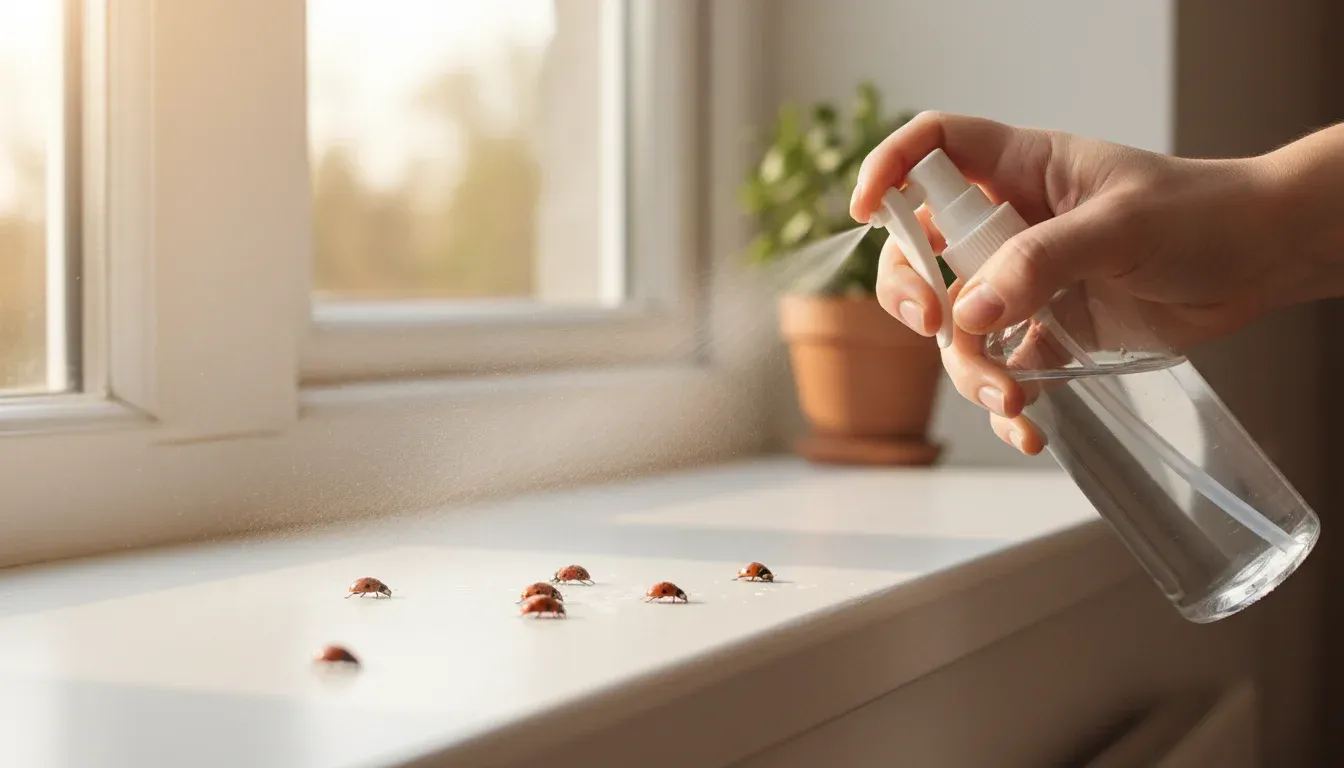
The camphor scent in eucalyptus oil hits ladybirds harder than most other essential oils. 10 drops per cup of water, applied with a cloth or spray bottle around entry points. It lingers longer than citrus scents, so you’ll get a few extra days between applications. Works on other household pests too.
6. Seal Entry Points
Stop them getting in at all. Inspect your home for gaps around windows, doors, pipes, vents, utility lines. Caulk the small cracks, add weather stripping under doors. Pay attention to attic vents and eaves because ladybirds can squeeze through absurdly tiny openings. This is the only method that actually solves the problem long-term instead of just managing it.
7. Diatomaceous Earth
Food-grade diatomaceous earth is a fine powder with microscopic sharp edges that damage insect exoskeletons. Sprinkle it along window sills, doorways, attic floors. It stays effective as long as it’s dry, so it works better indoors than out. Safe around pets and kids (assuming you bought food-grade, not pool-grade). This is for persistent problems where repellent sprays alone aren’t cutting it.
Understanding Ladybird Behavior
Ladybirds (also called ladybugs or Asian lady beetles) overwinter in warm, protected spaces. They release pheromones that signal other ladybirds, which is why you see clusters instead of individuals. They enter homes in autumn when temperatures drop, aiming for attics, wall voids, and south-facing windows that get sun. Knowing this pattern means you can time your prevention (seal gaps and apply repellents in early autumn before they start looking for shelter).